Press and News Native fine-flavor cacao can match commercial varieties in yield, study finds

- Blanco de Piura, a native fine-flavor cacao variety recognized for its white beans and high sensory quality, achieved yields of 1,500 kg of dry beans per hectare, comparable to those of high-yielding commercial varieties.
- Renewing trees through grafting with selected native plant material increased production by 59% in just three years.
- The findings show that it is possible to increase productivity and farmers' incomes while conserving the genetic diversity of native cacao.
A study carried out on smallholder farms in northern Peru shows that Blanco de Piura, a native fine-flavor cacao variety, can achieve productivity levels comparable to those of commercial varieties widely grown across Latin America.
The research, led by the Alliance of Bioversity International and CIAT and the University of Göttingen in collaboration with Cooperativa Agraria Norandino, shows that Blanco de Piura—renowned for its exceptional flavor and aroma—can produce an average of between 1,200 and 1,500 kilograms of dry beans per hectare. Achieving such high productivity, however, depends on good tree management.
Under smallholder farming conditions, these yields match—and in some cases exceed—those of commercial clones widely cultivated across Latin America, such as CCN-51, which have long dominated the market because of their reputation for high productivity.
Although fine-flavor cacao accounts for about 12% of the global market, 90% of it is produced in Latin America. Buyers pay premium prices for its sensory attributes, yet native fine-flavor cacao has long been regarded as low yielding. The study's findings show that this is not always the case.
For decades, farmers have faced pressure to replace their native varieties with commercial hybrids because of the belief that native cacao was less productive. This project's finding is particularly significant because it demonstrates that, by selecting highly productive plant material already present in farmers' fields, yields can reach economically viable levels while conserving the region's agrobiodiversity.
Other key findings
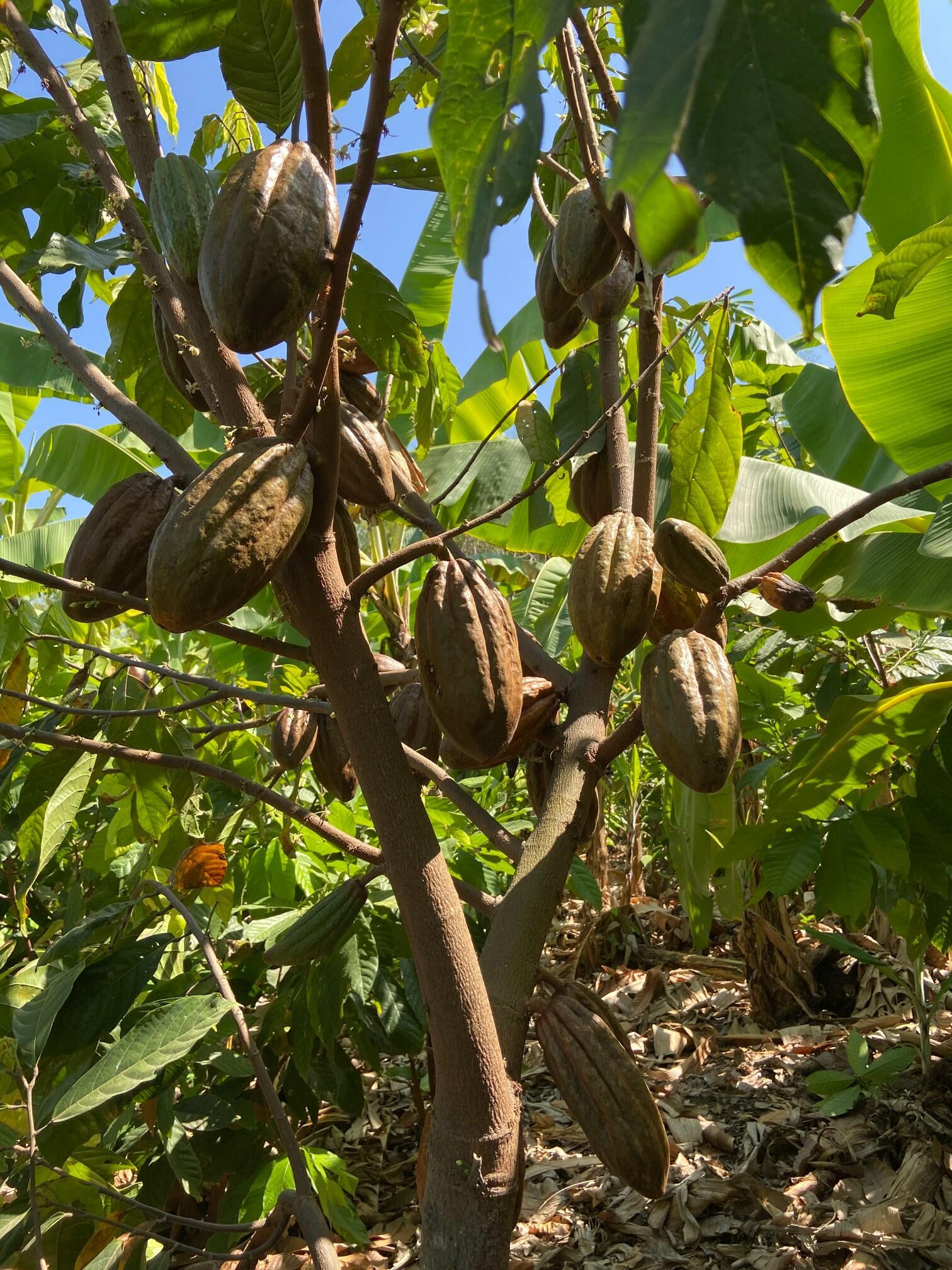
The study was conducted over a three-year period on 12 cacao farms in Peru's Piura region, all owned by members of Cooperativa Agraria Norandino. Researchers evaluated different clones, planting arrangements, and levels of agronomic management to determine their effects on crop productivity.
The study showed that renewing the canopies of mature trees through grafting with selected native plant material increased production by 59% in just three years, regardless of the clonal arrangement, improving production more rapidly than establishing a new plantation. The greatest impact, however, came from good agronomic practices: farms that pruned twice a year and managed the crop more frequently achieved yields 118% higher than farms with lower levels of management.
"We confirmed that certain Blanco de Piura cacao genotypes can self-pollinate, which facilitates their planting and ensures production in the field, contrary to what was previously believed," said researcher Carolina Ocampo Ariza, one of the study's authors.
The researchers also found that, on farms with less intensive management, polyclonal planting designs acted as a form of "insurance" that compensated for a lack of pruning, while designs using a single clone or genotype reached their highest productive potential when combined with intensive agronomic management.
"The findings show that farmers do not have to choose between conserving agrobiodiversity and improving their incomes. When selected native plant material and good management practices are used, both goals can be achieved simultaneously, making this an economically viable strategy," said Evert Thomas, also an author of the study.

Evert Thomas
Senior Scientist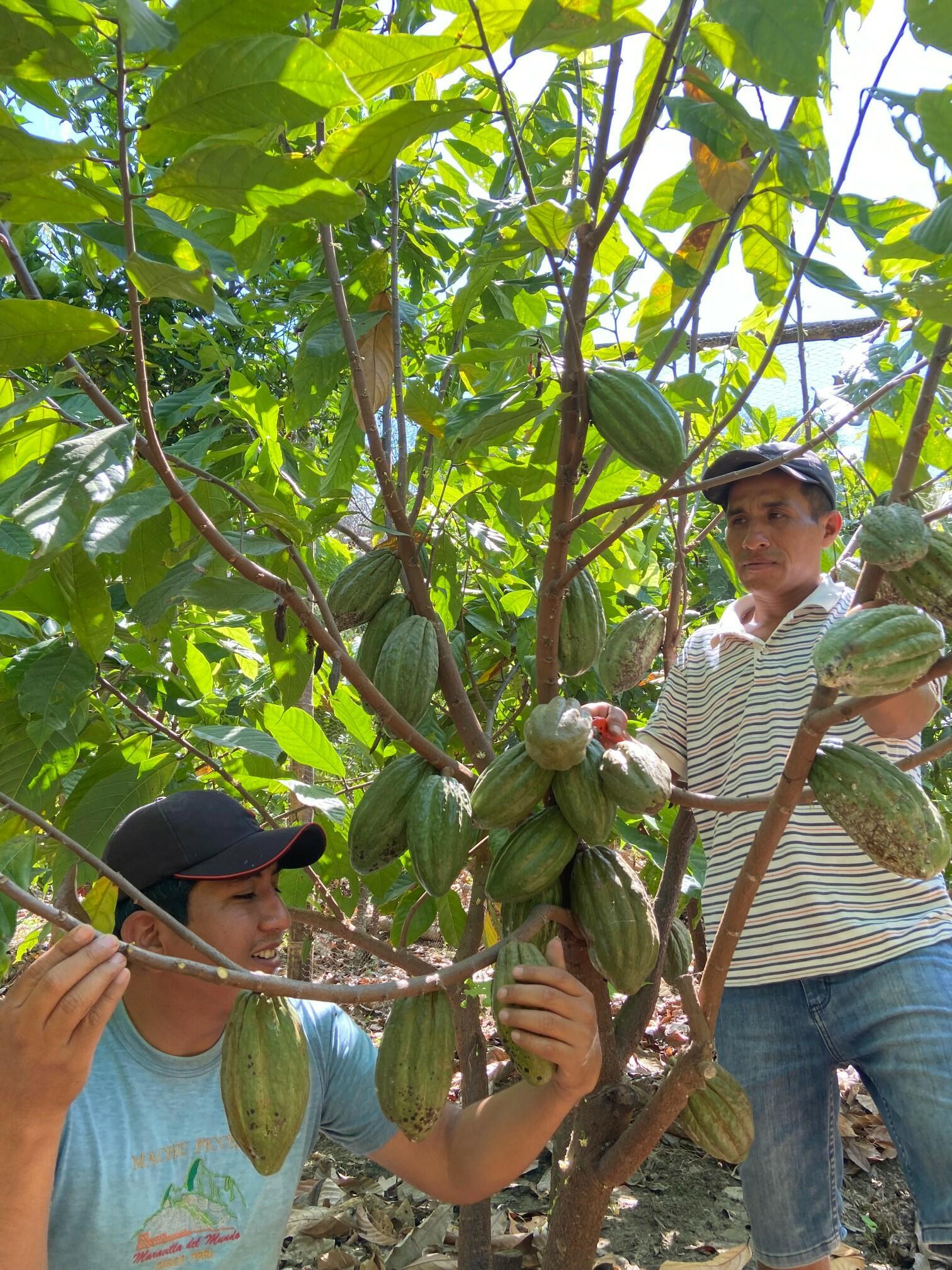
At these production levels, Peruvian farmers gain a dual competitive advantage: the high volume needed for profitability and the premium prices paid in international markets for the unique sensory quality of Blanco de Piura cacao.
"These results strongly support the work we have been carrying out at Cooperativa Agraria Norandino to improve our farmers' livelihoods by increasing productivity. We are currently scaling up the use of Blanco de Piura cacao clones on farmers' farms. Today, many of them produce around 500 kilograms per hectare, but the study shows that, with a well-managed plantation and the use of these materials, yields can increase significantly, even reaching 2,000 kilograms per hectare. This is a very important step toward further strengthening a cacao that is already internationally recognized for its sensory quality and now also demonstrates its enormous productive potential," said Eduardo Espinoza, Cocoa Value Chain Manager at Cooperativa Agraria Norandino.
This scientific advance is essential to protecting Peru's heritage as a country with high cacao diversity and preventing its local resources from being replaced by hybrids, thereby ensuring that this diversity is not lost for future generations.
This effort is the result of years of genetic selection initiated in 2007 by Cooperativa Agraria Norandino and the Asociación Peruana de Productores de Cacao (APPCACAO), with funding from the German Federal Ministry for Economic Cooperation and Development (BMZ) through GIZ.
About Blanco de Piura cacao
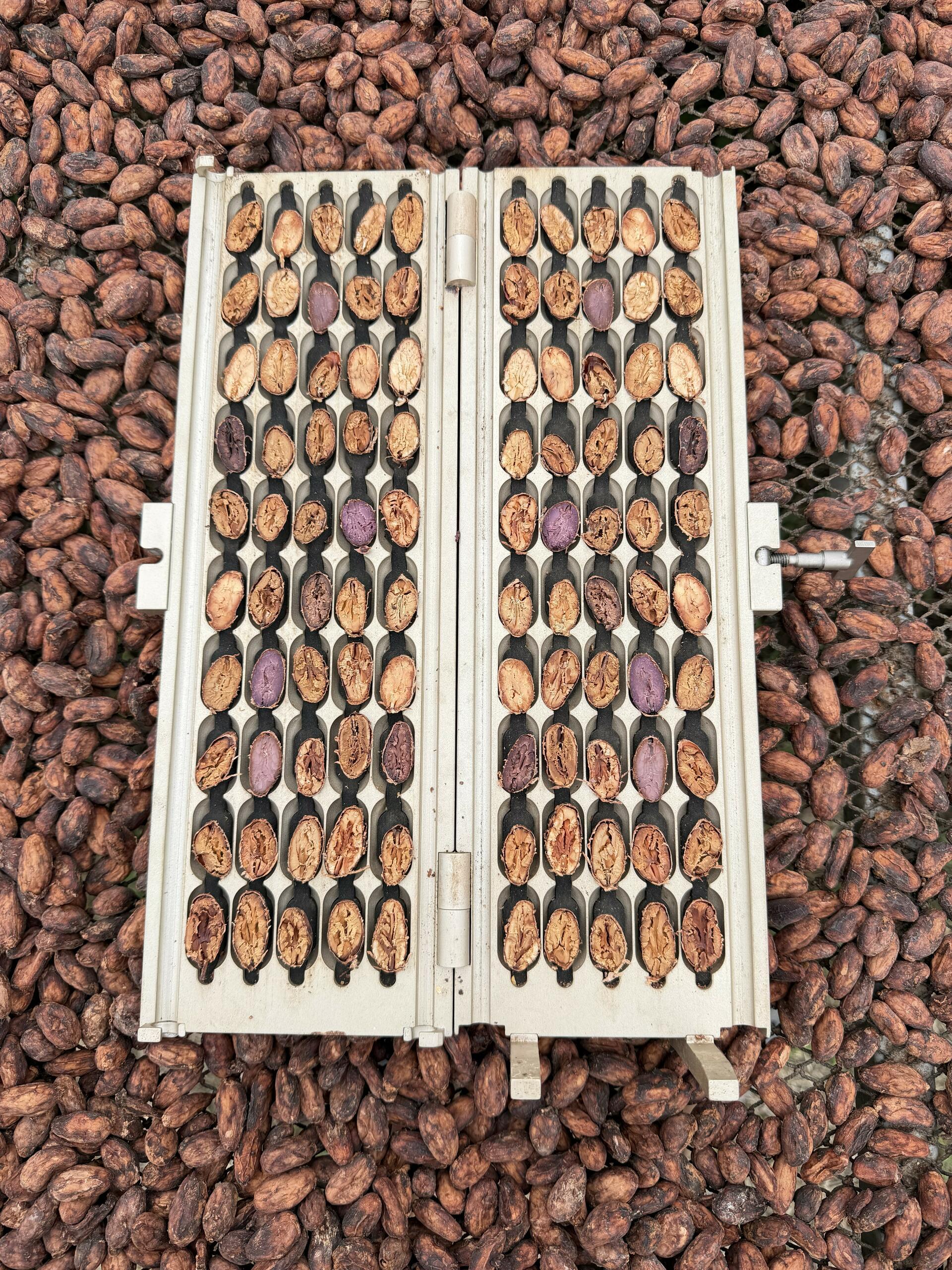
Peru is home to an extraordinary diversity of native cacao varieties, many of which have been conserved through the efforts of farmers, cooperatives, and research institutions. Blanco de Piura is a native cacao genetic group specific to northern Peru, recognized for its superior sensory characteristics and the unusual pale or white color of its beans. It is classified as fine-flavor cacao, allowing it to command higher prices in specialty markets.
The study's authors emphasize that identifying, selecting, and promoting local plant material with high productive potential will be essential to strengthening differentiated markets and preventing the loss of valuable genetic resources.