Press and News Meta and Caquetá strengthen capacities for deforestation-free livestock production
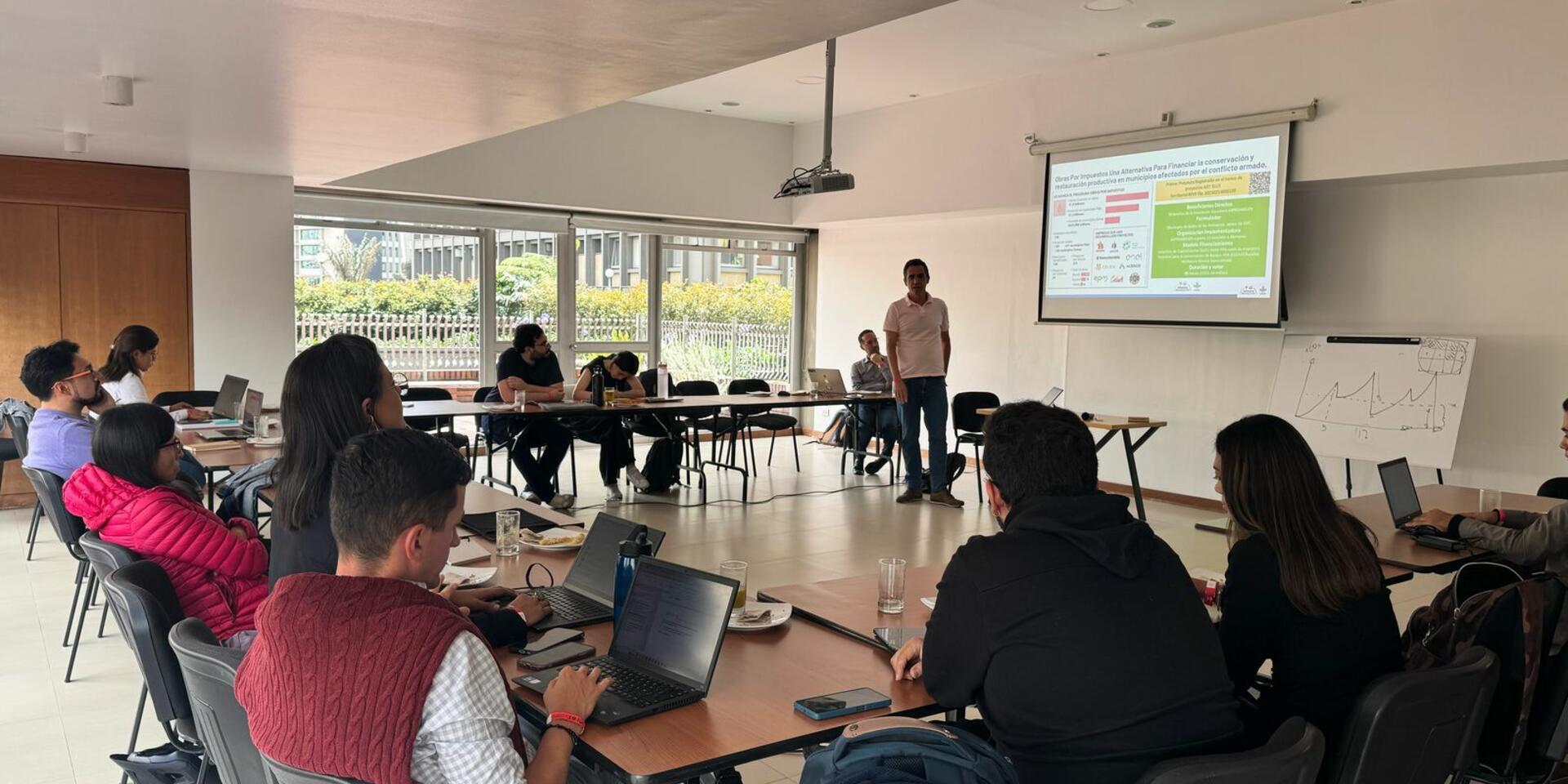

Ensuring sustainable livestock production requires more than good intentions. In two Colombian departments, stakeholders have participated in a series of workshops given by the Alliance and the German Development Cooperation - GIZ to strengthen capacities and consolidate production models that minimize their environmental impact.
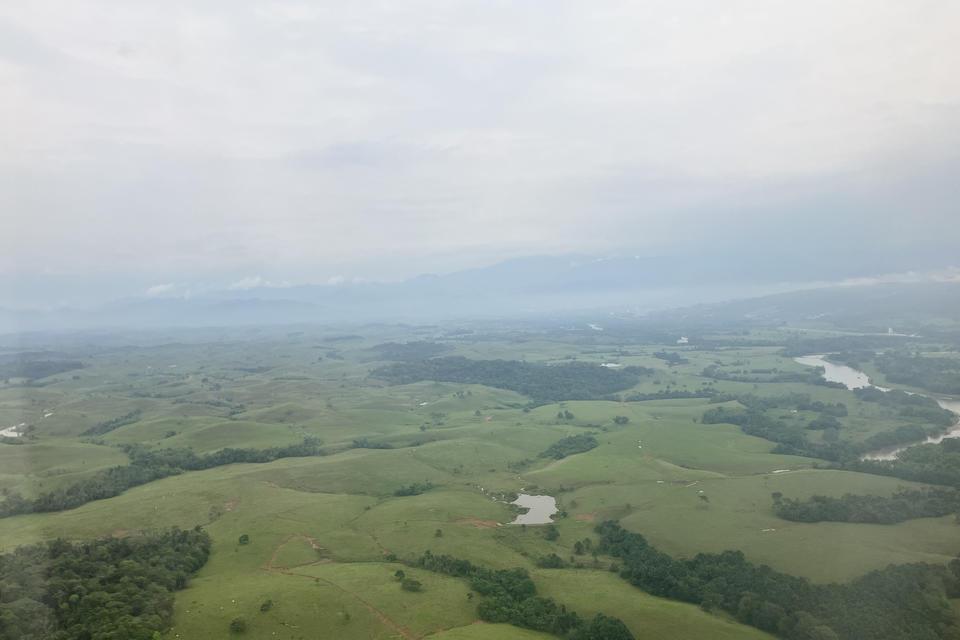
Meta and Caquetá are two of the departments with the largest cattle herds in Colombia, making livestock the main source of livelihood for thousands of families. However, producers face a constant challenge: to reduce deforestation without compromising production.
Livestock expansion has been a primary driver of forest loss in Colombia, necessitating a reassessment of production models. Aware of this, more than 40 representatives of mayors' offices, governors' offices, livestock companies, and organizations in the sector have come together in a series of workshops designed to transform the way meat and milk are produced in these lands, a large part of whose territory comprises the Amazon rainforest.
This initiative, led by the Deforestation-Free Rural Development Project of the German Development Cooperation - GIZ and the Alliance of Bioversity International and CIAT, seeks to provide participants with tools to consolidate a sustainable and deforestation-free livestock farming.
The first workshop addressed national policies focused on reducing deforestation in livestock farming, which are fundamental for developing more sustainable models aligned with the country's environmental commitments. Strategies such as the Deforestation Containment Policy and the National Payment for Environmental Services Program were discussed.
The second meeting was dedicated to financing mechanisms that facilitate the transition to sustainable livestock farming, ensuring that initiatives are scalable and sustainable in the long term. This is because, without adequate resources, many of these initiatives remain on paper. Calls for proposals were explored, including those of the Rural Development Agency (ADR), as well as the Works for Taxes programs, highlighting their capacity to finance projects that integrate environmental conservation and productivity.
Finally, in the third session, knowledge was translated into action, with a focus on practical tools for formulating viable and sustainable projects. Participants worked on structuring 20 investment project profiles, applying methodologies such as Theory of Change and cost-benefit analysis to ensure that initiatives are feasible and sustainable in the long term. For more information, please access the presentations here.
As a result of the trainings, a roadmap will be established to facilitate access to financing and enable companies in the dairy sector, territorial entities, unions and other actors to leverage public and private resources for deforestation-free livestock initiatives, promoting training and capacity building among climate and community actors.
This roadmap responds to the need to scale effective solutions, aligning with global programs such as Scaling for Impact and Climate Action of the CGIAR Research for Development System, which promote the transformation of agri-food systems and emissions reduction through sustainable production models, key to the development of diverse and resilient markets.
This effort will not only ensure that the strategies discussed are translated into concrete actions but will also contribute to the global goals of reducing emissions and strengthening the resilience of smallholders. Furthermore, it will demonstrate that deforestation-free livestock farming is not only possible but also viable and profitable. Beyond the documents and presentations, the real impact of these workshops will be reflected in the field. The expectation is that the structured projects will serve as replicable models in other regions, demonstrating that cattle ranching can be an ally of biodiversity rather than its enemy.
The road ahead is still long, but every decision made in favor of sustainability is an investment in the future of these lands and those who inhabit them. Even more so when we see the articulation between the public, private, and civil society sectors demonstrates that it is possible to achieve a more balanced and productive model that is environmentally friendly, without compromising the country's economic development. The history of Colombian livestock farming is being rewritten, and this time, the ink is green.