Blog Tipping the scales towards growth: How Khama Cattle Ranch turned unmet demand into sustained growth and is reshaping the livestock sector in southern Malawi
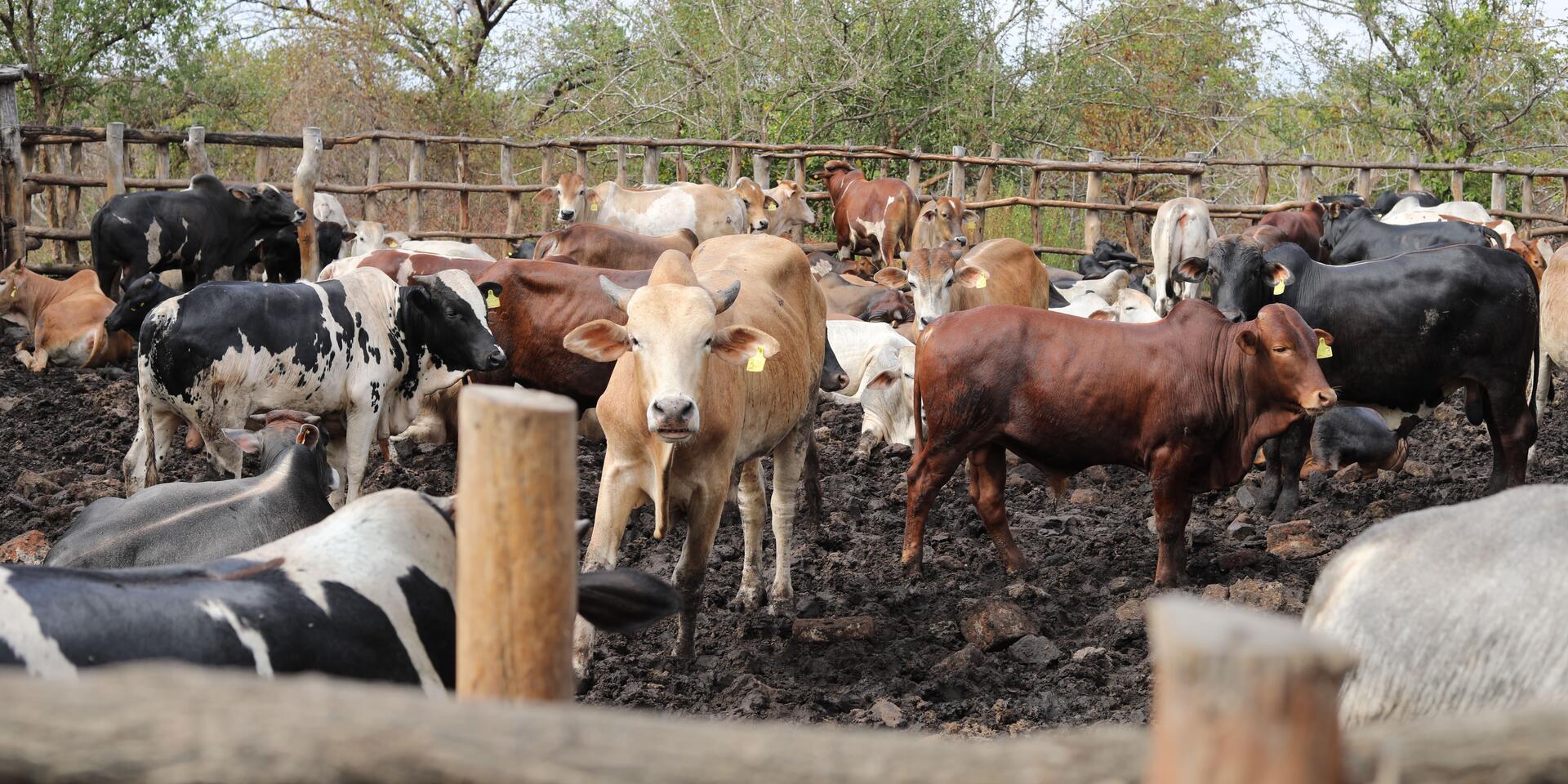

The orders kept coming. Ekhaya Supermarket. Maka Foods. GO Fresh. Restaurants across Blantyre sending the same message, week after week: we need more. Demand for Khama Cattle Ranch’s meat had outgrown the business several times over. Buyers were ready. The market was proven. The opportunity was real. But for years, every attempt to grow ran into the same wall.
Every path to expansion, more livestock, better systems, increased production, led back to the same dead end. Bank loans came with punishing interest rates. Collateral requirements were far beyond reach.
“We had overwhelming demand,” recalls Adrian Semba, who co-manages Khama Cattle Ranch. “But our capacity was only a fraction of what the market demanded.”
The business was profitable. The meat was exceptional, stall fed, carefully managed, consistently high quality. Customers could see and taste the difference. And yet, opportunity kept walking past their gate. The constraint was not effort. It was not ambition. It was access.
Affordable financing simply did not exist for them. Every option was either too expensive or out of reach.
“Every opportunity we could get was either expensive or unattainable,” Adrian explains. “Commercial loans required security that we simply did not have.”
So, like many enterprises trapped in the void between potential and reality, Khama Cattle Ranch operated below its capability, not because it lacked the skill to grow, but because it lacked the means to scale what it had already built.
Khama started in 2009, the way most enduring businesses do, quietly. By 2016, it had evolved into a feedlot operation, specialising in ‘finishing,’ the final stage of livestock production, where animals received intensive feeding and veterinary care before going to market. The quality spoke for itself. Demand followed.
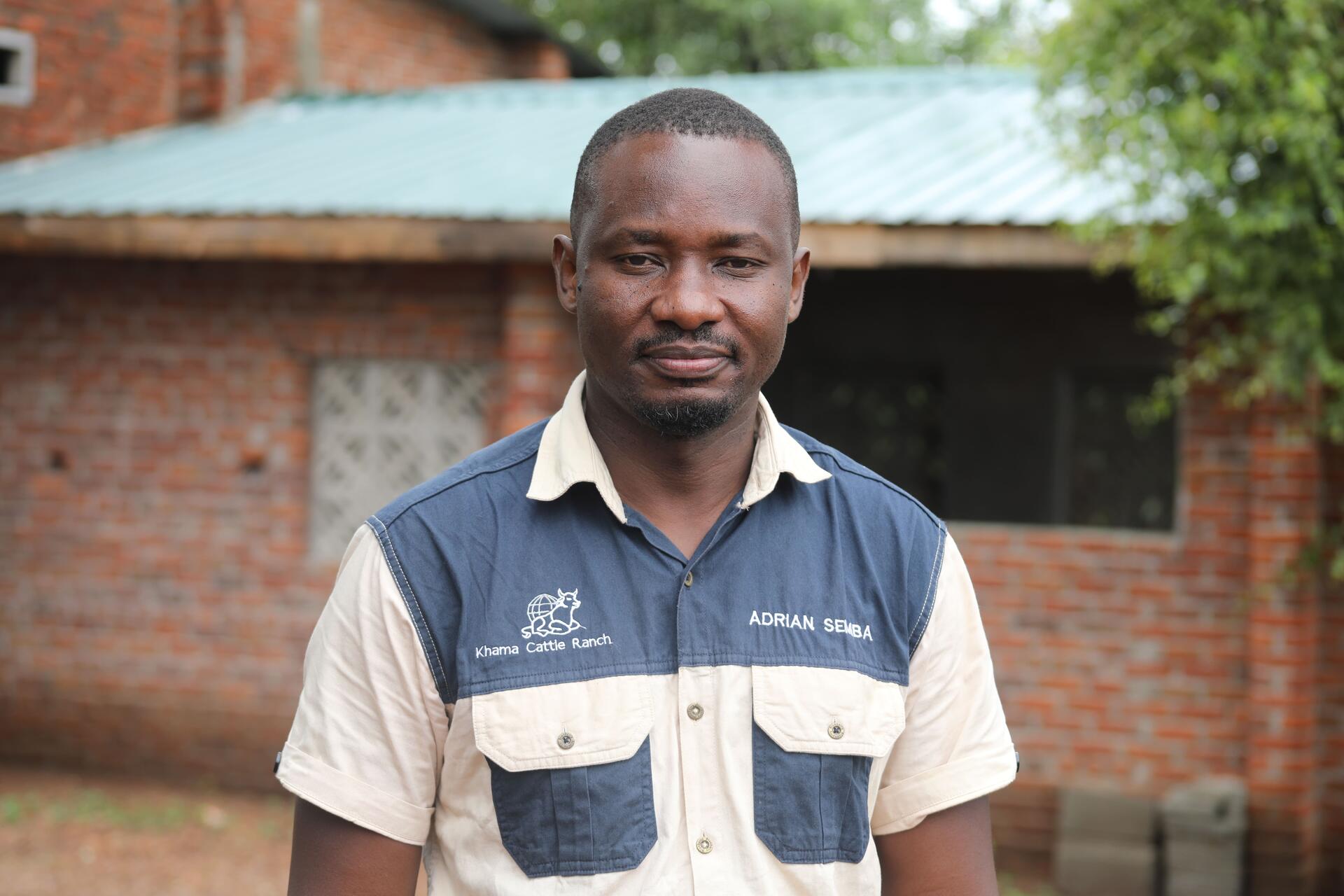
Adrian Semba at Khama Cattle Ranch, where rising demand is driving rapid expansion.
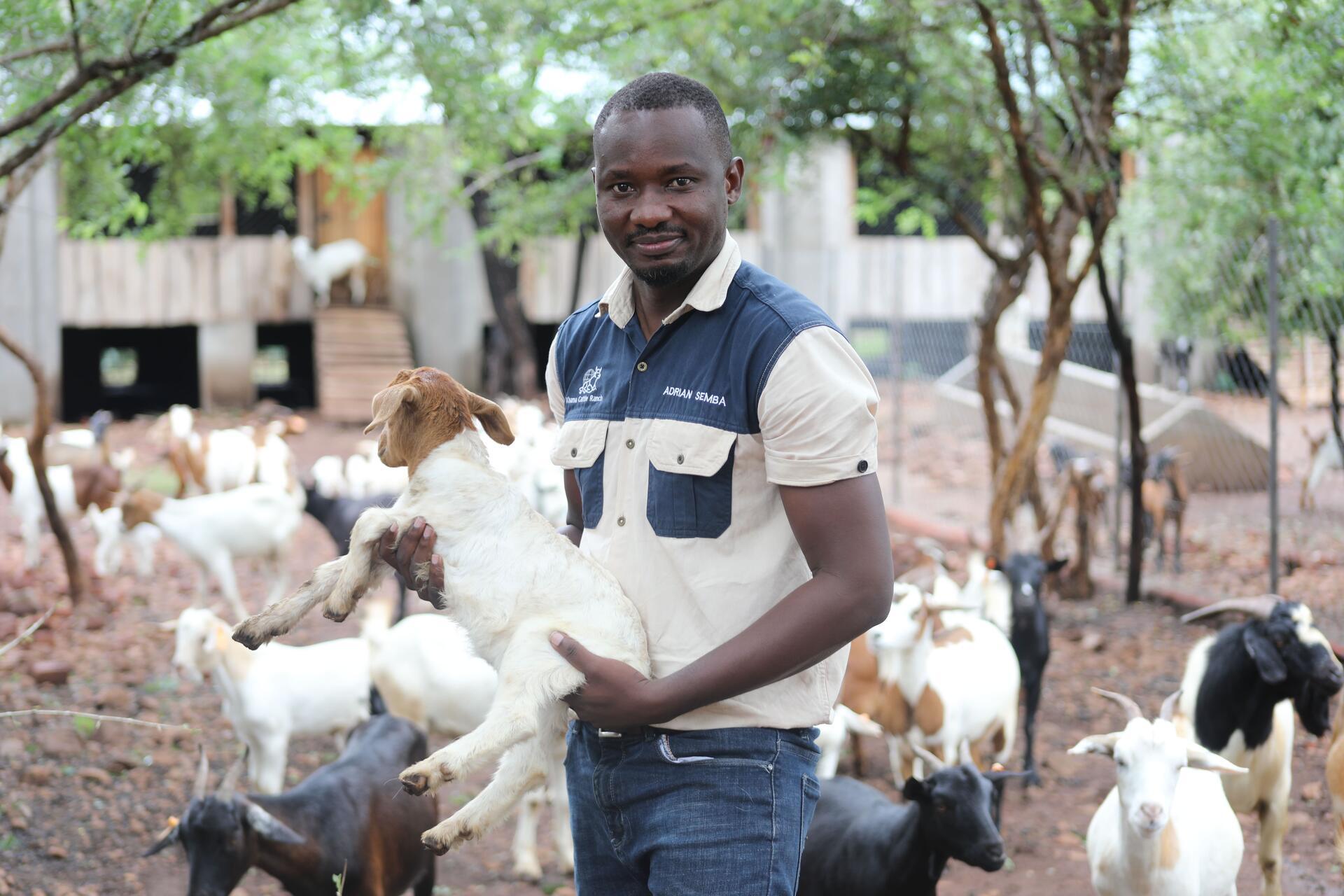
But growth required capital, and capital in this context came with teeth.
Then something shifted. Adrian Semba came across a call for applications under the Business Acceleration for Youth (BA4Y) project. At the time, it was one of many opportunities circulating, most of which led nowhere. But this one felt different.
“I saw the call and thought, this is it,” he recalls. They applied. What followed was not just funding, but something far more valuable, access to the kind of support that matched the ambition of the business for what they dreamed becoming.
For the first time, capital came without suffocating terms. Alongside it came technical support that reshaped how the business operated.
Machinery replaced manual labour. A chaff cutter, hammer mill, feed mixer and pellet mill transformed feed production from a slow, physically demanding process into something fast, efficient and scalable. What once took more than five hours now takes just thirty minutes.
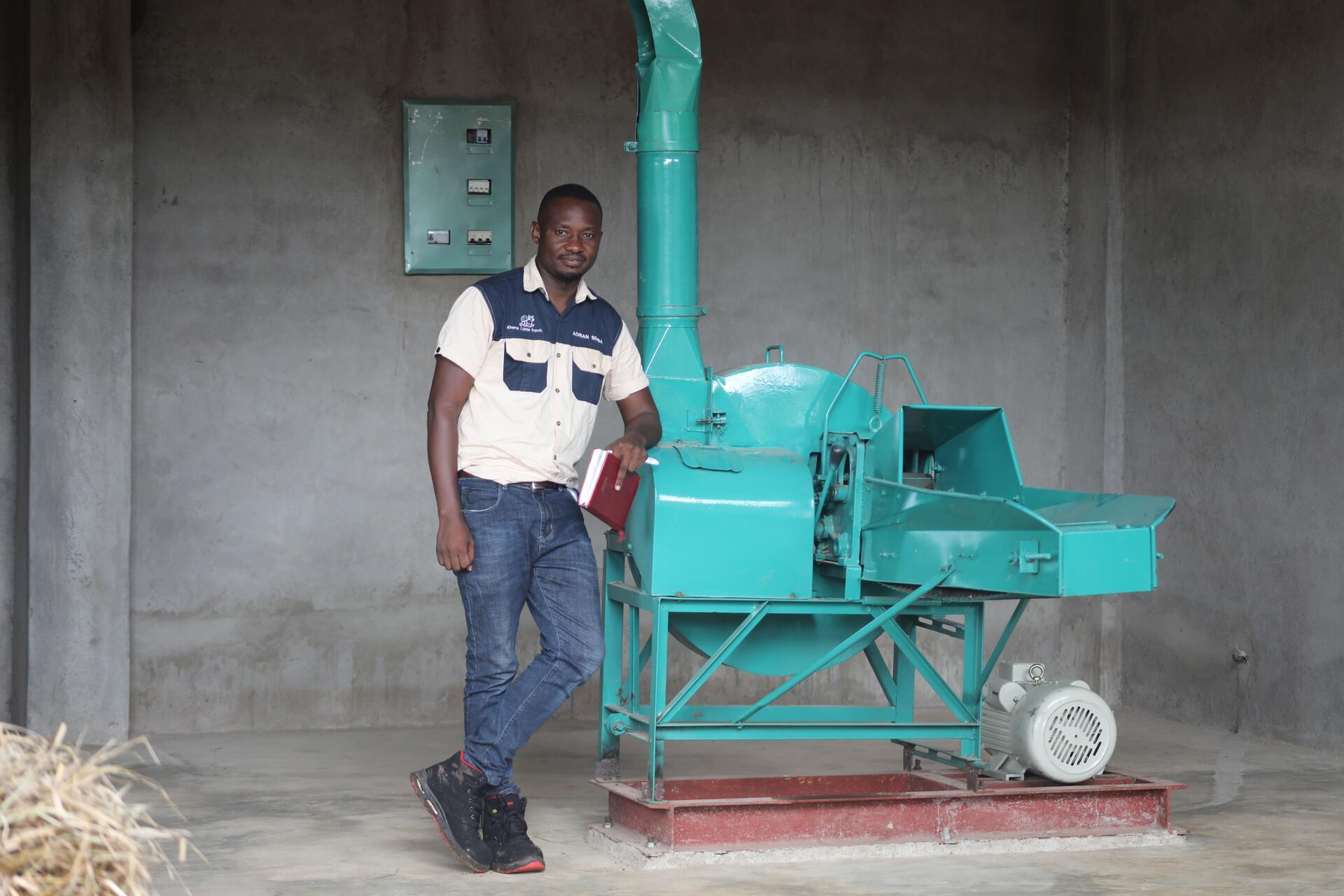
Modern equipment is helping the ranch scale efficiently to meet growing market demand.
Less visible, but far more significant, was the shift in how the business was run. Systems began to take shape. Bookkeeping became structured. Animal records became reliable. Performance could be tracked and understood. Decisions were no longer based on instinct alone. Then came a moment that redefined the business.
“Previously, we had never considered producing audited accounts,” Adrian says. “It came to our attention that this was not only important for managing the business, but also for building investor confidence.”
That first audit changed how the business saw itself, and how others saw it. What had once been a capable farm navigating constraints became a structured, credible enterprise with the ability to plan, to measure, and to grow with intention. The effects of that shift are now visible across the business.
The workforce has grown from 13 employees to 33, more than doubling in a short period, with over 80 percent of the team made up of youth.
Livestock numbers have expanded rapidly, with goat stock increasing from just over 100 to more than 600, including improved Boer breeds introduced for crossbreeding. What began as a small additional income stream is now a strong second line of business alongside cattle production.
This expansion was enabled by a targeted investment at a critical moment. Through the BA4Y project, the business acquired the feed processing machinery, goat stock, water tanks and security systems, assets that immediately increased both efficiency and scale. Alongside this, Adrian invested his own resources to construct a modern goat housing facility, strengthening the foundation for long term growth.
“We have continued investing beyond the project,” Adrian explains. “That is only possible because the business is now generating the kind of revenue that allows us to reinvest and grow.”
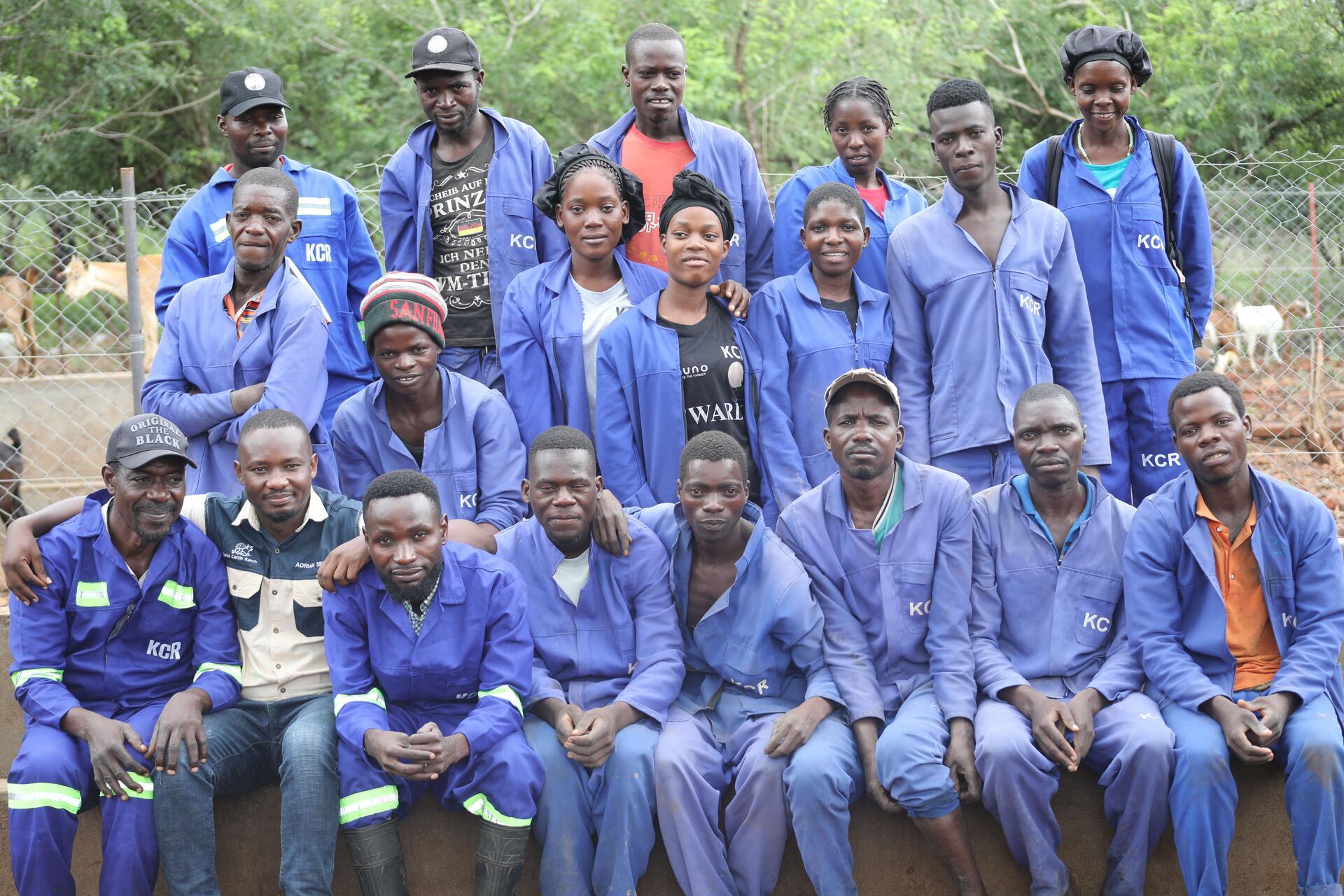
Young workers make up the majority of the team, contributing to the ranch’s expansion.
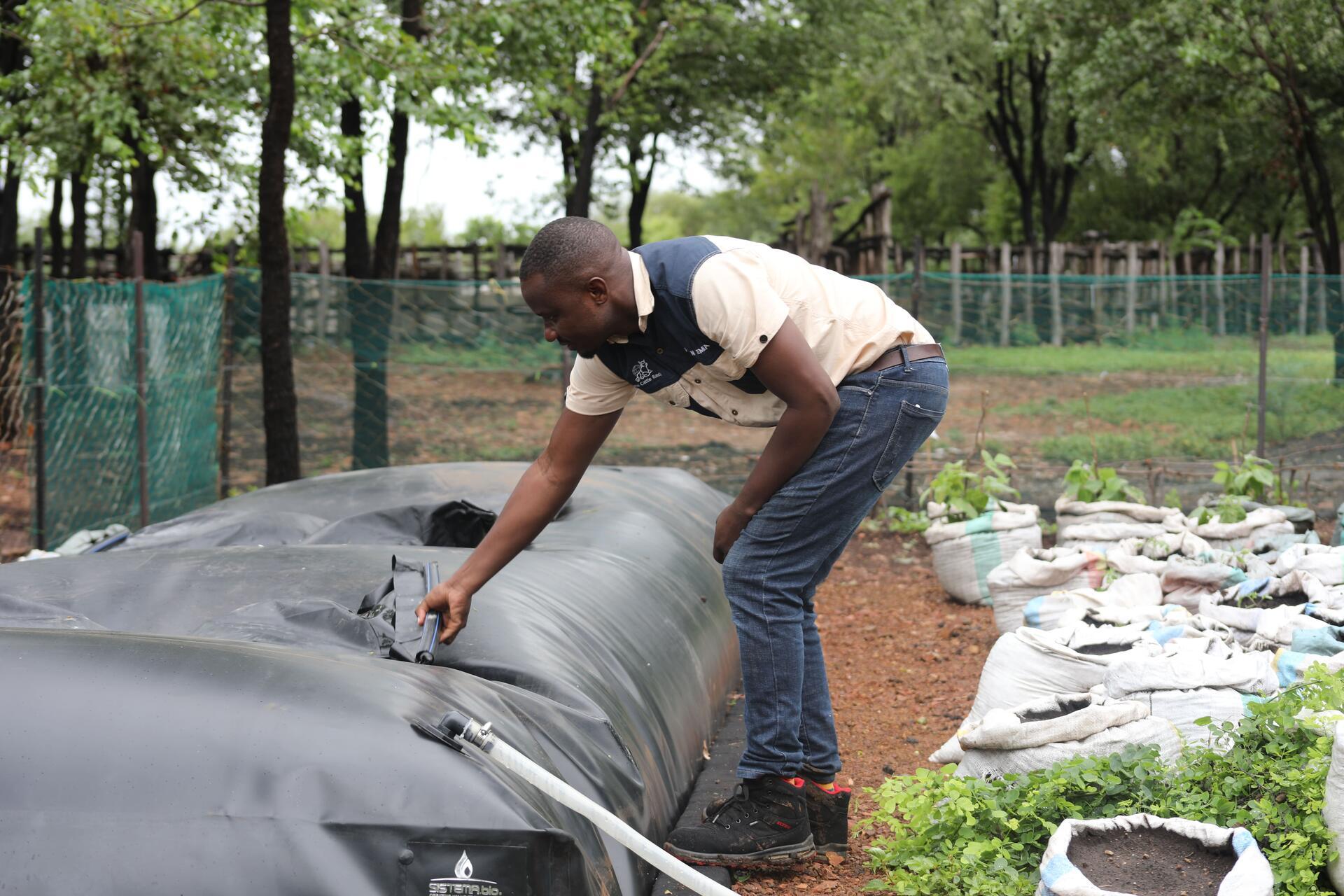
Animal waste is converted into biogas and biofertilizer, supporting sustainable farming.
Monthly cattle throughput has more than doubled (from 40 to 100), while the number of smallholder farmers supplying into the business has grown from around 150 to over 200. The customer base has expanded alongside it, supplying some of the most recognisable buyers in Malawi’s food sector.
What stands out is not just how much the business has grown, but how it now operates. Detailed record keeping, tracking births, breeding lines, disease and mortality, makes livestock management measurable. Staff receive regular training. Decisions are informed by data, not guesswork.
Challenges are approached differently too. When poor quality goats in the market led to losses, the response was not to scale back, but to adapt, strengthening sourcing practices, improving training, investing in enhanced genetics and relying on better systems to manage risk.
Banks that once turned Khama away are now returning, offering financing facilities large enough to support expansion. The door that had long been closed is now open. Not because the financial system has changed. But because the business has.
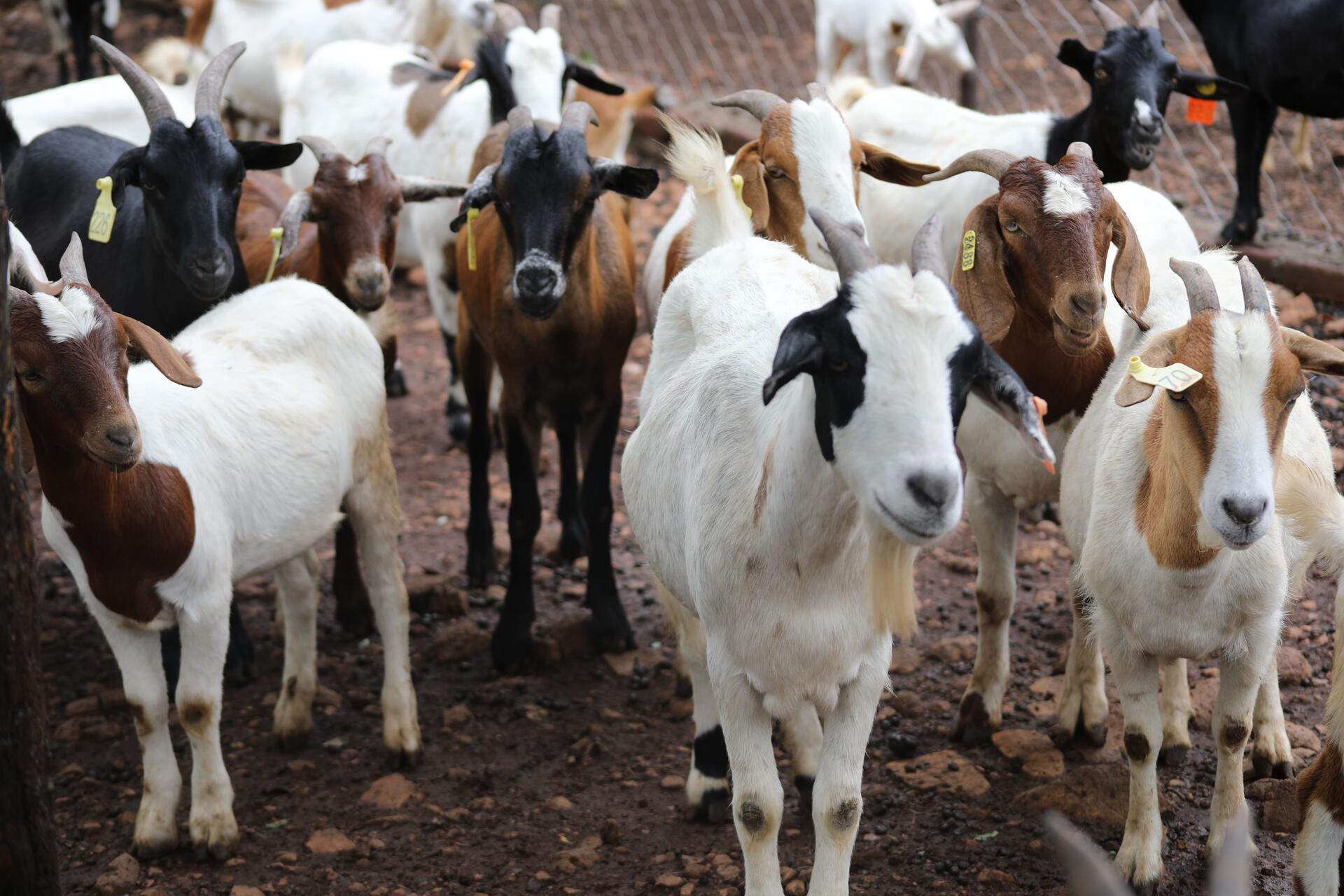
Goat production expands rapidly, with improved breeds strengthening the business.
As Khama grows, its role in the surrounding ecosystem is expanding with it. The ranch is becoming a hub for learning and production, training farmers, preparing to produce feed not just for its own use but for others, and creating pathways for smallholders to participate in more structured and profitable value chains.
At the same time, Khama is investing in sustainability. Animal waste is converted into biogas for cooking and biofertilizer for farming while further investments in breeding and livestock quality are being explored.
And at its core, the story remains simple. Khama Cattle Ranch did not suddenly become ambitious. What changed was access, to the right kind of capital, to the right systems, and to the kind of tailored business support that meets a business where it is and helps it move forward.