Research Articles Growing resilience from the ground up: How improved forages are transforming upland livestock systems in Vietnam

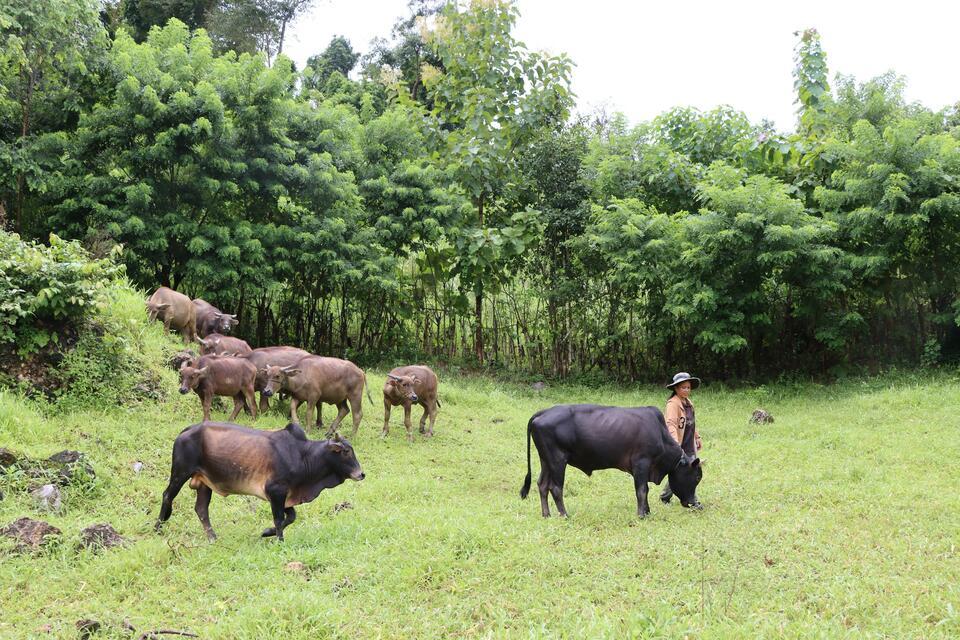
In the steep hills of Vietnam’s Northwest Highlands, livestock are far more than animals. Cattle, buffalo, and pigs are savings accounts, sources of food, and vital contributors to household resilience – especially for ethnic minority communities living in remote upland areas. Yet for decades, livestock productivity in this region has been constrained by a familiar challenge: not enough good-quality feed, especially during the long dry season.
Recent research from Son La province shows that this challenge is not insurmountable. By combining improved forage technologies with participatory, gender-responsive approaches and strong local partnerships, farmers are beginning to close the feed gap – unlocking gains in productivity, resilience, and livelihoods along the way.
The feed challenge in Vietnam’s Northwest Highlands
The Northwest Highlands are home to diverse ethnic groups, including Thai, H’mong, and Muong communities, most of whom depend on mixed crop–livestock farming. Livestock play a central role in daily life, yet animals are often underfed. During the dry and cold months, natural grazing declines sharply, and farmers rely heavily on low-quality crop residues such as rice straw or maize stalks.
The consequences are severe: weight loss, disease, low reproductive performance, and in some cases animal mortality. These problems are compounded by difficult terrain, land competition with food and cash crops, limited access to inputs and finance, and weak extension services – particularly for remote villages.
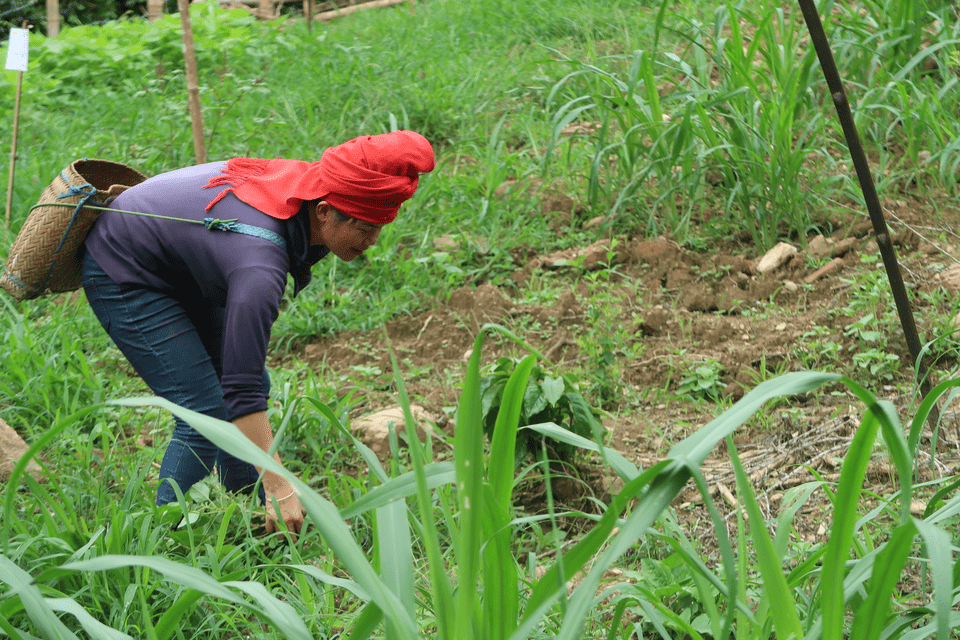
Women face additional burdens. They are primarily responsible for daily feed collection and processing, often walking long distances to gather fodder, yet they have less access to training, information, and decision-making power.
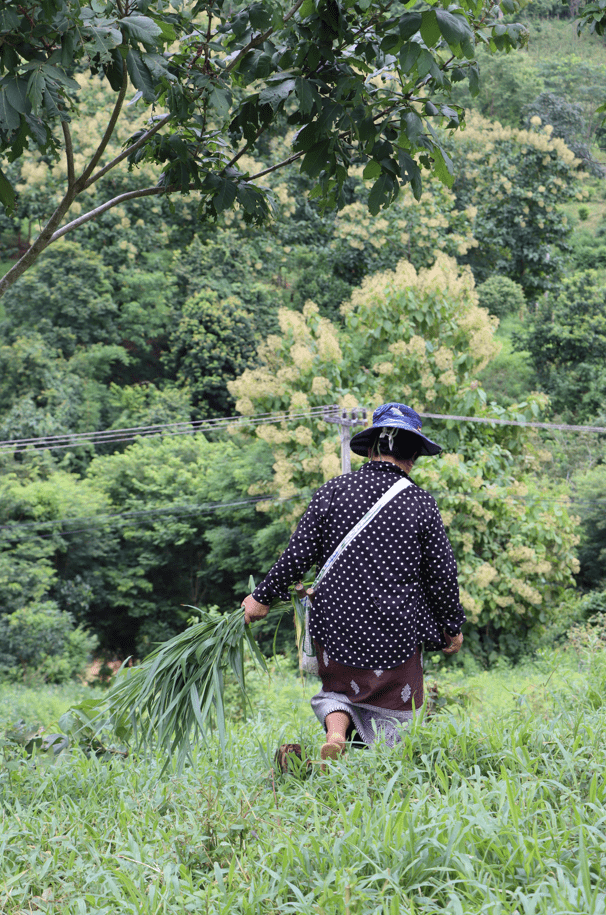
Fodder collection is labor-intensive, often consuming several hours daily, particularly for women and children. Credits: Alie Galeon / CIAT
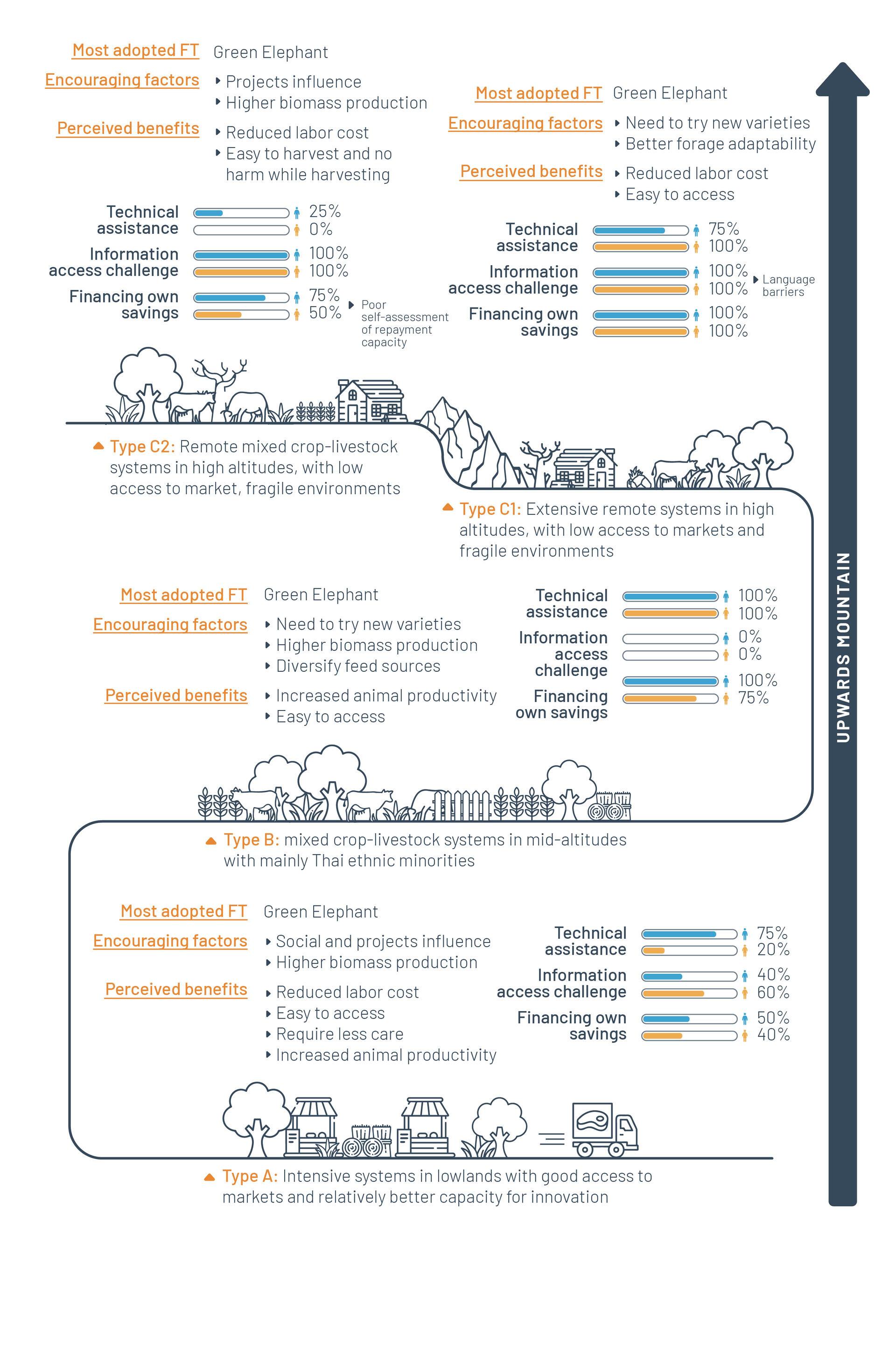
Adoption factors influencing the uptake of forage technologies in Vietnam's NWH. Limiting factors were categorized into three main groups: technical assistance, access to information, and financing. FT, forage technology.
Two projects, one shared goal
To address these interconnected challenges, two successive research-for-development initiatives were implemented in Mai Son district, Son La province: Li-chăn (2017–2021) and Chăn-henh (2022–2024). Both aimed to improve livestock productivity and livelihoods by tackling feed constraints head-on, while paying close attention to gender and social inclusion.
Rather than promoting a single “silver bullet,” the projects took a systems approach, combining improved forage varieties, farmer-led trials, inclusive training, and partnerships with local institutions.
What happens when farmers test forages themselves?
A cornerstone of both projects was participatory evaluation. Researchers and farmers worked together to test a range of improved forage species under real farming conditions. These included high-yielding tropical grasses such as Green Elephant, Mun River, Mombasa, and Mulato II, alongside forage legumes like Ubon Stylo and rice bean.
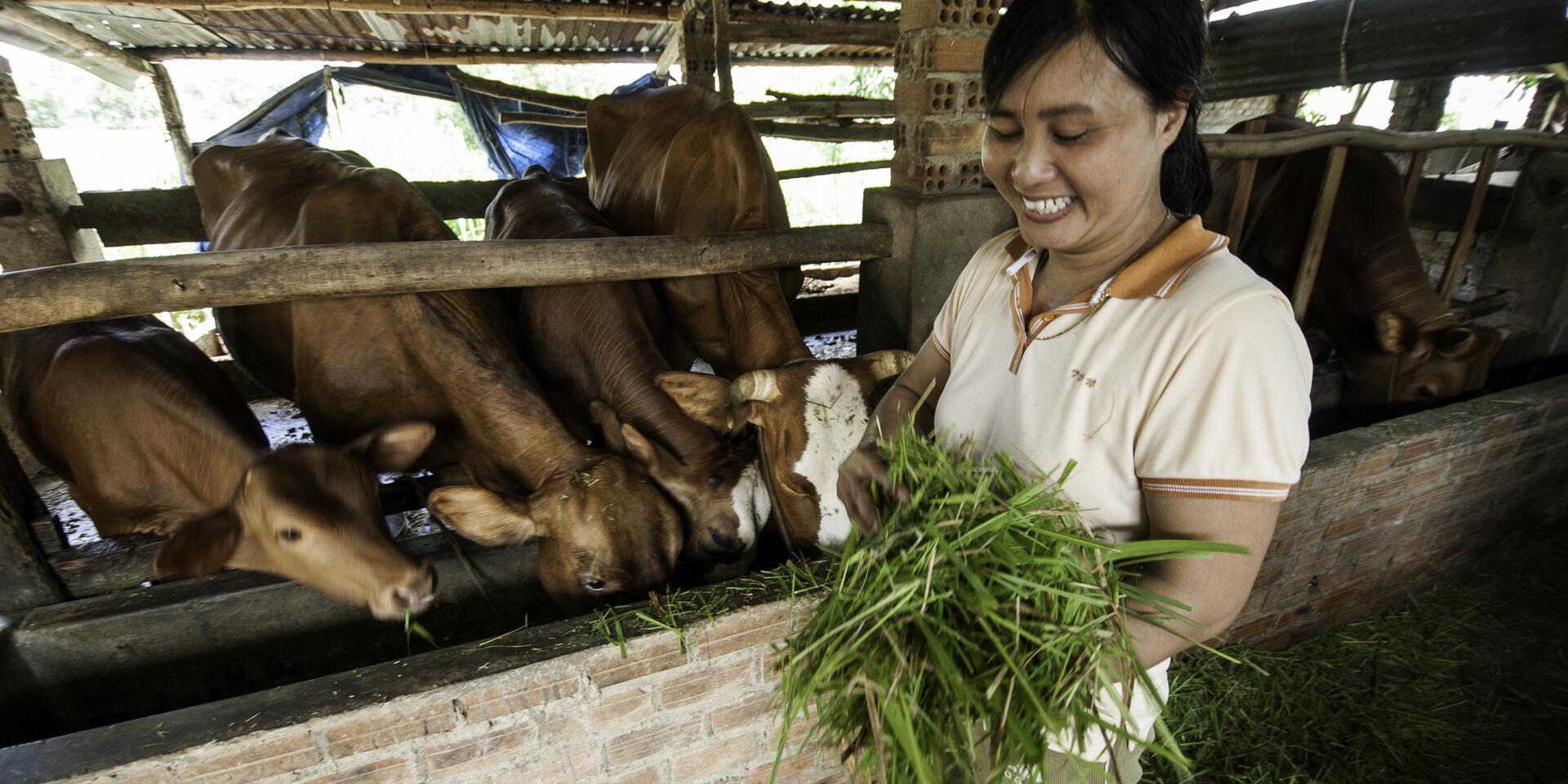
The results were striking. On demonstration plots, several grasses produced more than 100 tons of fresh biomass per hectare in the rainy season – far exceeding traditional forages. Even during the dry season, certain varieties maintained relatively good productivity, helping to bridge the critical feed gap.
Farmers’ preferences were clear. High-yielding grasses were favored for their biomass, resilience, and ease of management. Green Elephant, in particular, emerged as a standout performer. Forage legumes, while recognized for their soil and nutritional benefits, were less popular due to lower yields and establishment challenges in dry and cold conditions.
Importantly, these preferences were not imposed from outside – they emerged through farmers’ own observations, discussions, and evaluations.
Adoption: More than just planting grass
By 2023, more than 150 households had adopted at least one improved forage variety. While the plots were often small – typically less than 0.1 hectares – they represented a significant shift in how farmers managed livestock feeding.
Adopters reported multiple benefits:
• More reliable feed supply, especially during the dry season
• Reduced labor, as cut-and-carry forages were planted closer to homes
• Healthier animals with better body condition
• Greater confidence in managing livestock as a productive enterprise
Women, in particular, valued the time and labor savings from nearby forage plots, which reduced the daily burden of fodder collection.
However, adoption was not uniform. Households closer to roads and markets adopted more readily, while remote upland communities, especially H’mong villages, faced barriers related to language, isolation, and limited extension support. Access to quality seed and planting materials also remained a major constraint once project support ended.
Why training and partnerships matter
One of the clearest lessons from the Chăn-henh project was that technology alone is not enough. Adoption accelerated when improved forages were paired with practical training on feeding strategies, silage making, and animal health.
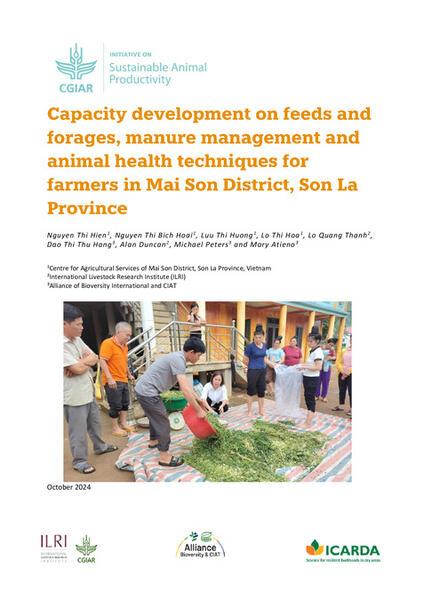
A co-investment model with the district Agricultural Service Center (ASC) proved especially effective. Local extension staff and veterinarians were trained as trainers, ensuring that knowledge remained embedded in the local system. More than 1,000 farmers, over a third of them women, participated in training sessions across nine communes, with very high attendance and satisfaction rates.
Follow-up assessments showed increased use of silage, improved feeding practices, and better animal health management. These gains continued even beyond the project’s direct involvement, supported by local institutions and peer-to-peer learning.
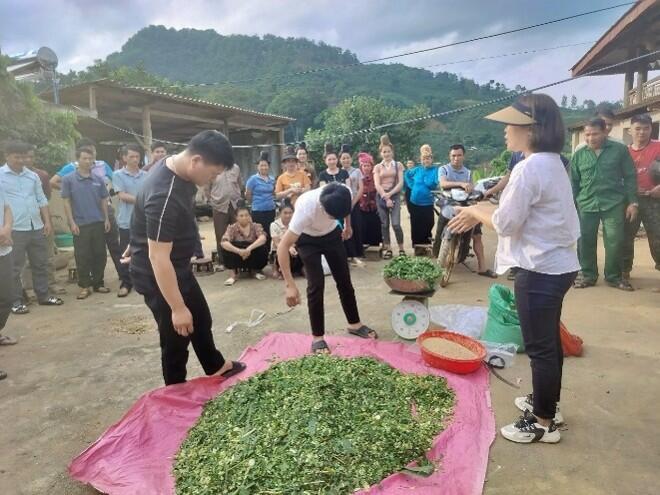
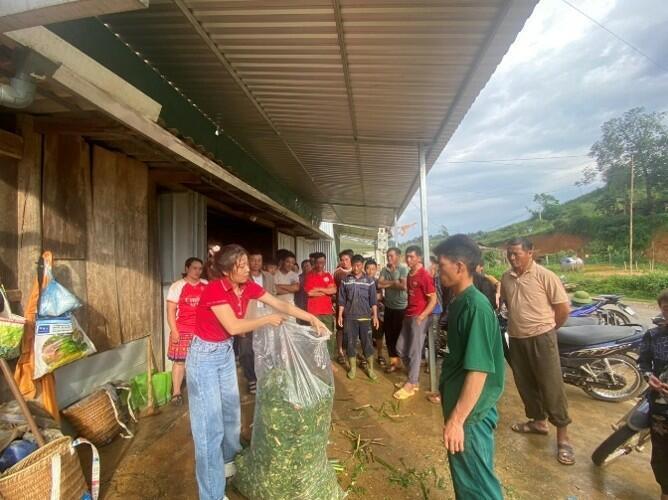
Some photos of training for farmers, which were implemented by the co-investment between Chan-henh and ASC in 2024. Credits: Dao Thi Thu Hang / CIAT
The missing link: Seed systems
Despite positive results, one bottleneck stood out clearly: forage seed systems. Many farmers struggled to access reliable, affordable planting material once initial project supplies were exhausted. Informal seed markets dominate, often offering low-cost but poor-quality seed with uncertain performance.
The research highlights the need for stronger coordination between public institutions, private companies, and farmer groups to develop decentralized, quality-assured seed systems. Community-based nurseries and farmer-led seed production offer promising pathways – if supported by appropriate policies and investment.
Lessons for sustainable livestock development
The experience from Son La offers broader lessons for upland and smallholder livestock systems, both within Vietnam and beyond:
1. High-yielding, well-adapted forages can transform feed availability, but they must match local conditions and farmer priorities.
2. Participation matters: Farmers are more likely to adopt what they have tested, evaluated, and adapted themselves.
3. Gender-responsive approaches are not optional – they are central to reducing labor burdens and ensuring equitable benefits.
4. Local institutions are key to scaling: Embedding innovations within extension systems ensures continuity beyond projects.
5. Seed and input systems must be addressed to move from pilot success to sustainable impact.
From innovation to impact: Building market systems that work for farmers
Improved forages are not just about feeding animals – they are about feeding resilience. In Vietnam’s Northwest Highlands, they are helping farmers stabilize production, reduce vulnerability to climate shocks, and build more sustainable livelihoods.
The challenge now is to move from promising pockets of success to wider, more inclusive adoption. Achieving this will require continued investment, supportive policies, and strong partnerships that place farmers – women and men alike – at the center of innovation.
This is where the next phase of work becomes critical. Through the CGIAR Sustainable Animal and Aquatic Foods (SAAF) Science Program, efforts are underway to build on these foundations by embedding improved forages and seed system development within a broader market systems approach. The focus is on better connecting farmers to bundled services delivered through local agents, including access to inputs, advisory support, and reliable output markets.
Strengthening decentralized seed systems will be central to this effort, ensuring that farmers can consistently access quality planting material beyond project lifecycles. At the same time, investments in local extension capacity and improved feeding strategies will help farmers better time production and target more profitable market opportunities for beef cattle.
By generating robust, evidence-based insights, SAAF also aims to inform livestock strategies and policies – supporting more inclusive and scalable development pathways. When resilience grows from the ground up, and is supported by systems that work for farmers, it has the power to reshape entire landscapes.
Acknowledgements: This work was carried out as part of the CGIAR Science Program on Sustainable Animal and Aquatic Foods (SAAF), the CGIAR Initiative on Sustainable Animal Productivity (SAPLING), and the CGIAR Research Program on Livestock (Livestock CRP). We thank all donors who globally support our work through their contributions to the CGIAR System. The views expressed in this document may not be taken as the official views of these organizations.
Further reading