From the Field Genes for the future: How agricultural biodiversity supports global food security

In times of climate crisis and accelerated biodiversity loss, genetic conservation is an investment in resilience. Every seed stored in a gene bank represents a possibility for adaptation for future generations. Unfortunately, today there is still a great deal of diversity in our crops that is not yet found in the cold storerooms of gene banks.
Gap Analysis is a methodology that helps determine which species, regions or ecosystems are underrepresented in gene banks or protected areas. When a country manages to identify and collect diverse genetic material, it strengthens its capacity to face agricultural and climate crises, ensuring that the farmers of tomorrow can access more resilient and sustainable crops.
From theory to capacity strengthening: A global partnership for agricultural biodiversity
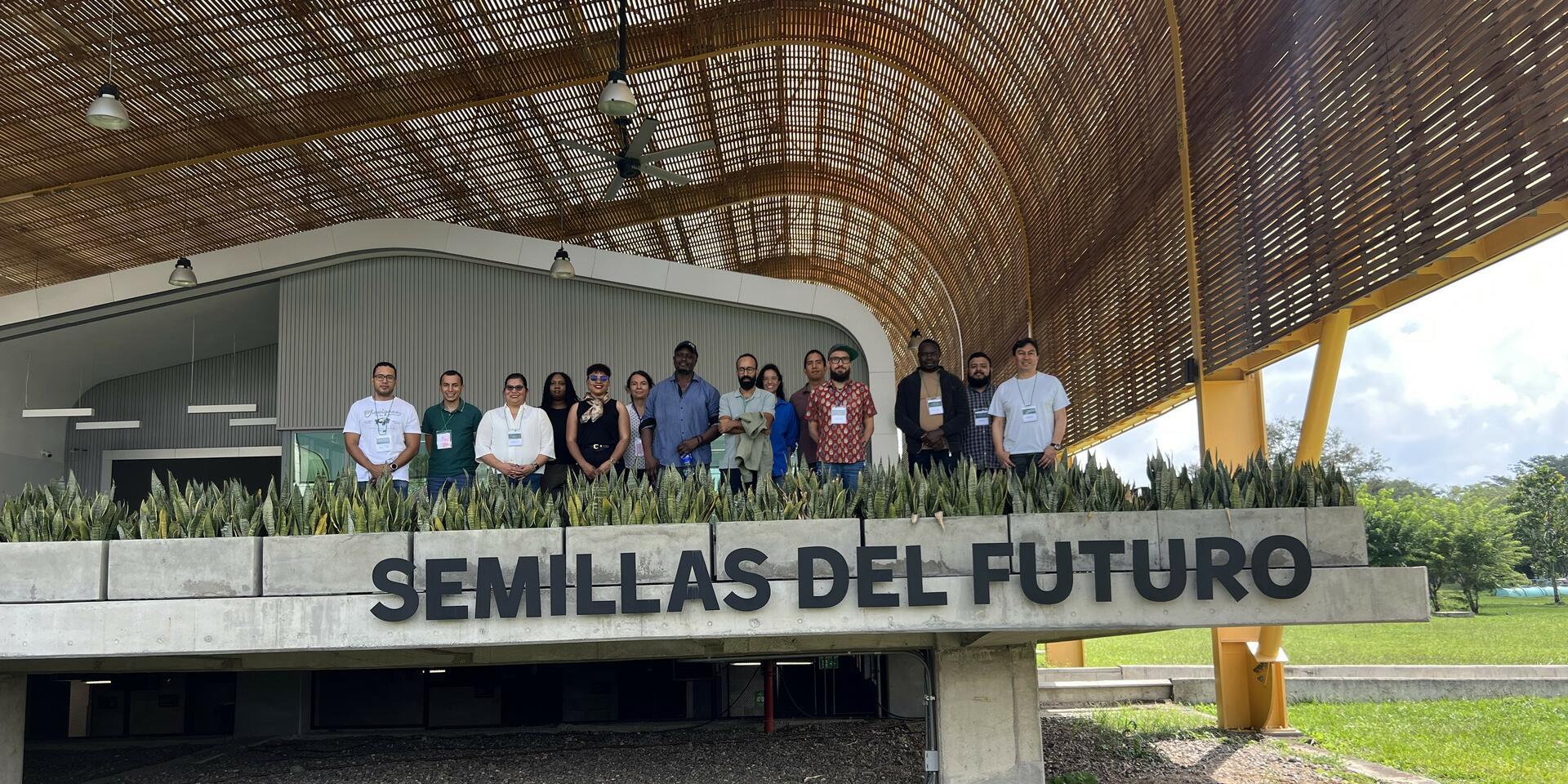
During two weeks of intensive work, experts from gene banks in different countries gathered at the Alliance’s Hub for the Americas in Palmira (Colombia) to strengthen their capacities and put collaborative science into action.
The Gap Analysis Training for Global Biodiversity Conservation workshop brought together participants from two Crop Trust–supported projects:
- Power of Diversity Funding Facility (PDFF), with AGROSAVIA (Colombia), ZARI-NPGRC (Zambia), and KALRO-GeRRI (Kenya),
- Biodiversity for Opportunities, Livelihoods and Development (BOLD), with INIAP (Ecuador), INRA (Morocco), and NARC (Pakistan).
Although they operate in different contexts, both projects seek to strengthen their conservation operations and the availability of crop diversity. By carrying out a gap analysis, participants learned to identify gaps in their collections and generated information that will strengthen the planning of new collecting missions and, subsequently, the management of their gene banks.
“Gap Analysis helps us use our resources efficiently, allowing us to be more strategic in managing and expanding our collections,” said Colombian researcher Paula Reyes, who works in AGROSAVIA’s gene bank. Colombia’s national gene bank is focusing its analysis on two opportunity crops—peach palm and chayote—which, under the Crop Trust’s Power of Diversity Funding Facility, have been prioritized “for their promotion, conservation and the strengthening of more inclusive and sustainable value chains.”
During the workshop, teams discussed how to organize field missions, prioritize species and regions, estimate resources, and ensure the safety of collections—transforming theory into concrete, coordinated action.
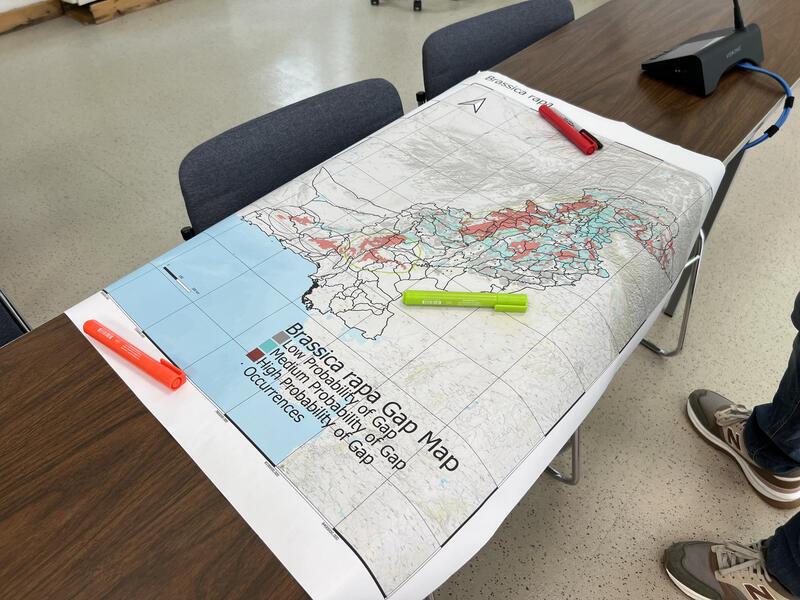
In agriculture, this methodology combines geographic, climatic, ecological and socioeconomic data with information from existing collections stored in gene banks, generating gap maps that guide future missions to collect seeds and genetic material. This information is vital: each highlighted area (in orange) on the map represents an opportunity to rescue unique genes, potentially useful for improving crops facing challenges such as drought, pests, diseases or degraded soils.
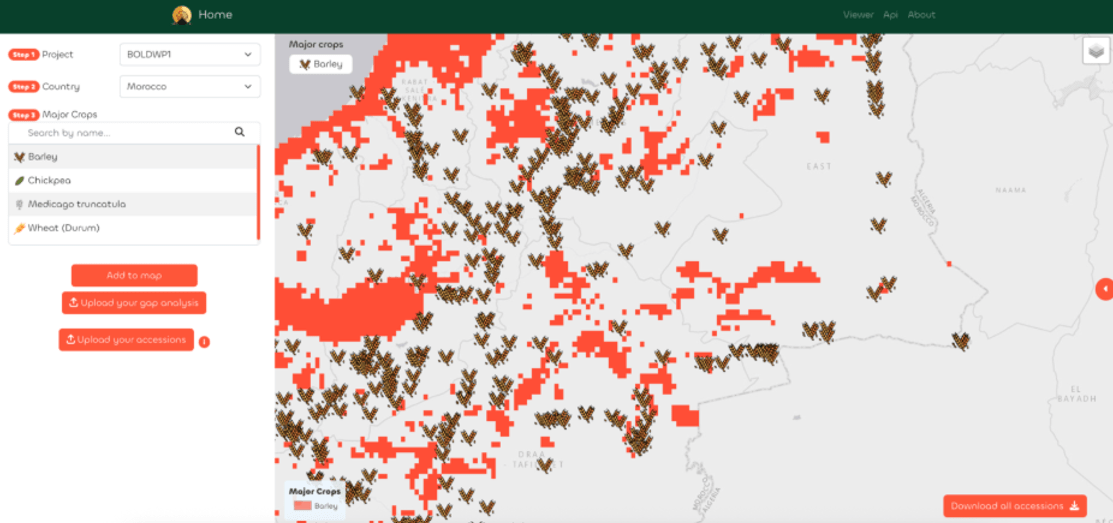
Example of gap analysis results for barley in Morocco. Orange areas represent potential sites where the crop may be present but is not yet conserved in the barley seed collection of the gene bank: https://viewer.gapanalysistools.org/maptools
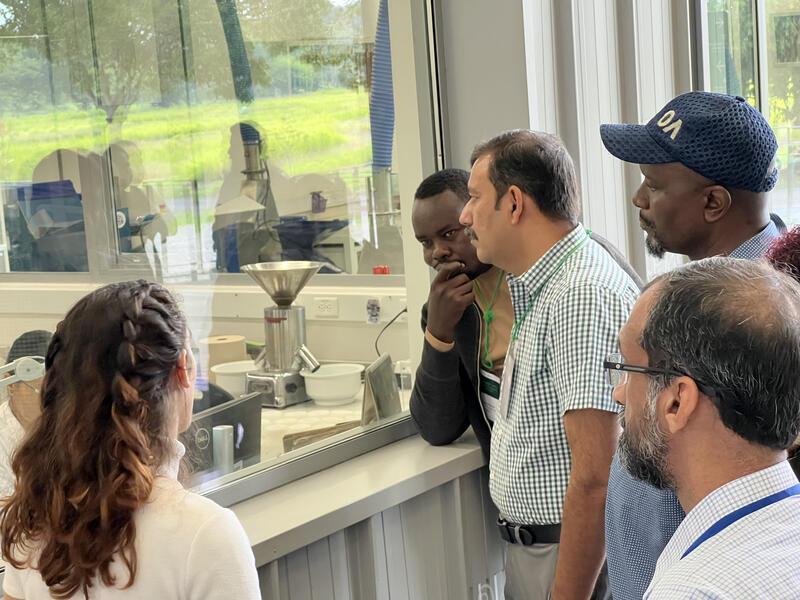
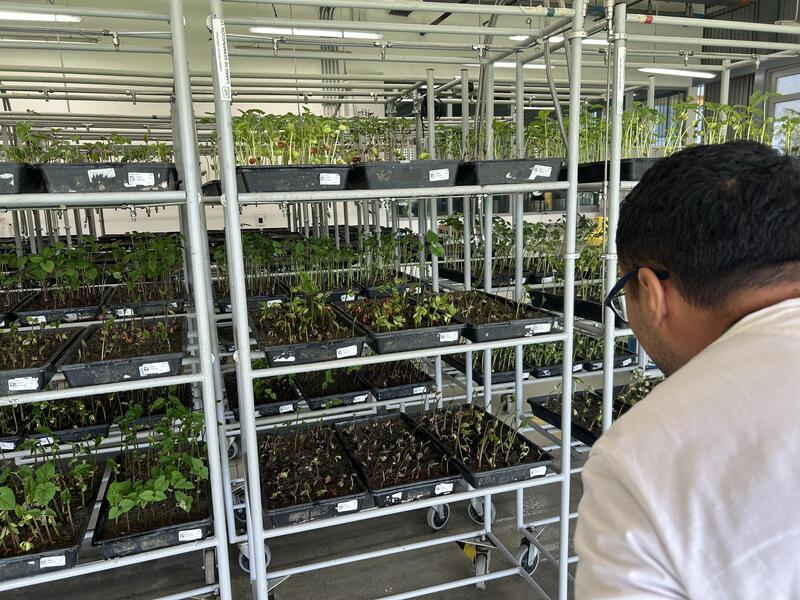
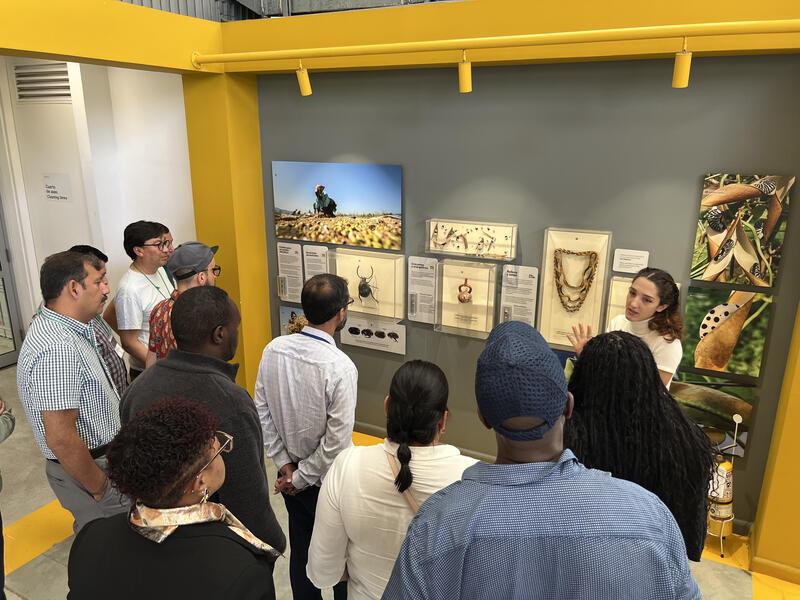
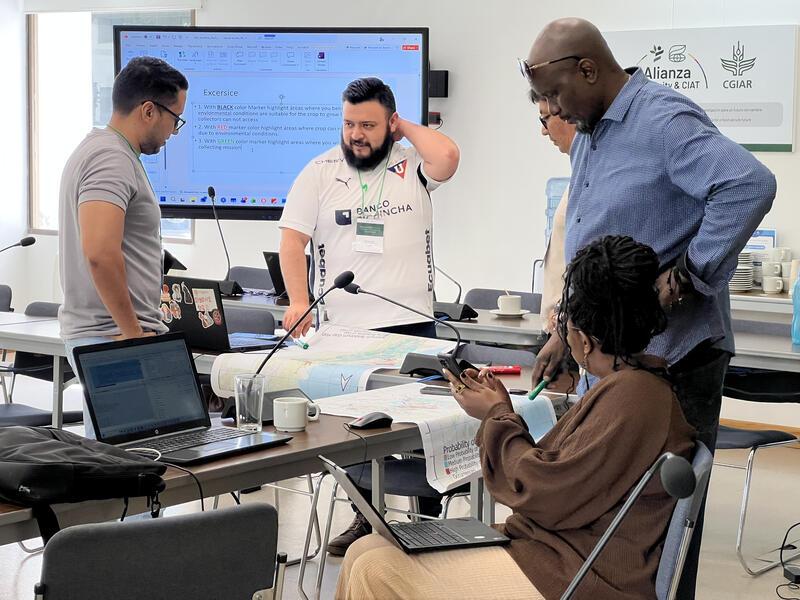
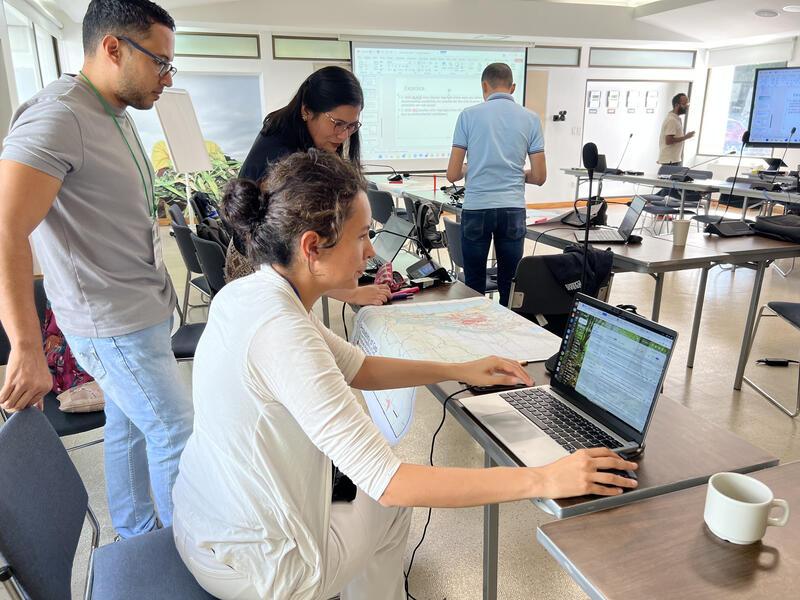
Applying these methodologies across different contexts—from the tropical Andes to the African savannas—helps anticipate the impacts of climate change by revealing which crops and varieties are at greater risk from droughts, pests, diseases or degraded soils. This not only supports strategic planning for collecting and conservation, but also ensures that genetic resources are distributed equitably among regions and gene banks, avoiding excessive concentration and duplication. In this way, each country and region can actively participate in global conservation, promoting a decentralized approach that combines local knowledge and international collaboration to protect agricultural biodiversity in a fair and effective manner.
“Gap analysis not only drives ex situ conservation (in gene banks) but also strengthens the food security of the future by ensuring that the genetic base of our food remains broad, diverse and available for research and crop improvement,” said Lizeth Llanos, Data Science Specialist from the Alliance of Bioversity and CIAT.
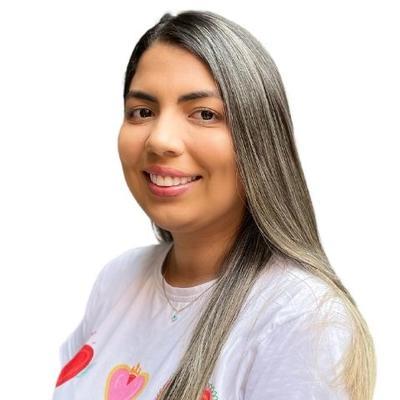
Lizeth Llanos
Specialist - Data ScientistConserving to feed the future
“Gene banks are not museums; they actively promote the use and conservation of our genetic resources. The greater the diversity, the more ways these crops can be used—from household consumption to improving food, nutrition and income security for smallholder farmers” said Sumini Sampa, Senior Scientist at the Zambia Agricultural Research Institute (ZARI). Sumini identified gaps in collections of sorghum and Vigna unguiculata—commonly known as cowpea, black-eyed pea and other names—two priority crops for her country. Under the Power of Diversity Funding Facility, ZARI will begin filling those gaps next year and, by doing so, “expand the genetic pool available to plant breeders, enabling them to develop novel and improved traits to incorporate into cultivated sorghum and cowpea varieties,” she explained.
The gap analysis workshop in Palmira symbolizes a step forward in how we understand applied science for a more resilient future—one in which genetic diversity underpins food security and climate adaptation. The focus is on turning scientific knowledge into practical capacities, building international cooperation networks, and ensuring that genetic diversity remains available long-term to safeguard food security and agricultural resilience at a global scale. The commitment that emerges from spaces like this is that of a global scientific community working to ensure that agricultural diversity is not lost, but flourishes in the fields of tomorrow.
“This workshop does not end in Palmira: it marks the beginning of a learning network that will continue to grow as teams take science to the fields, collect new varieties, and strengthen the genetic legacy of our crops” said Harold Achicanoy, Senior Research Associate, Alliance of Bioversity and CIAT.
🔗 Learn more about gap analysis and its available tools at: Gap Analysis Hub