From the Field From grains to gains: Farmers in western Uganda master the art of value addition

Ugandan farmers now master the value addition process to shift from selling raw grains to creating value-added and nutritious products, fostering income security and improve nutrition in their communities.
Farmers from western Uganda took part in a five-day training course in August 2025 at the Nyantonzi Community Seed Bank in Masindi to turn finger millet and sorghum grains into profitable, nutrient-rich composite flours. This locally managed value addition activity is creating new opportunities for both income and nutrition.
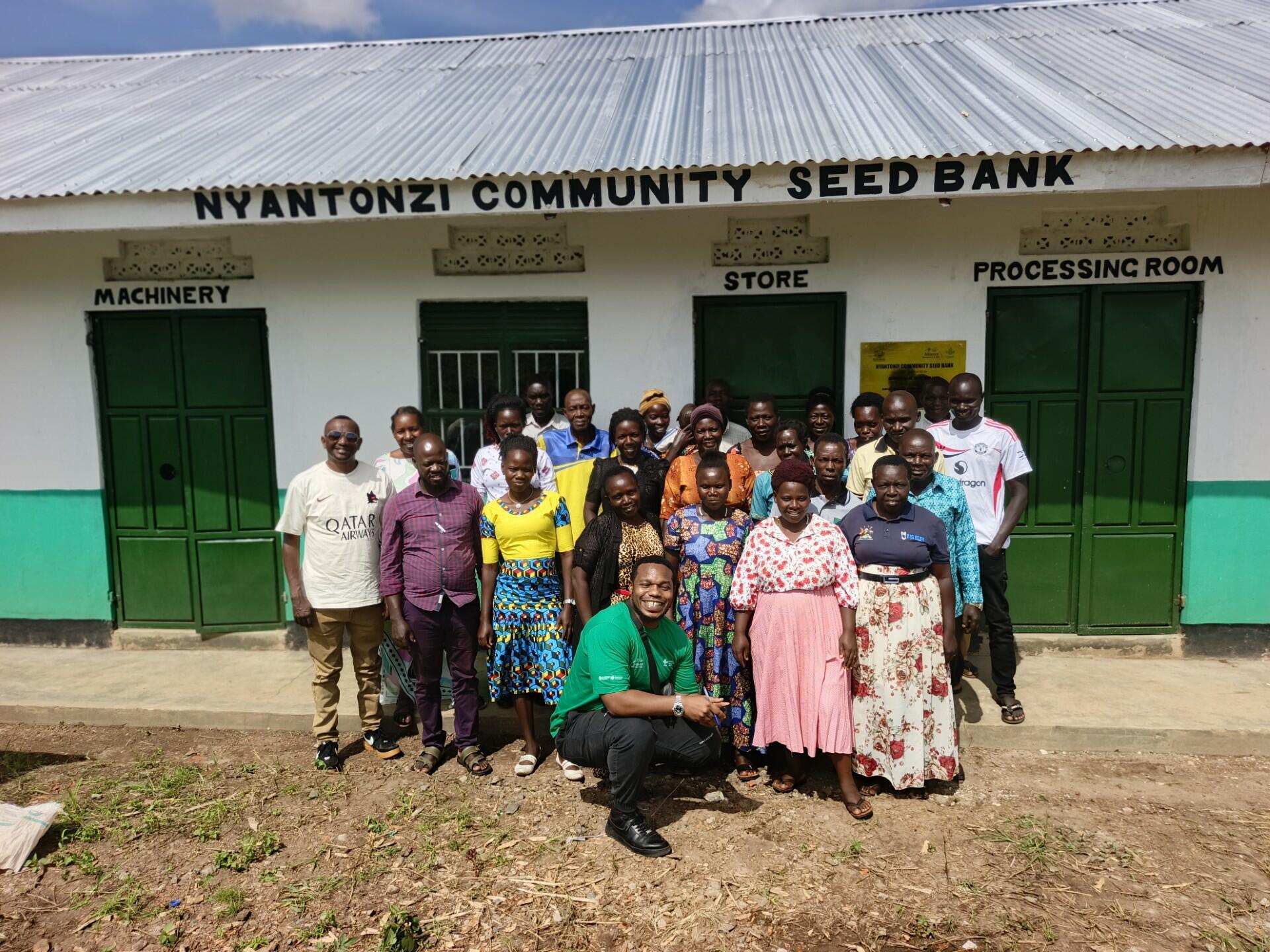
Photo 1. A group photo with Hoima and Masindi farmers during the training course. Photo credit: Alliance of Bioversity International and CIAT /H. Serunyigo
According to farmers, the journey of a grain often ends at the market sack, where it is sold as a raw commodity for a poor price. However, what if the same grain could become an added value, packaged product that satisfies consumer nutritional needs and commands a higher price? This was the major question at the recent intensive training course where 30 farmers (16 women, 14 men) from Hoima and Masindi used their field tools for mixing grains in bowls and developing new products (photo 1).
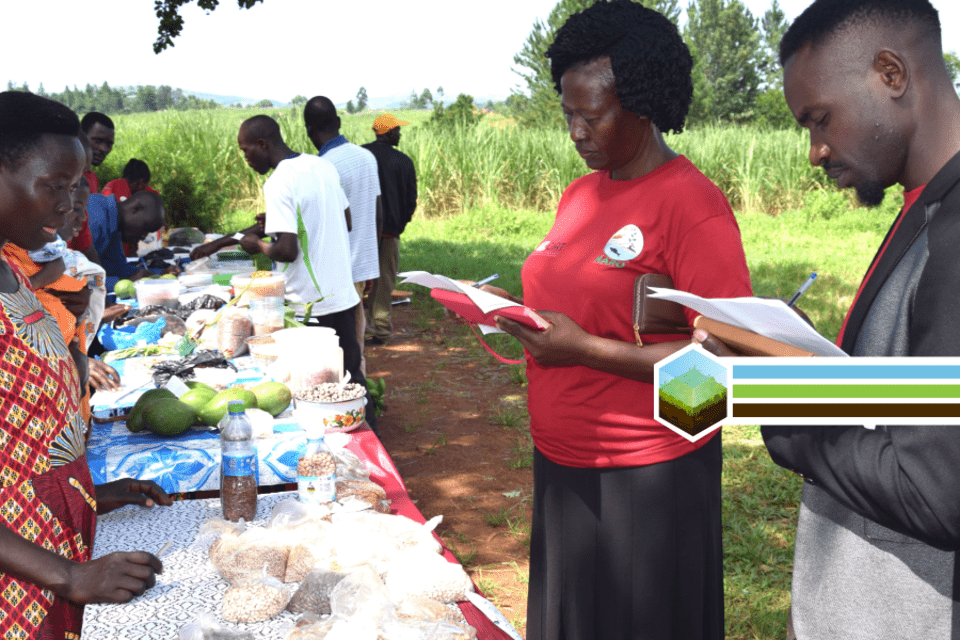
From 13-17 August, 2025, the Nyantonzi Community Seed Bank facilities buzzed with a new kind of energy. The Alliance of Bioversity International and CIAT in collaboration with Community Basket Food International (CFBI), were running a training course on “Value Addition for Finger Millet and Sorghum” (photo 2). The objective was to support the two community seed banks of Hoima and Masindi to develop a sustainable business through building capacity in value addition and marketing. Training participants were equipped with the skills to develop, package, market and sell their composite flour mixtures. This activity was supported by the Ministry of Agriculture, Nature and Food Quality of the Kingdom of the Netherlands, and the Benefit Sharing Fund (BSF) of the International Treaty on Plant Genetic Resources for Food and Agriculture (ITPGRFA).
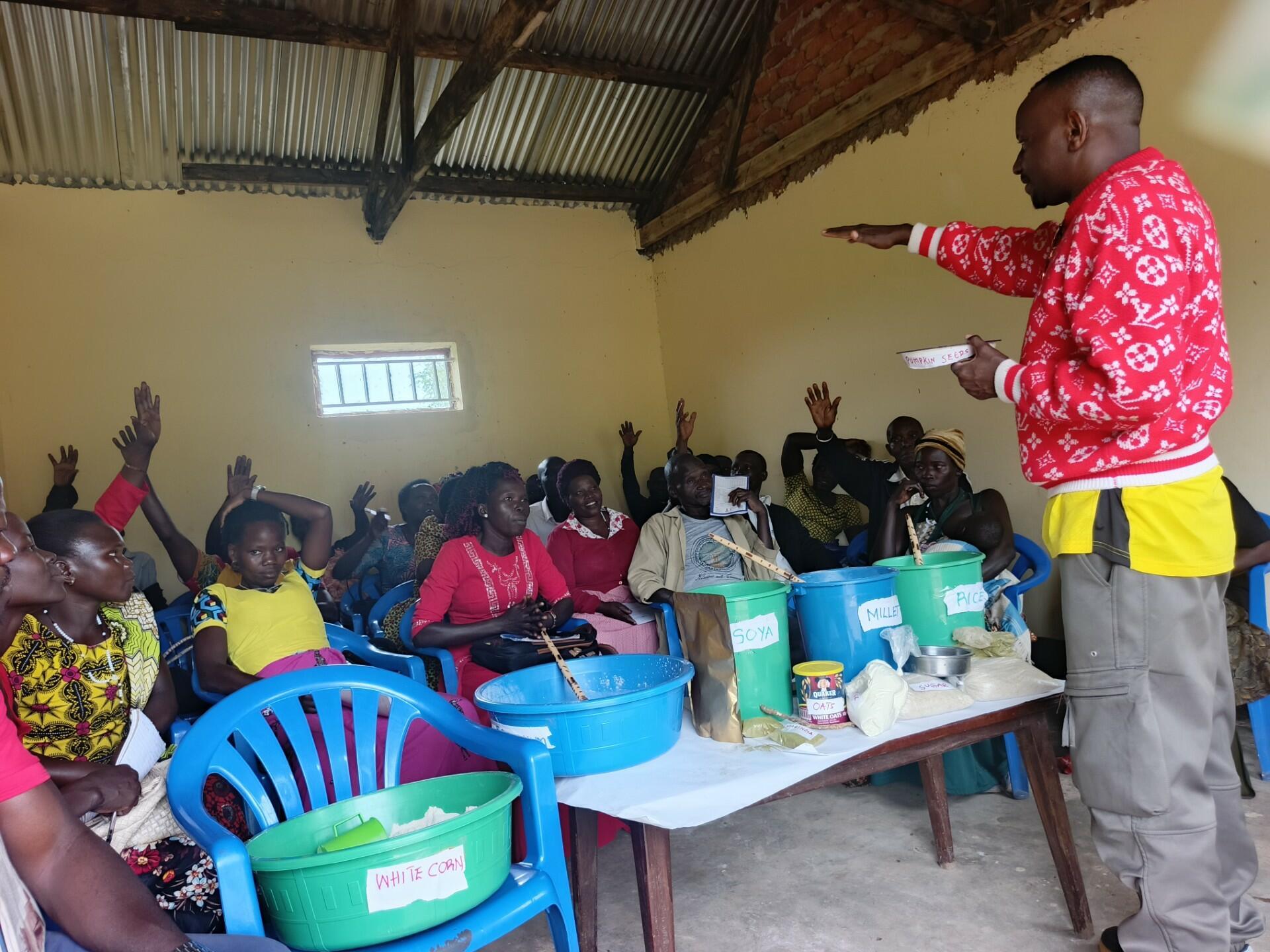
Photo 2. Rwakatale Lewis from Community Food Basket International (CFBI) facilitating the training. Photo credit: Alliance of Bioversity International & CIAT/D. Mubiru
A program designed for empowerment
Over the course of five days, the farmers moved from theory to practice and mastered the entire value addition process.
Day 1: Laying the foundation
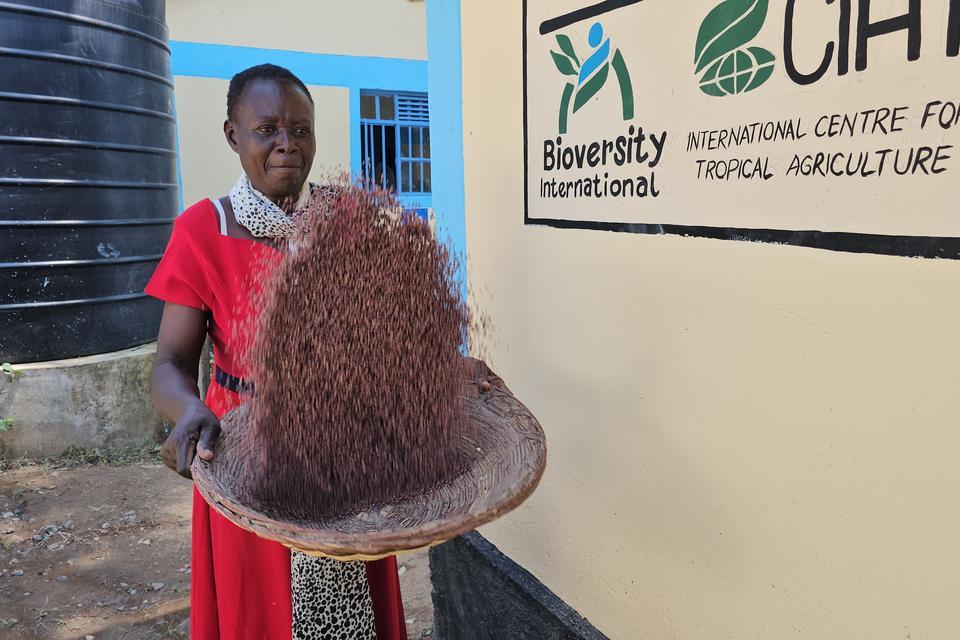
The training commenced with an overview of the possibilities in the millet and sorghum value chains. Farmers kicked off the practical sessions by learning the proper techniques for sorting, cleaning, and grading their grains—the crucial first step to a high-quality product (photo 3).
Day 2: The art of composite flour
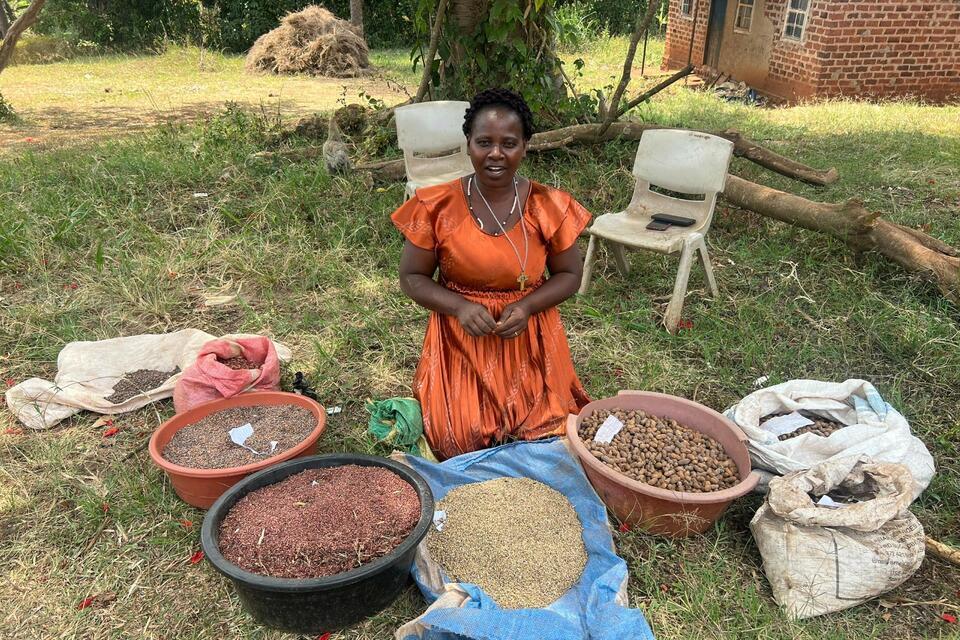
Following a recap session, the training was buzzing with the sound of milling as farmers practiced various processing techniques. The central focus was a comprehensive session on the production of composite flour, as farmers were trained on how to prepare adult and baby porridge mixes by combining their sorghum and finger millet with other nutritious ingredients like moringa, soybeans, pumpkin seeds, silver fish, oats, rice and mondia whitei (known in Uganda as mulondo).
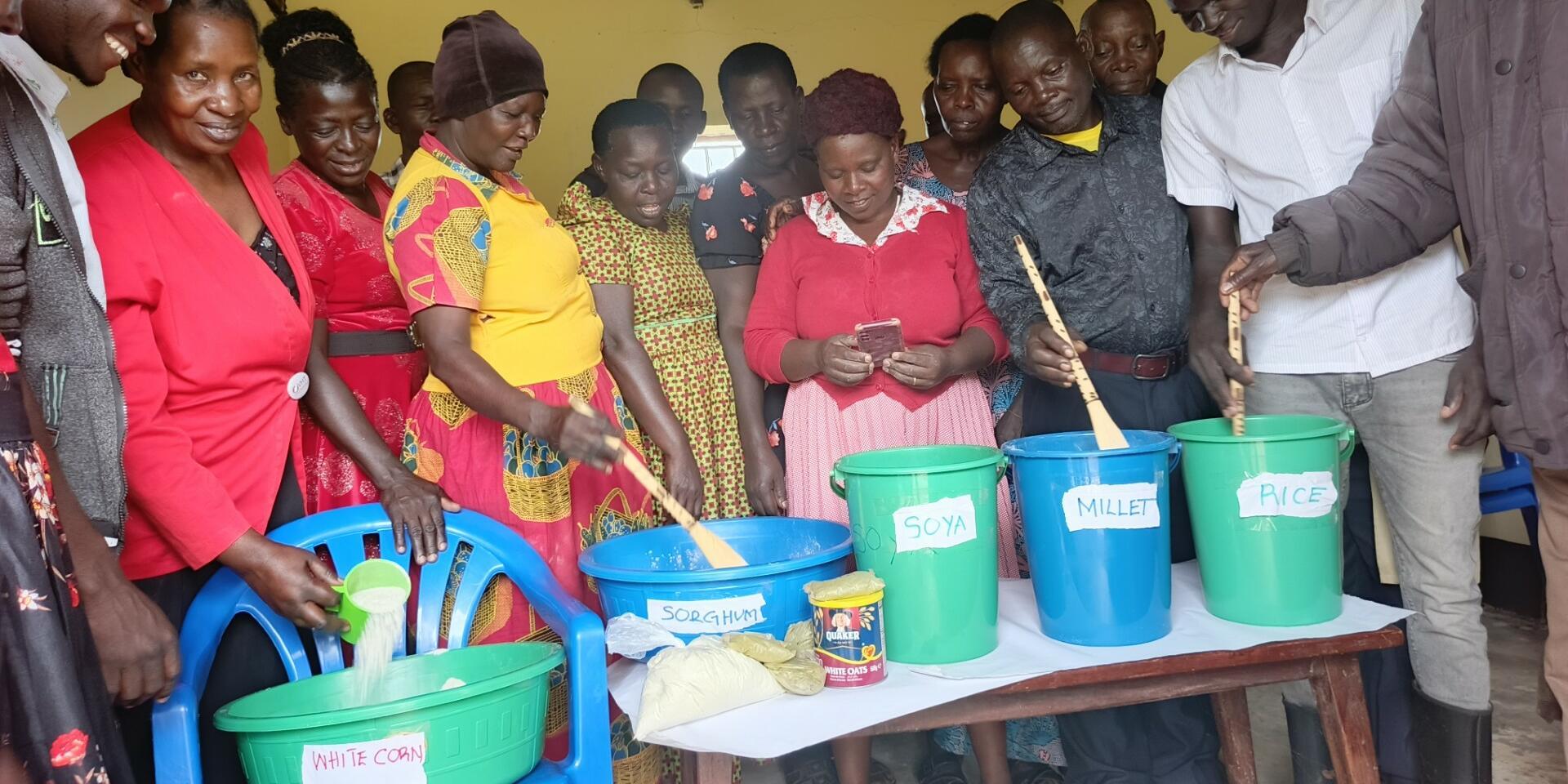
Photo 3. Farmers preparing the ingredients of the composite flours. Photo credit: Alliance of Bioversity International & CIAT/D. Mubiru
Day 3: Product diversification and packaging
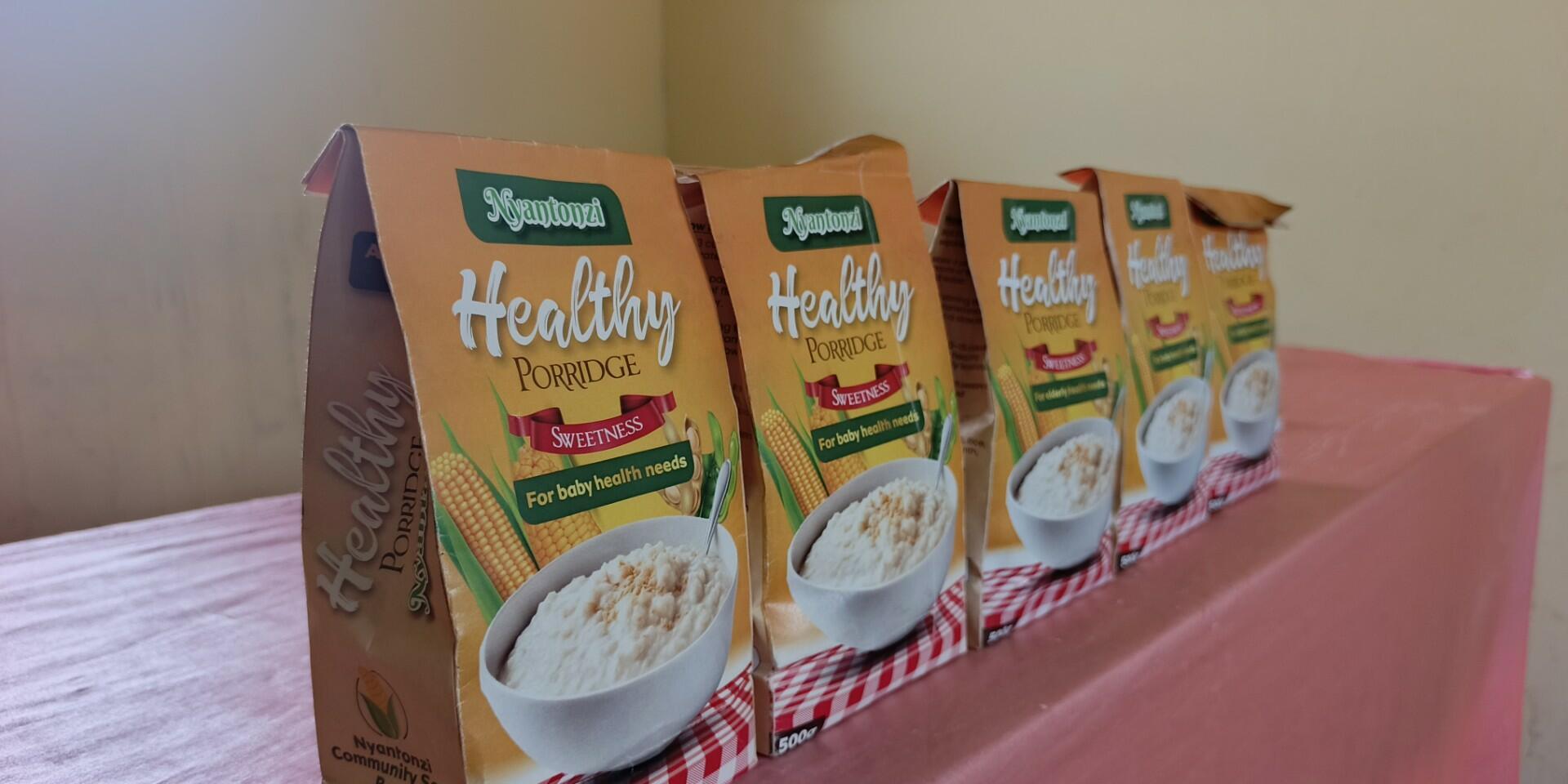
Day three of the training focused on product diversification and packaging, exploring options for instant porridges. Farmers prepared their own instant porridge mixes during the practical session. The afternoon session covered crucial packaging and labelling techniques transforming their composite flours into professionally sealed and branded products ready for the shelf (photo 4).
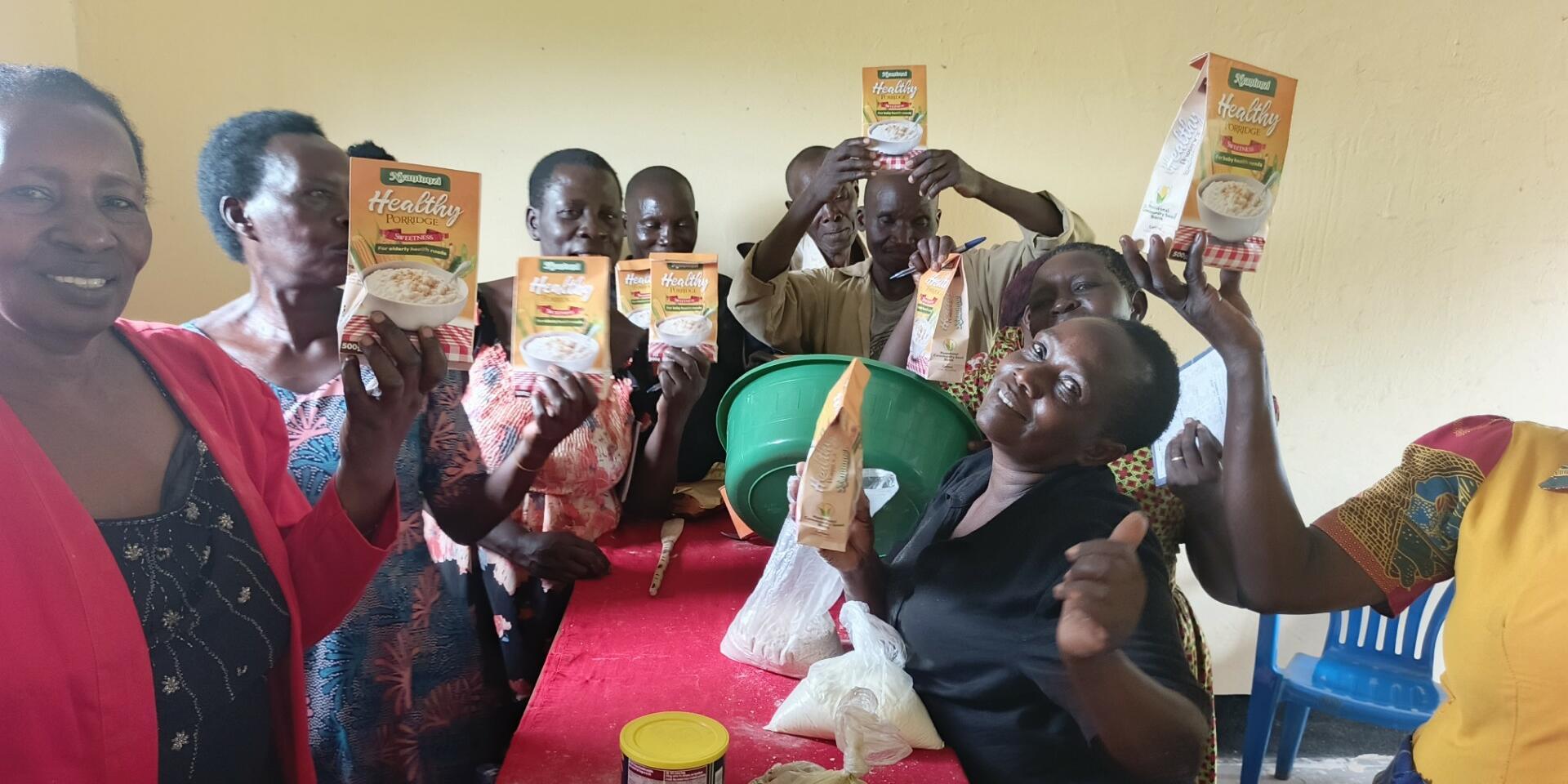
Photo 4. Farmers from Hoima Community Seed Bank displaying their packaged composite flour product during the training. Photo credit: Alliance of Bioversity International & CIAT/D. Mubiru
Day 4: The business of food
Understanding that a great product needs a solid business plan, day four concentrated on food safety protocols, quality standards, and the math of profitability. Participants engaged in practical costing and pricing exercises to build sustainable business models. Sessions on marketing strategies, including branding and exploring digital advertising and promotion, marked the end of the day.
Day 5: Exhibition and celebration
The training week concluded with a dynamic product exhibition where farmers proudly displayed their finished, packaged composite flours, showcasing their newly acquired skills to facilitators and fellow participants (photo 5). The training concluded with a closing ceremony, celebrating the new acquired knowledge and potential that these farmers now hold.
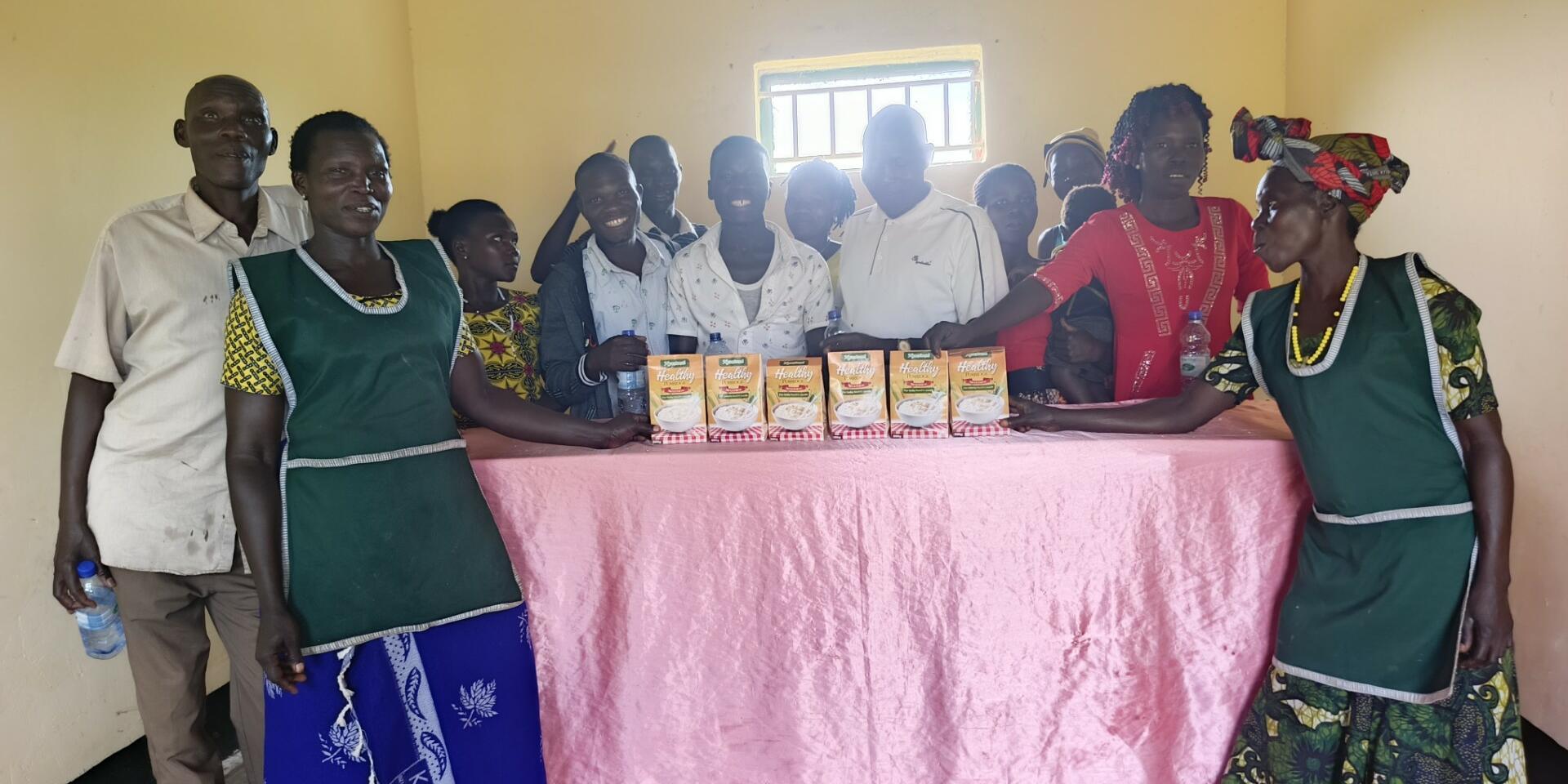
Photo 5. Farmers from Nyantonzi Community Seed Bank exhibiting their packaged composite flour product during the training. Photo credit: Alliance of Bioversity International & CIAT/D. Mubiru
Sowing the seeds for a brighter future
Beyond teaching recipes, this value addition training empowered farmers toward economic resilience. By mastering value addition techniques, farmers will be less dependent on volatile raw grain markets. Apart from seed custodians they can be agro-entrepreneurs who can add value to their own produce, expand their income and supply their communities with nutritious locally made products.
Cover photo: Packaged Nyantonzi composite flour. Credit: Alliance of Bioversity International & CIAT/D. Mubiru