Research Articles Farmers in Peru move forward in the rehabilitation of cocoa plots with agroecology

More than two years after the Alliance of Bioversity International and CIAT implemented rehabilitation practices in the cocoa plots of farmers of the Colpa de Loros Cooperative in Peru, the second follow-up visit was conducted to evaluate the progress of the project. Read about the findings here.
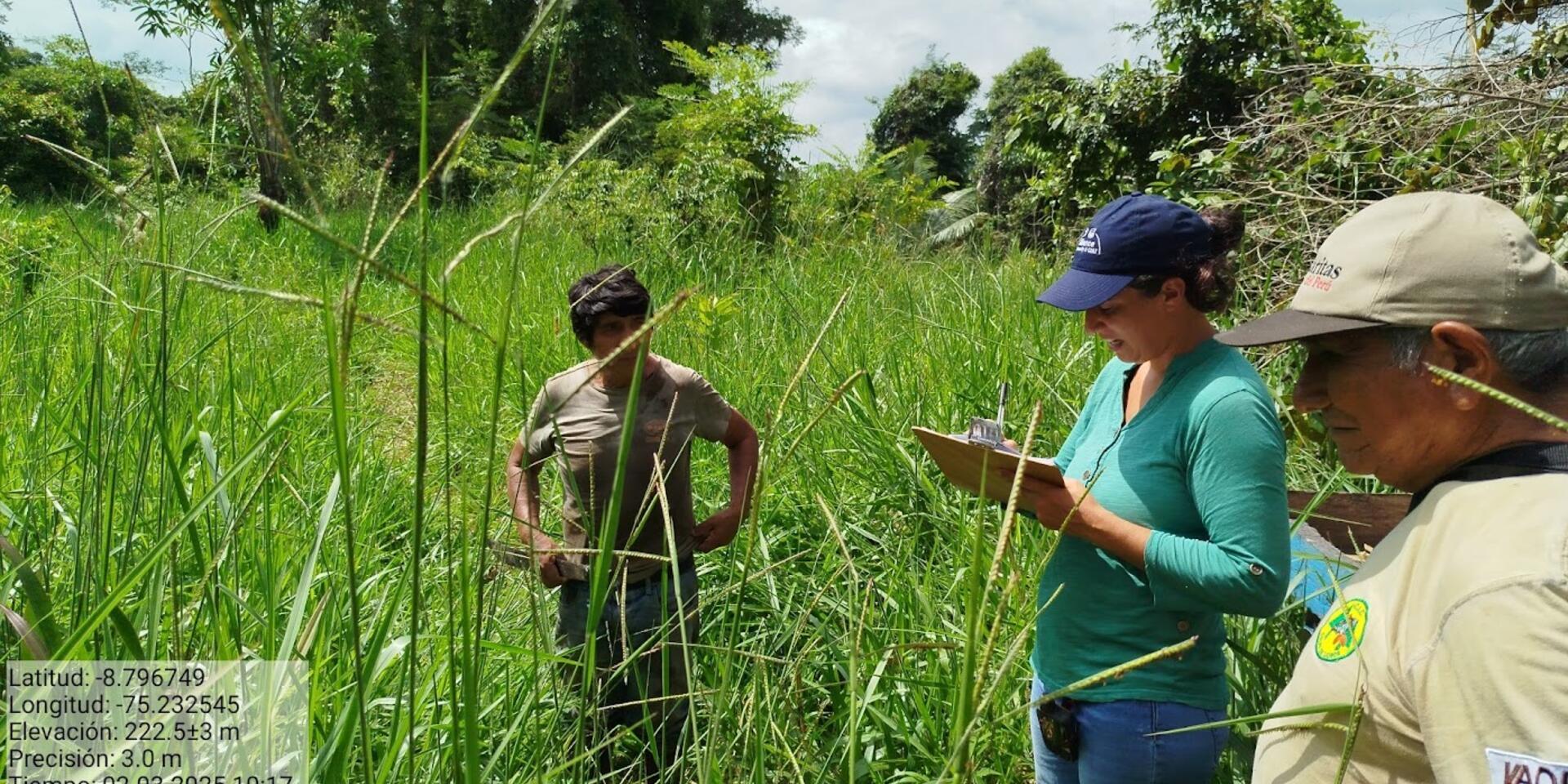
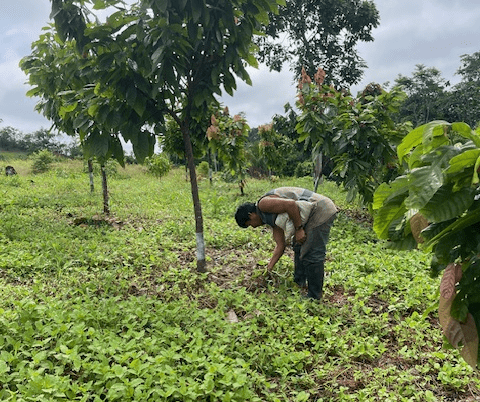
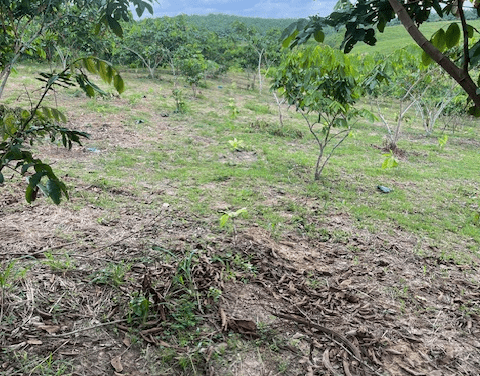
In February 2025, the second technical visit was conducted to the plots of farmers in the Colpa de Loros cooperative, as part of the soil component of the Agroecological Regenerative Cocoa (ARC) project. The objective of this visit was to evaluate progress in implementing degraded soil rehabilitation practices and to provide technical support to producers who continue with the agroecological restoration process, ensuring the continuity of activities within the project.
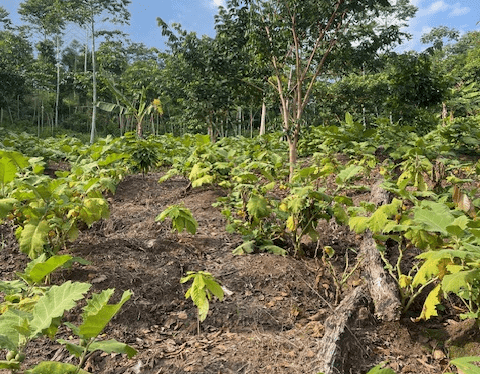
The work that began in 2022 benefited 25 cocoa farmers belonging to the Colpa de Loros Cooperative. In collaboration with Alliance researchers, cocoa agroforestry systems were implemented that included green cover crops, forest and fruit trees, and a technical fertilization package. Today, after two years of implementation, several farmers remain active in the process, reflecting both the complexity of the challenge and the commitment of those working in regenerative agroecology.
Some of the observations made during the visit:
- Of the 25 farmers who started the process, 12 are still actively rehabilitating their plots.
- All active plots now have cocoa planted.
- Soil amendments such as dolomite, compost, and phosphate rock have been used, and fruit and timber trees have been planted.
- The implementation of cover crops has been limited, identified as a key area for improvement.
- The cooperative highlights progress in knowledge, organization, and motivation, though it also acknowledges barriers such as transportation logistics and the turnover of technical staff.
One of the main challenges of the project has been ensuring that farmers maintain a consistent commitment to the process, which is essential for soil rehabilitation to be effective. Despite the difficulties, the progress achieved clearly reflects the effort and dedication of those producers who remain committed to agroecology.
The real value of this process lies in farmers' continued recognition of the benefits of regenerative agriculture. It is not only about restoring soil health, but also about making their plots more sustainable and profitable.
The Agroecological Regenerative Cocoa (ARC) project, led by the Alliance of Bioversity International and CIAT and KAOKA, and implemented jointly with its partners CIFOR-ICRAF, Conservation International (Colombia), Fundación KAOKA, and Biocacao, seeks to contribute to the establishment of sustainable production landscapes in the cocoa value chain of excellence in Colombia, Ecuador, and Peru. The project is funded by the French Global Environment Facility (FFEM).