From the Field Establishing Demonstration Farms in Ghana: Learning, Observation and Discussion Among Smallholder Farmers

Agriculture in Ghana's Upper West Region - as in much of sub-Saharan Africa - faces critical challenges, including low productivity, vulnerability to climate change, and a reliance on traditional farming methods. To address these issues and lay the groundwork for more sustainable farming practices, Alliance teams have established six demonstration farms across key districts in the region.
These farms were designed not just to introduce innovative techniques but to empower local farmers by showing them the tangible benefits of adopting new, climate-smart practices. By combining local knowledge with new technologies, these demonstration farms are helping to improve farming in the Upper West region, offering hope for improved food security and livelihoods.
Showcasing Innovation
Climate-Smart Improved Seed Varieties
The demonstration plots used a climate-smart maize hybrid variety known as Wang-Basig, which is early maturing, high yielding, and tolerant to drought and Striga. This variety was sown in the demonstration plots while farmers sowed their saved seeds on their plots. For intercrop plots, Padi-Tuya cowpea was also planted. This variety is particularly advantageous for its cover-cropping characteristics, which are essential for soil moisture conservation. Additionally, Padi-Tuya is well-suited for fodder use due to its high biomass production.
Fertilizer Recommendation and Application:
Fertilizer applications on the demonstration plots were conducted according to district-specific recommendations developed through the Agwise framework. These recommendations were formulated using data from legacy sources and literature, leading to improved, location-based guidelines that enhance crop response to fertilization. Fertilizers were applied at planting on the demonstration plots, in contrast to farmers were allowed to apply fertilizer at their own rates and timing on their plots.
Demonstration plots
Each demonstration plot featured three improved agricultural technologies alongside a traditional farming practice plot for comparison, allowing farmers to see first hand the benefits of innovation. The showcased technologies were cowpea-maize intercropping, ridging, and the use of push planters, all of which offer significant benefits to the farming community.
Cowpea-Maize Intercropping: Enhancing Soil Health and Crop Diversity
The farmers were also introduced to cowpea-maize intercropping, which offers numerous advantages. It promotes biodiversity and enhances soil health by fixing nitrogen, which benefits the maize. This method also provides farmers with an additional crop, improving food security and income diversity.
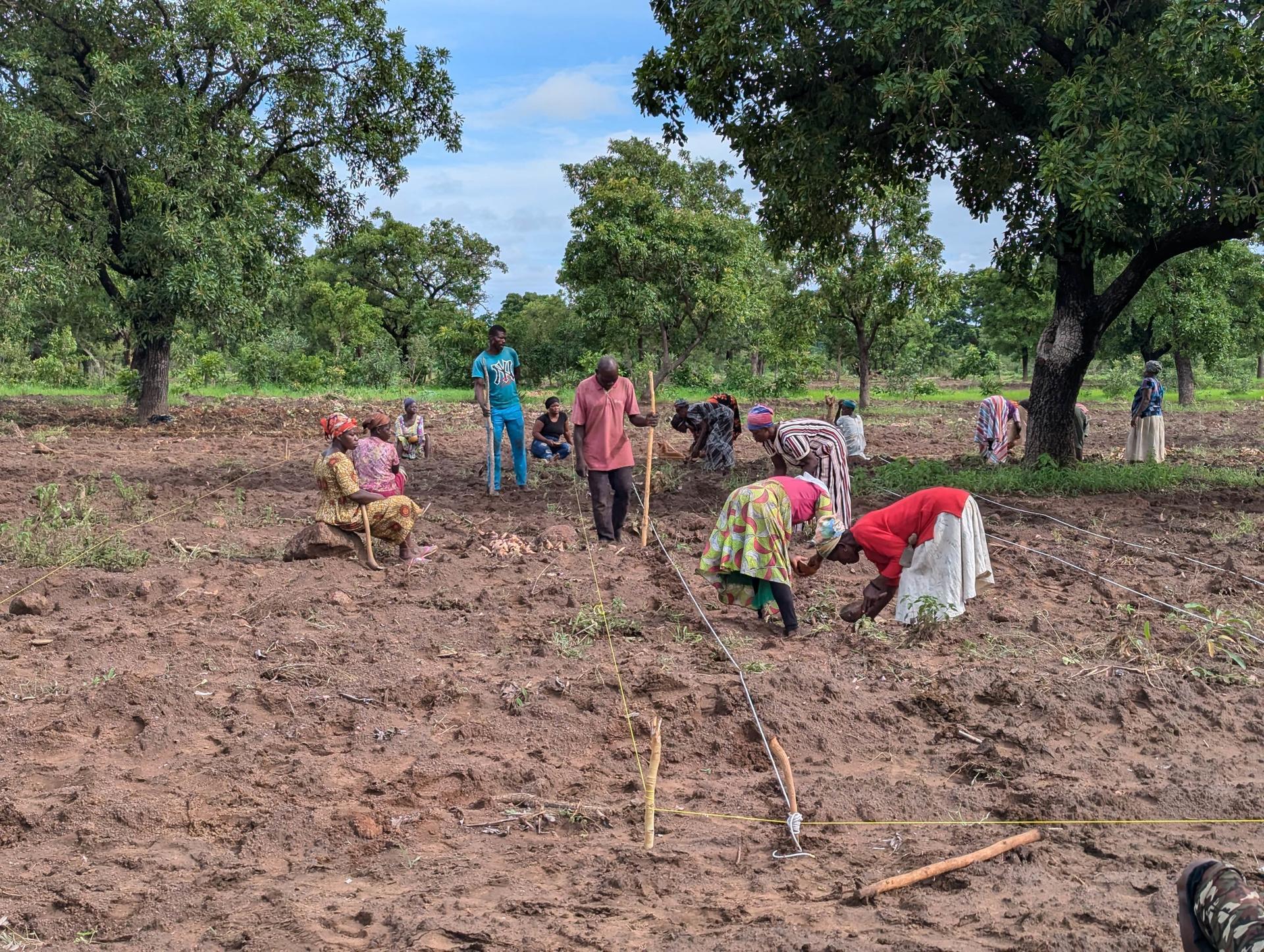
Sowing on a maize-cowpea intercrop plot at Dariyiri.
Based on feedback from farmers last year, it was recommended to shift from focusing on single-crop interventions to more integrated cropping systems. This led to the selection of maize-cowpea intercropping as a key practice to showcase in the demonstration. The crucial behavioral insight here is to build on the suggestions of smallholder farmers, reinforcing our efforts to establish trust. By aligning with their recommendations, we enhance their willingness to adopt innovations in the future.
Ridging: Conserving Water and Controlling Erosion
Ridging plays a crucial role in water conservation and soil erosion control. By creating ridges, water is better retained in the soil, ensuring that crops have access to moisture even during dry periods. The teams also tested this technique, and confirmed that it also improves root development and reduces soil erosion, leading to healthier and more resilient crops.
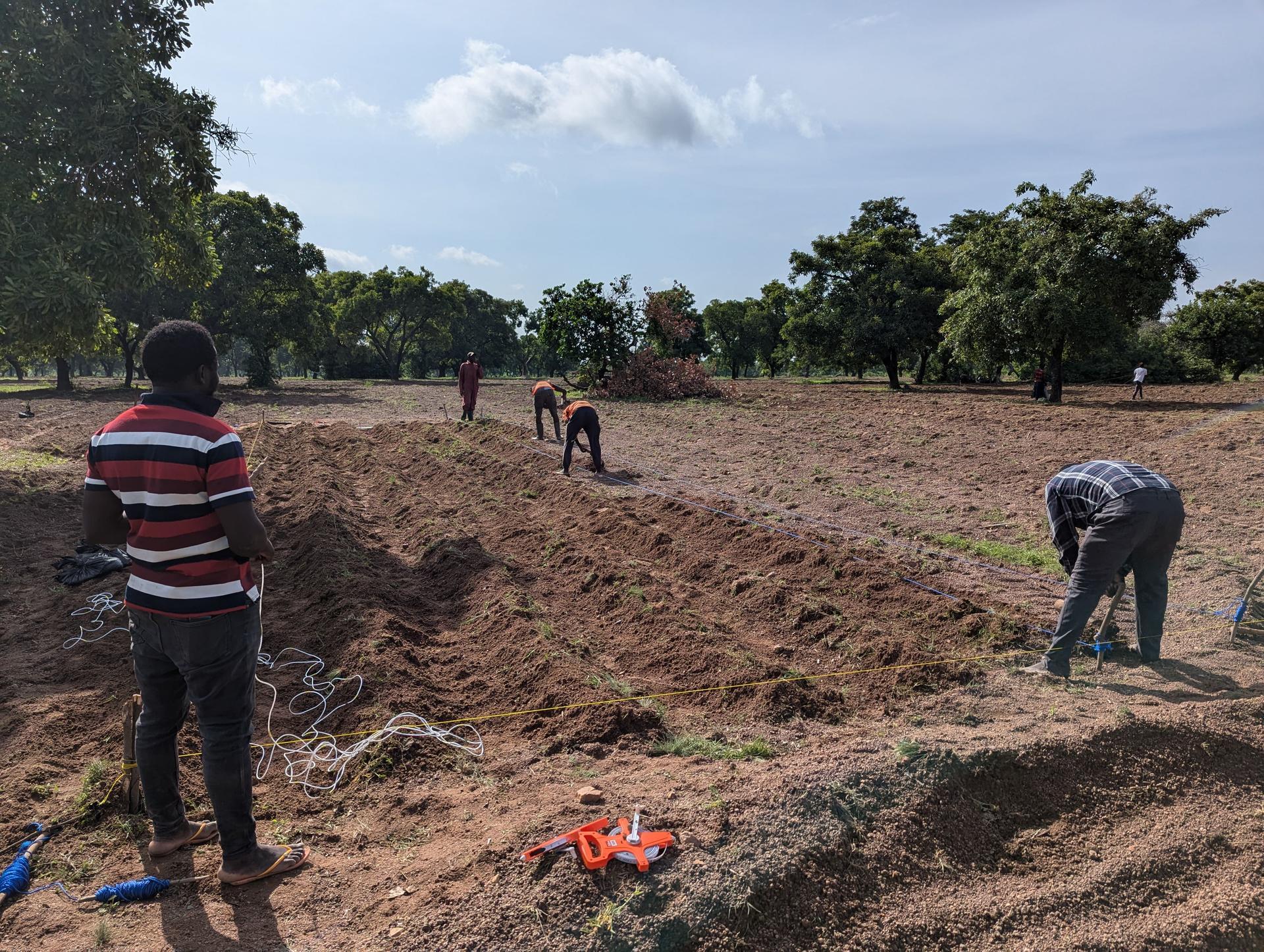
Ridging at Bussie
Push Planters: Mechanizing for Efficiency
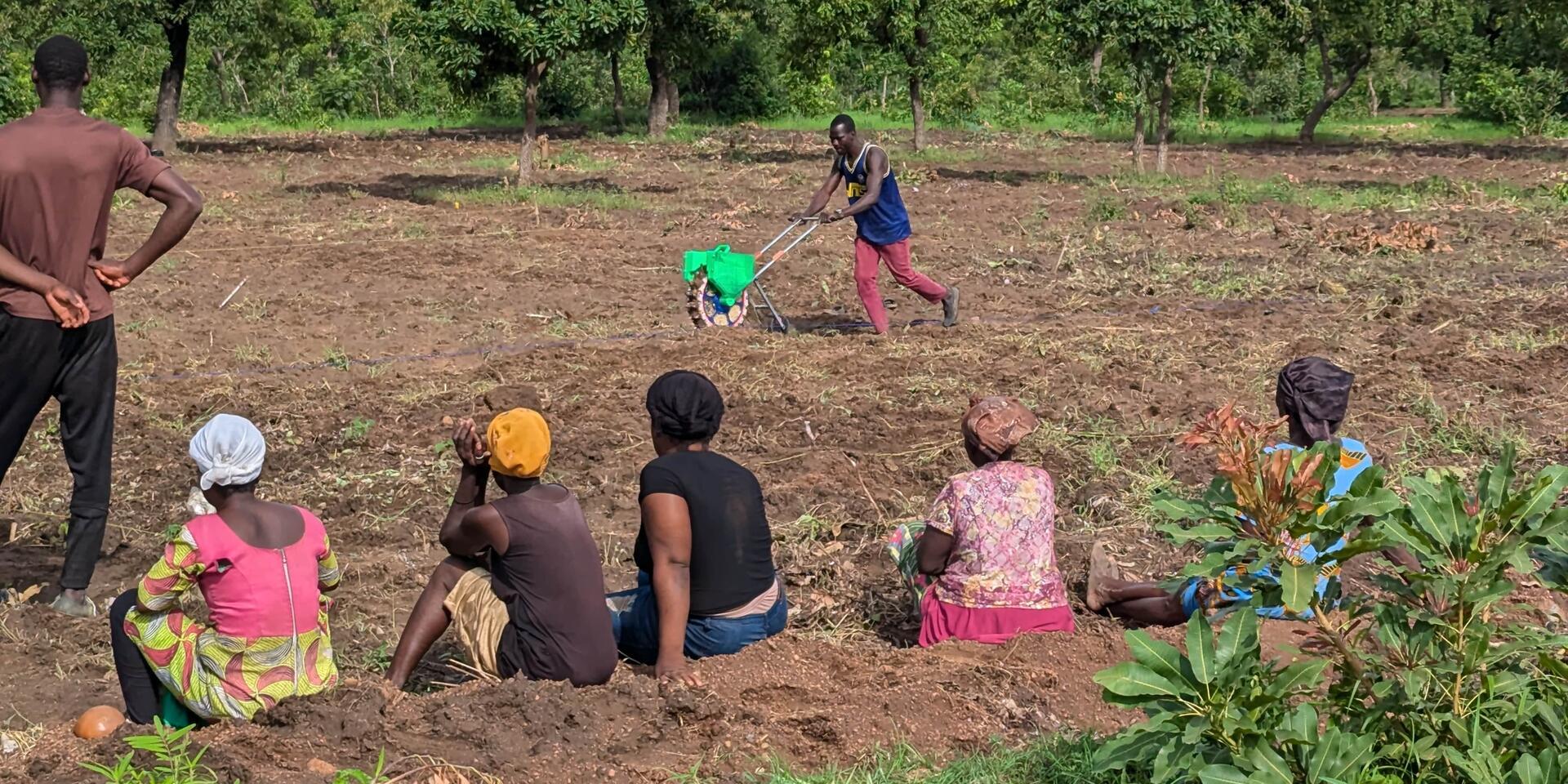
The use of push planters represents a leap towards sustainable mechanization. These tools enhance planting efficiency, ensuring uniform seed placement and depth. This precision leads to better germination rates and uniform crop stands, which are crucial for high yields. Additionally, push planters save time and labor, making farming more manageable and less physically demanding.
See Also
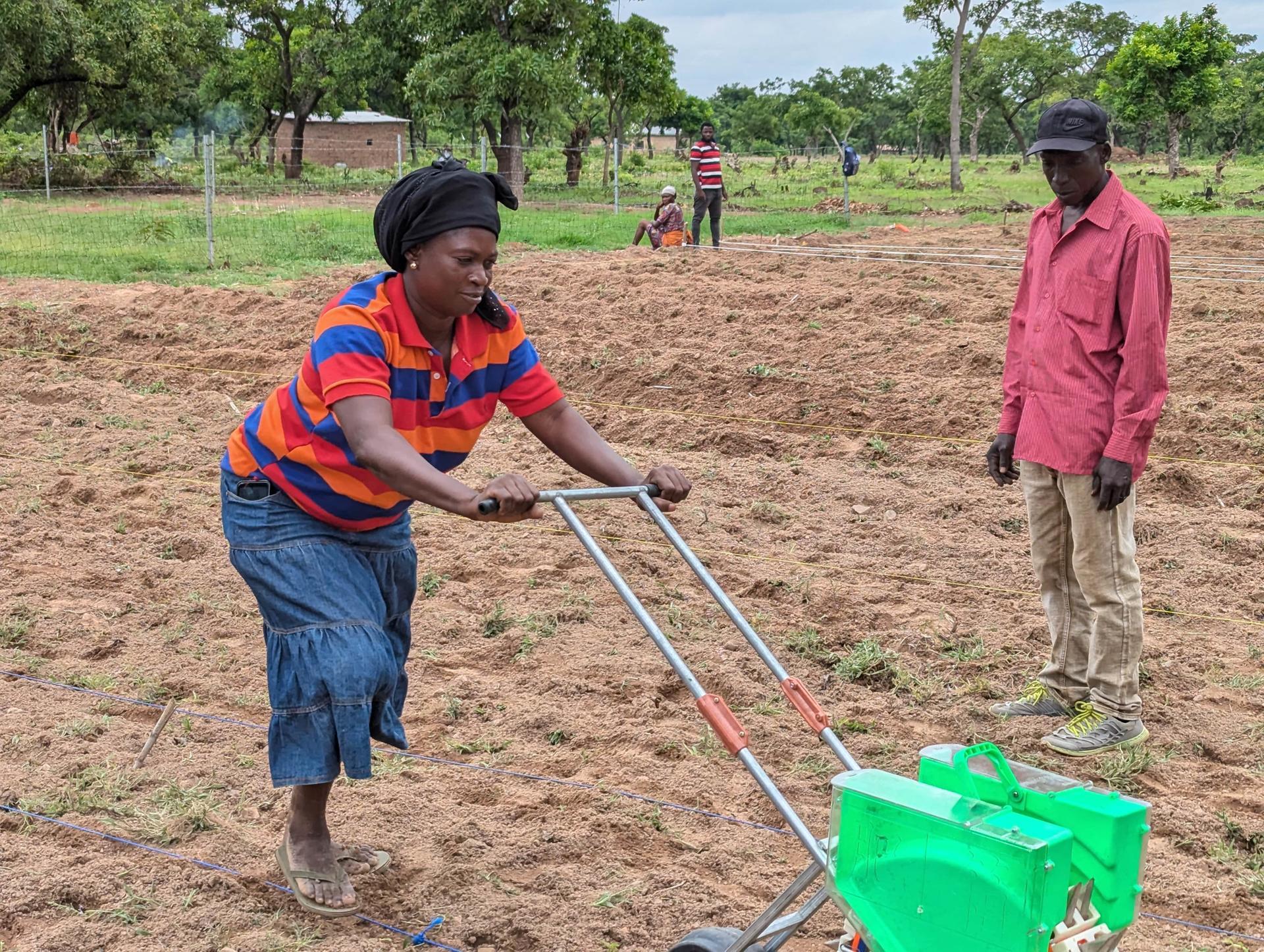
A woman learning to use the push planter in Bussie.
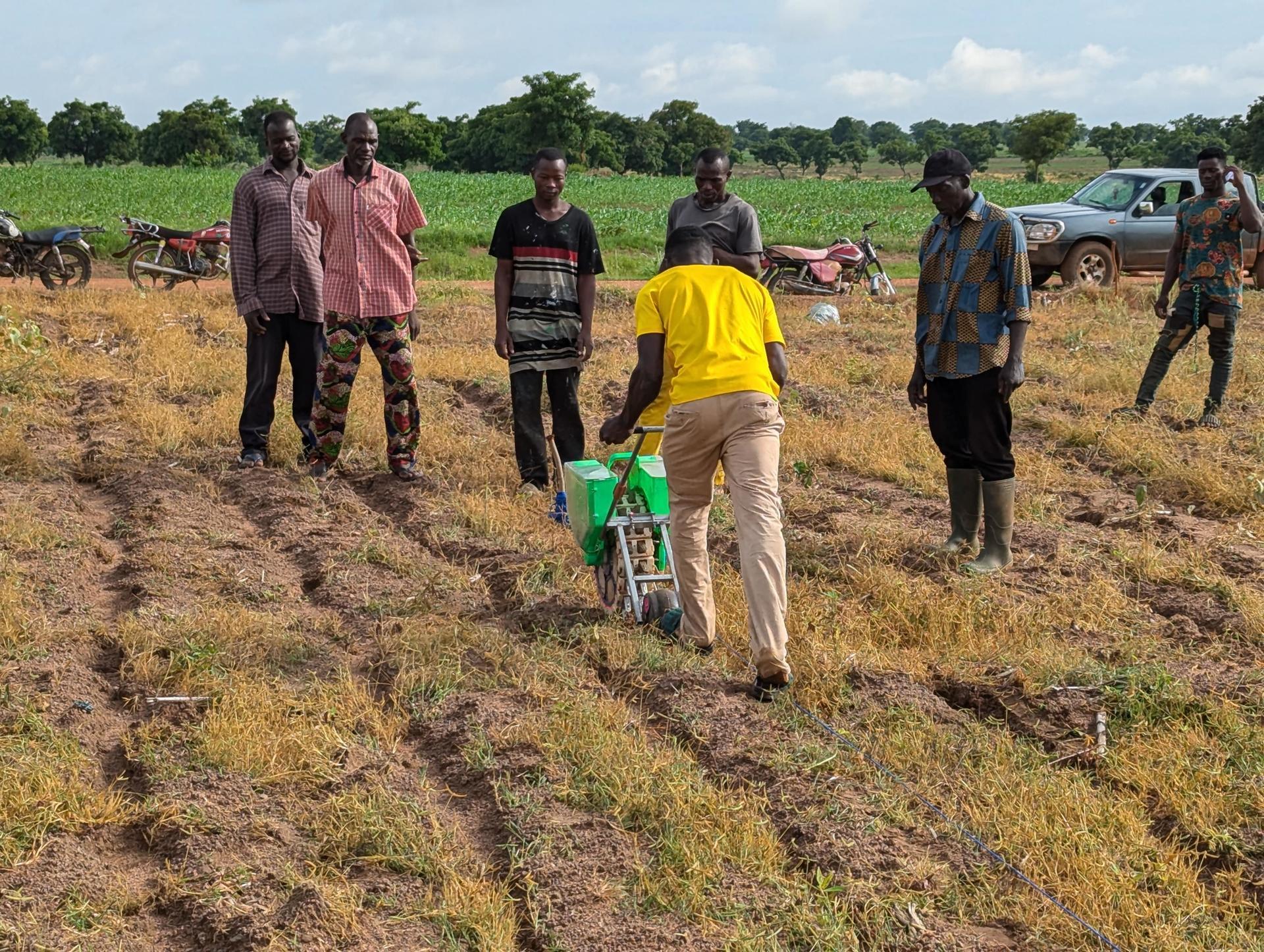
Farmer using the push planter on a ripped land in Bulolo.
Farmer Engagement: Learning by Doing
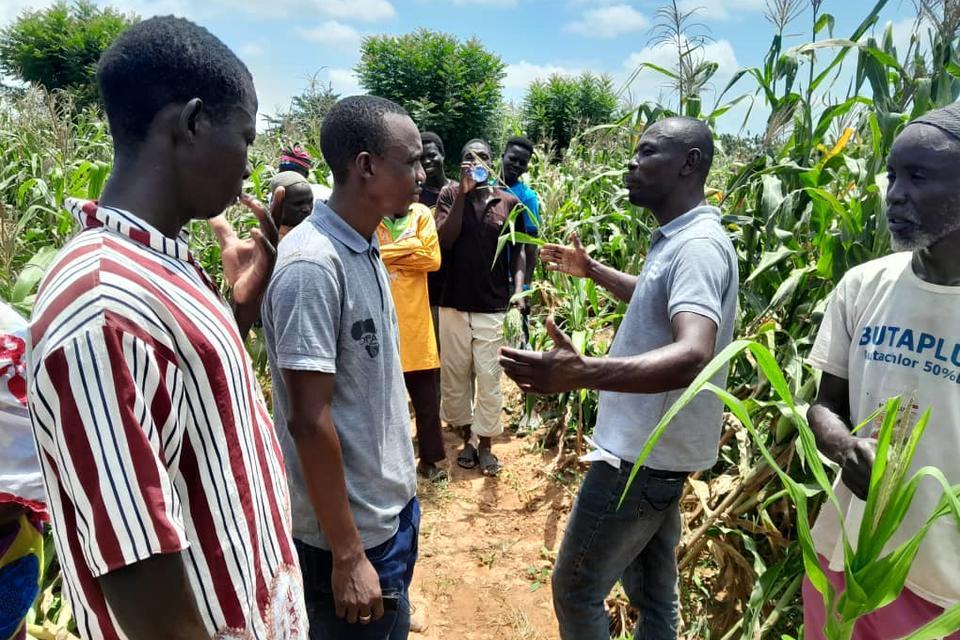
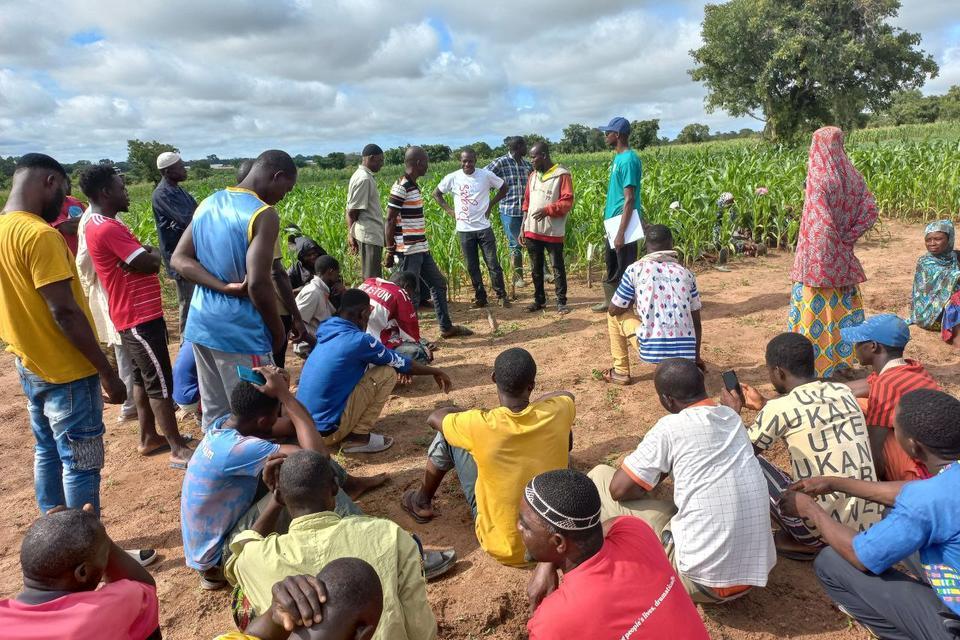
The turnout of farmers at these demonstrations was impressive, with significant participation from youth and women. Farmers learned valuable skills such as planting in lines at the correct distances to achieve optimal plant growth, applying fertilizers at planting for early nutrient availability, and operating push planters.
Agricultural extension agents and district directors played a crucial role in organizing and facilitating these demonstrations. Their involvement ensured that the demonstrations were well-coordinated and that farmers received the necessary support and guidance.
In addition to the demonstrations, farmers were provided with inputs to replicate the learned techniques on their farms (with the help and guidance of extension agents). This initiative aims to further develop their capacity and equip them with the tools needed to implement sustainable agricultural practices independently.
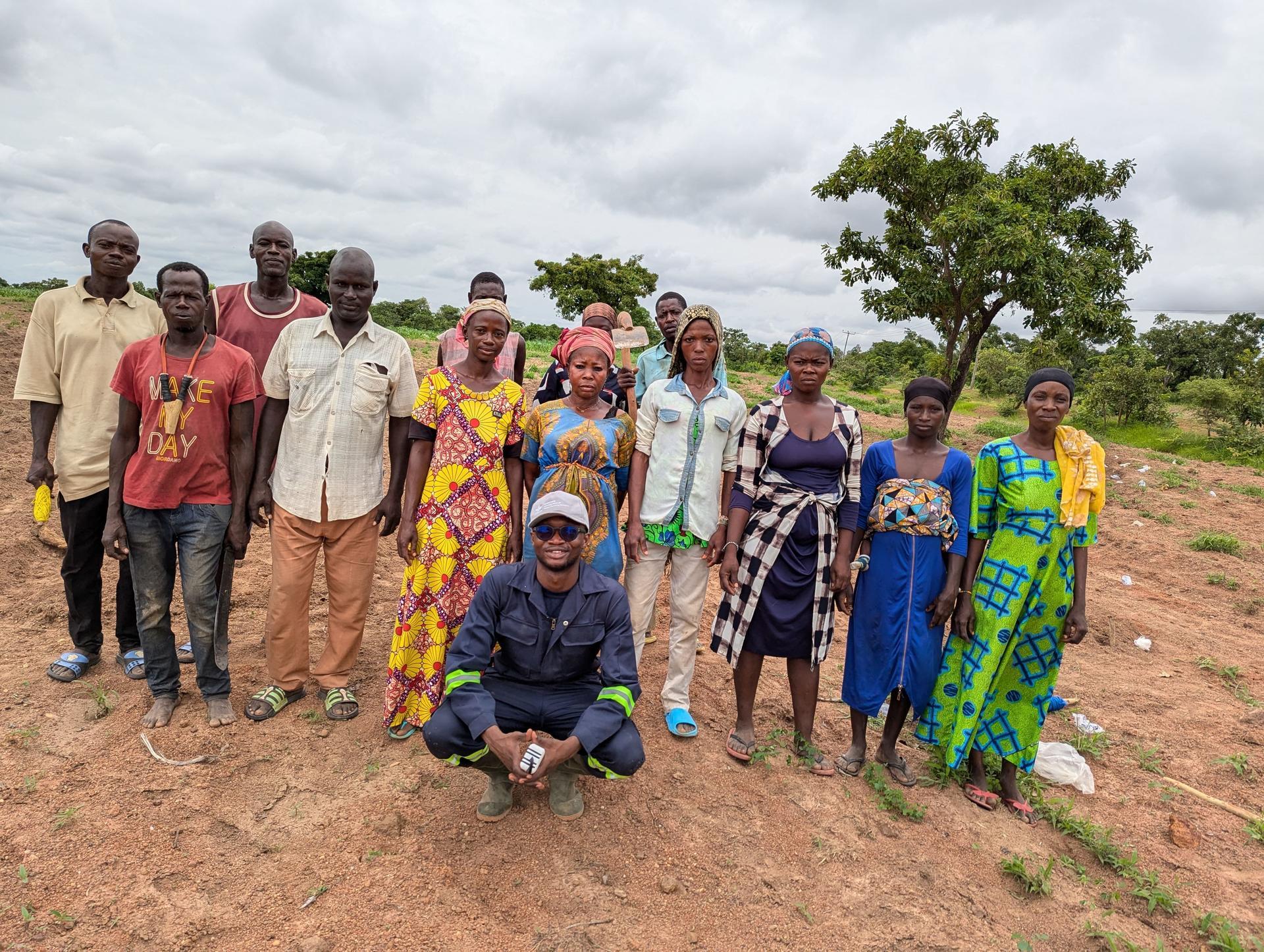
A picture taken at the end of the establishment of demonstrations.
Positive Feedback: A Step Towards Sustainable Farming
Overall, the response from farmers has been positive, particularly regarding the mechanization. Many expressed keen interest in the push planters, noting their potential to make farm work more efficient and less time consuming.
The establishment of these demonstration farms marks a significant step towards promoting sustainable agricultural practices in Ghana. The enthusiasm and active participation of the farming community highlight the potential for these innovations to transform local agriculture, improve food security, and enhance livelihoods.
The Team

Wuletawu Abera
Senior Scientist, Country Representative for Ghana
Kingsley Ofosu-Ampong
Scientist I
Abdul-Latif Baamonyor Jizorkuwie
Research AssociateAcknowledgements
This work is supported by CGAIR Excellence in Agronomy (EiA) and Sustainable Intensification of Mixed Farming Systems (SI-MFS) initiatives. Additionally, we extend gratitude to our partners, including the MoFA district directors and extension agents in Wa, Upper West Region.