From the Field Enhancing Farmers' Resilience to Climate Change through CSA Demonstrations in Northern Ghana

In Northern Ghana, the Alliance of Bioversity International and CIAT collaborated with CSIR-CRI to demonstrate climate-smart agriculture (CSA) techniques to local farmers in Kumbungu District. The initiative aims to boost resilience to drought, showcasing tools and crops varieties for more sustainable farming.
By: Jalaludeen Masoud, Kingsley Ofosu-Ampong, Isaac Boatey Akpatsu, Fuseini Salifu, Wuletawu Abera (Alliance of Bioversity International – CIAT, Ghana), and Patricia Amankwaa-Yeboah (CSIR-CRI, Kumasi, Ghana)
As Northern Ghana faces the severe impacts of prolonged droughts exacerbated by climate change, the adoption of climate-resilient agricultural strategies has become critical for sustainable farming. The Alliance and the Industrial Research’s Crops Research Institute (CSIR-CRI) are implementing the smart soils and production component of the Accelerating Impacts of CGIAR’s Climate Research for Africa (AICCRA) project in five communities in the Kumbungu district. This initiative aims to demonstrate and promote validated climate-smart technologies, showcasing their effectiveness and potential for adoption across the region.
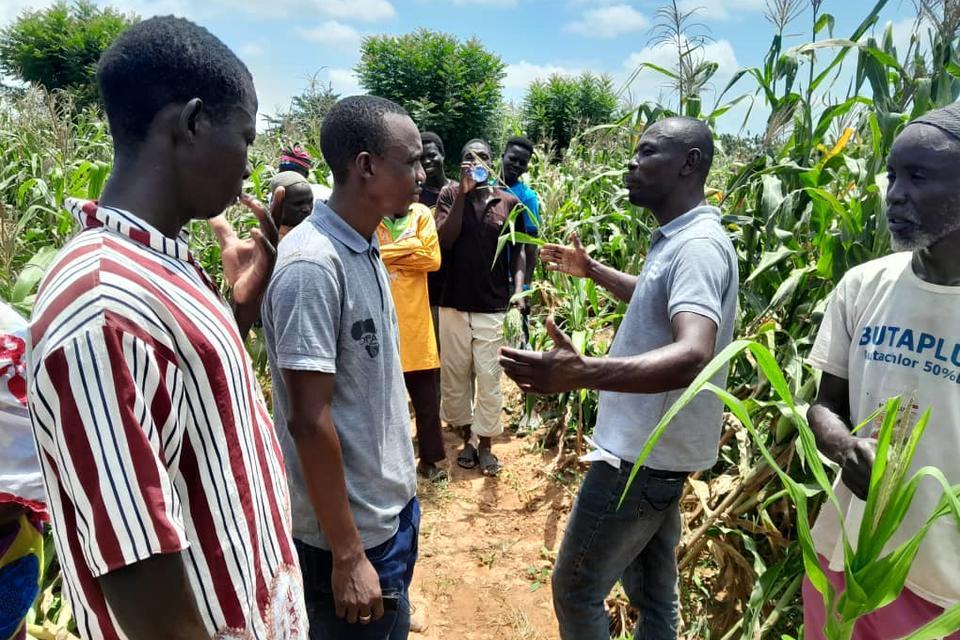
As part of the project's outreach activities, a field day was organized at Kunkulung with neighboring communities including Gbulung, Nyoring and Nganang. This event enabled cross-community knowledge sharing and facilitated the dissemination of best practices. Key stakeholders attended the field day, including officers from the Department of Agriculture, members of the CSA hub, media outlets and farmers from various nearby communities. Through these farmer field days, hundreds of farmers were introduced to climate-smart agriculture innovations, seeing their value and how they could increase their resilience.
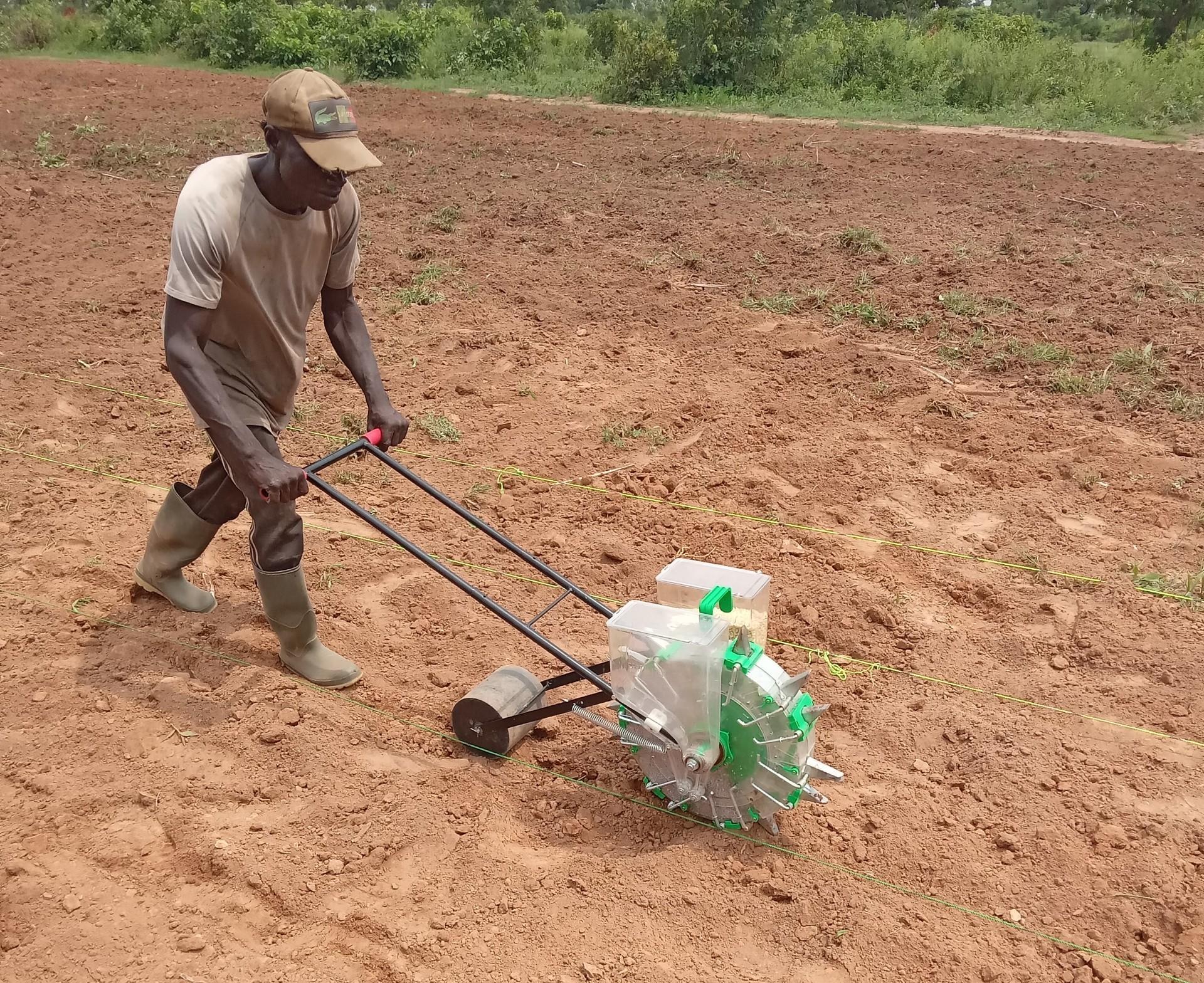
Farmers trying their hands on how to use the push planter.
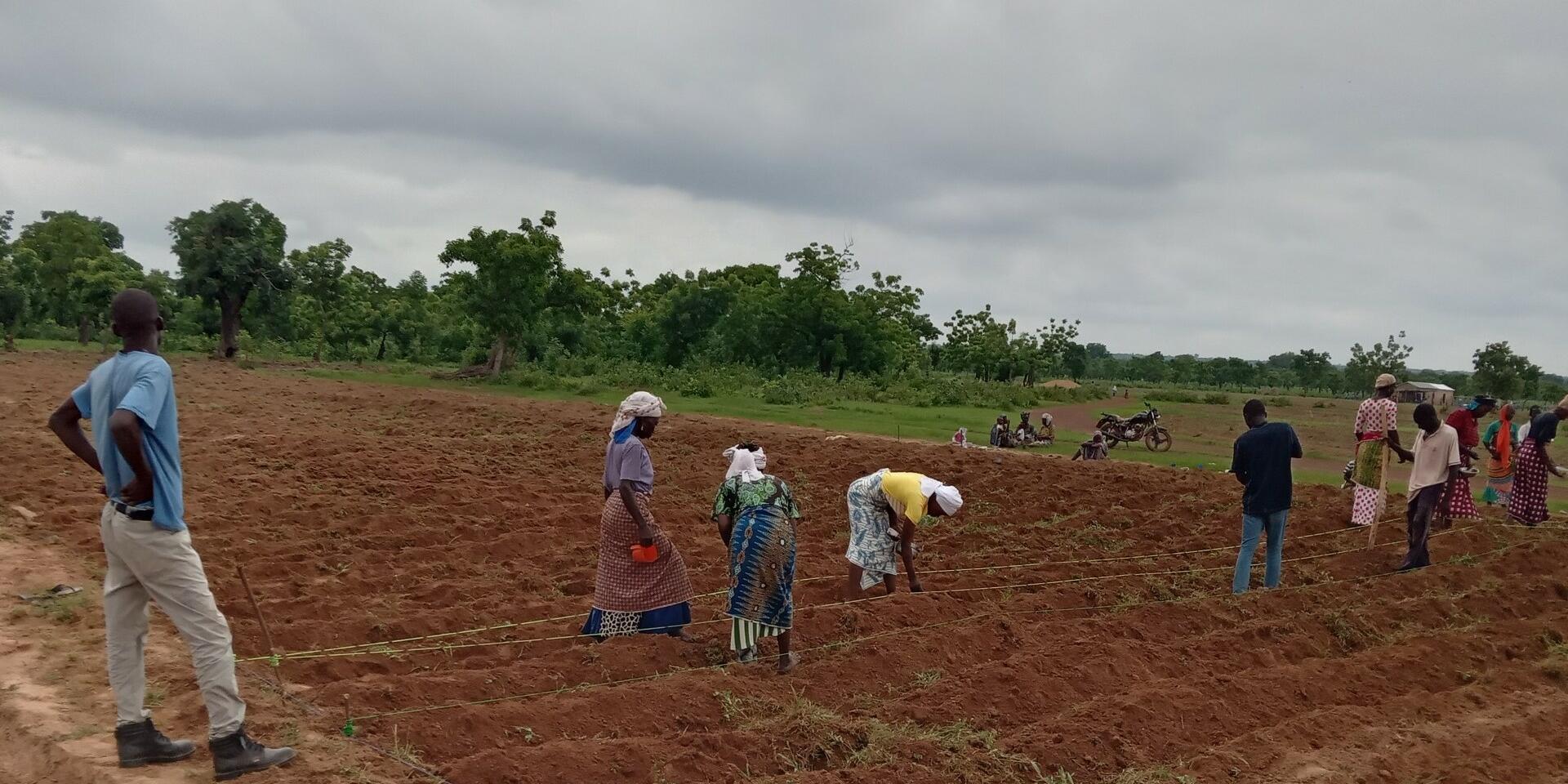
CSA approaches demonstrated at the event include the use of climate-resilient crop varieties of maize, cowpea and groundnuts; applying basal fertilizer at planting; maize-cowpea intercropping; and ridging as a soil moisture conservation measure.
The farmers were also introduced to push planters, which enable simultaneous planting and basal fertilizer application with minimal effort. These versatile tools - adjustable for various crops - provide farmers an efficient way to optimize plant populations. Additionally, backpack fertilizer applicators were introduced to reduce labor demands, offering significant advantages to the farming community.
On a separate 'farmer practice plot', farmers were encouraged to apply traditional or Indigenous methods and knowledge they hold, which included utilizing saved seeds from the previous season. In line with common practice, they did not apply basal fertilizer at planting, opting to apply it 10-14 days later, contingent on sufficient moisture.
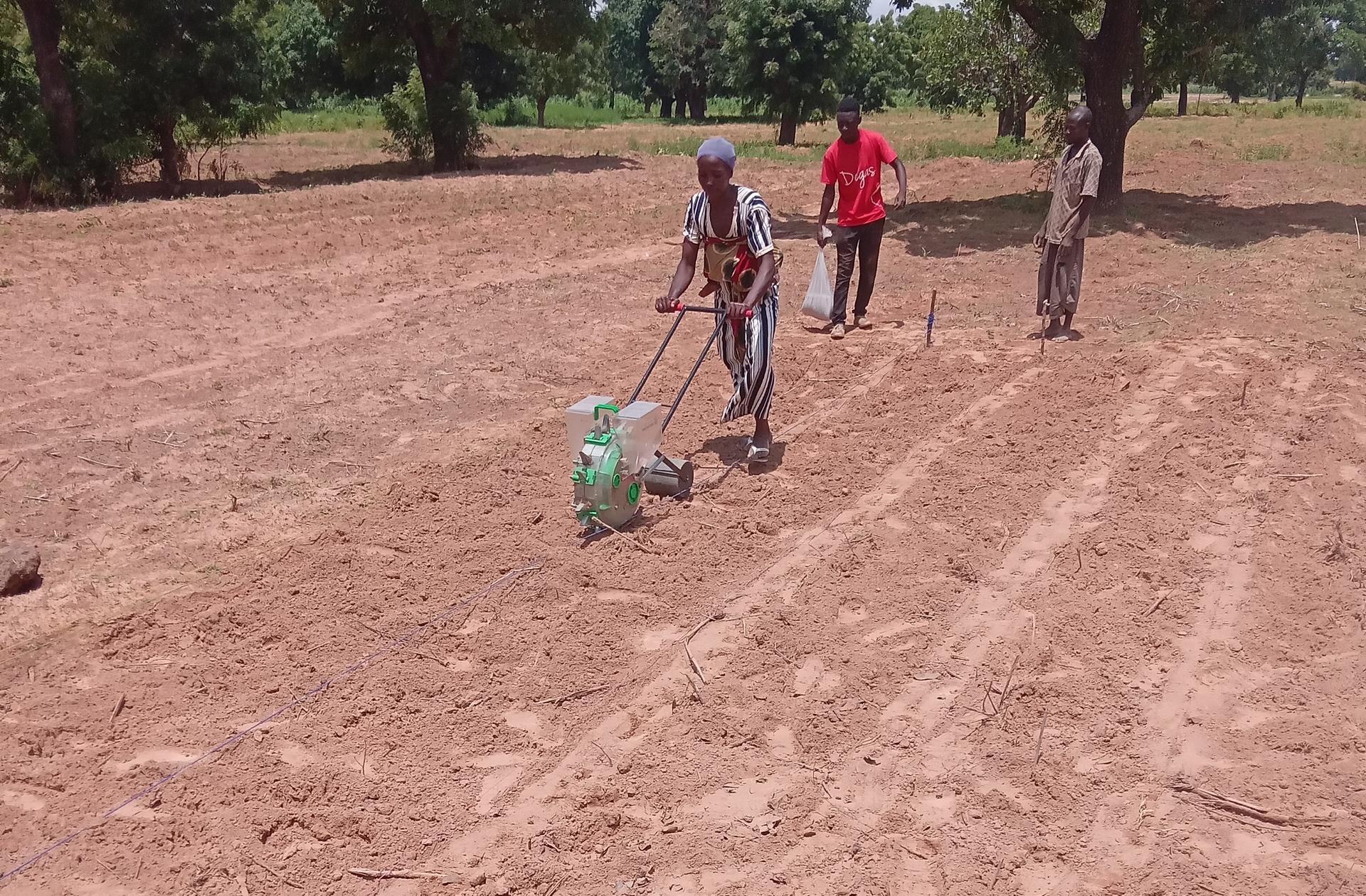
A woman farmer is trying her hands on how to use the push planter.
Farmer turnout at these demonstrations was impressive, with plenty women and young people also attending. Farmers learned valuable skills such as optimal seed spacing and planting in rows to obtain right plant populations, applying basal fertilizers at planting for rapid crop establishment, and the use of push planters and backpack fertilizer applicators.
The district director and agricultural extension agents were very supportive in organizing and facilitating these demonstrations across the communities, showing the need to collaborate with other implementing partners to ensure further project success.
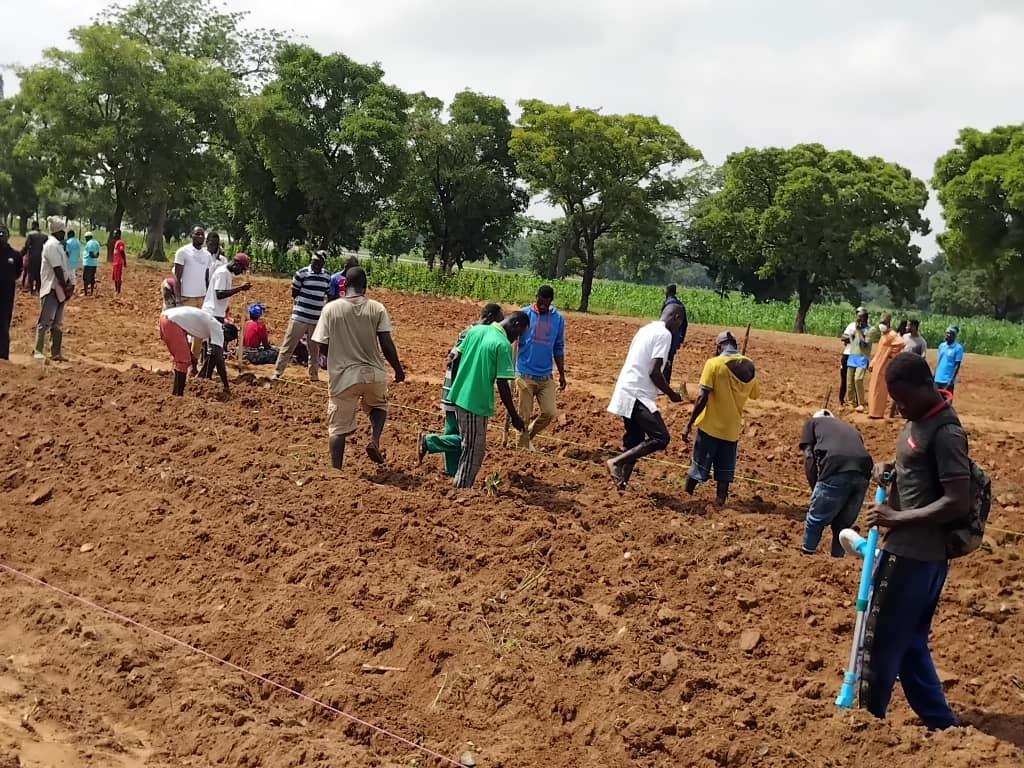
Planting of groundnuts on ridges.
Watch the event highlights here
Acknowledgement
We extend our gratitude to our partners at the CSIR’s Crops Research Institute, the Department of Agriculture in the Kumbungu District, and all the participating farmers for their invaluable support and contributions.