From the Field From demonstration to transformation: How partnerships and practice are reshaping farming in Kongwa district, Tanzania
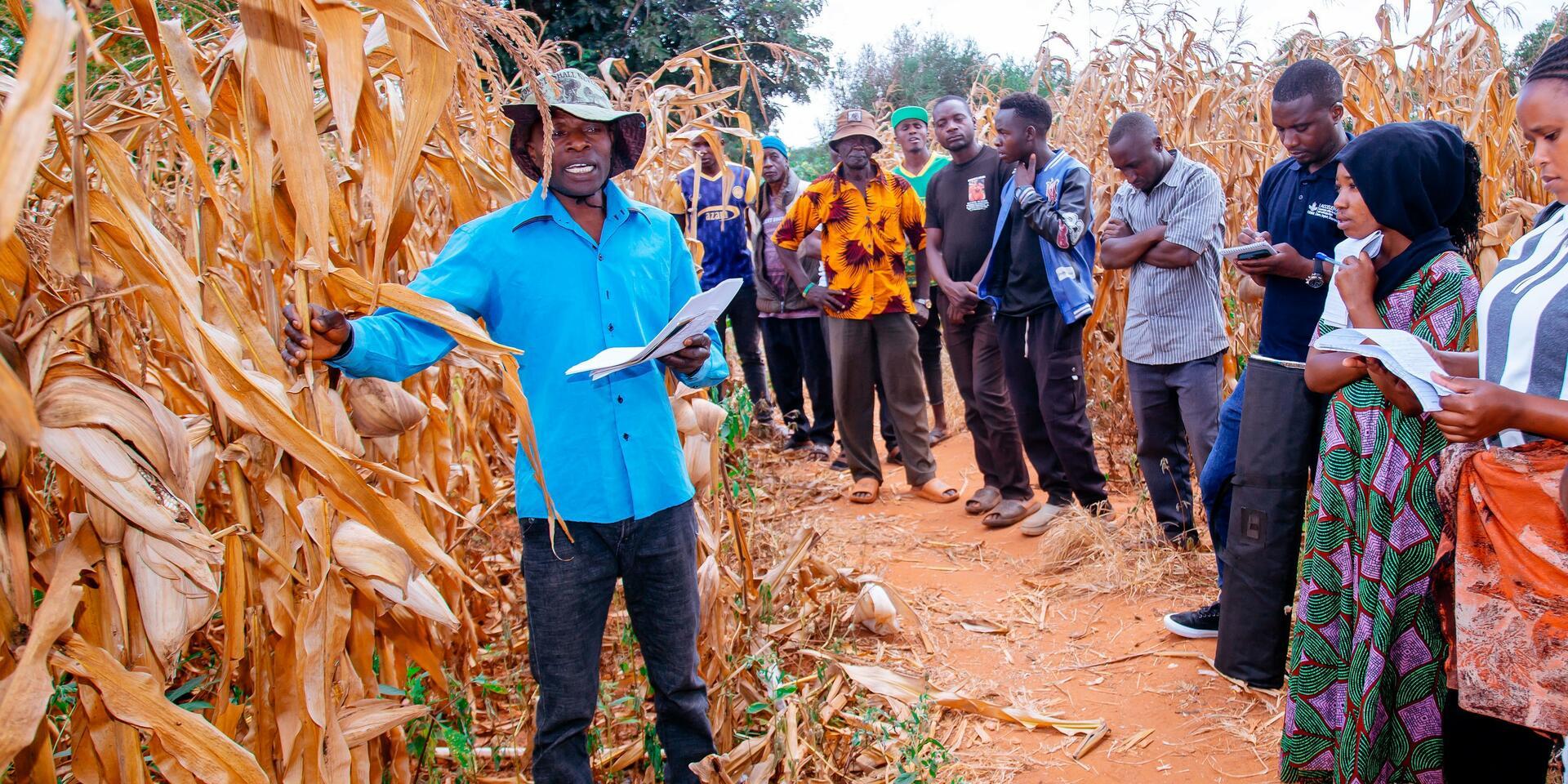

In June 2026, farmers, researchers, extension officers, and private-sector partners met in Kongwa District, Tanzania, to demonstrate how partnerships and regenerative agriculture are improving productivity, soil health, and climate resilience.
On a warm June morning in IDUO Village, Kongwa District, farmers gathered not just to observe but to experience a different way of farming. Hosted by Kibaigwa Flour Supplies (KFS) under the Growing Together Program, the farmer field day brought together 62 participants—farmers, extension officers, researchers, and private sector partners—with one shared purpose: to turn knowledge into practical solutions that farmers can immediately apply. But what made this day different was not just the technologies on display; it was the partnership behind them.
Growing Together is a program led by IDH, funded by Norad, and implemented in partnership with the Alliance of Bioversity International and CIAT, Rikolto and EAGC in Tanzania and Ethiopia. The program seeks to support and transform SMEs and producers towards resilient, sustainable and inclusive production and sourcing.
Where science meets the field: A researcher’s perspective
For researchers working with farmers, the field day represented something deeper than dissemination. It was about co-learning and validation under real conditions.
“Research only becomes meaningful when farmers test it in their own fields,” noted Juma Kapiligi, a researcher from the Alliance of Bioversity International and CIAT. “What we see here is not just adoption; it is adaptation. Farmers are modifying practices to fit their realities.”
Through collaboration with Tanzania Agricultural Research Institute (TARI), extension services, and KFS, research is no longer confined to stations—it is embedded directly within farming communities.
“Our role is to bring evidence-based options, but farmers decide what works,” added Mbwando Dimosso a TARI collaborator. “These demonstration plots bridge the gap between science and practice.”
“Seeing is believing”: Why practical learning works
In the demonstration plot, maize grown with improved seed, proper spacing, organic manure, and mechanized planting spoke louder than any training manual.
“When you see the difference in the field with your own eyes, you understand immediately what works,” shared Grace Kapila, a woman farmer. “This is better than just hearing about it; we can go and do it ourselves.”
This approach reflects a growing shift in agricultural development moving from knowledge delivery to experiential learning systems.
And partnerships are making this possible: Researchers (CIAT, TARI) – generating and validating innovations; Extension officers – translating knowledge into farmer-friendly guidance and Private sector (KFS) – ensuring access to inputs, services, and markets
Timely seed access: A system challenge, not just a farmer problem
One of the strongest messages from the field day was simple but critical: timing matters. Farmers emphasized that late access to quality seed often undermines productivity, even when all other practices are correct.
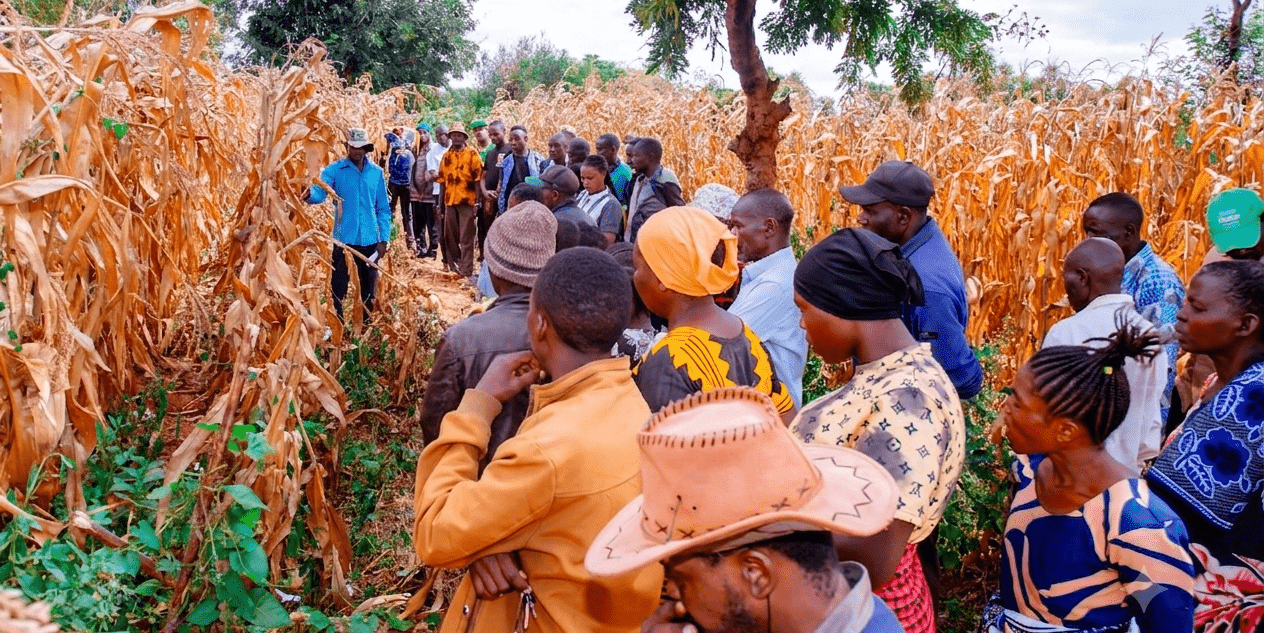
Lead farmer Issaya Kusalula shares lessons from the KFS demonstration plot, highlighting improved maize practices during the IDUO Village Farmer Field Day.
“Access to quality seed on time is critical for us,” explained Isaya Kusalula, a farmer from IDUO Village.
From a systems perspective, this is where partnerships become critical. Extension officers emphasized better planning and communication, while KFS highlighted its role in linking farmers to input suppliers.
“We are working to ensure farmers get inputs when they need them—not after the rains start,” noted Dennis Luhunga, a KFS agronomist.
Women farmers echoed this, linking timely seed access to household food security.
“When seeds come late, we lose both time and food. Timely supply means a secure harvest.” said Modesta Segunda
The discussion spotlighted the need for stronger coordination between farmers, SMEs like KFS, and seed suppliers to ensure no season is lost.
Mechanization: Scaling through collective action
Another highlight of the day was the demonstration of mechanized planting using a planter—a tool that significantly reduces labour while ensuring proper spacing. For many farmers, especially women, labour constraints are a daily reality.
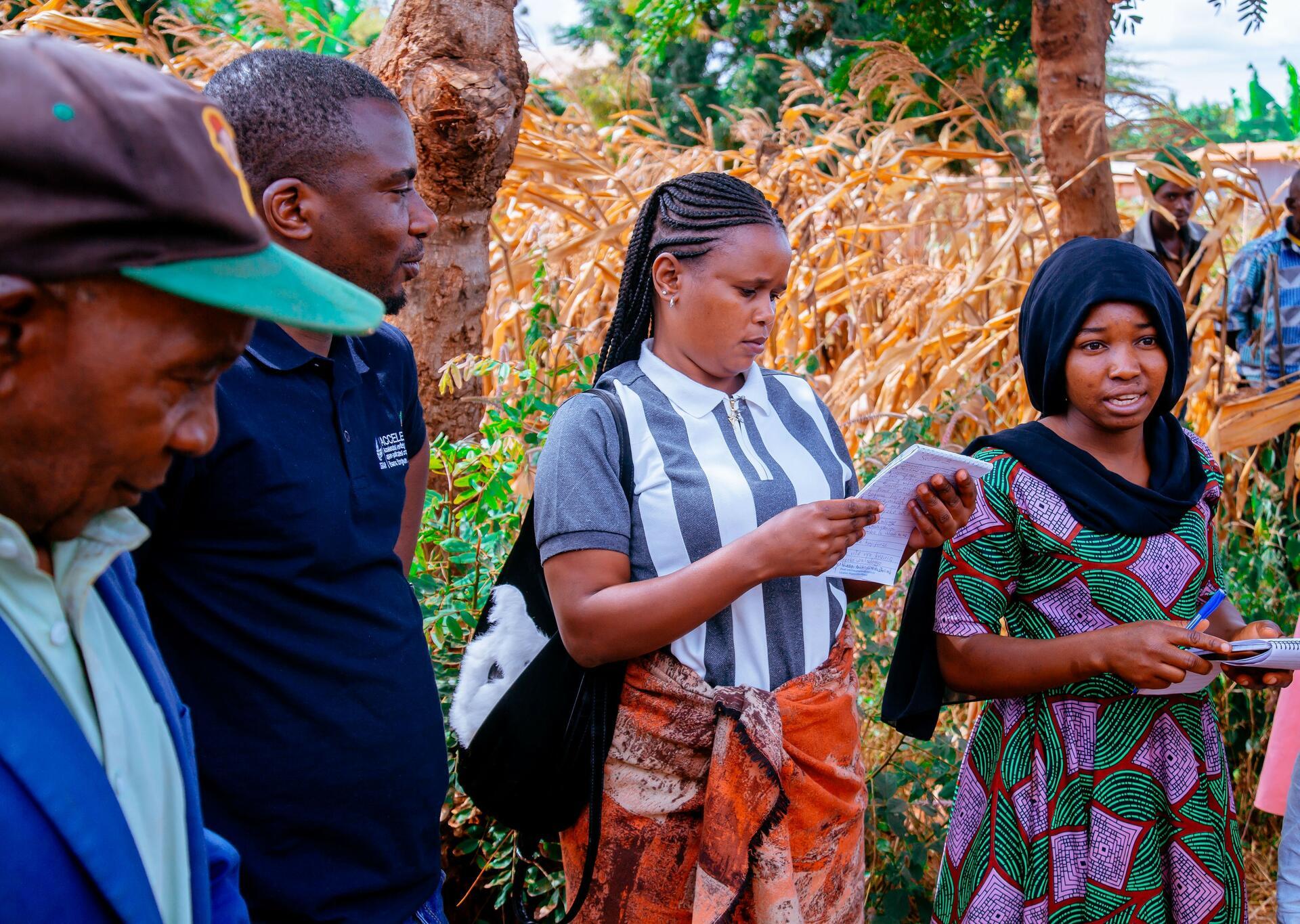
Rebecca Chiloleti (right) shares her lessons on the use of a planter machine, highlighting its role in saving time, and reducing labour.
“Planting by hand takes time we don’t always have,” said Rebeka Chiloleti, a woman farmer. “If we can access these machines as a group, it will change how we work.”
The field day sparked an important shift in thinking—from individual ownership to collective access.
“We may not all afford machines individually, but together we can,” said John Senyagwa , a farmer.
Extension officers reinforced the importance of group-based access models, while KFS has already begun providing discounted planters—especially targeting women farmers.
“Planting by hand is tiring and slow. If we access machines as a group, it will save time and energy.” observed Rebeka Chiloleti.
Soil health: From awareness to action
The field day also showed that soil health awareness is translating into action. Farmers increasingly recognized soil testing as essential for better decision-making.
“Before, we guessed. Now we test,” said Sesilia Kusalula, a farmer. “Soil testing helps us use the right inputs and avoid wasting money.”
The field day reinforced the need for timely soil testing services, use of results during the cropping season, and continued support from extension and technical partners. Researchers and extension teams emphasized that soil testing services must be accessible, timely and translated into simple recommendations.
Organic manure: Turning local resources into solutions
With rising input costs, farmers are rediscovering the value of organic manure. The demonstration plot clearly showed improved crop performance where manure was applied.
“We have livestock, so manure is available, now we see how it improves the crop.” observed John Senyagwa.
For women, the benefits are both agronomic and financial. Using manure reduces amount of money spent on fertilizers, saving it for other household needs such as education, health care, noted Grace Kapila.
Crop residues: When farming requires community decisions
One of the most powerful lessons of the day was that some solutions cannot be implemented alone. Crop residues are essential for soil cover, moisture conservation and soil fertility improvement. Yet, widespread post-harvest grazing limits residue availability.
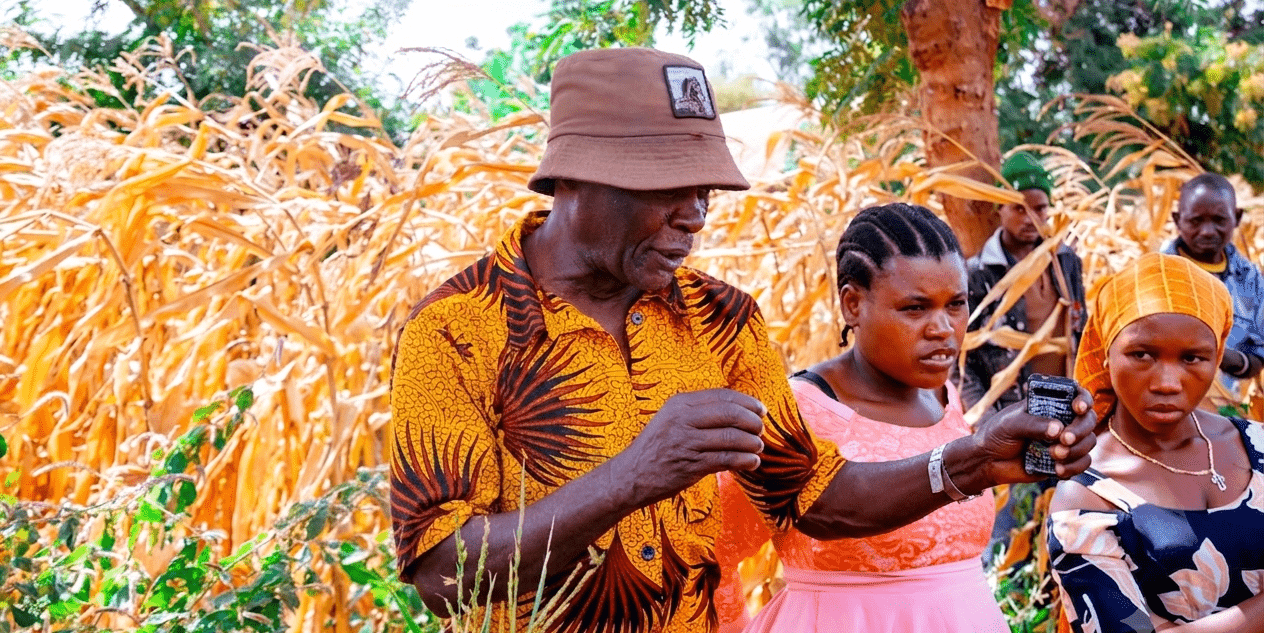
Patrick Ndatila explains how crop residues can improve soil health, while noting that livestock grazing remains a key challenge to residue retention after harvest.
“We want to keep residues, but livestock eat them,” said Patrick Ndatila.
This led to a broader realization: Regenerative agriculture depends on community cooperation.
“We need agreements as a village,” said Rebeka Chiloleti. “If everyone benefits, then everyone must adjust.”
Extension officers highlighted the need for local by-laws, coordinated grazing systems and farmer group dialogue.
Why this model works: Partnerships driving practical change
The IDUO field day demonstrates a powerful model: Co-created solutions through partnerships. Each actor plays a critical role: Farmers test, adapt, and share experiences; researchers (Alliance, TARI) provide evidence and innovation; extension officers translate knowledge into practice; and the private sector (KFS) ensures access to inputs, services, and markets.
“This collaboration ensures farmers are not learning in isolation but are supported from knowledge to application.” noted Juma Kapiligi researcher.
From Learning to Action: The Real Impact
The success of the field day lies not in attendance but in what happens next.
“Now we have seen it, we must try it,” concluded Eliud Elisha.
As farmers return to their own plots, they carry with them not just ideas but tested practices, shared experiences, and trusted partnerships. And in IDUO Village, one thing is becoming clear. Sustainable agriculture is not built by farmers alone, it is built through learning, collaboration, and action.