From the Field When diversity comes together: Cidra papa and peach palm, two crops with much to tell
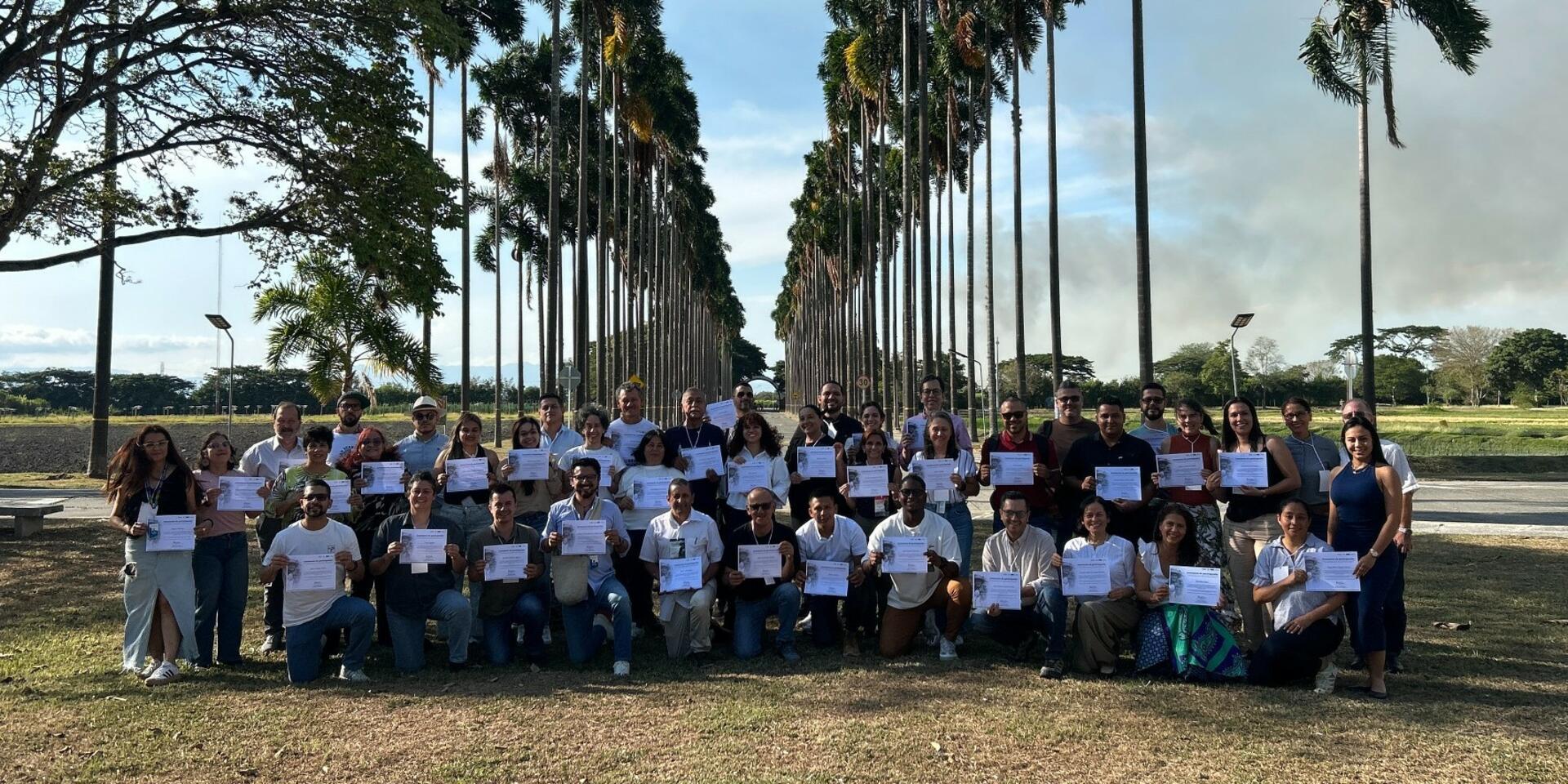

Peach palm and cidra papa have long been part of Colombia’s farms and food traditions, yet much of their potential remains unexplored. At a four-day workshop in Palmira, farmers, seed guardians, and researchers brought together local knowledge and science to explore how these crops could enrich diets, support rural livelihoods, and conserve agricultural diversity.
What if some of the opportunities to build more diverse and resilient food systems were already growing in our territories? Along a fence, climbing among other crops, there may be a cidra papa that a family has conserved for generations. On a farm in San José del Palmar, a peach palm may be part of a story that enabled a family to find new opportunities to make a living from the land.
These are very different realities. But both speak to something Colombia has in abundance: diversity.
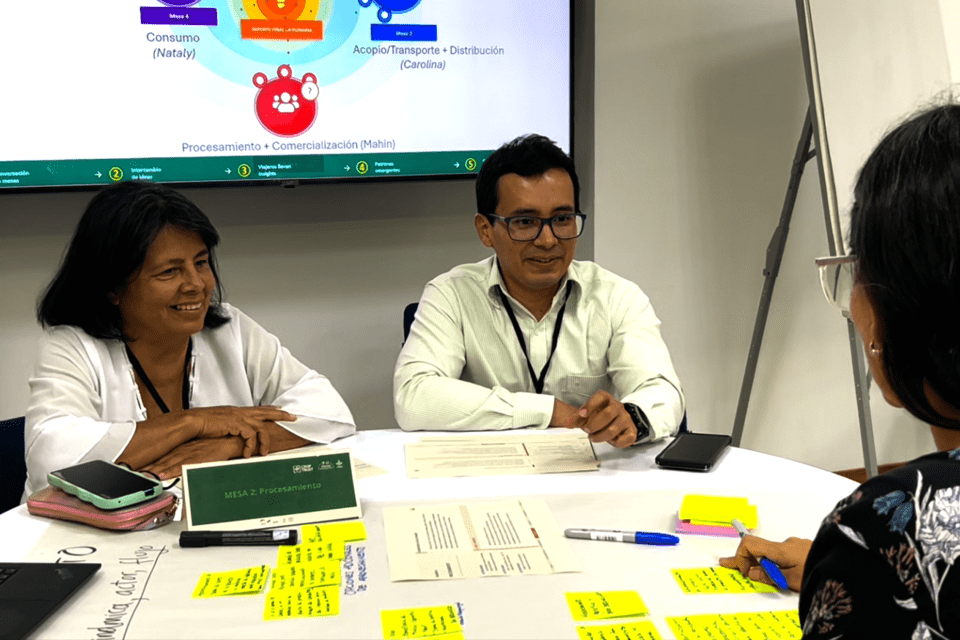
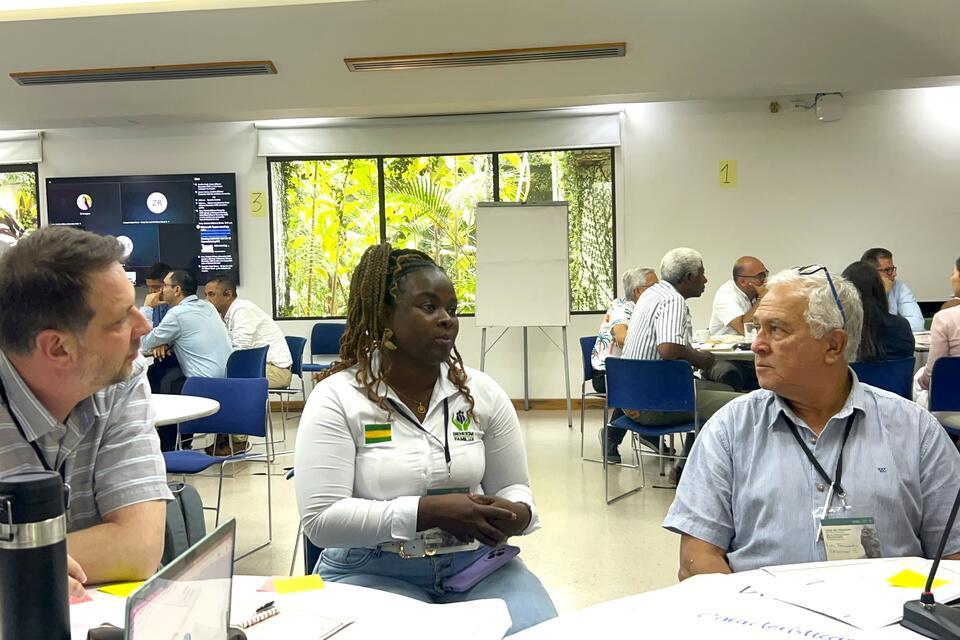
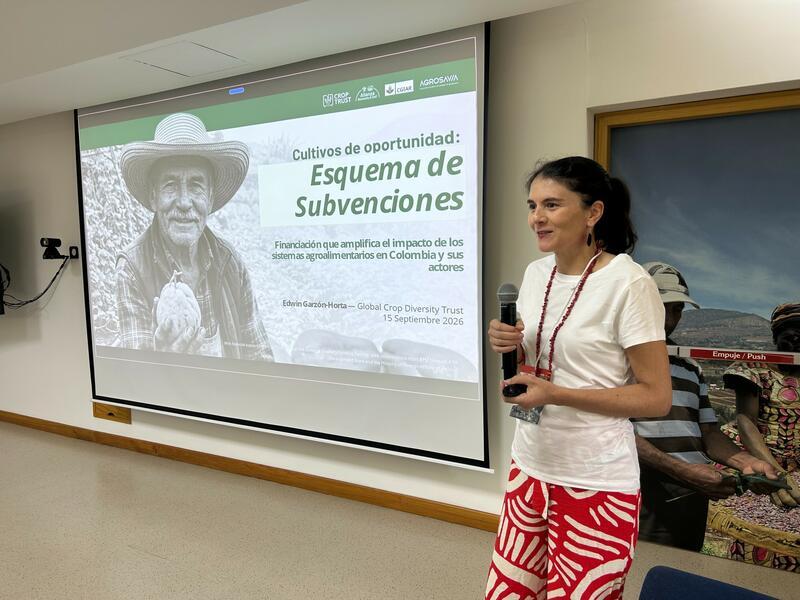
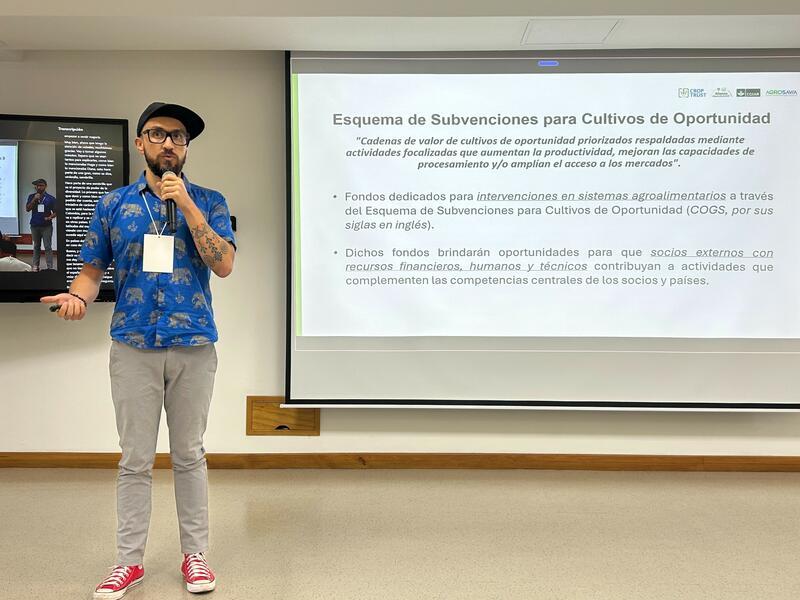
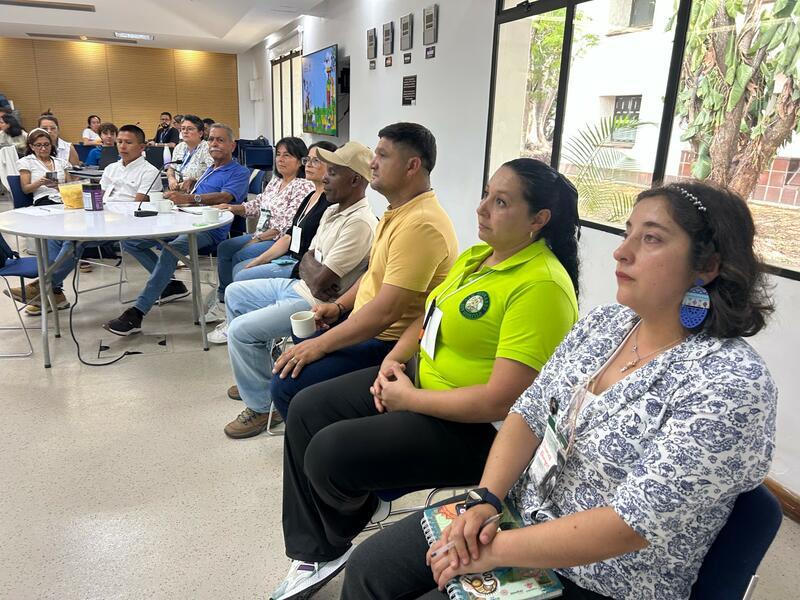
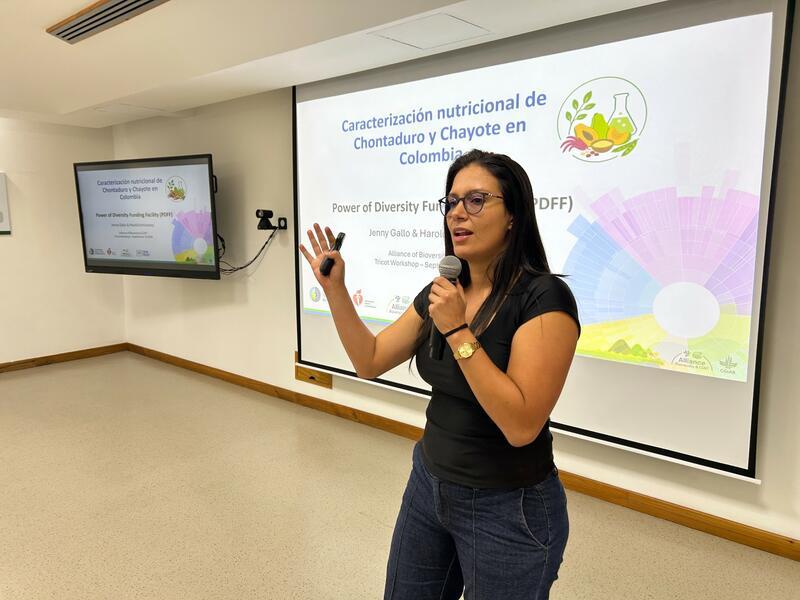
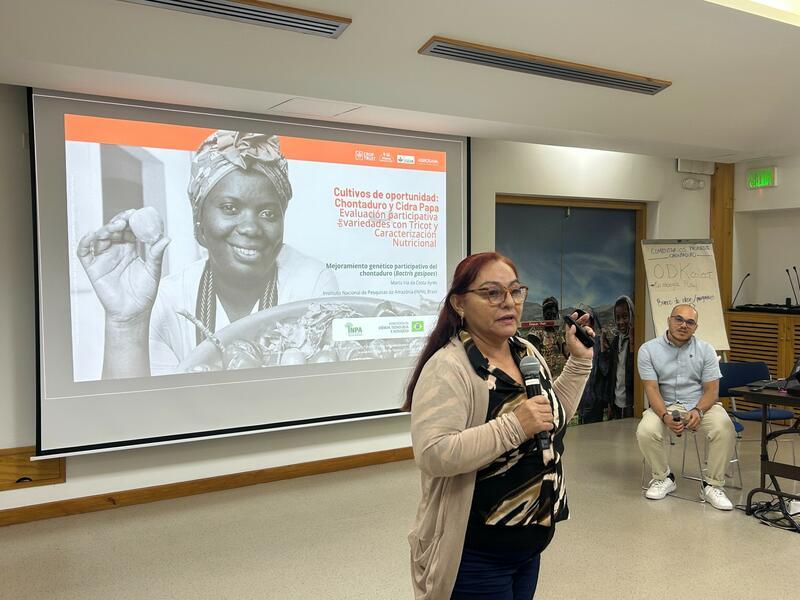
For four days, this diversity became the meeting point for women and men farmers, seed guardians, researchers, and national and international experts gathered at the Alliance Bioversity International & CIAT Americas Campus in Palmira for the workshop “Opportunity crops: Peach palm and cidra papa – Participatory variety evaluation with tricot and nutritional characterization,” held within the framework of the Power of Diversity Funding Facility, an initiative of Crop Trust, with the participation of the Alliance Bioversity International & CIAT and AGROSAVIA.
The technical objective was ambitious: to jointly design participatory Tricot trials and advance the nutritional component for both crops, integrating the knowledge of experts, researchers, and seed guardians.
But something else happened.
During those days, there was fruit on the tables, family stories, questions, tastings, science, and a strong desire to learn. And one thing became clear: conserving diversity also means listening to those who have kept it alive.
Cidra papa: the diversity that was already there
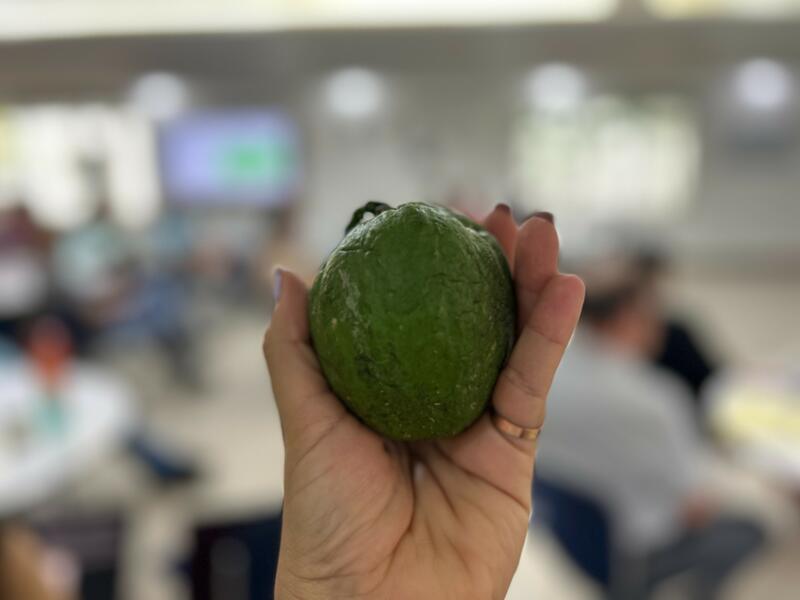
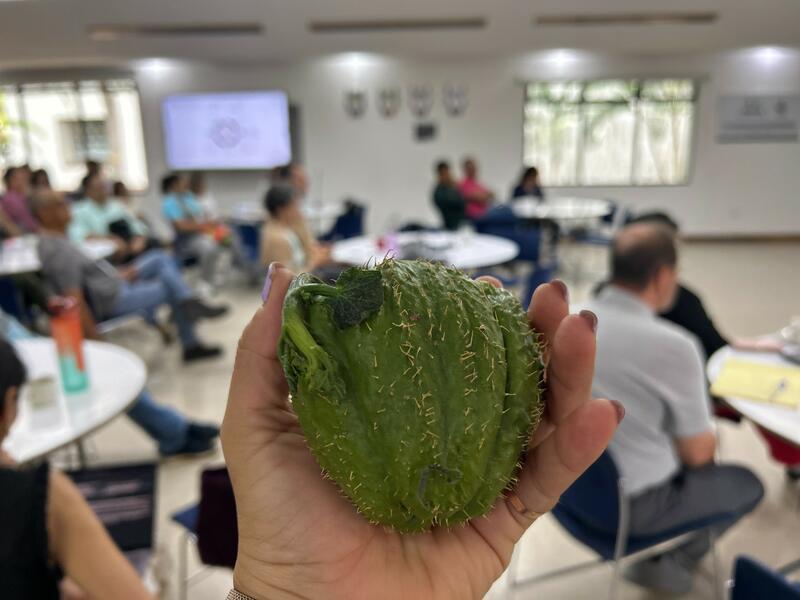
Cidra papa, guatila, chayote. Even its different names offer clues to the cultural diversity surrounding this crop.
In Colombia, it is commonly found along fences, in home gardens, or associated with other crops. It has a relatively short growing cycle, requires few inputs, and displays broad genetic and morphological diversity. Yet it remains a secondary crop, with limited presence in markets and little visibility in agricultural statistics.
And here emerged one of the great paradoxes of the gathering: how can something so diverse be, at the same time, so little known?
Much of the answer was sitting right there in the room.
Women and men seed guardians have maintained this diversity for generations, often without any commercial expectation behind it. During the workshop, participants spoke of guatilas growing alongside plantains and citrus trees, others climbing the fences around their homes, and collections of numerous varieties conserved on a single farm.
One of the seed guardians explained that the plants had been there since the time of her grandparents and great-great-grandparents. Over time, she began discovering new varieties, bringing them to her farm, and multiplying their seeds, just as she does with beans, squash, and other crops. Her hope now is that cidra papa can become part of everyday diets and, eventually, contribute to local economies.
Another participant captured it with an image that is hard to forget: the root of chayote does more than support a plant; it also “roots the social fabric of farming communities.”
Conserving, yes. But also understanding and using
Today, this diversity raises new questions.
What differences exist among the materials? Which characteristics do farmers value? Which ones matter to consumers? What nutritional attributes do they have? Which might work better for particular uses or markets?
This is precisely where conservation, science, and the knowledge of those who have maintained these materials in their territories come together.
During the workshop, women and men seed guardians brought their own varieties and placed them alongside materials previously established at CIAT, advancing the selection of those that will become part of the Tricot trials and the nutritional component.
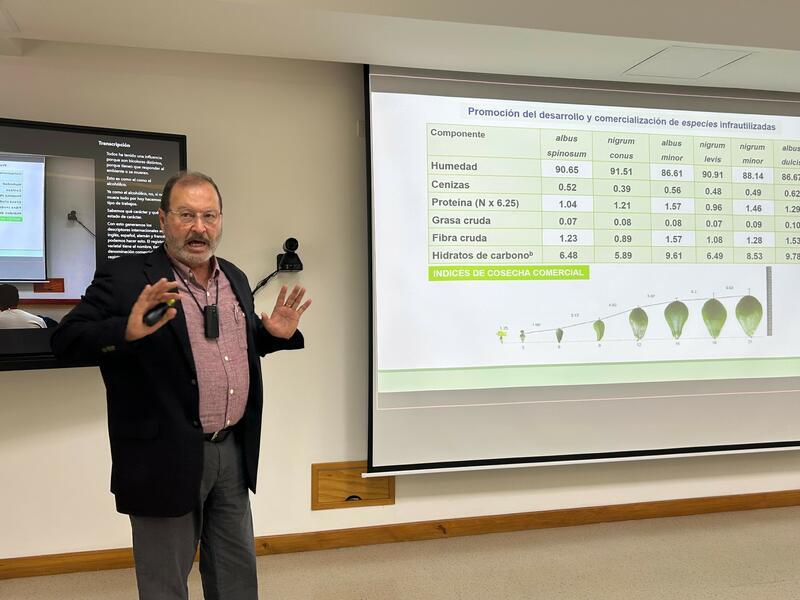
The exchange with international experts added another piece to the puzzle: diversity needs to be documented and linked to its territory, while its nutritional attributes and potential uses need to be communicated responsibly and backed by evidence.
This is especially important because Colombia currently does not have a germplasm bank for cidra papa/chayote. As part of the process, AGROSAVIA plans to conduct collections that will contribute to establishing a collection, while work continues to characterize the existing diversity and understand how it can contribute to differentiated products and markets.
Peach palm: when a crop transforms a territory
The story of peach palm begins from a different place.
In San José del Palmar, Chocó, an economy already exists around this fruit. During the gathering, one farmer explained that the municipality has more than 250 producers and that, according to his account, the cultivated area grew from around 100 hectares to between 1,200 and 1,300 hectares in just over a decade.
But behind those numbers are personal stories.
One of the most moving moments of the workshop came when a farmer explained what peach palm has meant for his territory. According to his account, families that had previously depended on the coca economy found another source of income in this crop. For him, strengthening peach palm also means keeping open the possibility of making a living from the land and remaining there.
That growth also brings new questions.
Farmers spoke openly about pests, agronomic management, the use of agrochemicals, commercialization, and the need to move toward processing and value addition. Recent events made this vulnerability even more visible: following the August earthquake, farmers reported difficulties marketing their harvest and highlighted the need for processing alternatives that would make it possible to use the fruit when the fresh market contracts.
For this reason, talking about strengthening peach palm does not simply mean producing more. It means asking how to strengthen a value chain that already generates opportunities without losing sight of diversity, environmental conditions, and the people who depend on it.
And which peach palm do we prefer?
To answer some questions, we had to do something quite simple: taste it.
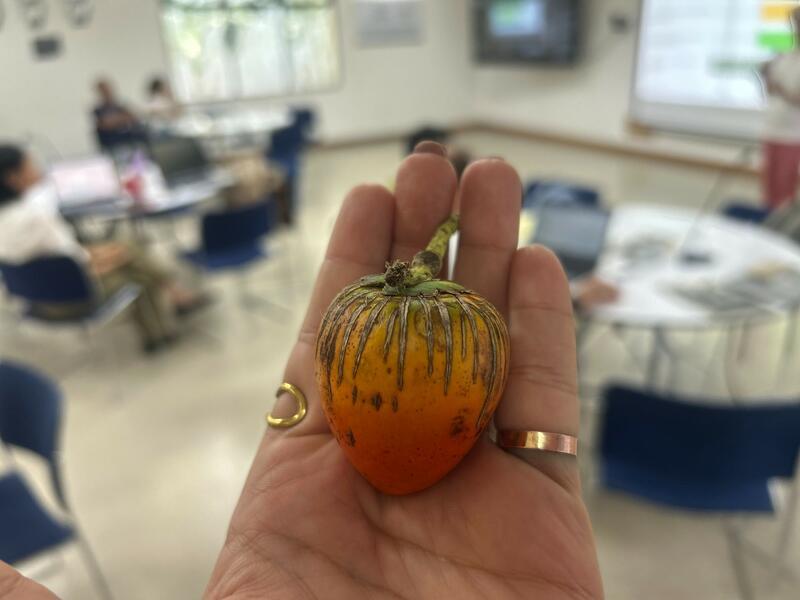
During one of the liveliest exercises of the gathering, participants took part in a blind tasting using Tricot. They compared yellow, orange, red, and green peach palm morphotypes and ecotypes, evaluating characteristics such as flavor, texture, color, and overall preference.
The data were then uploaded to ClimMob, allowing the group to see the results and complete the full participatory evaluation cycle within a single day.
The exercise demonstrated in a very tangible way something that ran through the entire workshop: diversity opens up new possibilities when we begin to understand which characteristics matter, to whom, and for what purpose.
And Tricot makes it possible to take that question beyond a meeting room. The protocols being developed seek to incorporate participants’ knowledge and experience so that evaluations can subsequently be carried out in the field.
Science also begins by listening
Perhaps one of the most beautiful images from those four days was not part of any presentation.
It was in the conversations.
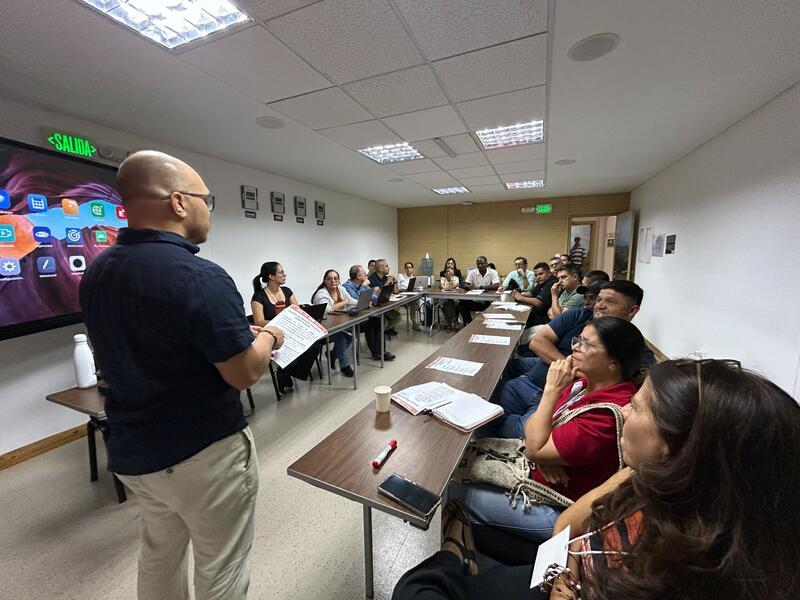
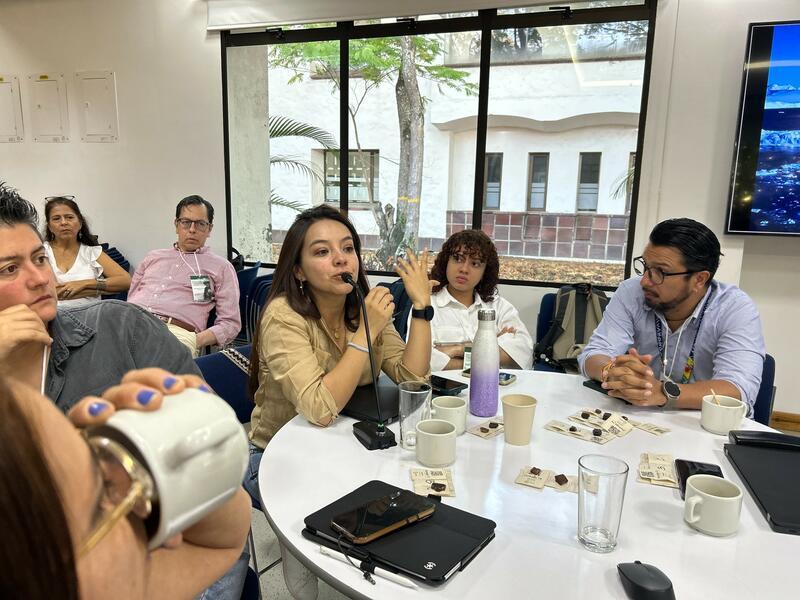
Researchers asking farmers questions. Farmers comparing experiences with experts. Seed guardians placing on the table materials they have conserved for years. People from different institutions and territories gathering around a fruit, tasting it, touching it, and asking themselves what they could learn from one another.
From the outset, there was an explicit intention to avoid placing academic knowledge above the knowledge of farmers and seed guardians. The space was conceived as an opportunity to talk, debate, and recognize the value of different ways of knowing.
And this matters especially when we talk about opportunity crops.
During the conversations, an important warning emerged: developing new value chains should not mean replacing diversity with systems that prioritize only what the market demands. For seed guardian networks, conservation means maintaining diversity as a whole and within the production systems and territories where it exists.
This led to a question much bigger than either of the two crops: what kind of agriculture do we want to build around this diversity?
An agriculture capable of generating food and income, yes, but also of recognizing local knowledge, conserving agrobiodiversity, and responding to the particular characteristics of each territory. This discussion emerged as one of the lessons that will need to accompany the next stages of the work.
What continues to grow
The workshop did not end with a tasting or a group photograph.
It ended by looking ahead.
The teams worked on protocols, selection decisions, collection schedules, upcoming consumer tests, and a roadmap that will continue throughout 2026 and 2027.
Because neither cidra papa nor peach palm has told its full story yet.
One holds enormous diversity that has long remained at the margins of food systems. The other demonstrates how a crop can become an important source of income for a territory while facing new challenges to make that growth sustainable.
Both, however, leave us with a shared lesson: biodiversity is not only something we conserve. It is something we can understand, cultivate, share, taste, and value.
And perhaps this is where part of their enormous potential in a changing climate lies: in having a greater diversity of crops and materials, understanding how they respond in different territories, and doing so without separating innovation from the people who have cultivated and conserved them for generations.
For four days in Palmira, that was precisely what could be felt: plenty of science, yes, but also curiosity, generosity, and genuine affection for these crops.
Because when diversity comes together with knowledge, territory, and people willing to learn from one another, new possibilities begin to grow.
Further reading