Blog How bundled climate services and cooperatives are transforming smallholder farming in Kenya


Smallholder farmers in Kenya are transforming their farming practices through a bundled service model by ECREA, KALRO, KMD and the county government of Nakuru. In March 2025, a donor visit in Nakuru showcased how this model boosts resilience to climate shocks.
For years, smallholder farmers in Kenya have faced fragmented access to essential agricultural services. Weather and climate information services (WCIS), quality seeds and agro-advisory support were often provided independently, making it difficult for farmers to make timely and well-informed decisions. Even when improved seeds were available, they were often planted at the wrong time. When weather forecasts were issued, farmers lacked the right crop varieties or missed critical agronomic advice.
To address this gap, the Enhancing Climate Resilience in East Africa (ECREA) project, in partnership with the Kenya Agricultural and Livestock Research Organization (KALRO) and the Kenya Meteorological Department (KMD), developed an integrated service delivery model. This model bundles WCIS, certified seeds, and timely agro-advisory services to ensure that farmers receive all the critical components they need—at the right time.
“Before, we had to rely on guesswork. Sometimes, we planted too early and lost everything, or we waited too long and missed the rain. Now, we receive forecasts, get advice on what to plant, and even access good seeds all at the right time.” — Mark Kamau, Farmer
The Power of Cooperatives in Scaling Climate Resilience
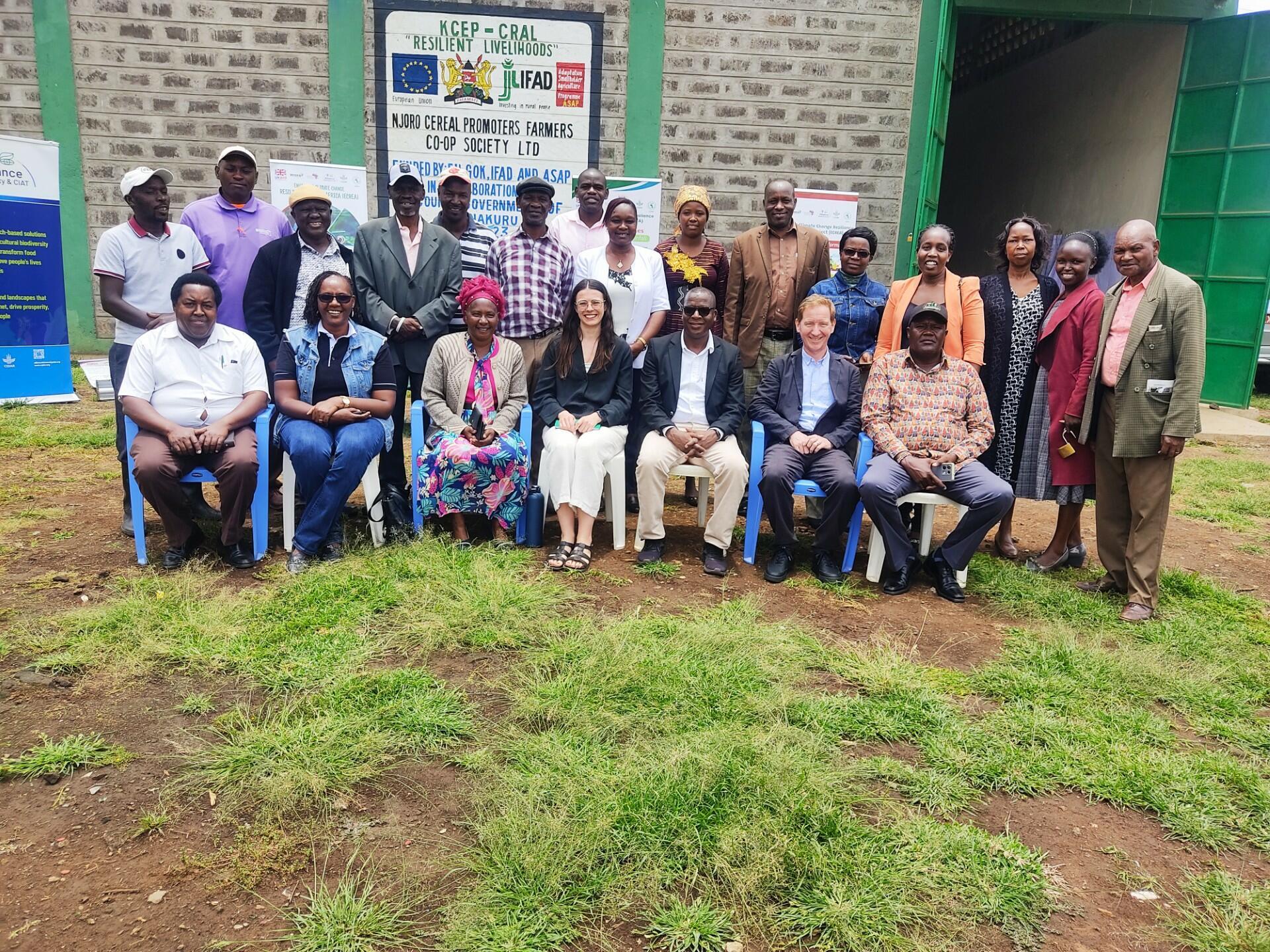
Field visit to the Njoro Cereal Promoters Farmers’ Cooperative Society, where the delegation witnessed how integrated agri-climate services and cooperative structures are enhancing farmers’ resilience, productivity, and market access under the ECREA project. Photo credit: Joseline Kiogora/Alliance of Bioversity International and CIAT
The success of the ECREA-KALRO-KMD partnership is reinforced by structured farmer engagement platforms, particularly cooperatives, which enable the bundling of services at scale. Cooperatives play a vital role in aggregating farmers, facilitating access to inputs and information, and improving links to markets.
By organizing into cooperatives, farmers can pool resources, share knowledge, and apply climate-smart practices collectively. These structures also strengthen their bargaining power, reduce production costs, and foster greater resilience to climate variability.
“Through our cooperative, farmers can now access quality seeds, climate information, and better markets as a united front. By working together, we strengthen our bargaining power, reduce costs, and build resilience against unpredictable weather patterns.” — John Ndung’u, Chairman, Njoro Cereal Promoters Farmers’ Cooperative Society
“Being part of the cooperative has transformed the way I farm. We can now buy inputs in bulk, get better prices for our produce, and access reliable climate information. Farming feels more secure and profitable.” — Dorcas Wanjiru, Member, Njoro Cereal Promoters Farmers’ Cooperative Society
Media as a Multiplier
Media platforms such as Shamba Shape Up, iShamba, and local radio stations (Kass FM, Kameme FM, Inooro FM) complement these efforts by making climate information widely accessible. These platforms help translate technical forecasts into localized, actionable messages that resonate with farmers.
Strengthening Farmer Networks
In counties like Nakuru, Elgeyo Marakwet, Homabay, and Machakos, farmers are organizing into cooperatives and producer groups that go beyond input access and market linkage. These cooperatives have evolved into dynamic hubs of knowledge exchange, where farmers learn from each other, adopt climate-smart practices, and build collective resilience.
Regular meetings and peer-to-peer exchanges empower farmers to adopt improved soil management, drought-tolerant crop varieties, and efficient water use techniques. Access to extension services and real-time climate advisories is also strengthened through these networks.
“Being a member of this cooperative has changed everything. We get better market prices and access climate information together. Farming is no longer a gamble.” — James Onyango, Youth Farmer
Bundled Services Driving Transformation
ECREA’s innovative service models—including the Agri-Climate Bundling Model (EACBM), Resilient Farming Solutions Model, and Smart Bundling Partnership Model (SBPM)—reimagine how agricultural support is delivered. By bundling climate information, certified seeds, and advisory services within the bean value chain, the models help farmers improve productivity and withstand climate shocks.
The project also supports grain aggregation through cooperatives, reducing post-harvest losses and improving access to institutional markets, such as school feeding programs.
Firsthand Impact and Government Endorsement
On March 26th, 2025, development partners visited the Njoro Farmers' Cooperative in Nakuru, where they observed participatory training sessions facilitated by KALRO and ECREA. They interacted with farmers who shared how the bundled approach had improved yields, planning, and livelihoods.
“These trainings have completely changed how we approach farming. We no longer just plant—now we plan based on real information and proper guidance.” — Margaret Chebet, Farmer
“We used to rely on trial and error. Now, I understand when and what to plant, and the cooperative even helps us reach better markets.” — Daniel Mwangi, Farmer
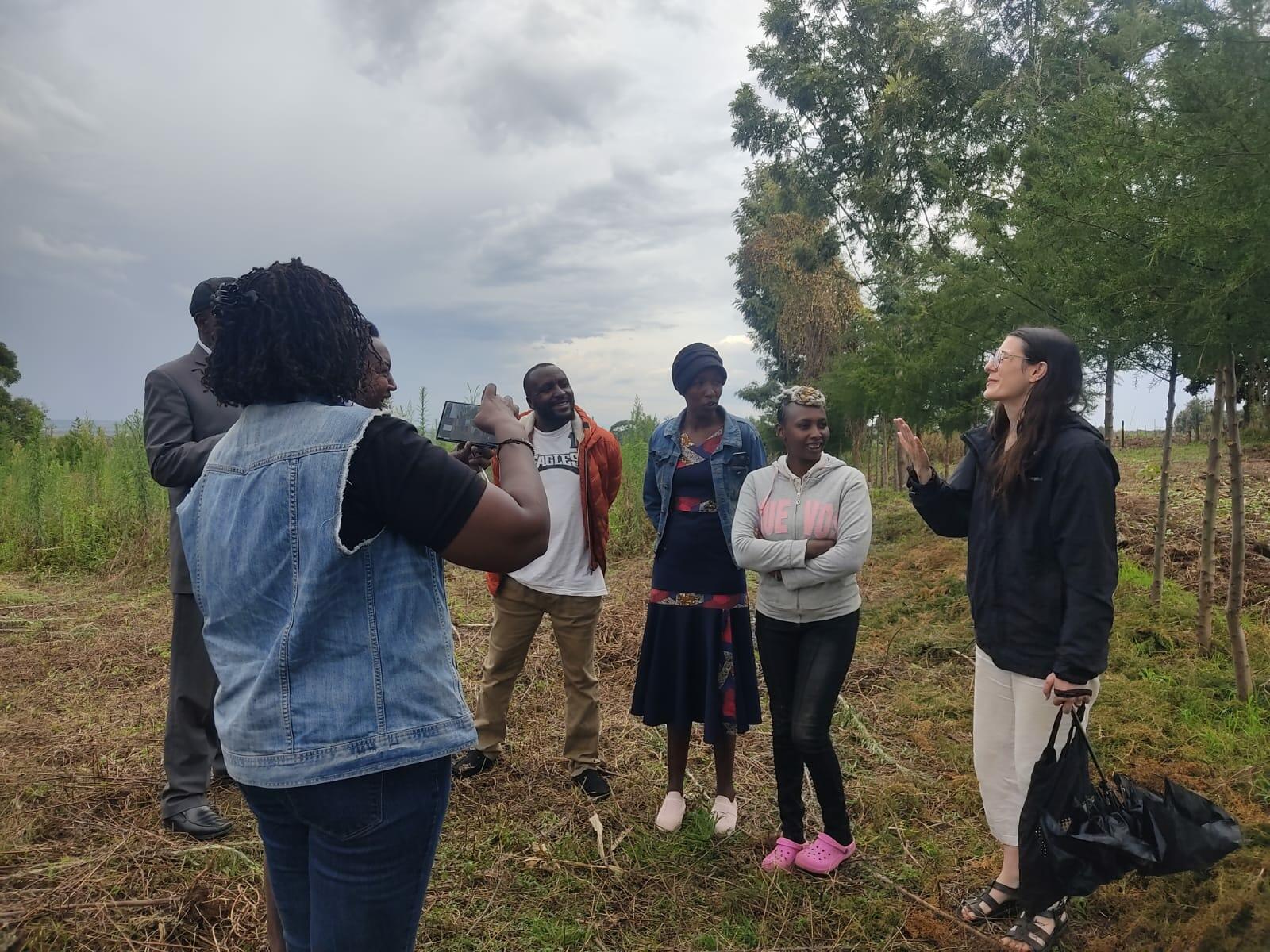
Development partners interact with beneficiary farmers during a field visit in Njoro, Nakuru County — hearing first-hand how bundled climate-smart services have improved their productivity and resilience. Photo credit: Joseline Kiogora/Alliance of Bioversity International and CIAT
The development partners also paid a courtesy call to the County Executive Committee Member (CECM) for Agriculture, Nakuru County Government Hon, Leonard Bor. The CECM commended the collaborative initiative and reaffirmed the county’s commitment to supporting climate-smart agriculture. He highlighted the critical role of partnerships in strengthening grassroots resilience and pledged ongoing support for initiatives that improve productivity and farmer livelihoods.

Development partners meet with the County Executive Committee Member for Agriculture, Nakuru County, Hon, Leonard Bor to acknowledge the county’s support and discuss continued collaboration on climate-resilient agriculture through the ECREA project Photo credit: Joseline Kiogora/Alliance of Bioversity International and CIAT
Redesigning Agricultural Support for a Climate-Resilient Future
This transformation is not just about bean production. It is about redesigning agricultural systems to meet the needs of smallholder farmers in a changing climate. Through strategic partnerships, empowered cooperatives, targeted media engagement, and county government support, ECREA is creating a blueprint for climate-resilient and profitable farming across Kenya.
The Team

Desire Kagabo
Project Leader