Blog Bridging the gap: Why regional forecasts must become local decisions
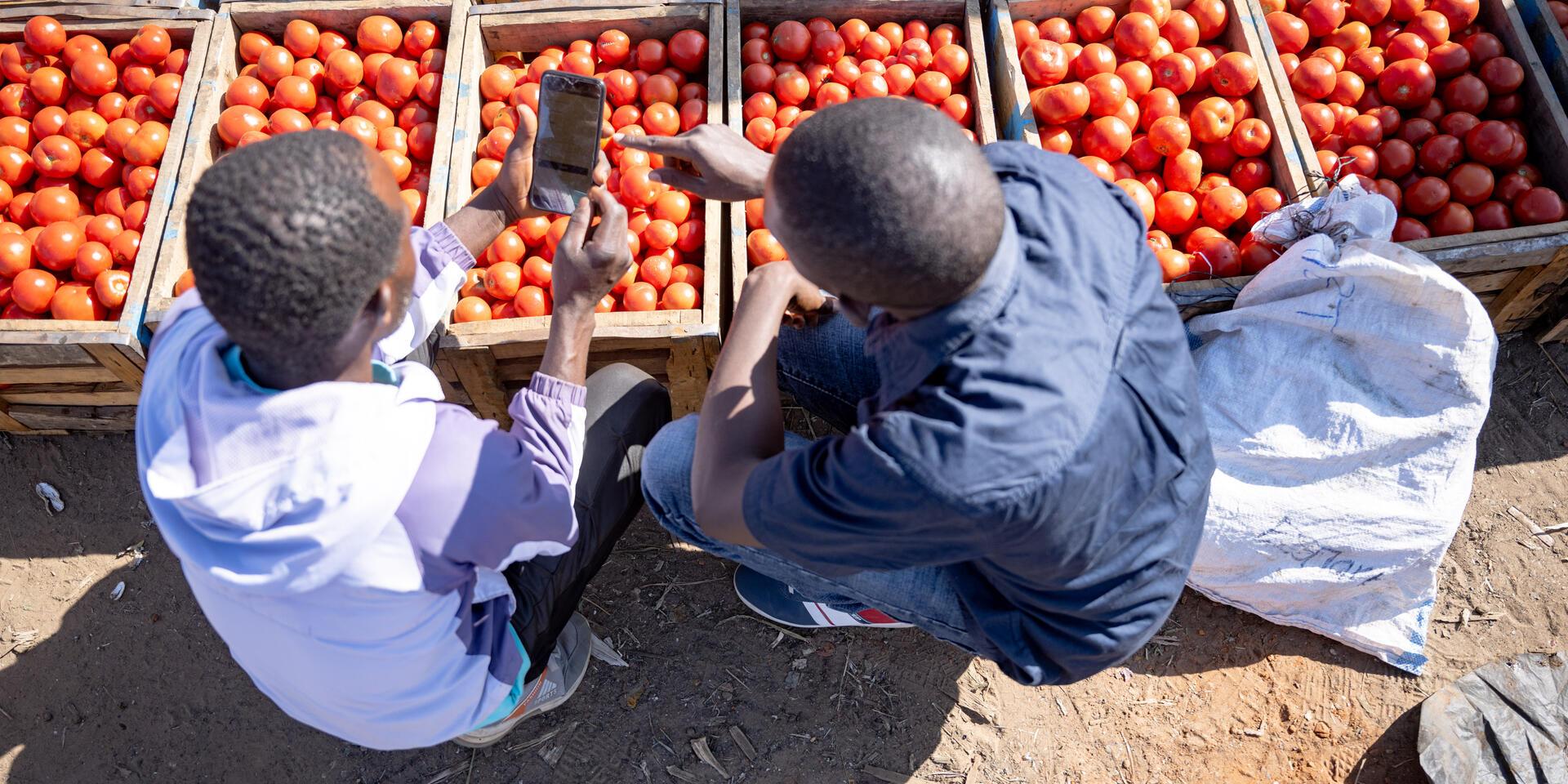

In Southern Africa, a seasonal forecast is more than just a map of probabilities; it is a lifeline for millions of producers.
For too long, a critical "early-warning gap" has persisted: the disconnect between the complex data generated by scientists and the practical, timely advice needed by a farmer in the field. At the 31st Southern Africa Regional Climate Outlook Forum (SARCOF-31) in Lusaka, the message was clear: we must close the early warning gap together. This isn't just a theme; it's a call to action to move beyond simply predicting the weather and start protecting livelihoods.
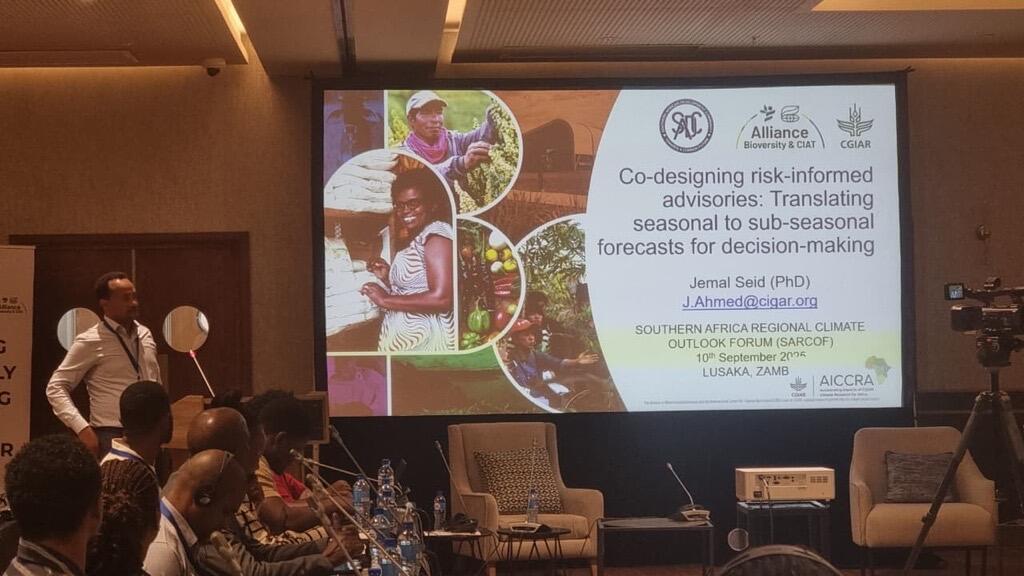
Dr. Jemal Seid of the Alliance of Bioversity International and CIAT presents on co-designing risk-informed advisories at SARCOF-31 in Lusaka, Zambia.
The 'last mile' challenge: Why data isn't enough
The 'early warning gap' is often a translation problem. While regional meteorological centers can predict a "60% chance of above-normal rainfall," a farmer needs to know: Should I plant my maize today, or wait for the second dry spell to pass?
When forecasts remain technical and high-level, they fail to trigger action. Without localized climate information, farmers often default to traditional planting dates that may no longer work in a changing climate.
Closing this gap requires moving from disseminating data to delivering services.
The innovation: A framework for refined decisions
At SARCOF-31, the Alliance of Bioversity International and CIAT( presented a practical solution to this translation problem: an integrated climate information services (CIS) framework that transforms raw forecasts into farm-ready decisions.
The approach works by layering multiple knowledge sources such as soil data, crop characteristics, field observations, and climate models, into a unified decision-support system. Rather than handing a farmer a probability map, the system outputs a tailored advisory, for example: "Given your soil type in Choma District and the forecast wet spell, plant your early-maturing maize variety within the next 10 days."
At the heart of this framework is the Africa AgroClimate API: a flagship innovation developed through the AICCRA project. The API harmonizes global numerical weather prediction models, bias-corrected regional climate data, and emerging AI-based forecasting systems into a single, open-access platform. This isn't about replacing national meteorological services; it's about amplifying their reach. By providing quality-controlled datasets that NMHSs can customize, the API empowers local institutions to generate advisories that speak directly to their farmers' realities.
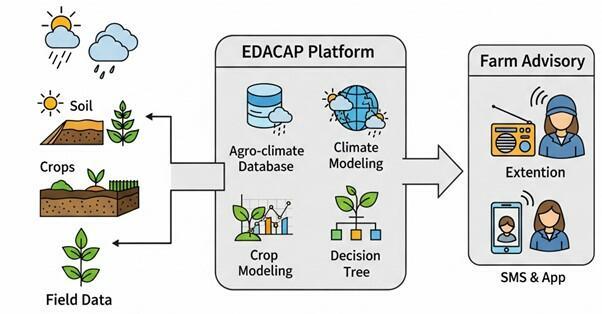
The Alliance's Climate Information Services framework: integrating soil, crop, climate, and field data into tailored farm advisories delivered via extension officers, SMS, and mobile apps.
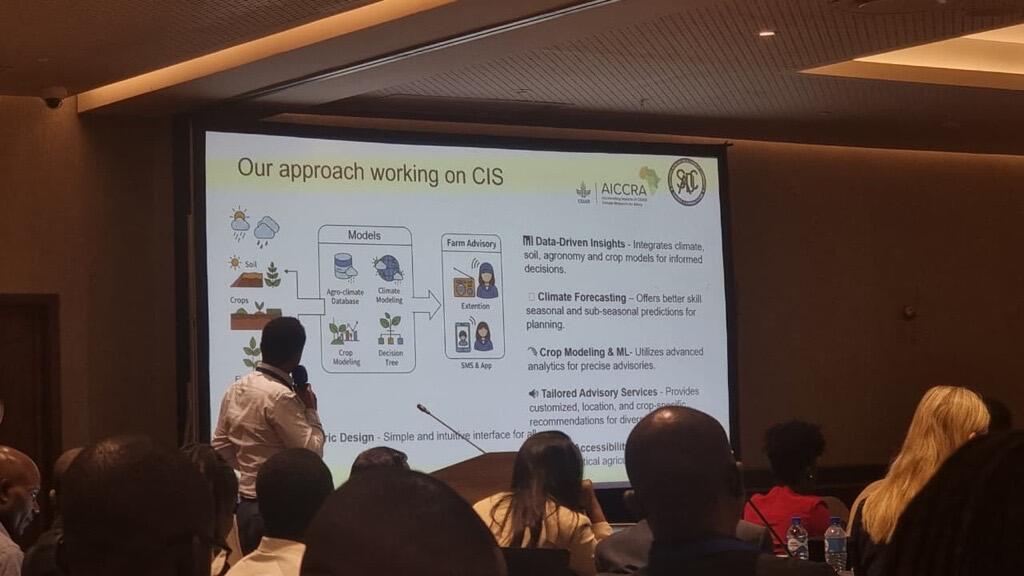
The CIS framework explained to SARCOF-31 delegates: from raw climate data to actionable farm advisories.
This isn't theory. In Ethiopia, the same framework powers the Ethiopian Digital AgroClimate Advisory Platform (EDACaP): a working demonstration that closing the early-warning gap is possible at the national scale.
EDACaP integrates climate, soil, crop, and agronomic data into actionable advisories delivered through the channels farmers actually use: SMS, interactive voice response, and local-language radio broadcasts. During its pilot phase, the platform reached 82,000 smallholder farmers and is expected to scale to 16.7 million farmers through the Ministry of Agriculture's network of over 60,000 agricultural extension agents.
Lessons for scaling climate services across Southern Africa
The Alliance's engagement at SARCOF-31 revealed several insights for anyone working to bridge the gap between climate science and agricultural decision-making:
Co-design builds relevance and ownership: Stakeholders consistently expressed interest in frameworks that connect forecasts directly to agricultural decision points, planting, water management, input use at weather, sub-seasonal, and seasonal timescales. The participatory nature of advisory development fosters institutional ownership and increases the likelihood that advisories become embedded within existing systems rather than developed as parallel efforts.
Collaboration strengthens impact: Partnerships among regional bodies (such as the SADC Climate Services Centre), NMHSs, and research institutions are essential for translating scientific advances into policy and practice. Collaboration also enhances credibility and resource mobilization potential, as donors and governments increasingly seek integrated, multi-partner solutions for climate resilience.
Open data enables scale: The positive reception of the Africa AgroClimate API underscored the value of open-access platforms. With appropriate support, these innovations can be scaled through regional mechanisms, building a harmonized approach to forecast-to-advisory translation across the SADC region.
The Alliance of Bioversity International and CIAT's engagement at SARCOF-31 was supported through the Accelerated Innovation Delivery Initiative (AID-I) and the AICCRA project. For more information on the Africa AgroClimate API and climate services for agriculture, visit alliancebioversityciat.org.