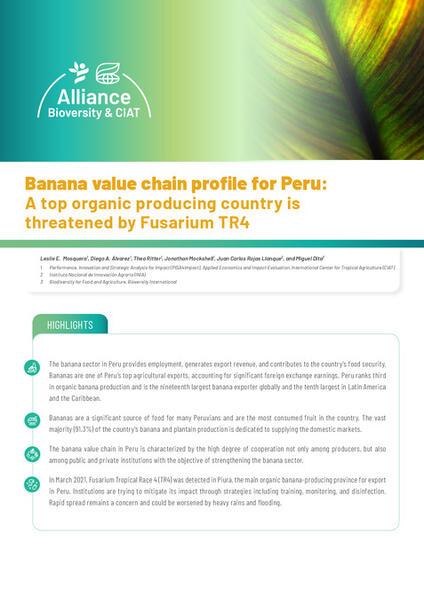
Press and News Banana farmers in Piura face the hidden cost of Fusarium TR4: The potential to wipe out their livelihoods
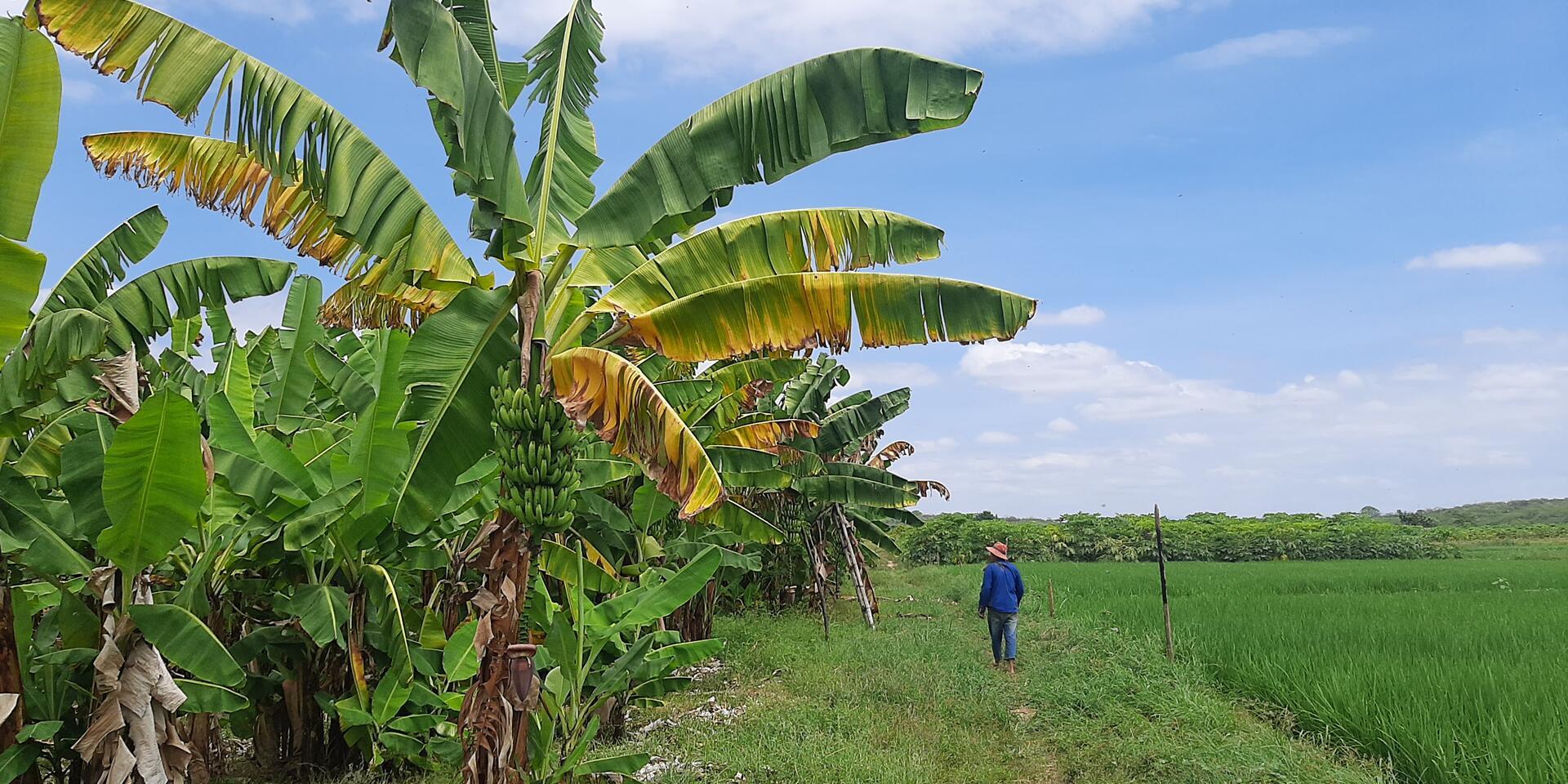

In the sun-drenched fields of Piura, Peru, banana farmers are fighting an invisible enemy—Fusarium TR4. More than a plant disease, it threatens their livelihoods, traditions and the future of one of the world’s most beloved fruits.
More than four years have passed since the first signs of Fusarium Tropical Race 4 (TR4) appeared in Peru. The fungus, scientifically known as Fusarium oxysporum f. sp. cubense TR4, was detected in 2021 in Piura, the country’s leading region for organic banana production. Since then, its presence in Piura has cast a long shadow over an industry that sustains thousands of rural families and supplies one of the world’s most popular fruits. For farmers in Piura, the arrival of TR4 was not simply the outbreak of a new disease, it was the beginning of a long and uncertain struggle for their livelihoods.
TR4 is among the most destructive plant pathogens known in agriculture. Once it infects a banana plant, there is no cure and it can survive in soil for decades, long after infected plants have been removed. Even a small trace of contaminated soil can spread the disease. For regions like Piura, where banana farming is not only an economic activity but also part of the region's cultural identity, this represents an important threat.
Researchers from the Alliance of Bioversity International and CIAT have been studying TR4 for more than 15 years, working closely with producers and national authorities to design strategies that can reduce its spread. Their most recent study, published in World Development Perspectives, goes beyond the biology of the fungus to reveal its socioeconomic consequences for farmers and their communities.
The study provides insights into the devastation TR4 can cause and the benefits early action can entail. Farmers whose fields are affected by TR4 lose on average 13.7 tons of bananas per hectare each year. For smallholders, this translates into nearly $4,000 USD of lost income per hectare. Over the course of 25 years, the long-term financial viability of banana farming becomes drastically compromised. For producers affected by TR4, the net present value of their activity stands at just $8,535 USD per hectare, compared with $48,014 USD for unaffected producers.
When these numbers are projected onto the entire banana-growing area of Piura, the potential losses are staggering and would not only devastate local employment but would also affect food security and destabilize a regional economy that depends heavily on bananas.
Despite these sobering figures, the study also provides reasons for cautious optimism. Mitigation strategies can make a difference and be economically profitable. When producers invest in biosecurity and prevention, the returns outweigh the costs. According to the study projections, for those who have not yet been affected by TR4, every dollar spent on mitigation yields $2.24 USD in benefits. For farmers already battling the disease, the return is lower, but still positive, at $1.47 USD per dollar invested.
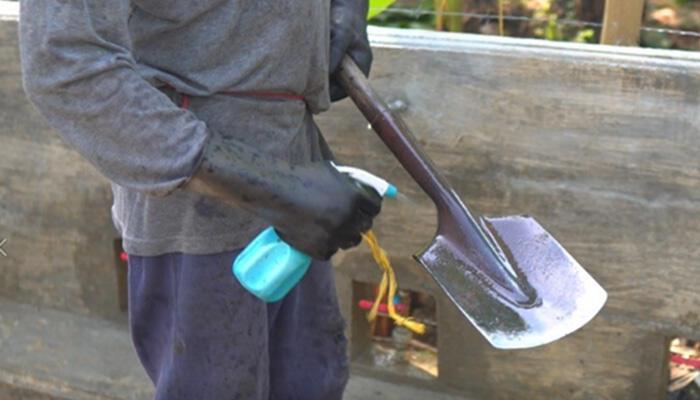
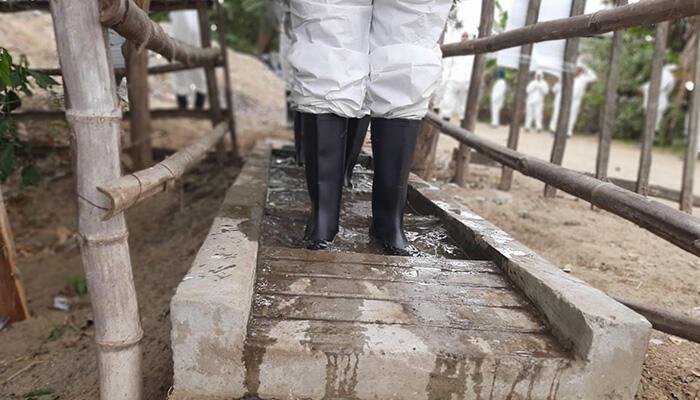
Cleaning of shoe wear and tools are one of the more widespread mitigation practices, but they alone are not enough.
Photos: CIAT/JE Vargas
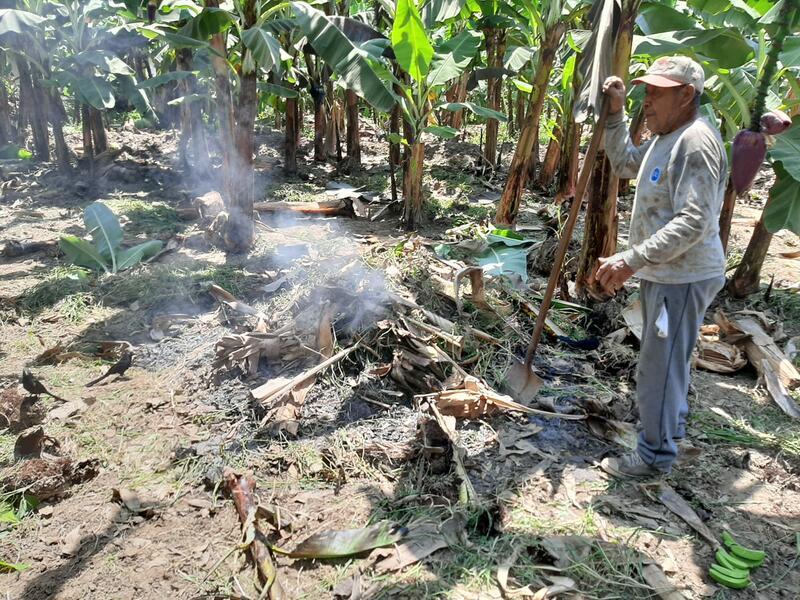
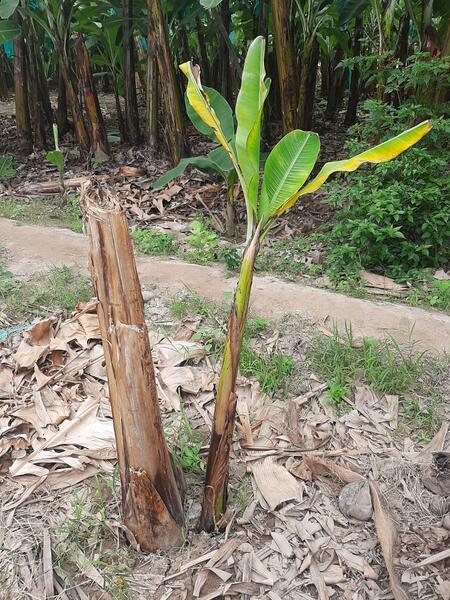
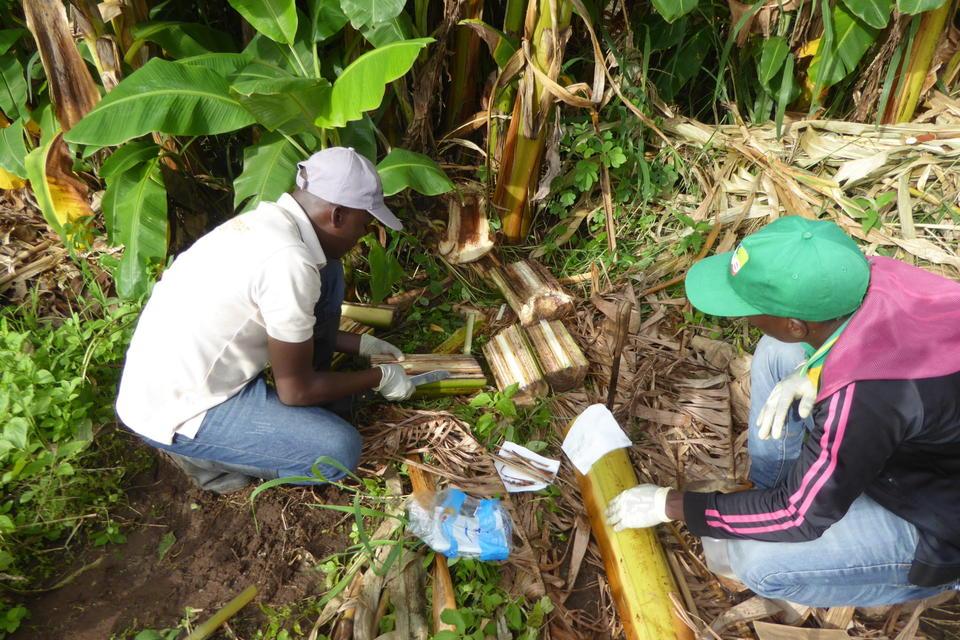
Bad practices, such as using corm as planting materials and burning infected plants, helps the disease spread.
Photos: CIAT/JE Vargas
Nevertheless, there are serious barriers to widespread adoption of mitigation practices. Many farmers in Piura lack the resources to invest in measures such as fencing fields, purchasing disinfectants for shoes and tools, neither other essential practices.
A striking example of this vulnerability is the continued use of corms as planting material. Almost every producer surveyed still uses corms taken from their own fields rather than seeking clean, certified material. This practice dramatically increases the risk of spreading TR4. At the same time, only one percent of producers reported knowledge of certified seed sources. Training and awareness campaigns have also been uneven. Farmers reported receiving information about TR4, but in many cases, it was insufficient or even counterproductive, as some resorted to burning infected plants, an action that helps the disease spread.
Technology could be part of the solution. Most farmers in Piura own smartphones, but very few uses mobile Apps to help manage their farms or detect diseases early. Digital platforms, like Tumaini App have the potential to support surveillance, early warning systems and phytosanitary education. More awareness and training on such platforms need to be part of the solution to combat the spread of TR4.
The study underlines the need for a coordinated response that combines economic support, technological innovation, and continued awareness campaigns. Preventing the expansion of TR4 requires policies that enable producers to adopt biosecurity practices, access certified planting material, agroecological suppression and management practices and receive phytosanitary education. It also requires that national and regional governments invest in surveillance systems that can stop outbreaks before they spread.
Ultimately, the story of TR4 in Peru is not just about a plant disease. It is about the resilience of farming communities and the urgent choices that must be made to safeguard both their livelihoods and the fruit that so many people around the world consume daily. Research from the Alliance of Bioversity International and CIAT offers more than a warning. It provides evidence that prevention works, and that timely investment can protect the future of banana farming in Piura and other affected countries, such as Colombia. But the clock is ticking, and without collective action, incentives and investment in prevention strategies, the silent march of TR4 could turn into an unstoppable wave.
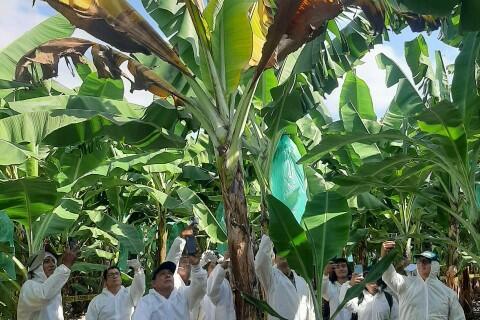
Digital platforms have the potential to support surveillance, early warning systems and phytosanitary education.
Photo: CIAT/J Mora
Acknowledgements
We are grateful for the funding for this work from the Deutsche Gesellschaft für Internationale Zusammenarbeit (GIZ) [Project Number O143] and the CGIAR Policy Innovations Program.
Alliance Authors

Jonathan Mockshell
Scientist and Project Leader
Diego Álvarez
Research associate
Leslie Estefany Mosquera Escobar
Research Associate
Jorge Eliécer Vargas Acosta
Research Associate
Carolina Gonzalez
Thematic LeaderFurther reading