Research Articles From Aichi to Beyond: The Future of Global Biodiversity

The Convention on Biological Diversity (CBD) has been a cornerstone of global efforts to conserve biodiversity. As we get ready for another crucial Conference of the Parties (COP), we must reflect on the journey so far, the lessons learned, and the path forward.
A Historical Perspective
Before the CBD, various international agreements aimed to protect specific species or ecosystems: Conventions on wetlands (Ramsar), endangered species (CITES), migratory species (CMS) and World Heritage (WHC). However, a comprehensive framework was missing. Recognizing this gap, the CBD was established in 1992, providing a global platform for biodiversity conservation.
Since then, 15 conferences of parties to the convention (COPs) have been held biannually to further develop a common global plan to protect biodiversity across the world. The Aichi Biodiversity Targets -proposed at COP10 held in Aichi, Japan in 2010, and supported by all the 196 parties of the Convention - should have been reached by 2020. Yet, a stock-take found that of the 20 targets, not a single one was fully achieved, and only six were partially met.
There are many questions to ask, such as why there was such limited progress; and, more importantly, what can we do to accelerate change? Looking back to learn from the past, we now know that a lack of clearly defined metrics of progress made the Aichi goals difficult to implement, and a key priority is to have an agreement on robust monitoring, planning, reporting and review.
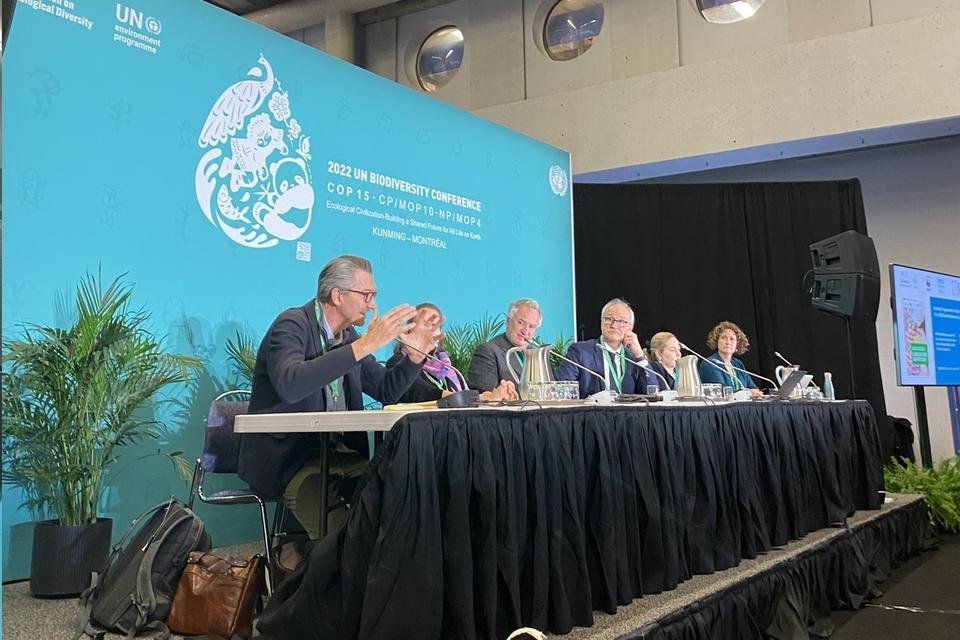
Another important piece of this puzzle is the lack of public awareness on the importance of biodiversity to sustain life on Earth, and because of that, the CBD’s Communication, Education and Public Awareness program (CEPA) aims to raise awareness about the importance of biodiversity for human well-being, therefore giving more political priority to biodiversity; this is also critical to enhance the uptake of the Kunming-Monreal Global Biodiversity Framework (GBF), adopted at COP15 in Montreal, Canada.
The Role of Communications in Driving Change
- Raising Public Awareness: The CBD's Communication, Education, and Public Awareness (CEPA) programme has highlighted the critical role of public awareness. Without a well-informed public, it's difficult to garner support for biodiversity conservation.
- Bridging the Knowledge-Action Gap: While scientific knowledge has expanded, translating this knowledge into actionable policies and practices remains a challenge, but effective communication can bridge this gap.
- Promoting Behavioral Change: Communications can play a key role in promoting behavioral change to support biodiversity conservation.
A Journey of Joint Efforts
The connection between biodiversity and climate change is undeniable. The CBD's member parties and observers have increasingly acknowledged this connection, emphasizing the need for integrated nexus approaches. The GBF is a testament to this shift, aiming to address these challenges holistically, working alongside the UN Framework Convention on Climate Change (UNFCCC). In this context, food systems are a key pathway for supporting a sustainable transformation for biodiversity, especially as agricultural landscapes are the largest ecosystem on Earth. In this context, and in a critical moment for implementation of member countries' National Biodiversity Strategies and Action Plans (NBSAP), the CGIAR Initiative on NEXUS Gains aims to accelerate progress on water, energy, food and natural ecosystems, integrating biodiversity, food systems and climate change.
Recognizing the importance of integrated approaches, the NEXUS Approach addresses the interconnection between these critical topics, integrating efforts to avoid these topics being addressed in an unarticulated way, therefore, understanding what’s working and what’s not. For instance, with scientific and technical backstopping of CGIAR and other partners, for the first time the GBF has included the role of agroecological approaches for the sustainable use of biodiversity in agriculture (Target 10), and has included means to monitor progress from a NEXUS perspective such as the Agrobiodiversity Index that collects data on biodiversity across nutrition, agriculture and genetic resources, measuring the status of agrobiodiversity and identifying actions, risks and opportunities to increase the use and conservation of biodiversity. With more accurate data and indicators supported by research, we are informing policymakers to set more achievable targets and action plans.
Keeping in mind the importance of communications and working in partnership, the Alliance is collaborating with local partners in Colombia: the Mayor’s Office of Cali, El País newspaper, and the Autónoma de Occidente University with the support of the Colombian Ministry of Environment and the Colombian Association of Science Journalism and Communication. Together, the partnership organized a webinar series to strengthen the capacities of Latin American journalists by providing them with tools and knowledge to effectively report on the upcoming COP16 on Biodiversity to be held in Cali Colombia in October 2024. More than 100 journalists and communicators participated in the four sessions held in September. On behalf of the Alliance, Carolina Navarrete-Frías (Senior Policy Advisor on Environmental Policy and Biodiversity) and Marcela Quintero (Associate Director General) shared presentations on these topics of discussion.
The GBF and Beyond
The GBF represents a new era in global biodiversity conservation. The new framework aims to set more ambitious targets, a robust monitoring framework essential to track progress, and the rights and roles of Indigenous Peoples and Local Communities (IPLCs) which are central to achieving the GBF. Universities and research institutions have a critical role to play, strengthening the scientific and technical capacity of developing countries, conducting research to inform policy and practice, and communicating complex scientific concepts to a wider audience.
The journey towards biodiversity conservation is long and complex. While challenges remain, there are also many reasons to be optimistic. By learning from the past, strengthening international cooperation and investing in effective communication, we can build a more sustainable future for both people and the planet.
Written by José Luis Urrea-Benítez, Science Communications Specialist, with inputs from Carolina Navarrete-Frías, Senior Policy Advisor at the Alliance. Photo credit: Convention on Biological Diversity
See Also