Blog Who decides what AI does to our food? Reflections from CFS 54 in Rome


This week, Rome hosts the 54th Plenary Session of the Committee on World Food Security (CFS 54). This year’s session puts smallholders and family farmers at the centre of the discussion while also addressing a question that is moving faster than most institutions can follow: What should artificial intelligence mean for food security?
For the Alliance of Bioversity International and CIAT, this is a conversation we want to be part of. Elisabetta Gotor, Principal Scientist and Program Leader of our Policy, Inclusion and Socio-economic Analyses for Impact and Learning Program, is presenting key reflections from the High-Level Forum on Harnessing Artificial Intelligence, Digitalization and Data Governance for Food Security and Nutrition.
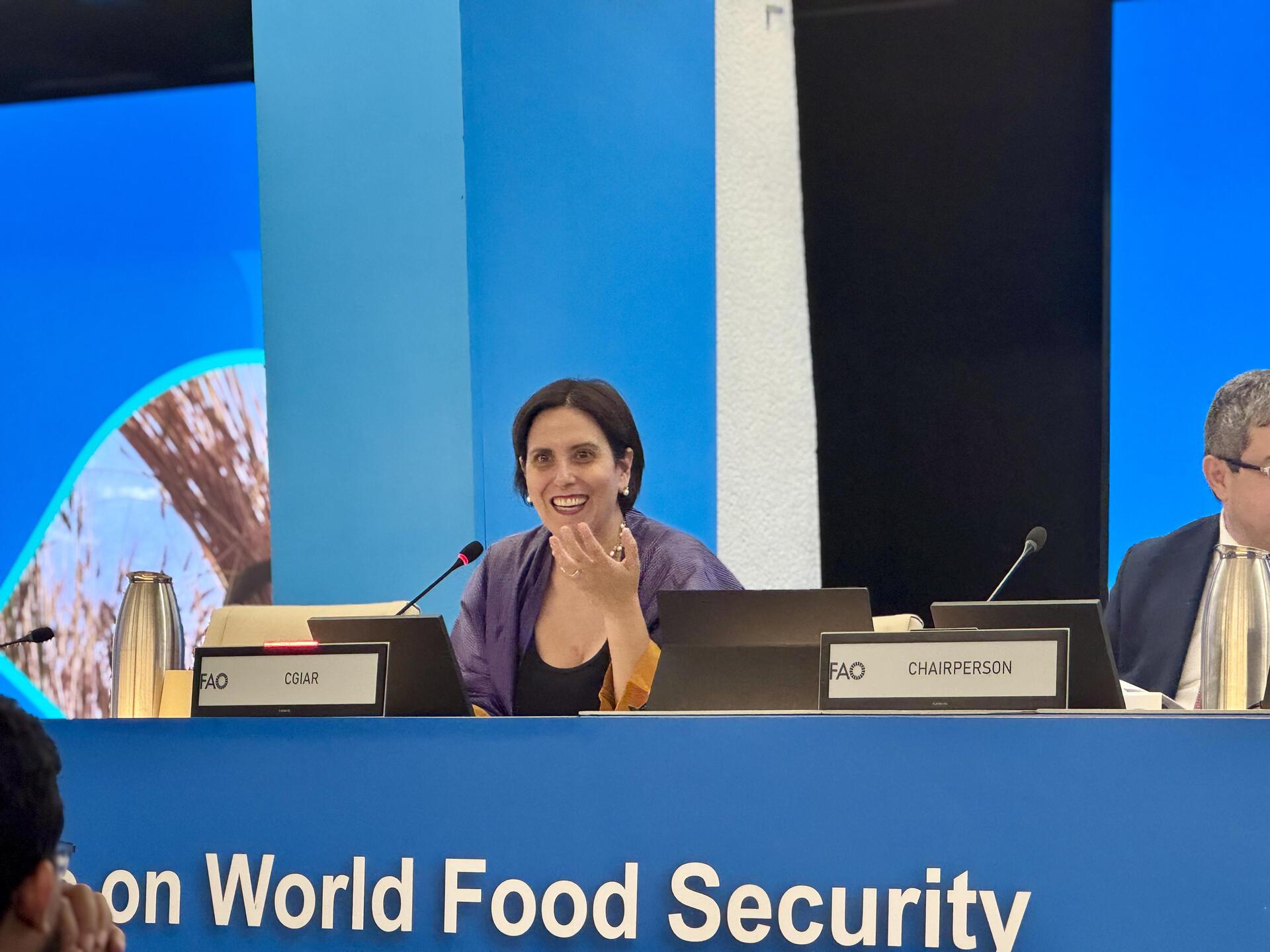
What stood out most was the shift in the conversation. The old debate over whether AI is good or bad for food security has given way to better questions: Under what conditions, for whom, and governed by whom?
Five key messages emerged from the discussion
1. The benefits are real, but narrower than the promise. The strongest evidence supports specific applications, such as yield forecasting, pest and disease detection, and early warning systems. Evidence on access to food, nutrition and diets remains much thinner. Early warning models perform reasonably well in predicting climate-related shocks, yet they largely miss conflict-driven crises, which are now a leading cause of acute hunger. The lesson is simple: we should judge these tools by their impact on food security and nutrition, not by how many people use them.
2. Technology amplifies capacity. It does not replace it. Digital tools work best where connectivity, skills, strong institutions and trust already exist. Where these are lacking, technology can widen the very gaps it was intended to close. Smallholders, women, young people and Indigenous Peoples are under-represented in datasets and often have less bargaining power, putting them at greater risk of being overlooked or misjudged by biased algorithms.
3. Data governance is about power and rights. Who collects the data? Who controls it? Who benefits, and who is accountable when something goes wrong? One panelist put it plainly: there can be no food sovereignty without data sovereignty. Participants raised concerns about the concentration of ownership of cloud infrastructure, data and algorithms; the risk of public institutions becoming locked into a single vendor; and the need to protect traditional knowledge and uphold the principle of free, prior and informed consent.
4. AI has a footprint. AI infrastructure requires energy, water and land, sometimes in the very territories where food is grown. Investment in AI also competes with funding for the basic needs of food security. Responsible adoption means weighing these costs transparently.
5. Technology should extend human judgement. A farmer’s knowledge of land, water and ecosystems cannot be replaced by an algorithm. Across the panels, speakers agreed that AI should support human judgement and public responsibility while remaining firmly anchored in the right to adequate food.
Why the CFS is the right place for this
The CFS is the most inclusive intergovernmental platform for food security and nutrition, making it the right place for this debate. At the Forum, producers, Indigenous Peoples, scientists, governments and private-sector representatives listened to one another, even where they disagreed.
The Forum highlighted several priorities: strengthening the 2023 data recommendations in light of AI developments; assessing AI tools through impact assessments before public procurement; and investing in public digital infrastructure and local capacity so that institutions can audit and challenge digital systems. Participants also stressed the importance of continuing scientific exchange and dialogue with broader UN processes on AI governance.
At the Alliance, our work sits at the intersection of research, policy and practice, and this is where we want to contribute: by generating evidence that tests bold claims, building partnerships that bring diverse voices together, and shaping policies that put the people who feed the world first.
Technology is moving fast. Governance, rights and evidence must keep pace to ensure that the digital transformation of food systems serves the people who produce our food.
Follow the Alliance’s engagement at CFS 54 throughout the week