Blog Enhancing agricultural research with FAO's AGRIS and AGROVOC programs: A conversation with Alliance of Bioversity International and CIAT's knowledge management team

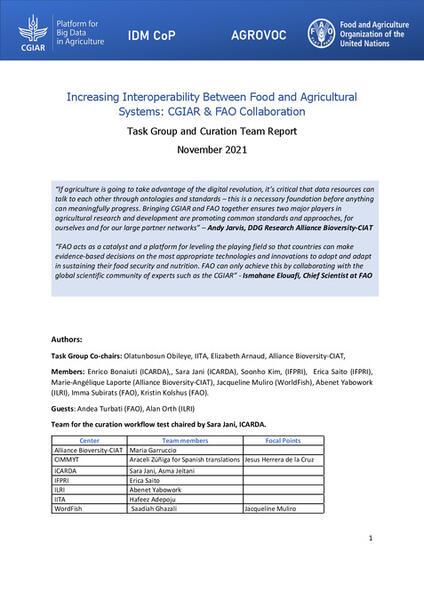
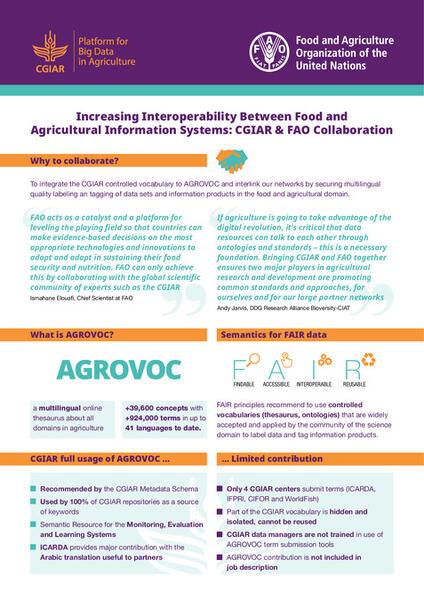
In a recent series of conversations with CGIAR Knowledge Management teams, Sara Jani and Valentina De Col from ICARDA interviewed Maria Garuccio, Information Management and Open Science Manager at the Alliance of Bioversity International and CIAT. They discussed CGIAR's collaboration with the Food and Agriculture Organization of the United Nations (FAO) on AGRIS and AGROVOC – two key resources in agricultural research. AGRIS is a comprehensive bibliographic database focused on agriculture and nutrition, while AGROVOC is a multilingual thesaurus covering a wide range of agricultural terms.
By: Sara Jani and Valentina De Col (ICARDA)

Maria Garruccio
Manager, Information Management and Open Science,Benefits of being in AGRIS
Alliance has shared its knowledge products with AGRIS and plans to do so more. What are the benefits of being in AGRIS for your center?
Maria: For us, AGRIS is more than just a platform—it's a community of practice. It connects people working within the agricultural domain, fostering collaboration and knowledge-sharing. Being part of AGRIS allows our center to engage with others who share similar goals. The benefits are numerous: access to support, exchanging ideas, opportunities for professional growth through training, and a sense of belonging to an international network. Overall, it is about being part of a global collaboration that enhances our visibility and lets us contribute to shared innovations in agriculture.
Importance for CGIAR to share research outputs via AGRIS
From a broader perspective, do you think it is important for CGIAR to share its research outputs with a larger community and global users through AGRIS? And why?
Maria: Yes. AGRIS is one of the world's largest bibliographic databases in the agricultural domain, and having our research products indexed in AGRIS is a significant advantage. It increases the visibility and dissemination of our work globally. Since Google Scholar indexes AGRIS, it ensures that our research reaches a broader audience. Additionally, it offers multilingual access to millions of records and a centralized resource database, making it a valuable tool for information managers, helping us filter out irrelevant data and focus on pertinent research. Being part of this international collaboration not only benefits us but also strengthens partnerships across the global agricultural research community and like-minded organizations worldwide.
The knowledge content from Alliance: types of content and subjects
How would you describe the knowledge content produced and available from your center through your repository? In which specific research areas is your center publishing results?
Maria: Our center publishes on key areas like climate change, food systems, food security, agriculture, climate change adaptation, and climate-smart agriculture. The content we provide ranges from journal articles and monographs to technical reports, books, book chapters, conference proceedings, and even datasets. We publish various outputs, but peer-reviewed journal articles are a major focus. All our research is submitted to CGSpace and harvested by AGRIS, ensuring broad dissemination and access to our diverse publications.
Importance of AGRIS for agricultural research institutions such as CGIAR
Do you believe it is important for agricultural research institutions or networks, such as CGIAR, to have access to a comprehensive bibliographic database like AGRIS? If so, what are the specific benefits of accessing such a database?
Maria: Yes, it is important. One unique advantage of AGRIS is its extensive collection of gray literature, which many other databases lack. This gives visibility to research that hasn't been formally published, opening up new opportunities for discovery. For example, a research report from a center in Kenya might highlight critical insights that could lead to innovations. Additionally, using the AGROVOC thesaurus as a standard within AGRIS makes organizing and retrieving information easier, ensuring interoperability across other systems.
Enhancing findability and interoperability through AGROVOC
CGIAR contributes to and uses AGROVOC as a common vocabulary. How does this collaboration impact the findability and interoperability of your data?
Maria: AGROVOC is a well-established and recognized standard in agricultural information management, greatly enhancing the findability and interoperability of our data. It is an effective retrieval and resource discovery tool because its integration with platforms like Google ensures that our content surfaces during searches. Our participation in the editorial processes of AGROVOC also allows us to introduce relevant emerging terms and keep the vocabulary updated with our research needs.
This discussion highlighted the significant role AGRIS plays in enhancing the visibility and reach of the Alliance's research outputs and the sense of community fostered by the AGRIS Network. By continuing to collaborate with AGRIS and AGROVOC, there is an excellent opportunity to amplify further the effectiveness and global impact of AGRIS within the agricultural research community.