From the Field From science to scale: What the Alliance brought to the Africa Food Systems Forum
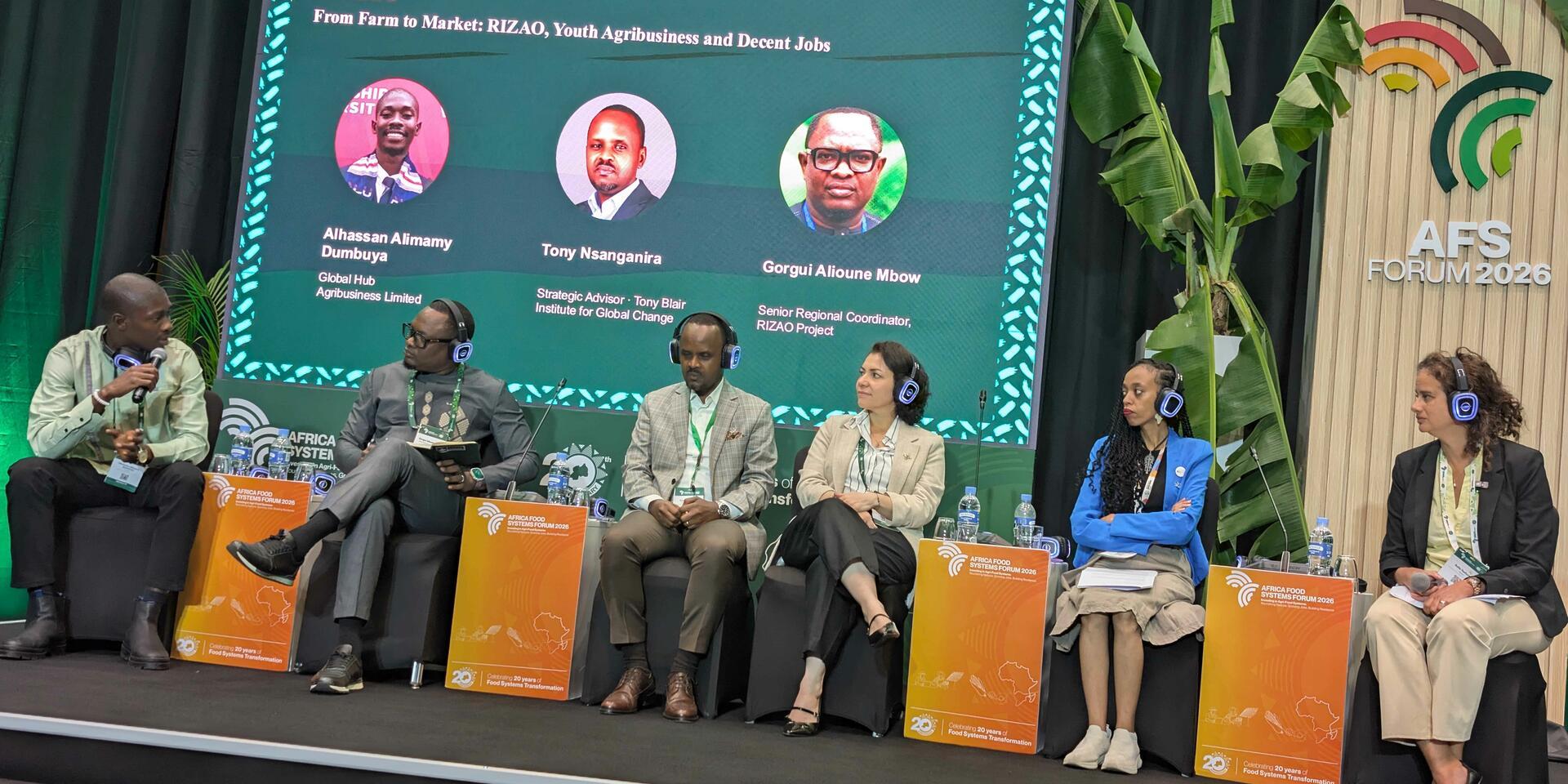

 From PABRA's 30-year record to climate finance, school meals, regenerative agriculture and youth-led innovation, the Alliance of Bioversity International and CIAT joined the Africa Food Systems Forum 2026 to connect scientific evidence, finance, policy and delivery with the goal of transforming food and land systems. This was embodied by the Africa launch of the Alliance's 2026-2030 Strategy and new partnerships designed to turn it into action.
Kigali offered a useful way to see what 'science to scale' looks like in practice. At the Africa Food Systems Forum 2026, held from 31 August to 5 September, governments, businesses, research institutions, farmers' organizations, youth networks and development partners gathered around a theme centred on investment: nourishing nations, growing jobs and building resilience. Rather than treating nutrition, climate, markets and innovation as separate tracks, the Alliance used them as connected parts of one question: what has to happen between a promising idea and impact at scale?
That question linked the week's two institutional milestones. PABRA's 30th anniversary showed what patient, African-led partnership can achieve over decades; the Africa launch of the Alliance's 2026-2030 Strategy set out how the organization intends to carry that lesson into its next chapter. Around them, Alliance scientists and partners examined the same pathway from different angles: evidence, demand, finance, policy, delivery and the institutions needed to hold those pieces together.

PABRA at 30: when staying power becomes an innovation in itself
The strongest argument for scale in Kigali was not a new technology, but a 30-year track record.
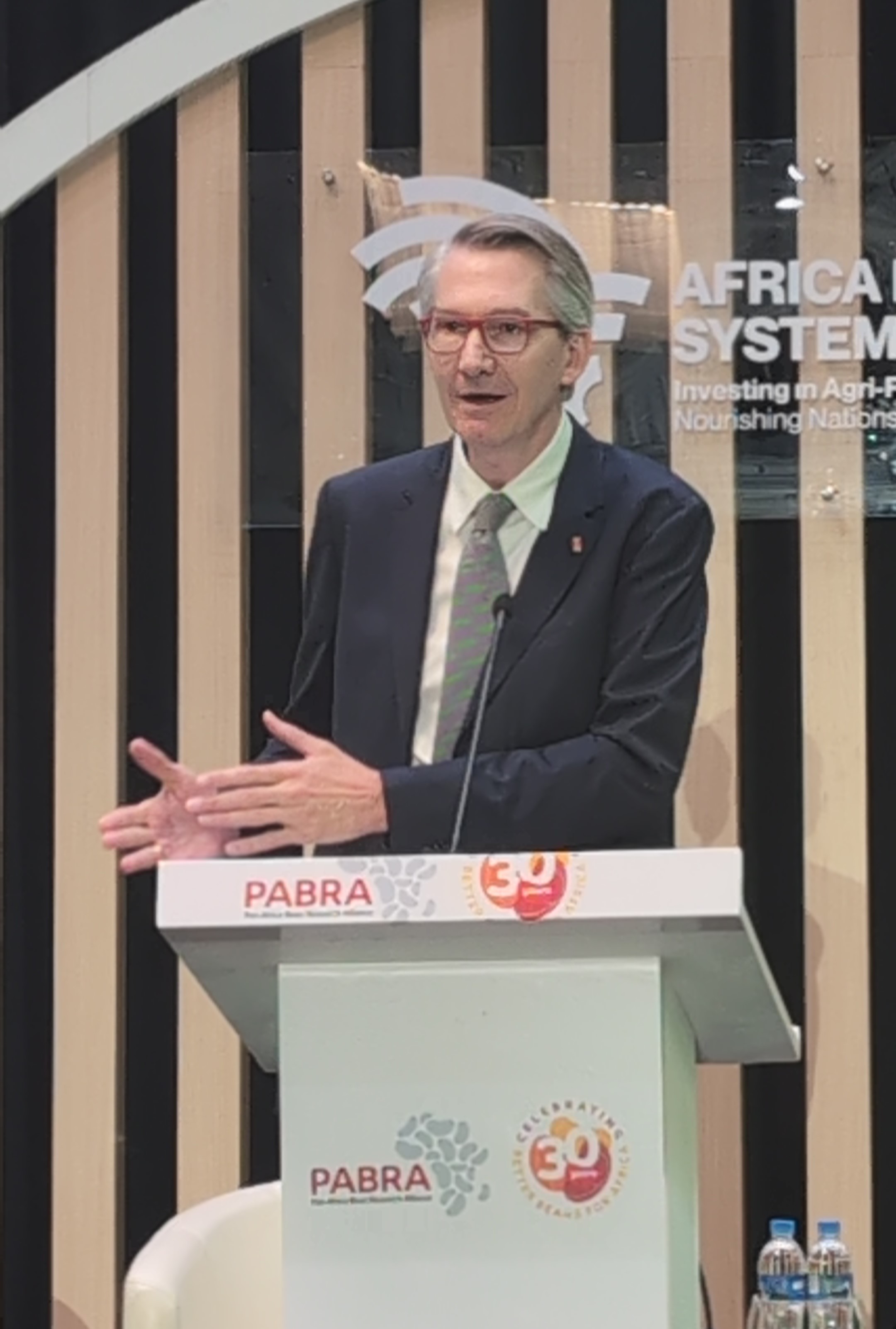
The Pan-Africa Bean Research Alliance (PABRA) marked three decades of work with a record that reaches well beyond a single crop. Established in 1996, the network now brings together more than 900 organizations across 31 African countries. More than 43.5 million farmers, 58.1% of them women, have accessed improved bean varieties. More than 600 varieties have been released, over 500 small and medium-sized enterprises have been supported, and more than five million farmers have been linked to markets.
PABRA's significance lies in how those results were built. National agricultural research systems, breeders, farmer organizations, seed enterprises, processors, traders, governments and funding partners did not operate as separate links in a chain. Over time, the network connected varietal improvement with seed access, nutrition, enterprise development and markets, creating the conditions for research to travel further than a project or trial.
That is why the anniversary looked forward as much as it looked back. Sessions explored demand-led breeding, resilient seed systems, school meals, private-sector investment, climate-smart agriculture, regional trade and the possibility of adapting the PABRA model to other crops and value chains. The theme 'beyond 30, and beyond beans' turned an anniversary into a question about the next frontier of scale.
"The last 30 years allowed us to build a superhighway. Now it is about accelerating. We have achieved a great deal, but there is still much more to accomplish.” - Jean Claude Rubyogo, Leader, Global Bean Program, and Director, PABRA

That shift, from celebrating results to asking how to accelerate them, set the rhythm for the Alliance's wider AFSF participation. If PABRA showed what sustained partnership can achieve, the rest of the week examined the ingredients needed to reproduce that movement across crops, landscapes, markets and finance.
"PABRA shows what becomes possible when science stays connected to institutions, farmers, markets and investment long enough to build trust and reach scale. In Kigali, that same lesson ran through our Strategy, our scientific discussions and the partnerships we formed: impact depends on making those connections work together.” - Juan Lucas Restrepo, Director General, Alliance of Bioversity International and CIAT
When science meets investment
The first ingredient was capital, but not capital in isolation. Across the climate discussions, finance was repeatedly paired with evidence: how can investment move towards solutions whose benefits can be measured, whose risks can be understood and whose performance can be tested under African farming conditions?
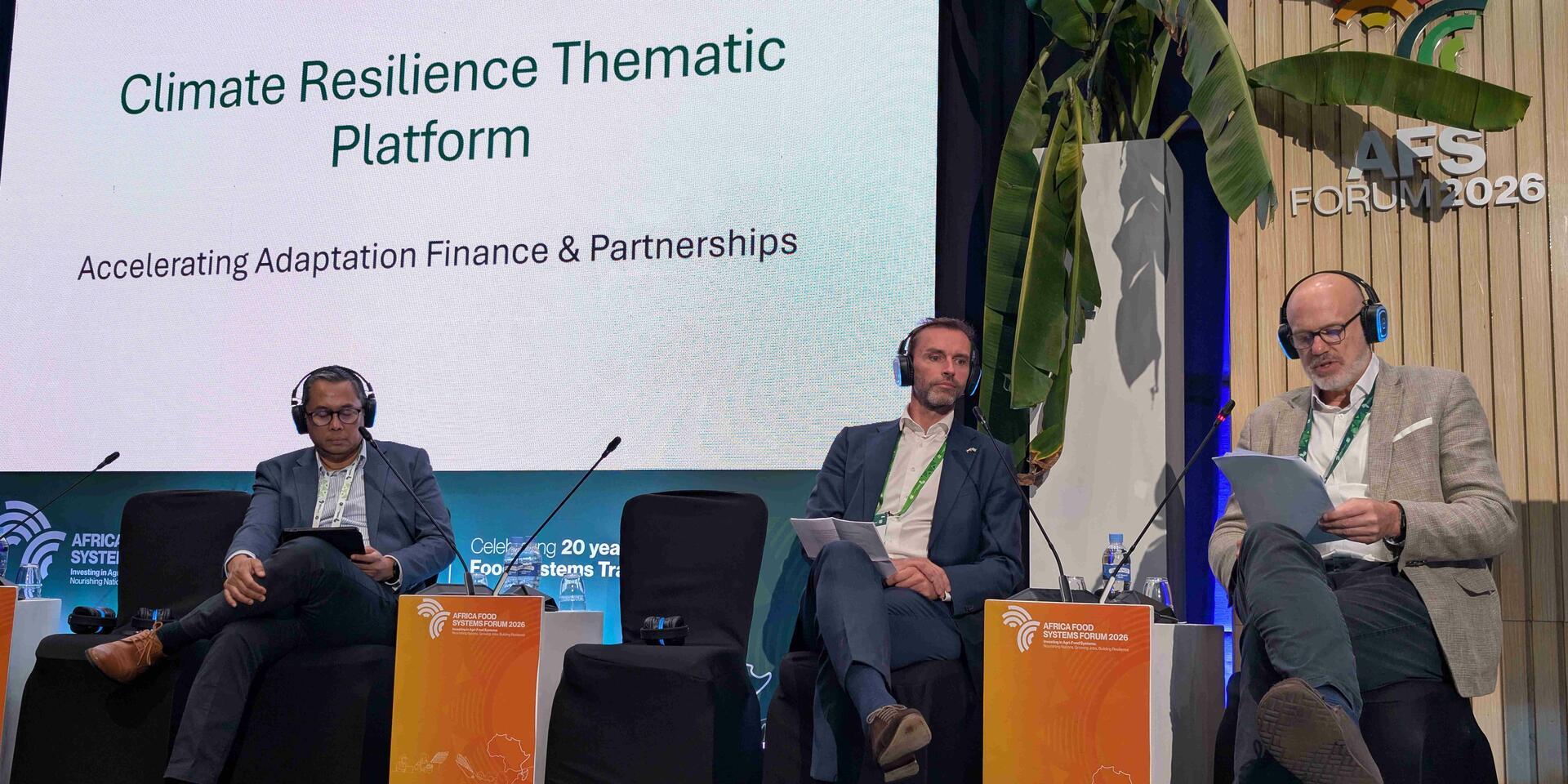
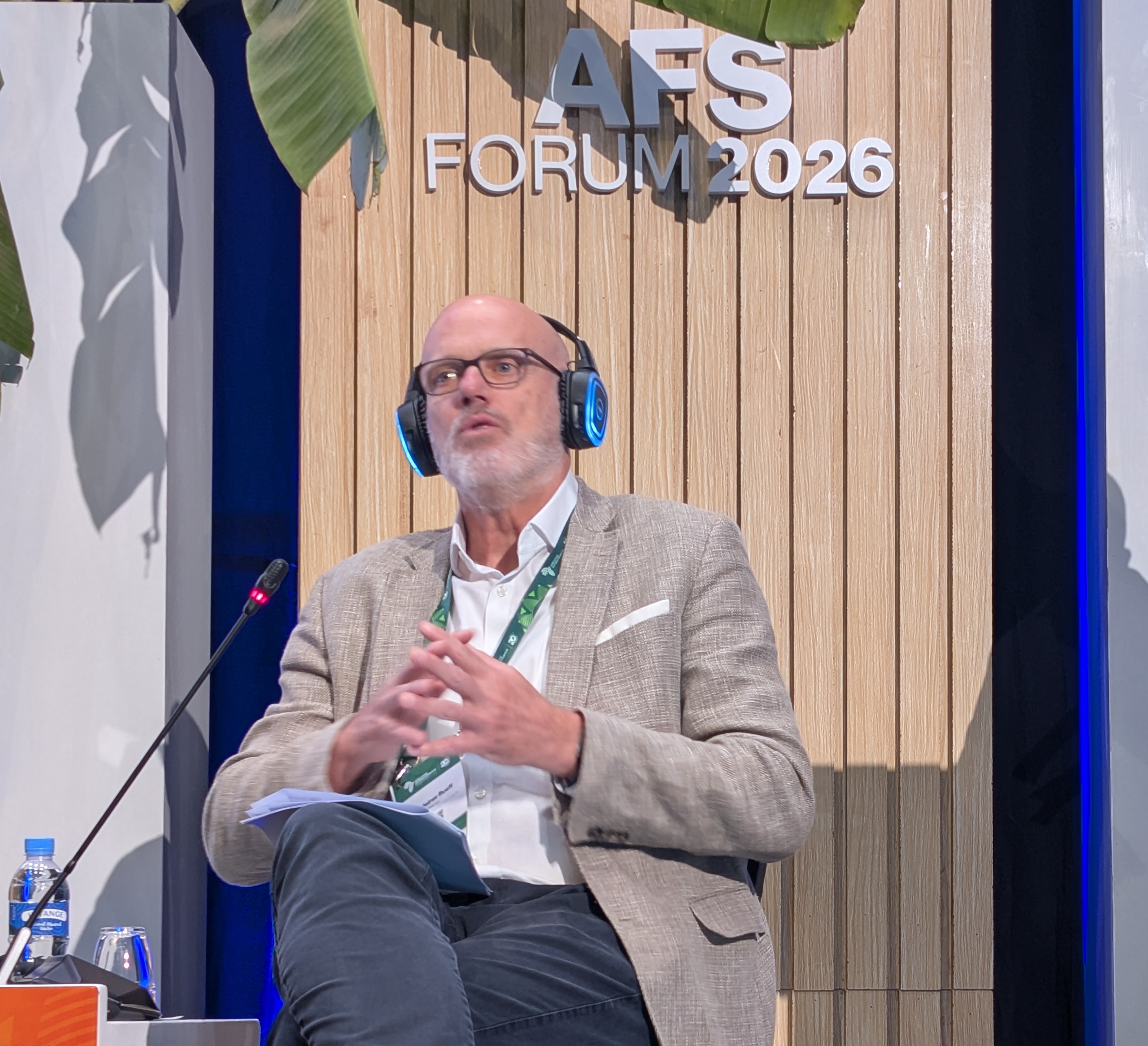
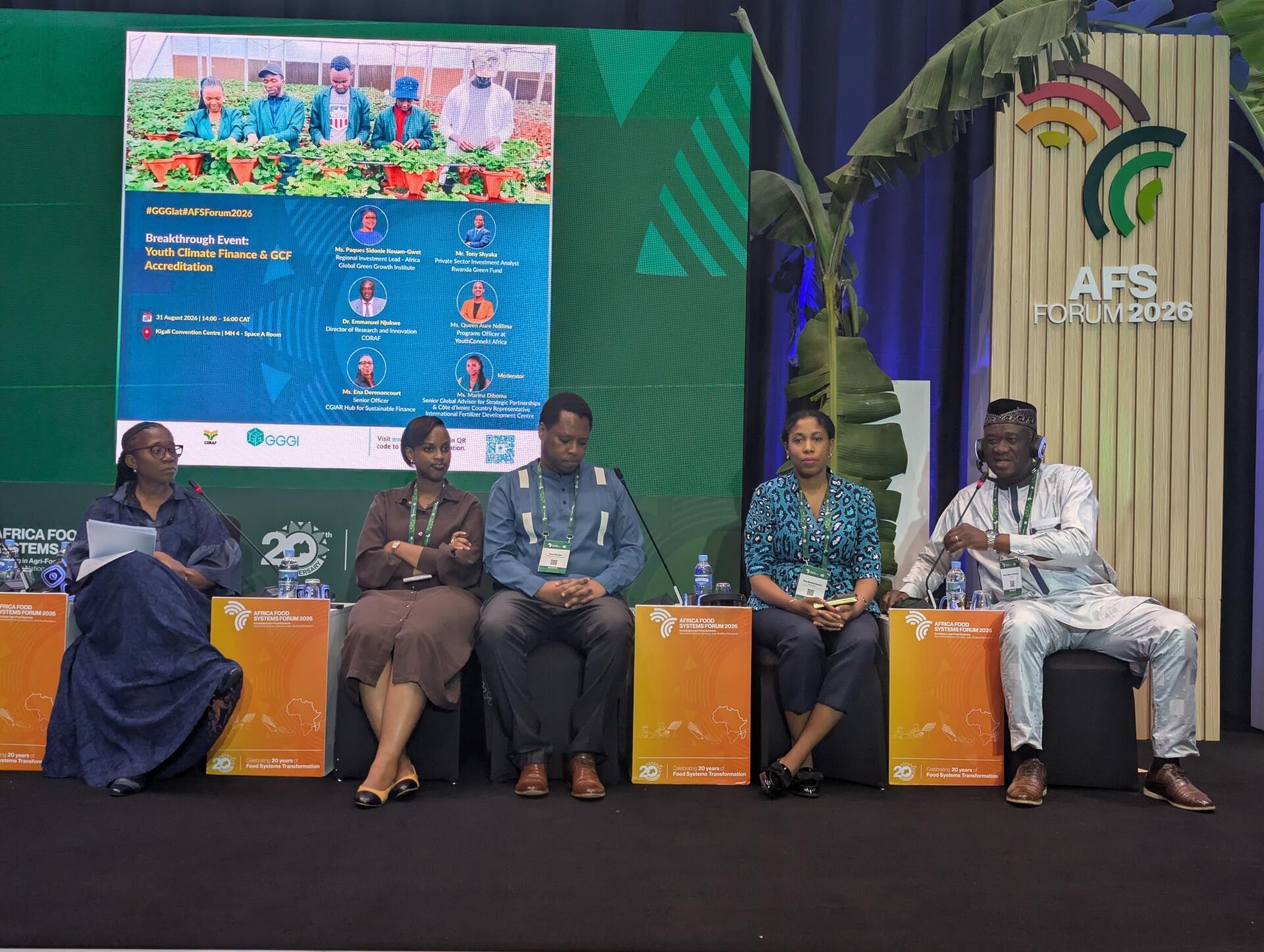
Henri Rueff, Director of Climate Action and Principal Scientist, joined a discussion on climate adaptation finance and partnerships, examining how African countries can improve access to adaptation finance, including through development finance institutions and climate funds such as the GEF and GCF, and how partnerships can reduce risk around climate-resilient agriculture.
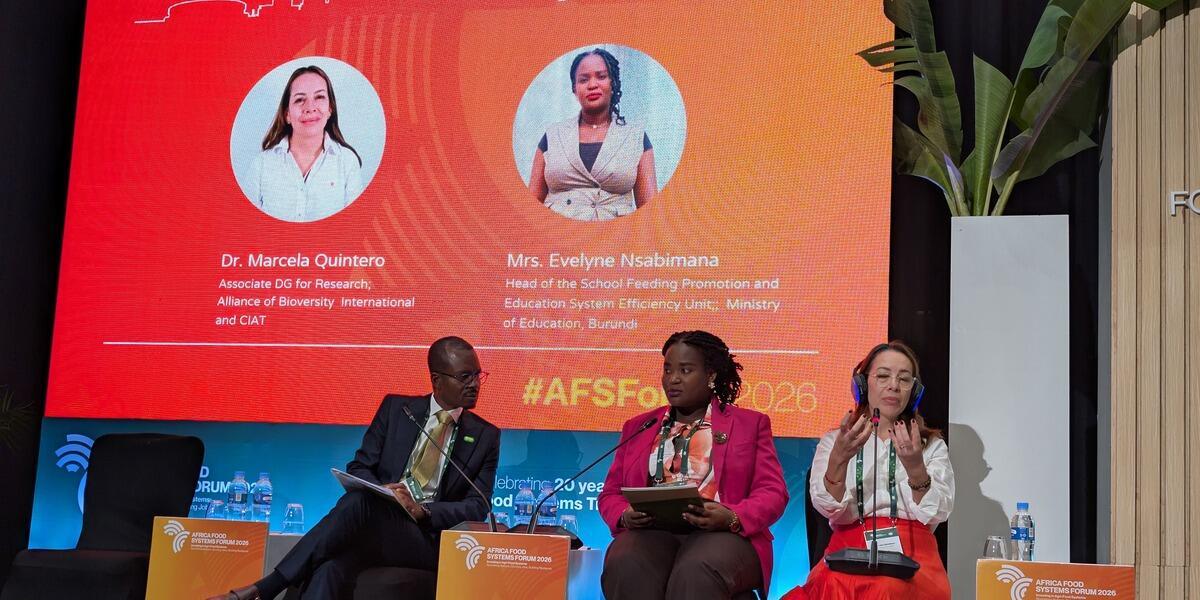
The same question moved from financial architecture to farmers' fields. Marcela Quintero, Boaz Waswa, Alemayehu Sintayehu and Job Kihara contributed to discussions on enhanced rock weathering, focusing on the agronomic evidence needed before a climate technology can be recommended responsibly across different soils, crops and agroecological conditions.
The connection between discussion and delivery became tangible through a new five-year agreement between the Alliance and Mati Carbon. Field trials will test whether crushed basalt can improve yields, soil health and resilience while delivering durable carbon removal. The emphasis is deliberately evidence-first: performance must be demonstrated under real-world conditions rather than assumed from promise alone.
The same evidence-and-investment logic surfaced in sustainable finance. Through FASA, the CGIAR Hub for Sustainable Finance is pairing catalytic capital and technical assistance with a science-driven learning agenda for funds investing in African agri-SMEs, while strengthening the integration of climate risk into investment decisions. Together, these conversations made one point clear: climate finance becomes more credible when science can show what works, for whom and under what conditions.
"Climate finance should not be judged only by how much capital is mobilized. The more important test is whether those investments reduce vulnerability and improve farmers’ ability to cope with shocks. Science helps us identify what works, measure risk and direct finance towards solutions that can deliver durable results.” - Henri Rueff, Director, Climate Action and Principal Scientist
Nourishing people while building markets
But capital alone does not create scale. Innovations also need demand, and Kigali repeatedly brought that demand-side question back to food, nutrition and markets.
Discussions on financing home-grown school feeding illustrated the connection. Sourcing more nutritious and diverse foods from local producers can improve children's diets while creating predictable demand for farming communities. In that sense, a school meal becomes more than a social service: it can also be a public investment in local production, diversified diets and market development.
That logic connects directly with PABRA's experience, where iron- and zinc-rich beans have been linked to healthier diets and locally sourced school meal programmes. Kigali then widened the lens beyond beans, asking what it takes to build demand and viable markets for a broader range of nutritious crops.
Jean Claude Rubyogo carried the PABRA experience into discussions on investing in diverse and underutilized crops. Christine Chege brought evidence on consumer demand and changing food environments. Maria Fernanda Alvarez joined the NextGen Rice Revolution conversation on the next generation of rice-sector leaders, with a focus on youth, jobs and inclusive enterprise across African rice value chains.
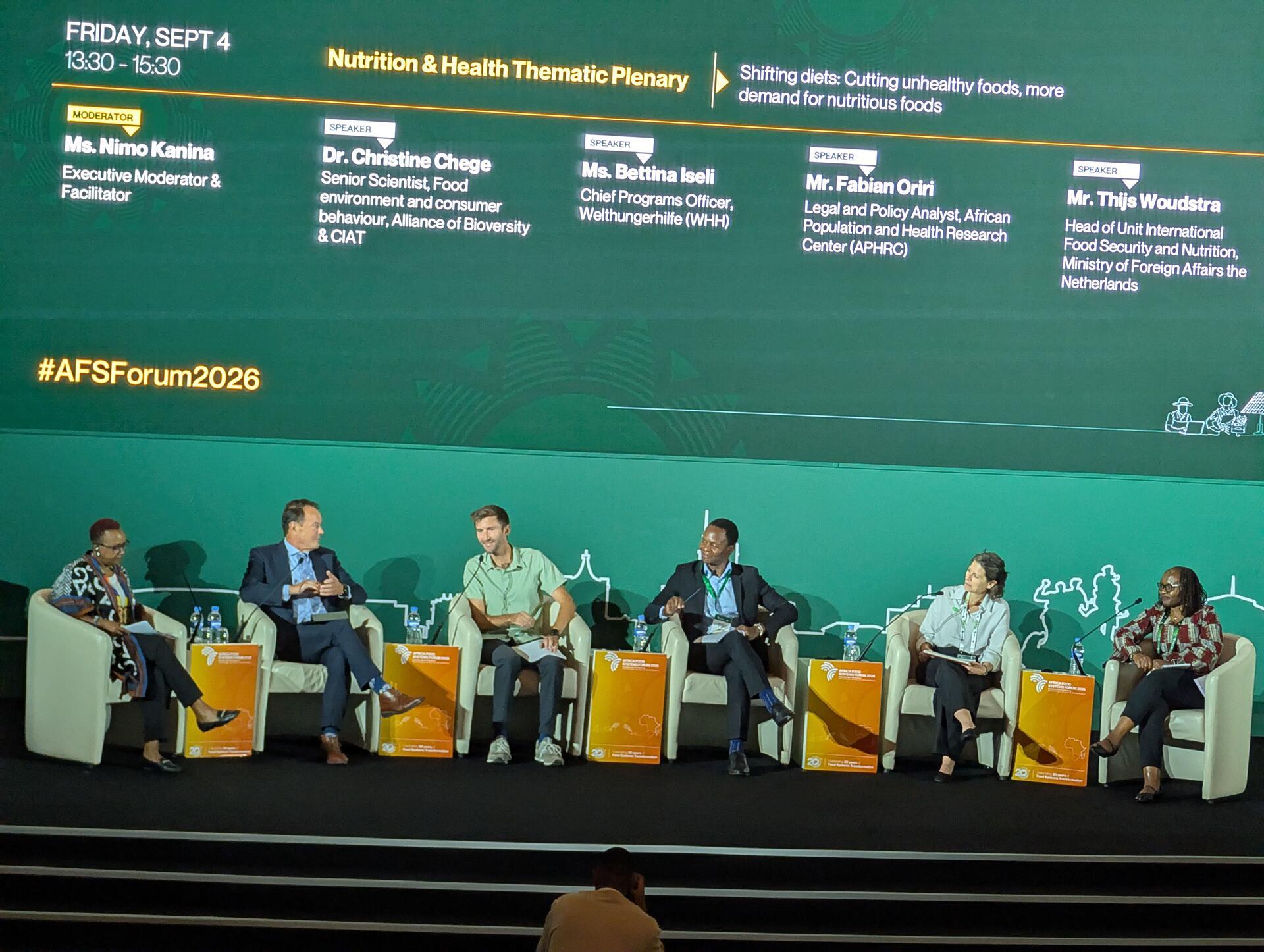
These were not separate crop conversations. Together they traced the same market pathway: diversify what is produced, understand what people want and can afford, create reliable demand, and build value chains in which farmers and local enterprises can participate. In other words, scale needs buyers as much as it needs better technologies.
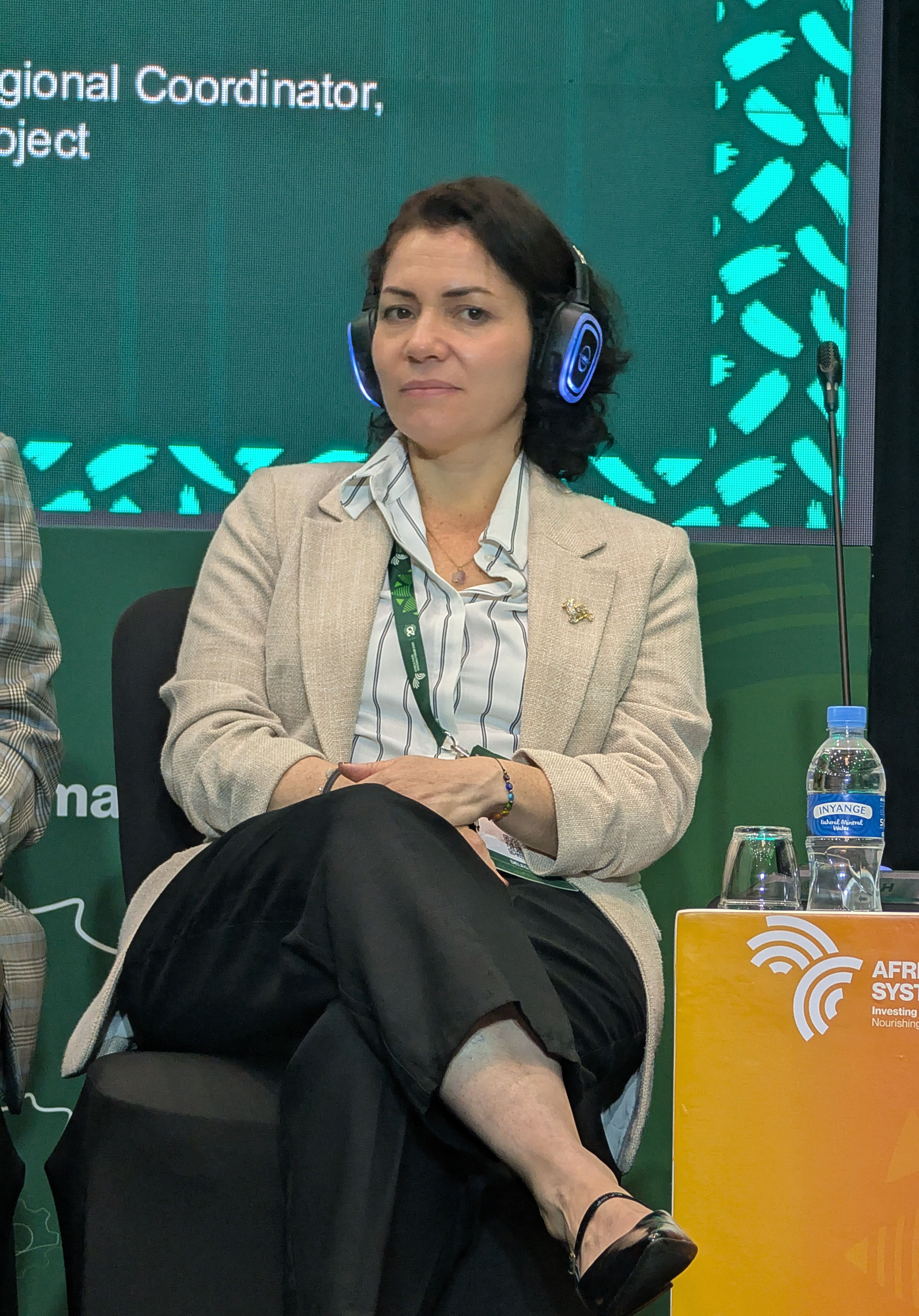
"A crop is never only about yield. We also have to look at nutrition, resilience, farmers’ preferences, consumer demand and the economic opportunities created along the value chain. When those dimensions are connected, crop improvement becomes a much stronger tool for food-system transformation.” - María Fernanda Álvarez, Director, Crops for Nutrition and Health, and Program Leader, Rice Breeding and Genetics
Moving innovations beyond the pilot
Once evidence, finance and demand begin to align, another question appears: who carries an innovation beyond the pilot? That challenge surfaced repeatedly across the Alliance's scientific and policy engagements.
The Researchers Roundtable on 'Big Bets' asked which research priorities and investments are most likely to transform Africa's agri-food systems at scale. Other sessions explored next-generation agricultural solutions, from artificial intelligence and pest early-warning systems to smart solar irrigation, climate-finance technologies and satellite-based fertilizer advisories.
Jonathan Mockshell translated the scaling question into public policy through discussions on national agroecology strategies. At the Youth Dome, Nekesah T. Wafullah examined the same problem from the enterprise side: what young innovators need to move from a promising pilot to a viable business. The two conversations pointed to the same reality - technical readiness is only one part of the journey; policy, business models and institutions determine whether an innovation can travel.
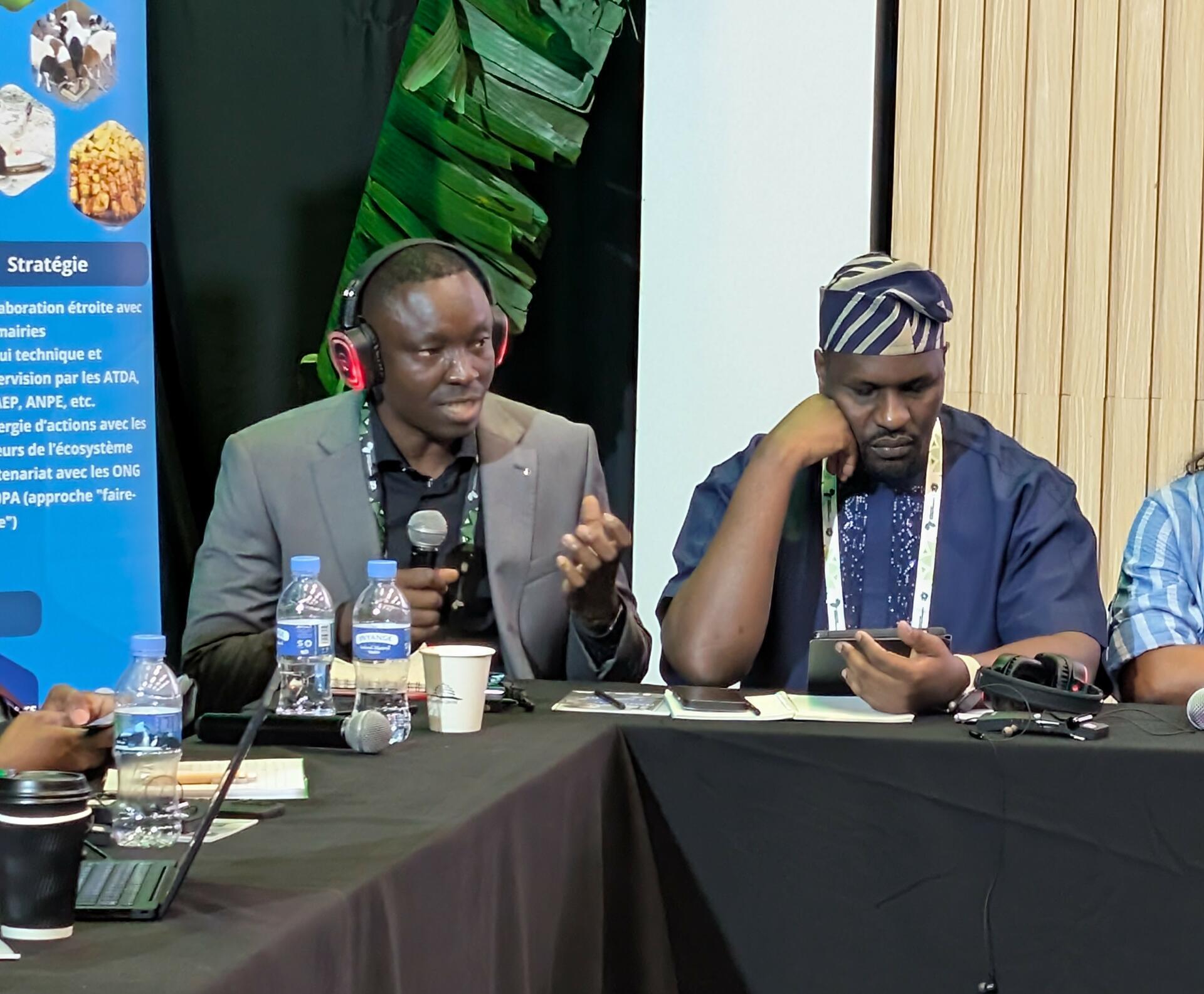
Lennart Woltering and colleagues used the Next-Gen Ag Solutions platform to examine how high-risk, high-reward ideas can be incubated and connected with co-funders, governments and private-sector partners. The common thread across these sessions was simple but demanding: scale cannot be an afterthought added once the research is complete. It has to be designed into the pathway from the start.
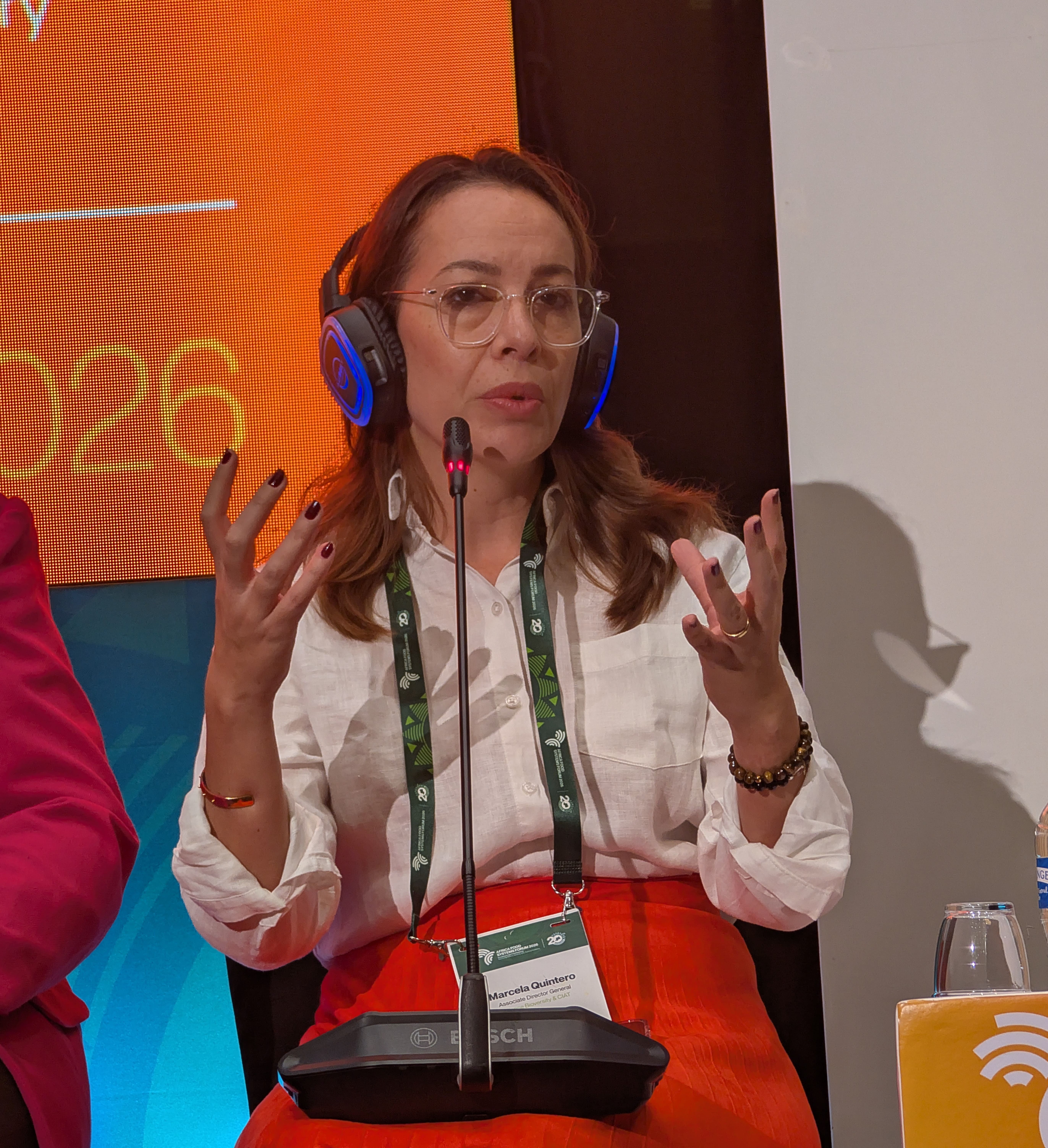
"The path from proof to impact has to be designed from the beginning. We need to know who will use an innovation, which institutions can support adoption, what delivery or business model can sustain it, and what evidence will give decision-makers and investors confidence. That is how strong research becomes scalable impact.” - Marcela Quintero, Associate Director General, Research Strategy and Innovation
An African transformation designed and led in Africa
That led naturally to a question deeper than technology or finance: who gets to define the priorities, and who has the agency to carry transformation forward?
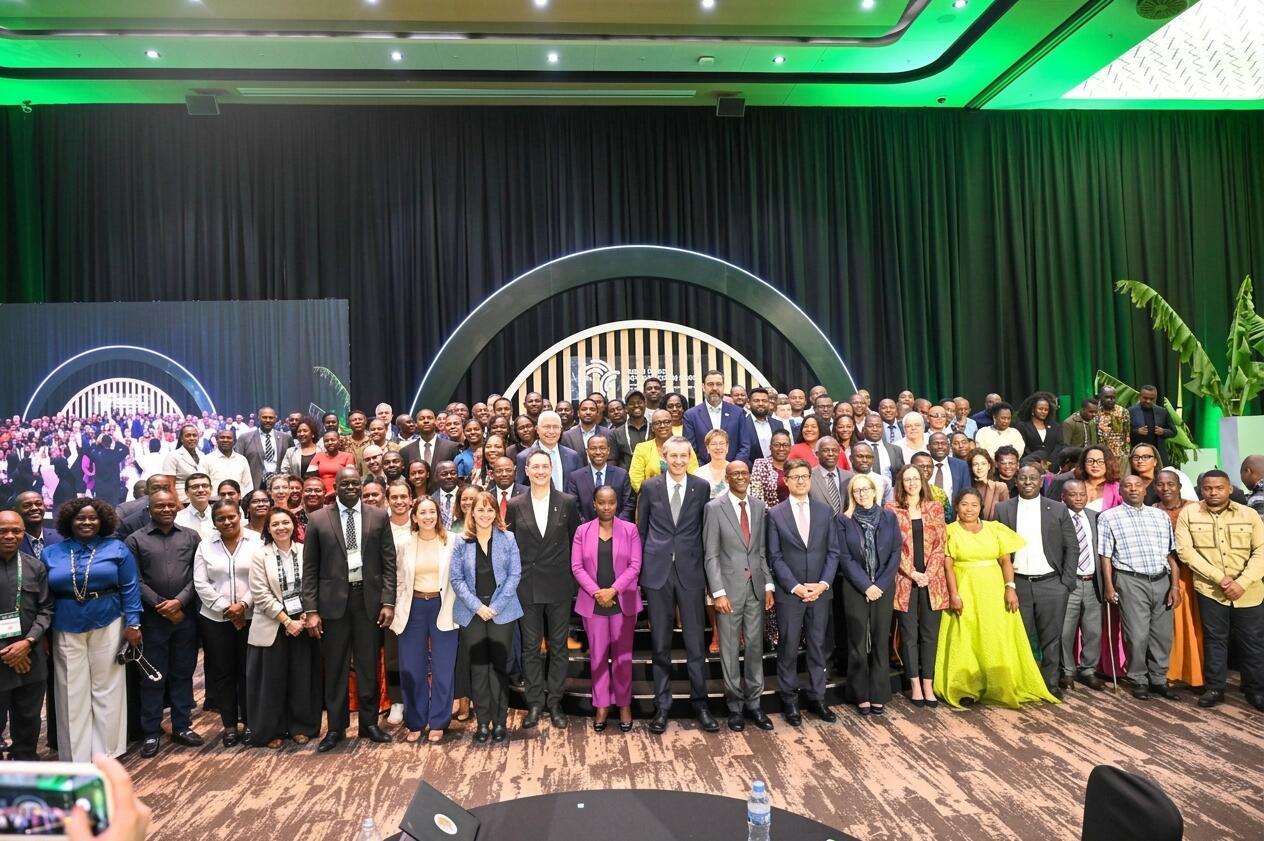
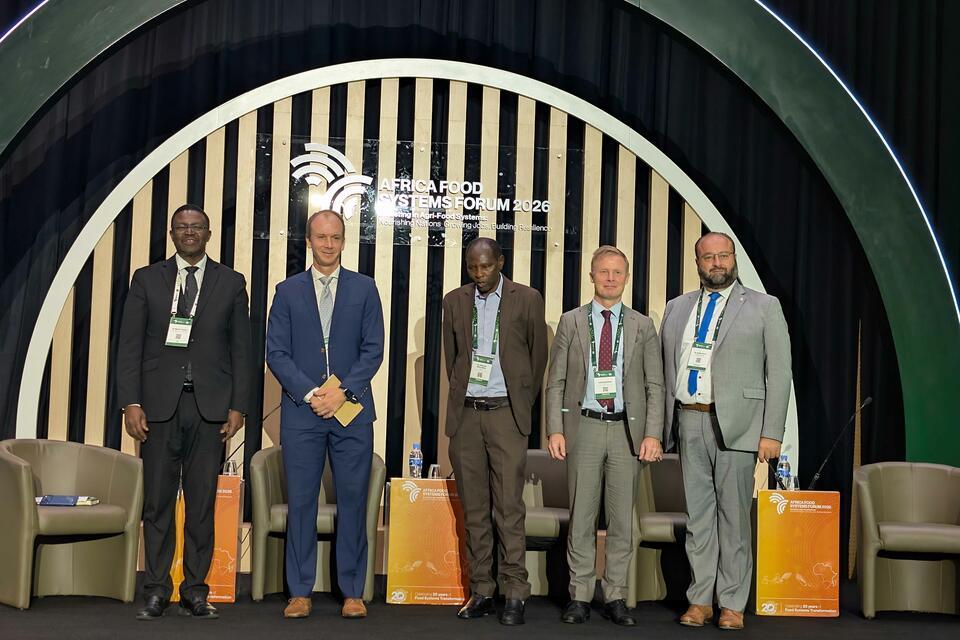
The Alliance's participation placed African scientific capacity, farmer knowledge, women, young people and locally grounded institutions at the centre of that discussion. The Africa launch of the Alliance's 2026-2030 Strategy gave those conversations a common institutional frame, linking science, biodiversity, inclusion, policy, investment and partnership around an Africa-led pathway to impact.
The Strategy itself, Resilient Futures: Urgent Science for Food and Land Systems Transformation, is built around connecting research with policy and finance rather than treating scientific discovery as an endpoint. In Africa, that means not only developing strong science, but ensuring that research priorities respond to the continent's institutions, markets and communities, and that African actors have a meaningful role in decisions about resources and implementation.
Seen together, the researchers' roundtable, the Youth Dome, the focus on women farmers and the farmer-centred partnership agenda were not side themes. They described the governance of scale: who shapes the questions, who tests the solutions, who has access to capital and who ultimately has the power to take an innovation forward.
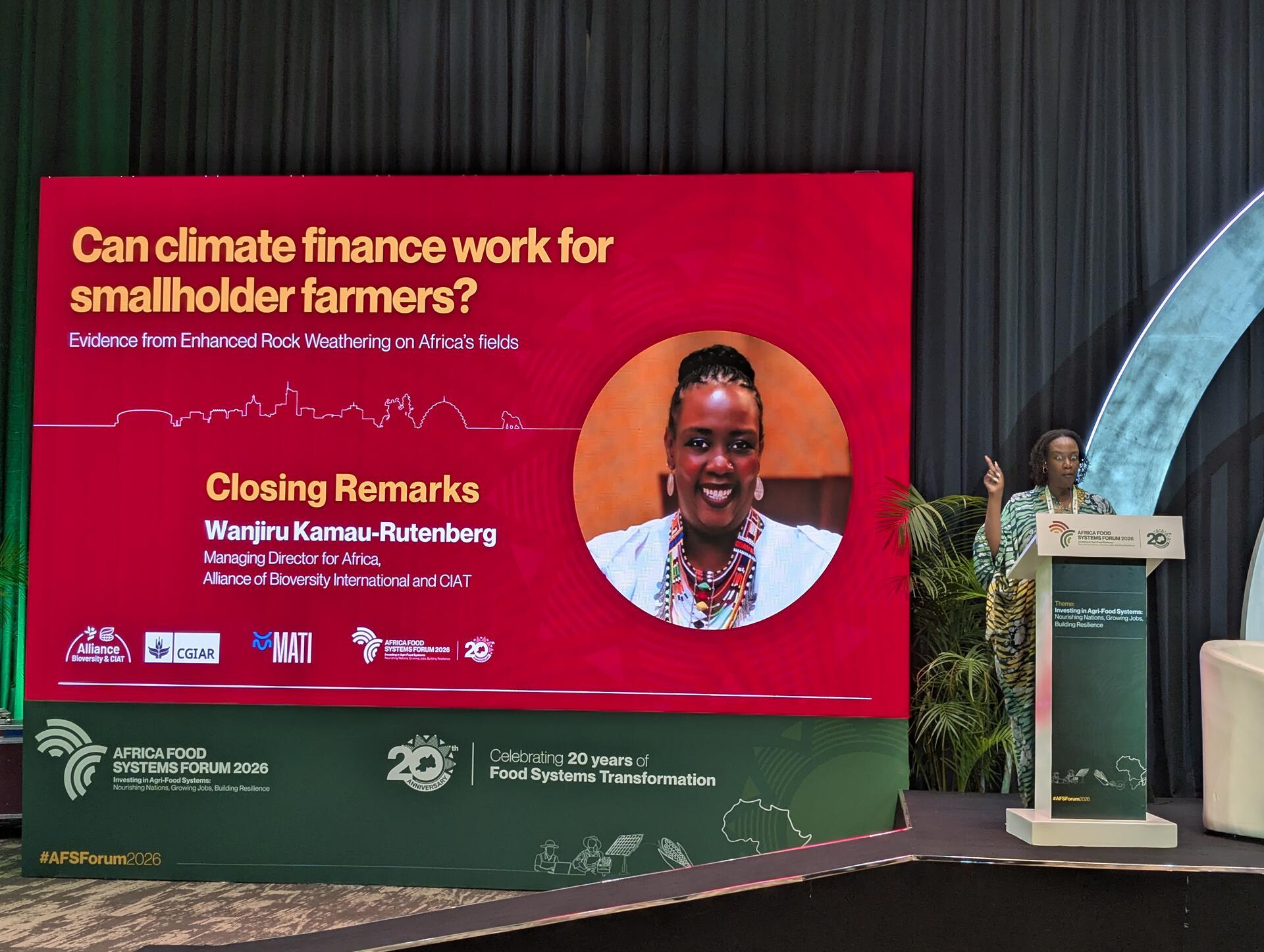
"Africa does not lack ideas, scientific talent or ambition. The task is to strengthen the conditions that allow those capabilities to lead transformation: long-term investment, institutions that trust African leadership, and real decision-making power for the people who understand the continent’s realities. Scale begins with agency as much as with technology." - Wanjiru Kamau-Rutenberg, Managing Director, Africa
Partnerships that turn intent into capacity to act
This is where the Strategy launch became more than a statement of intent. It created a bridge between the principles debated across AFSF and organizations with the reach, networks or implementation capacity to put them into practice.
The agreements formalized in Kigali made that bridge visible.
With One Acre Fund, the Alliance is bringing research and digital innovation capacities together with a last-mile delivery network serving smallholder farmers. Areas identified for collaboration include climate-smart agriculture, seed systems, digital agricultural services, risk management and the scaling of innovations that can improve productivity, incomes and resilience.
With the World Farmers' Organisation, a five-year agreement creates a framework for farmer organizations and researchers to work more closely from priority-setting through testing and scaling, strengthening the role of farmers' knowledge in research and innovation.
With SNV, the focus is on tightening the link between agricultural research, innovation and implementation, bringing scientific evidence closer to the experience of governments, businesses and communities working on food systems and climate action.
And with Mati Carbon, the Alliance is creating a field of applied research in which claims made for a climate solution can be tested against independent evidence from tropical smallholder farming systems.
Read together, the agreements map closely onto the barriers raised throughout the week: last-mile delivery, farmer voice, implementation capacity and independent evidence. Their scopes differ, but the logic is shared - research creates more value when it is connected early to the actors who can validate, adapt, finance and deliver its results.
After Kigali: turning commitments into results on the ground
Kigali did not end with a shortage of ideas. It ended with a sharper implementation question: how can the continent turn political commitments into results that farmers, consumers and businesses can see? The Forum closed with renewed attention to the Kampala CAADP Declaration and Strategy and Action Plan 2026-2035, a continental agenda that aims by 2035 to mobilise US$100 billion, increase agrifood output by 45%, triple intra-African trade in agrifood products and inputs, and cut post-harvest losses by half.
Those ambitions give the conversations in Kigali a clear benchmark: delivery must be measurable, financed and built to last.
PABRA offers the long view. Thirty years after it was established, the network remains relevant not because it preserved a fixed model, but because it kept connecting science to farmers' needs, national research systems, seed access, businesses and markets. Its history is a reminder that scale is rarely a single breakthrough; it is usually the result of institutions staying connected long enough to learn, adapt and keep delivering.
The same logic runs through the six strategic objectives of the Kampala agenda: sustainable production, agro-industrialisation and trade; investment and financing; food and nutrition security; inclusive and equitable livelihoods; resilient agrifood systems; and stronger governance. Those priorities closely mirror the threads the Alliance carried through AFSF, from climate finance and soil science to school meals, youth enterprise, farmer-centred research and new delivery partnerships.
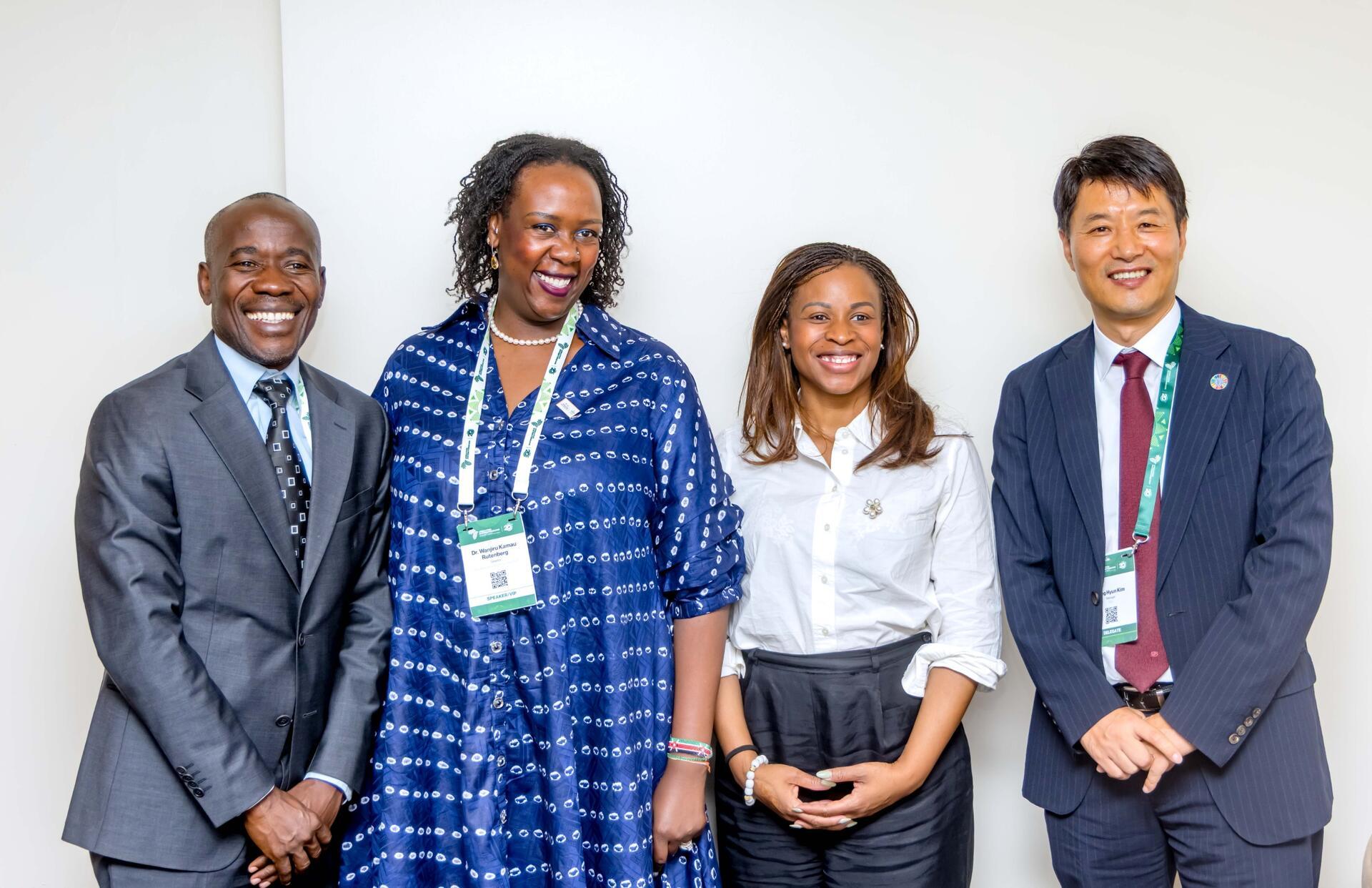
Read through the Alliance's participation, four practical resolutions emerge from Kigali.
- First, design science for delivery from the beginning. Evidence remains the foundation, but a strong research question must be accompanied by an equally serious question about adoption: who will use the solution, what will it cost, what institutions must support it, and what evidence will decision-makers and investors need before they can act? The discussions on enhanced rock weathering, digital tools and next-generation agricultural solutions all pointed back to that discipline.
- Second, make finance follow both evidence and demand. The climate-finance sessions, FASA and the conversations around home-grown school feeding showed why capital is most useful when it is connected to credible evidence and a real route to demand. Funding a technology without a delivery pathway creates pilots; linking finance to markets, public procurement and viable enterprises creates a better chance of durable scale.
- Third, put African institutions, farmers and young innovators closer to the centre of decision-making. PABRA's long-term partnership with national research systems, the World Farmers' Organisation agreement, the Researchers Roundtable and the Youth Dome all underscored the same point: local knowledge cannot enter only at the end of a research process. It needs to shape priorities, testing, investment choices and the conditions under which innovations are scaled.
- Fourth, turn new partnerships into joint milestones. The agreements with One Acre Fund, the World Farmers' Organisation, SNV and Mati Carbon create channels for last-mile delivery, farmer participation, implementation and independent evidence. Their value will ultimately be judged less by the signatures in Kigali than by what follows: clear workplans, shared learning, investable opportunities and results that can be tracked in farmers' fields and food markets.
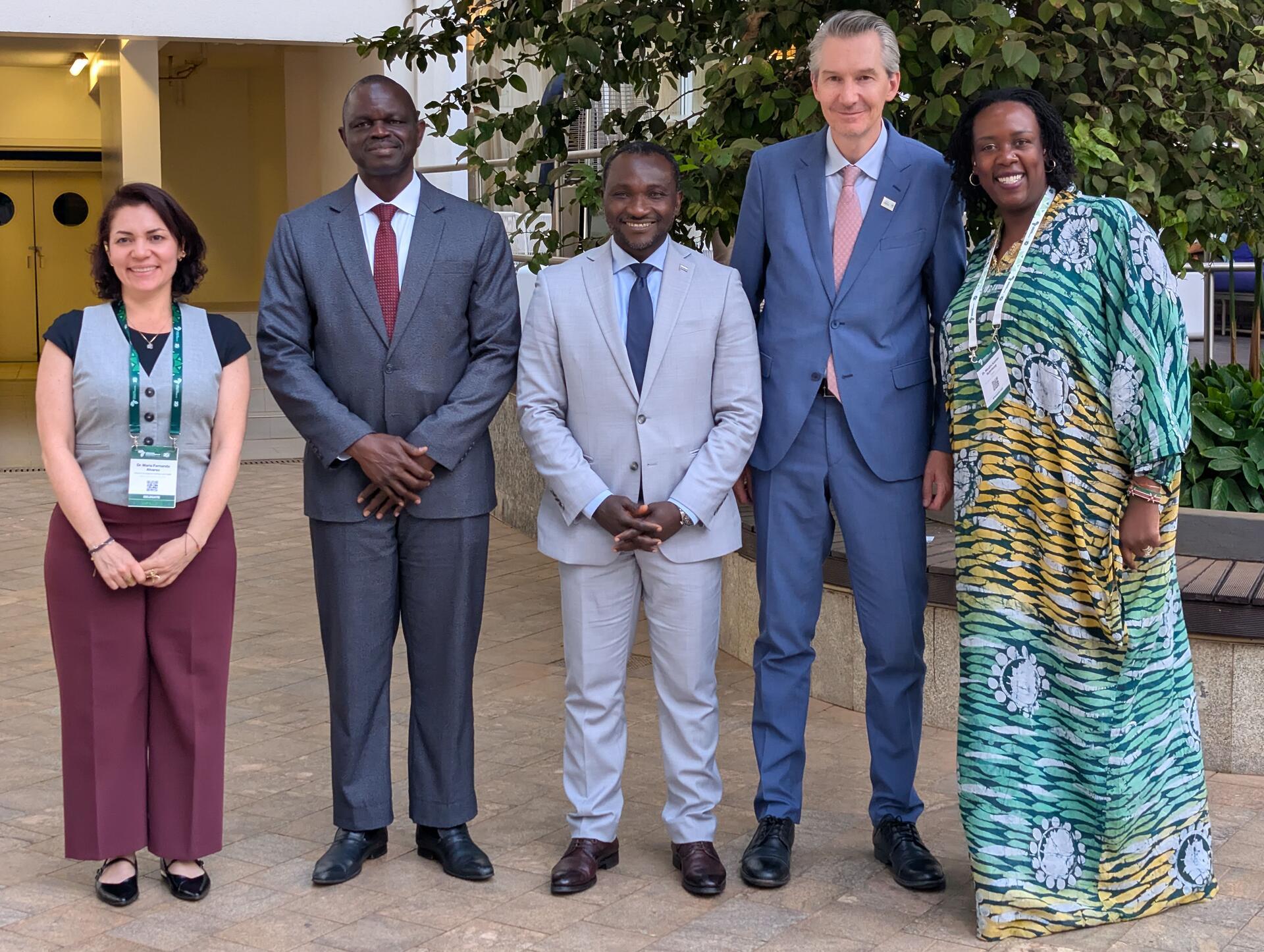
These are not additional declarations for the shelf. They are a practical test of follow-through. Across AFSF, the Alliance traced a connected pathway: PABRA showed what long-term partnership can achieve; science tested what works; finance asked what can be funded; nutrition and market discussions addressed demand; policy and youth conversations examined who can carry solutions forward; and new agreements created routes for delivery.
The next measure of success will therefore be outside the conference rooms: whether these connections help governments make better decisions, help capital reach credible solutions, help research respond faster to farmers' realities, and help proven innovations move from isolated projects to systems capable of delivering measurable change at scale.
Keep exploring
The Alliance launches its 2026–2030 Strategy in Africa at the Africa Food Systems Forum 2026