Blog Achieving economic balance with regenerative agriculture


In the face of climate change, soil degradation and food insecurity, regenerative agriculture has emerged as a transformative approach to farming. Unlike conventional methods that often focus on maximizing yields at any cost, regenerative agriculture seeks to improve soil health, enhance biodiversity and sequester carbon, all while creating sustainable financial opportunities for farmers.
This article explores how regenerative agriculture contributes to achieving economic balance that benefits farmers, consumers, and the environment. First, we will examine the principles of regenerative agriculture, the economic challenges of conventional farming, the economic potential of regenerative agriculture, the role of consumer demand, the role of governments and policymaking, and challenges to be addressed for the sustainable upscaling of regenerative agriculture that works both for the economy and for the planet.

Tea farms in Kenya's Tana River watershed, where farmers are implementing soil restoration techniques. Credit: CIAT/Georgina Smith
Regenerative agriculture is a holistic farming approach aimed at restoring and enhancing soil health, promoting biodiversity, and reducing dependence on synthetic inputs like pesticides and fertilizers. It differs from conventional farming by focusing not just on immediate yields but on long-term ecosystem health. This methodology includes practices such as crop rotation, cover cropping, minimal tillage, and agroforestry, which collectively contribute to healthier soils, increased carbon sequestration, and, ultimately, a sustainable and balanced agricultural economy.

Livestock grazing freely on wild grasslands. Credit: CIAT
The other side of the coin: Economic challenges of conventional agriculture
While industrial agriculture led to increased productivity and efficiency in the second half of the 20th century, leading to an increase in food security, over time it has created environmental and – as a result – economic challenges:
- Depleted soil health: Industrial farming utilizes intensive tilling and chemical inputs which deplete soil. Our current soil health crisis is now reducing yields, and while some farmers are addressing this with increasing quantities of expensive chemical fertilizers, regenerative farming may offer an alternative.
- Climate vulnerability: Conventional practices contribute to greenhouse gas emissions by releasing carbon from the soil and the industrial production of inputs, intensifying climate change impacts which are leading to economic instability.
- Increased input costs: Farmers face rising costs for seeds, synthetic fertilizers, and pesticides, leading to thin profit margins.
- Market Volatility: Dependence on a narrow range of crops increases vulnerability to price fluctuations, weather events, and disease outbreaks.
These challenges emphasize the need for an economically sustainable approach, one that regenerative agriculture aims to provide.
Core principles of regenerative agriculture
Regenerative agriculture is built upon a set of practices that improve ecosystem resilience while offering economic benefits:
- Soil health restoration: Improving soil organic matter through composting, crop rotation, and cover cropping helps increase yields and reduce dependence on chemical inputs.
- Biodiversity enhancement: Integrating various plant and animal species within the same land area fosters a self-sustaining environment that can resist pests and diseases naturally.
- Water management: Practices like no-till farming and agroforestry improve water retention, reducing irrigation needs and mitigating the effects of drought.
- Carbon sequestration: By increasing organic matter and minimizing soil disturbance, regenerative practices capture carbon, thus contributing to climate change mitigation and aligning with global sustainability goals.
These regenerative farming practices work together to create a resilient farming system that, over time, reduces input costs, enhances yields, and contributes to long-term economic stability for farmers.
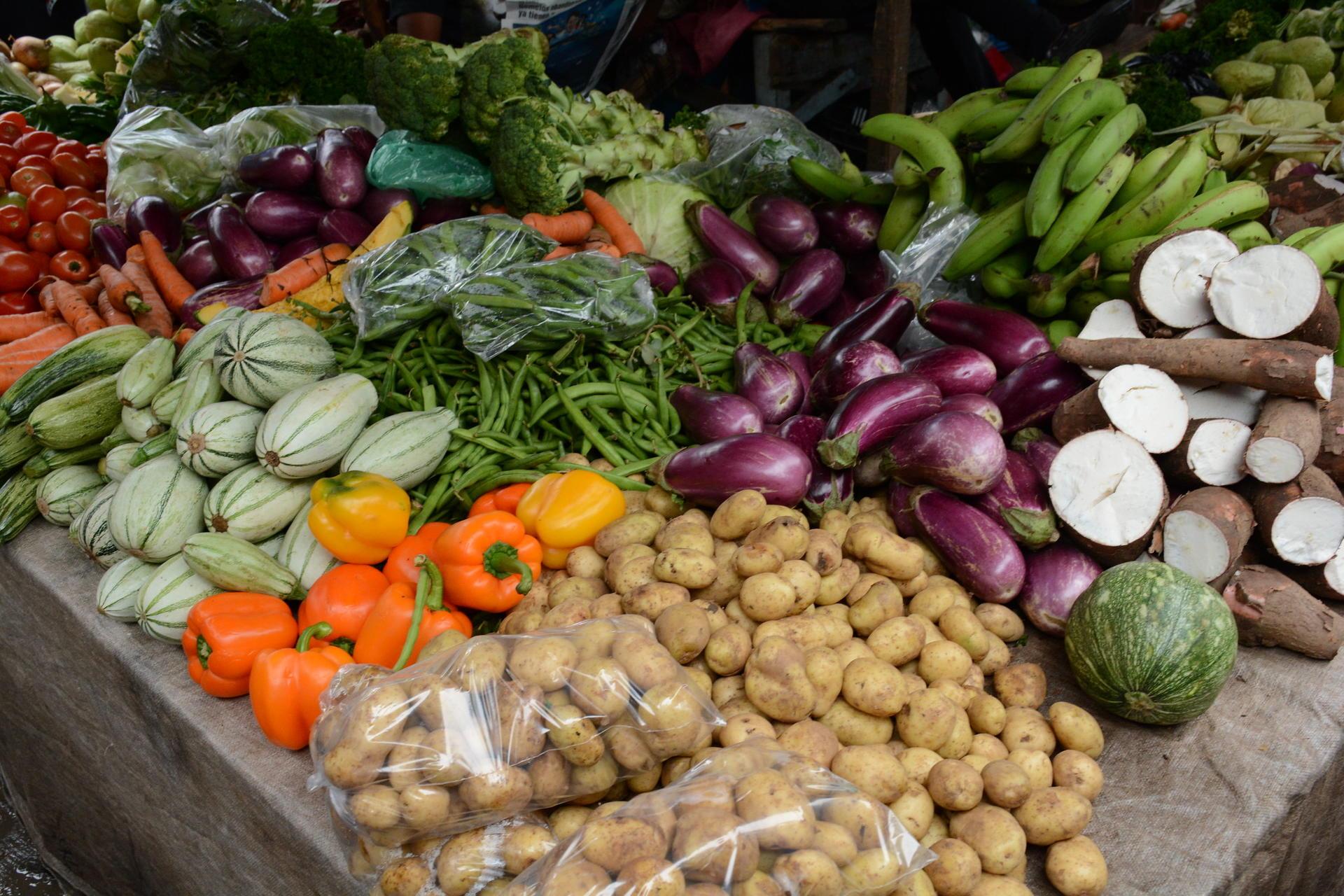
Fresh produce market in Nicaragua. Credit: CIAT
How regenerative agriculture contributes to economic balance
Regenerative agriculture holds immense potential for achieving economic balance through several key pathways:
- Cost reduction through decreased dependence on inputs: One of the major expenses in conventional farming is the continuous purchase of synthetic fertilizers, pesticides, and herbicides. By improving soil health, regenerative agriculture reduces the need for these costly inputs. Healthy soils, rich in organic matter and biodiversity, naturally suppress weeds, support beneficial insects, and retain nutrients, thereby lowering input costs and increasing profitability.
- Resilience to market and climate volatility: With its diverse crop rotations, perennial plants, and integrated livestock practices, regenerative agriculture provides farmers with a more diverse and resilient income stream. When extreme weather events strike, diversified farms are often better equipped to withstand losses, as they are not reliant on a single crop or harvest cycle. This diversification leads to a more stable financial outlook for farmers and minimizes risks associated with market volatility.
- Increased yield and profit margins over time: When transitioning from industrial to regenerative farming systems, farmers may experience initial yield declines, as their soil transitions from reliance on chemicals to yielding the benefits of regenerative practices.
- However, as soil health improves, so do yields, leading to greater profitability. Studies have shown that regenerative farms can achieve comparable, if not higher, yields after a transition period, especially in drought-prone areas where improved soil water retention becomes an asset. Higher yields over time translate to stronger profit margins, creating economic stability for farming families.
- Carbon Credits and Environmental Incentives: As governments and companies increasingly look to offset their carbon emissions, regenerative farmers can benefit financially by selling carbon credits. Healthy, carbon-rich soils can sequester substantial amounts of CO2, and regenerative farms are well-positioned to participate in these emerging carbon markets. Additionally, many governments are providing subsidies and incentives for farmers who adopt regenerative practices, further bolstering financial viability.
- Consumer-Driven Market Premiums: Consumers are becoming more conscious of food production methods and are often willing to pay a premium for sustainably grown, organic, or regeneratively farmed products. This market trend creates an additional revenue stream for regenerative farmers who can command higher prices for products labeled as environmentally friendly, ethical, or climate resilient.

Women planning sales at a food market in Kampala, Uganda. Credit: CIAT/Neil Palmer
Consumer demand and market potential
Increasing awareness of environmental issues has led to a surge in demand for sustainably produced food. As consumers become more informed about the benefits of regenerative agriculture, they show a preference for products labeled as regenerative or sustainable. According to a survey by Nielsen, 66% of global consumers are willing to pay more for products that support environmental and social causes. Ways for farmers to capitalize on consumer demand include:
- Direct-to-consumer sales: Farmers who implement regenerative practices can often sell directly to consumers either in farmers’ markets or through schemes where consumers support on-farm activities, creating an added revenue stream and allowing them to capture a larger share of profits.
- Farm-to-table movement: Many restaurants and retailers seek partnerships with regenerative farms to meet the demand for ethically sourced food, providing additional market access and premium pricing opportunities.
- Food certifications: Certification labels such as Regenerative Organic Certified (ROC) and other similar designations offer a way for farmers to differentiate their products and charge premium prices, further enhancing profitability of their regenerative practices.
- Blockchain and traceability solutions: For consumers to ensure that they are paying extra for more sustainable and ethical products, traceability is essential, and blockchain technology is increasingly used to authenticate regenerative claims, allowing consumers to trace the journey of their food from farm to table. This transparency fosters trust and justifies premium pricing, as consumers can confirm the sustainable methods used in production.

Farmers revise farm data. Credit: CIAT/Manon Koningstein
The role of technology and innovation in accelerating regenerative agriculture
As regenerative agriculture gains momentum, emerging technologies are playing a transformative role in supporting its economic feasibility and scalability. Innovations in soil health monitoring, digital precision agriculture, and alternative funding models are making regenerative practices more accessible and cost-effective. This integration of technology into farming not only enhances the efficiency and profitability of regenerative systems but also opens doors for farmers looking to balance economic stability with environmental stewardship. Some key technologies to support regenerative agriculture include:
- Soil health monitoring and data analytics: One of the core principles of regenerative agriculture is improving soil health, which requires precise and ongoing assessment of soil conditions. In conventional farming, monitoring is often limited to nutrient levels that guide fertilization. However, regenerative systems rely on a broader range of data, including soil organic matter, moisture retention, microbial diversity, and carbon sequestration levels. Emerging technologies are now enabling farmers to gather and analyze this critical data in real time, helping them make informed decisions that optimize both yields and environmental outcomes.
- Soil sensors and drones: Soil sensors and drones equipped with multispectral imaging can monitor soil health metrics such as moisture levels, nutrient availability, and microbial activity. These tools reduce the need for physical soil sampling, saving time and labor costs while providing a comprehensive view of soil health.
- Data-driven decisions: By using advanced analytics platforms, farmers can track soil health trends over time, allowing for more targeted interventions. This data-driven approach enables farmers to maximize soil productivity without relying only on costly synthetic inputs. These new digital tools empower farmers to make adjustments in their practices according to near real-time data, optimizing regenerative outcomes while improving economic viability. As soil health improves, yields become more predictable, resulting in higher profits and reduced risks associated with crop failure or input price volatility.
- Precision agriculture: Precision agriculture has revolutionized farming by using results from sensors to generate guidance for farmers to apply water, fertilizers and other resources precisely where needed, thereby increasing efficiency and reducing wasted resources. In regenerative agriculture, precision techniques are adapted to support practices like crop rotation, cover cropping, and minimal tillage, enhancing soil health and profitability.
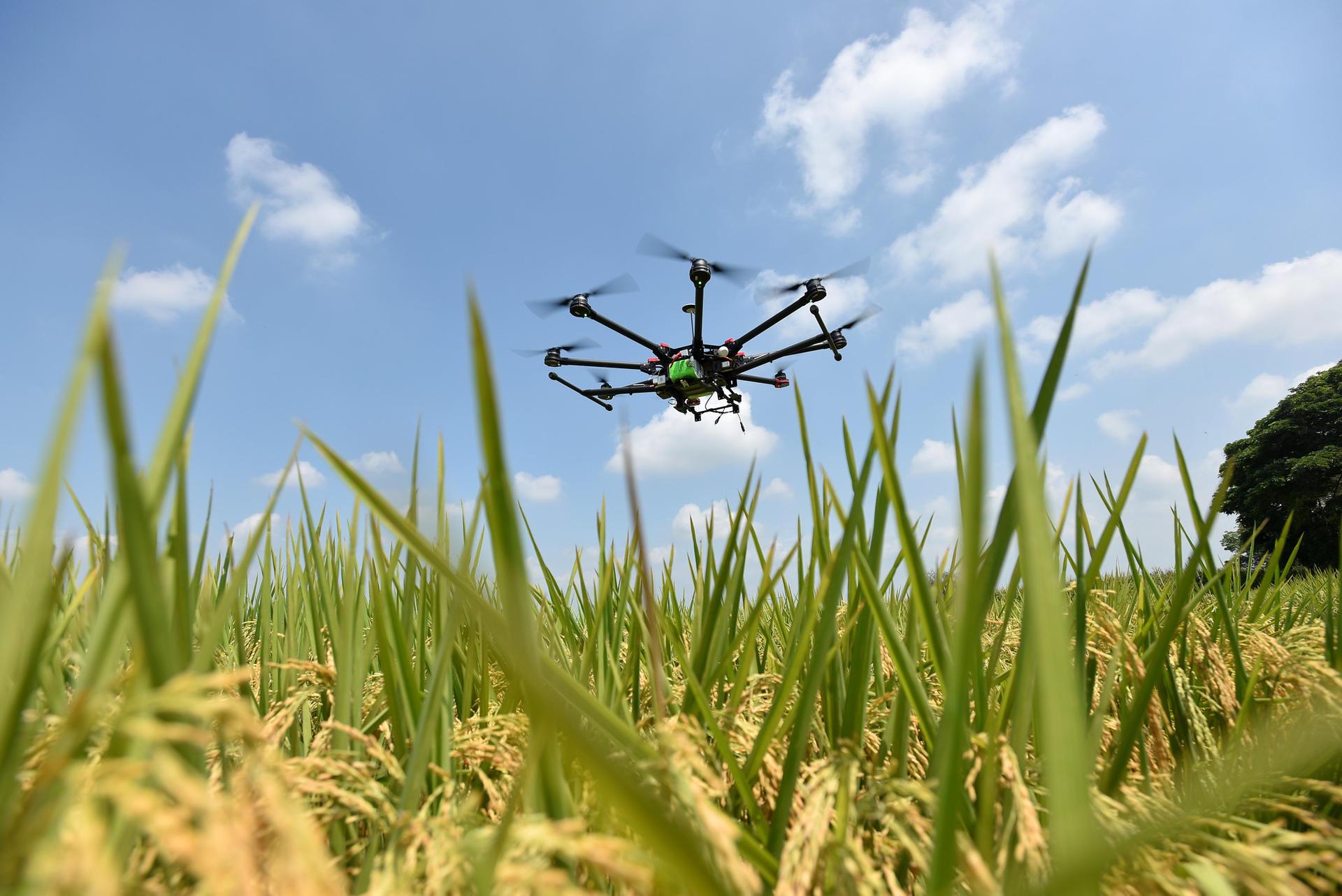
Alliance researchers test drone technology for rice crop monitoring in Colombia. Credit: CIAT/Neil Palmer
The role of artificial intelligence and machine learning in regenerative agriculture
Artificial intelligence (AI) and machine learning (ML) are reshaping the agricultural landscape by making farming systems more efficient and adaptable. AI-driven models can help regenerative farmers forecast weather conditions, optimize crop rotations, and predict soil health outcomes, ultimately supporting economic balance through strategic decision-making.
- Weather prediction models: Climate variability is a significant risk for agriculture. AI-driven weather models can predict rainfall patterns, frost, and droughts, and if communicated efficiently to farmers through ‘climate information services’, can enable farmers to plan planting and harvesting more effectively. This predictive capability reduces crop loss, stabilizing income for regenerative farmers.
- AI-powered crop monitoring: ML algorithms can analyze vast amounts of data to identify plant health trends and recommend interventions that align with regenerative practices. By identifying nutrient deficiencies or pest infestations early, farmers can address issues with minimal input use, lowering costs and protecting crop health. One example is the Alliance’s Tumaini mobile application, that allows farmers to freely monitor the health of banana plants.
These AI-driven insights provide regenerative farmers with precise recommendations that maximize productivity and profitability, balancing environmental benefits with economic returns.
Financial innovations for regenerative farming
The initial transition to regenerative agriculture can be financially challenging, with costs associated with new equipment, potential yield declines in the short term (until soil health is restored and productivity increases), and the need for specialized knowledge. To address these challenges, financial innovations are emerging to provide regenerative farmers with the necessary capital and support:
- Impact investment funds: Investors are increasingly recognizing the long-term potential of regenerative agriculture to generate both financial returns and positive environmental outcomes. Impact investment funds focused on regenerative agriculture provide farmers with access to capital, helping them navigate the initial transition period and scale their operations.
- Green bonds and carbon credits: As climate change concerns intensify, green bonds and carbon credits have gained popularity. Farmers practicing regenerative agriculture can issue green bonds or participate in carbon credit programs, monetizing their contributions to carbon sequestration. These funding options create an additional income stream for regenerative farmers, making it easier to sustain economically viable practices.
- Crowdfunding and community support models: Crowdfunding platforms enable small-scale regenerative farmers to connect with like-minded consumers and receive direct financial support for their projects. This model not only provides funding but also builds a community of supporters who value regenerative practices, creating a dedicated customer base for future sales.
Such funding mechanisms lower the economic barriers for farmers entering the regenerative space and provide them with the capital needed to sustain practices that enhance ecosystem resilience and economic profitability.
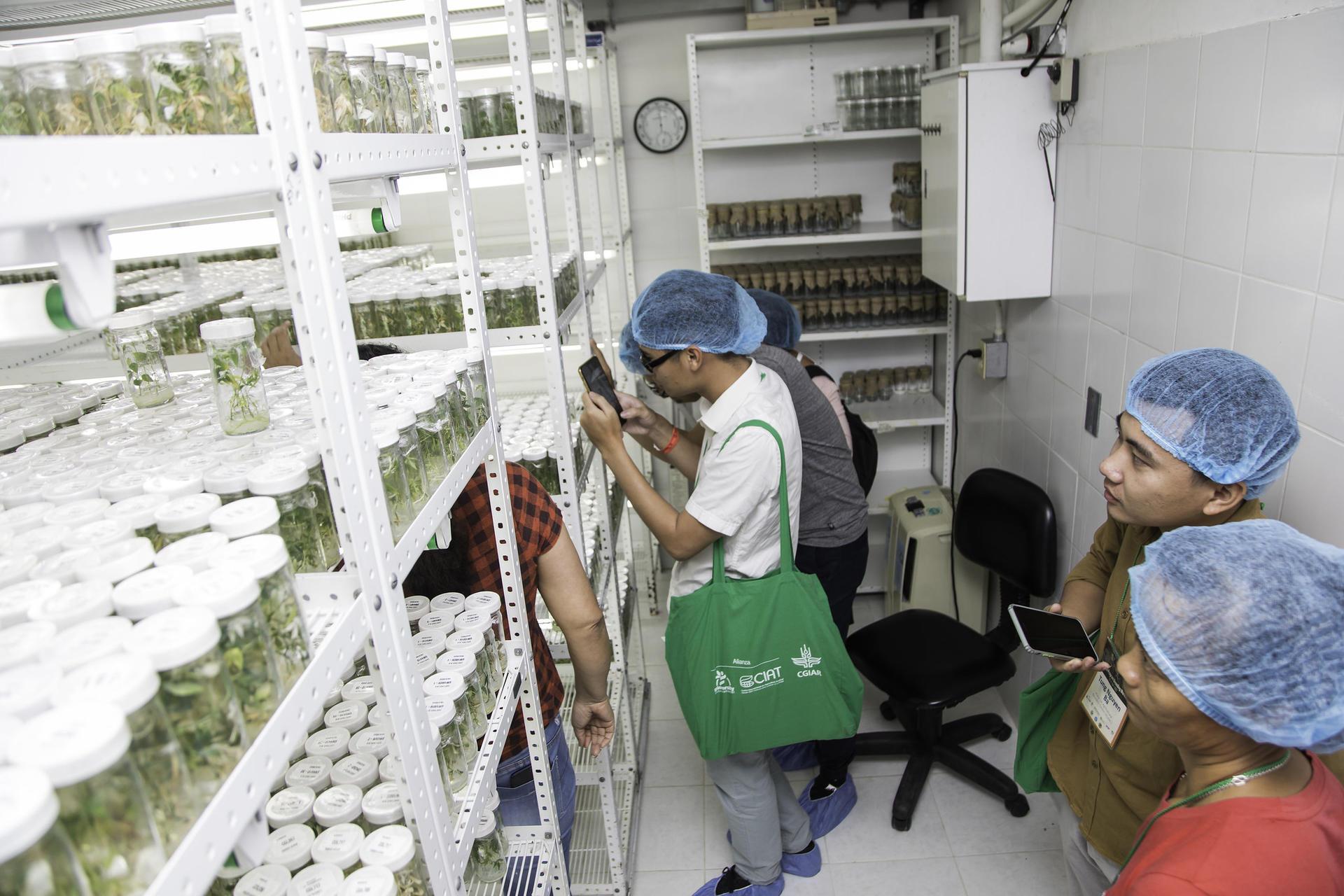
Alliance researchers at a cassava breeding workshop. Credit: CIAT/Juan Pablo Marin Garcia
Biotechnology and sustainable crop development
Biotechnology is advancing the regenerative agriculture field by developing crop varieties that thrive in low-input systems, tolerate drought, and resist pests without chemical intervention. These developments align well with regenerative practices, which emphasize reducing synthetic inputs and improving crop resilience.
- Drought-tolerant varieties: Given the erratic climate patterns affecting agriculture, crops that can withstand dry conditions are essential. By planting drought-tolerant varieties, regenerative farmers can reduce water usage and maintain productivity even during droughts, thereby achieving cost savings and protecting profits.
- Pest-resistant crops: Biotechnologists are creating crop varieties that can resist pests naturally, reducing the need for pesticides. These pest-resistant crops are especially beneficial in regenerative systems, where chemical pesticides are avoided to maintain soil and biodiversity health.
Biotechnology thus offers regenerative farmers tools to increase yield reliability and lower input costs, providing an economic advantage while staying aligned with regenerative principles.
Government support and policy implications
The economic benefits of regenerative agriculture have not gone unnoticed by policymakers. Governments are beginning to recognize the potential of regenerative practices to accelerate regenerative agriculture and harness its economic benefits, and several policy initiatives have been proposed or implemented to encourage widespread adoption:
- Subsidies and grants: Government loans for farmers who adopt sustainable practices, reducing the financial burden of transitioning to regenerative methods
- Carbon credit systems: Programs that allow farmers to sell carbon credits provide a financial incentive for sequestering carbon, aligning agricultural practices with climate goals
- Research funding: Funding for research into regenerative practices helps to improve understanding, streamline processes, and develop economically viable methods for farmers.

Negotiating farm insurance deals in Kenya. Credit: CIAT/Neil Palmer
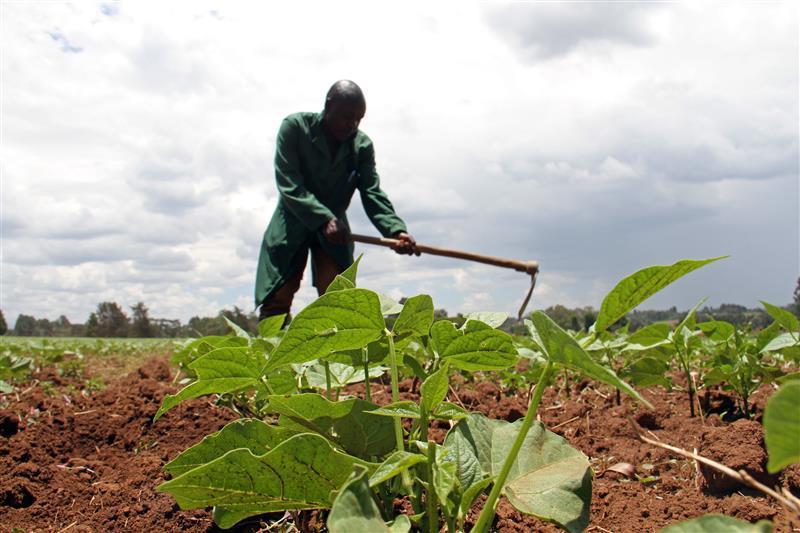
A farmer digs trenches manually to plant beans on his farm in Kenya. Credit: CIAT/Stephanie Malyon
Challenges for widespread adoption
While regenerative agriculture offers economic benefits which are increasingly recognized, barriers to widespread adoption remain, including:
- Initial costs: As mentioned above, farmers may need to invest in a transition period from convention to regenerative farming, which may make regenerative practices seem risky to farmers. One way to overcome this challenge is to establish demo sites for farmers to see clear success stories.
- Lack of knowledge and resources: Many farmers may lack the knowledge or access to resources needed to implement regenerative practices successfully. Extension services and education programs are essential to bridge this gap.
- Market access: Smaller regenerative farms may struggle to access premium markets or may lack the branding and marketing resources to differentiate their products effectively.
- Policy limitations: While government support is increasing, policies are still limited, and many farmers may find it challenging to access the available resources.
Addressing these challenges requires collaborative efforts from governments, industry, and non-profit organizations. Providing financial support, technical assistance, and clear guidelines can help overcome these obstacles and make regenerative agriculture accessible to a broader range of farmers.

Farmer evaluating soil health after implementing multiple restoration techniques. Credit: CIAT/Georgina Smith
The way forward to accelerate regenerative agriculture and harness its economic benefits
The journey toward regenerative agriculture is challenging, promising and necessary. By restoring soil health, increasing biodiversity, and capturing carbon, regenerative practices not only improve ecosystem resilience but also create a sustainable economic model for the agricultural sector. As farmers reduce dependence on synthetic inputs, diversify income sources, and gain access to premium markets, regenerative agriculture provides an economically viable alternative to conventional farming.
For regenerative agriculture to reach its full potential, supportive policies, consumer awareness, and continued research are essential. By fostering an environment that encourages sustainable practices, society can achieve a more resilient agricultural economy. Farmers, consumers, and policymakers alike have a role to play in advancing regenerative agriculture, ensuring that it becomes a cornerstone of a balanced, sustainable economic future.