
PRUNSAR
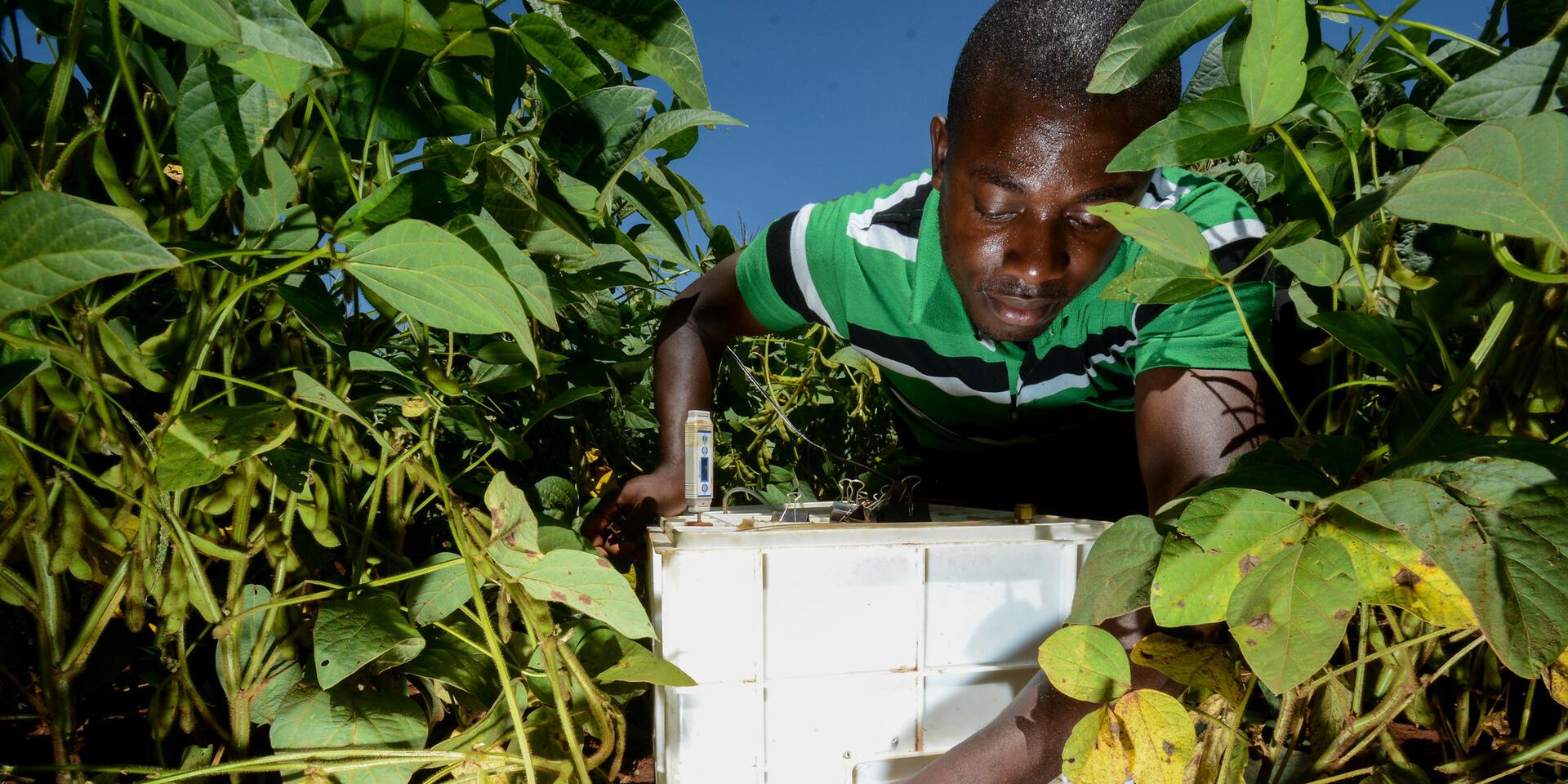
In seven African countries, PRUNSAR increases the resilience of farming communities through climate-smart agriculture technologies, whilst increasing the participation of women and young people.
Project Name: Building Livelihoods and Resilience to Climate Change in East and West Africa: Agricultural Research for Development (AR4D) for Large-scale Implementation of Climate-smart Agriculture
Timeline: 2015-2023
Geographic area: East Africa (Tanzania, Kenya, Ethiopia), West Africa (Mali, Senegal, Niger, Ghana)
Context
PRUNSAR supports rural communities to adapt to climate change and strengthen livelihoods through climate-smart agriculture (CSA). The project aims to generate new CSA technologies and practices, using its results to prove the positive impact of CSA, creating a basis for the development of enabling public policies, private-sector investment and other instruments that incentive smallholder farmers to adopt CSA practices. The project partners also leverage technologies to provide farmers with climate-information services to support on-farm decision-making, overcoming the challenge of implementing new practices in remote areas.
Implemented in seven countries in East and West Africa, PRUNSAR targets food-insecure farming communities that are especially vulnerable to the impacts of climate change, aiming to boost the participation of women and young people in innovative CSA practices.
With funding from the International Fund for Agricultural Development (IFAD) and the European Commission (EC), the Alliance of Bioversity International and CIAT was responsible for the implementation of PRUNSAR’s activities, under the overall supervision of IFAD. The Alliance also led the project’s monitoring and evaluation, carrying out surveys at intervention sites to assess impact, reporting all results to IFAD.
Key activities
- Gather new knowledge on scalable CSA technologies with demonstrable benefits for women and men farmers, youth, climate resilience and low-emissions development
- Identify the best CSA options for the rehabilitation of degraded ecosystems
- Engage in ongoing development and private-sector initiatives to assist in the prioritization of best options for policy development
- Enhance climate information services and big data solutions for smallholder production
- Generate risk assessments based on geospatial science
- Develop climate-smart geospatial tools for on-farm decision-making
- Identify climate-smart business models and generate business cases for CSA
- Identify key players in priority value chains to develop multi-stakeholder innovation platforms
- Identify bottlenecks in the upscaling of CSA and opportunities to overcome these
- Build capacity for public-private joint ventures
- Increase the diversity of insurance products available to smallholder farmers
- Increase the accessibility of credit services for smallholder farmers
- Provide technical assistance to NGOs, government actors and the private sector to design services tailored to different locations
Funders
Publications
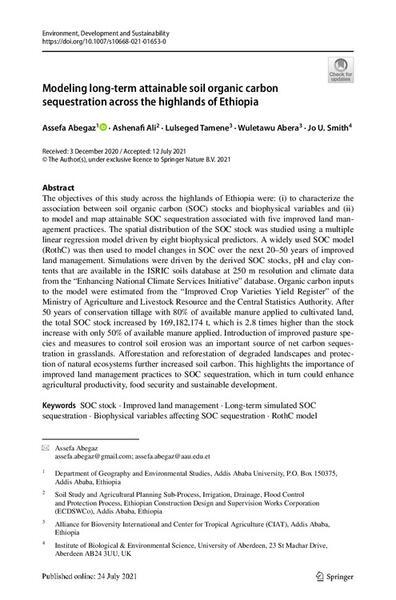
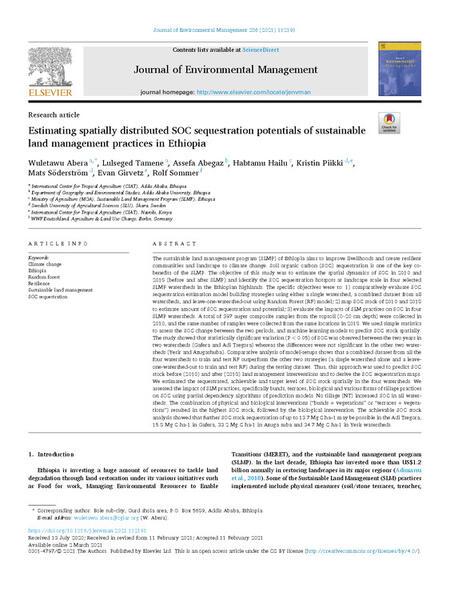
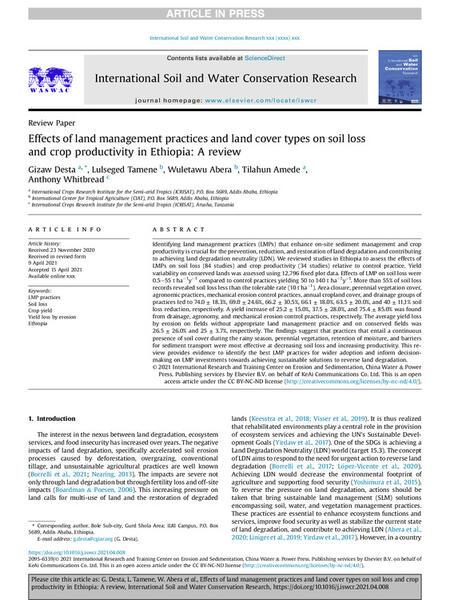
- Analysis of Climate Variability and Trends in Southern Ethiopia
- Are perception and adaptation to climate variability and change of cowpea growers in Mali gender differentiated?
- Ensemble Modeling on Near-Infrared Spectra as Rapid Tool for Assessment of Soil Health Indicators for Sustainable Food Production Systems
- Adaptation and Returns from Improved Indigenous Small Ruminants in Climatically Challenged Smallholder Systems of Kenya
- Cassava Production Efficiency in Southern Ethiopia: The Parametric Model Analysis
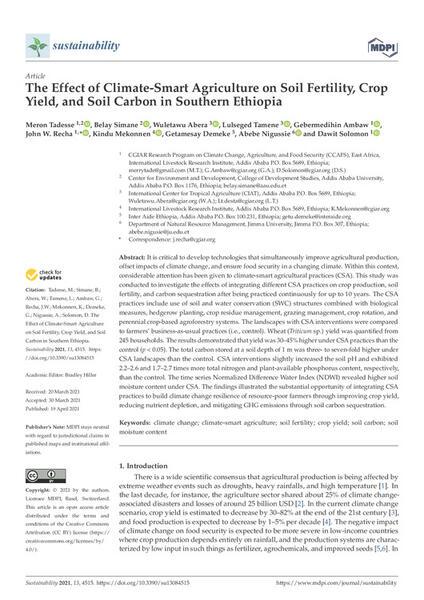
- The Effect of Climate-Smart Agriculture on Soil Fertility, Crop Yield, and Soil Carbon in Southern Ethiopia