
Application of IoT Technology for Rice Disease Management in Peru
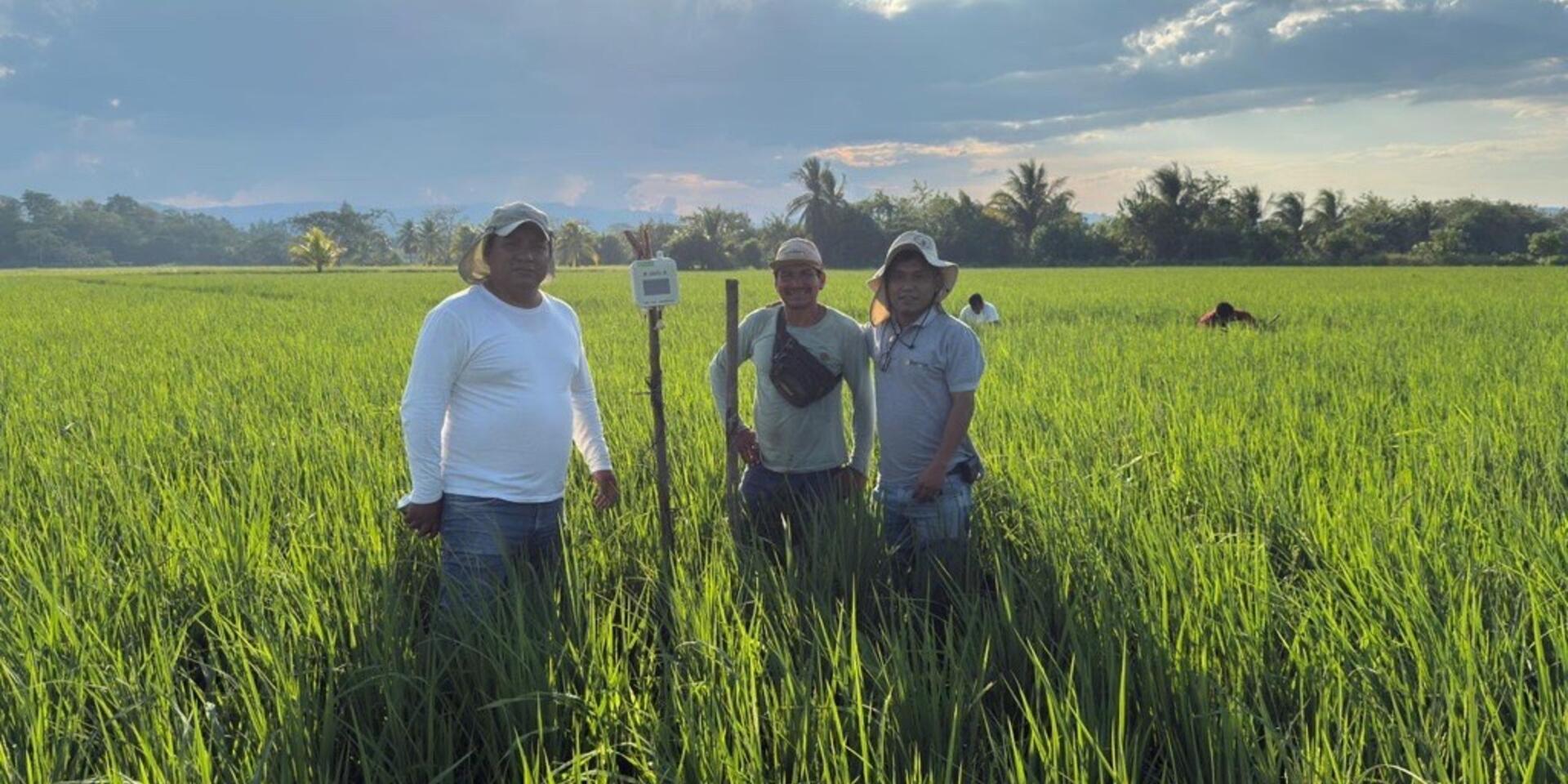
Rice is one of Peru's most important crops, but its production is facing increasing challenges: the emergence of diseases due to changing environmental conditions, irregular rain cycles, more intense heatwaves and a climate that no longer follows the patterns known from previous decades. The question is no longer whether these phenomena will affect production, but how we can prevent them from destroying crops.
To meet this challenge, the Universidad Nacional Agraria La Molina (UNALM) and the Alliance of Bioversity International and CIAT, with support from the STC-CGIAR, have launched a project that is setting a precedent in the country's agricultural digitalization:
Project Name: Application of IoT Technology for Disease Management for Sustainable Rice Production in Peru under Changing Climate Conditions
Start and end year: 2025 - 2028
Region: Americas (Peru)
Funders: Secretaría Técnica de Coordinación de CGIAR (STC - CGIAR)
Partners: Universidad Nacional Agraria La Molina
Project description
The project integrates sensors, artificial intelligence, and the e-kakashi IoT system a Japanese technology developed by Greein Inc., whose service is used to monitor key variables such as temperature, humidity, solar radiation, and soil temperature in real time. This information is used to predict disease outbreaks, improve harvest-timing prediction using e-kakashi, issue early warnings, and provide data-based management recommendations, strengthening the resilience of the Peruvian rice system in the face of an increasingly unpredictable climate.
Gaps and challenges in rice production
Despite its importance for the country’s food security, the Peruvian rice sector still operates with limited field information and tools that do not allow producers to anticipate emerging problems such as disease risks or optimal harvest timing.
The most important challenges include:
- Lack of real-time data, which hinders timely decisions in the face of diseases or adverse conditions
- Extreme weather events, heat waves, irregular rainfall favoring sudden outbreaks
- Low availability of accessible technologies for environmental monitoring in rural areas
- Insufficient training for the use of digital tools that can support crop management
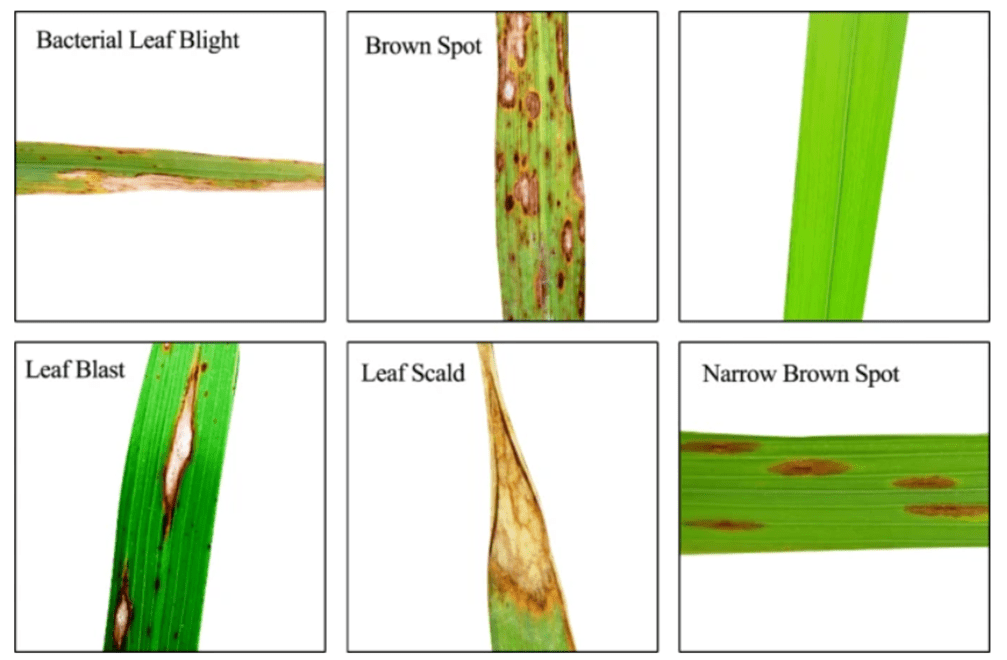
- Lack of local data to model and predict the behavior of diseases such as Pyricularia or bacterial blight.
Key activities
The project is advancing along three main lines of action: technology installation, data generation and capacity building.
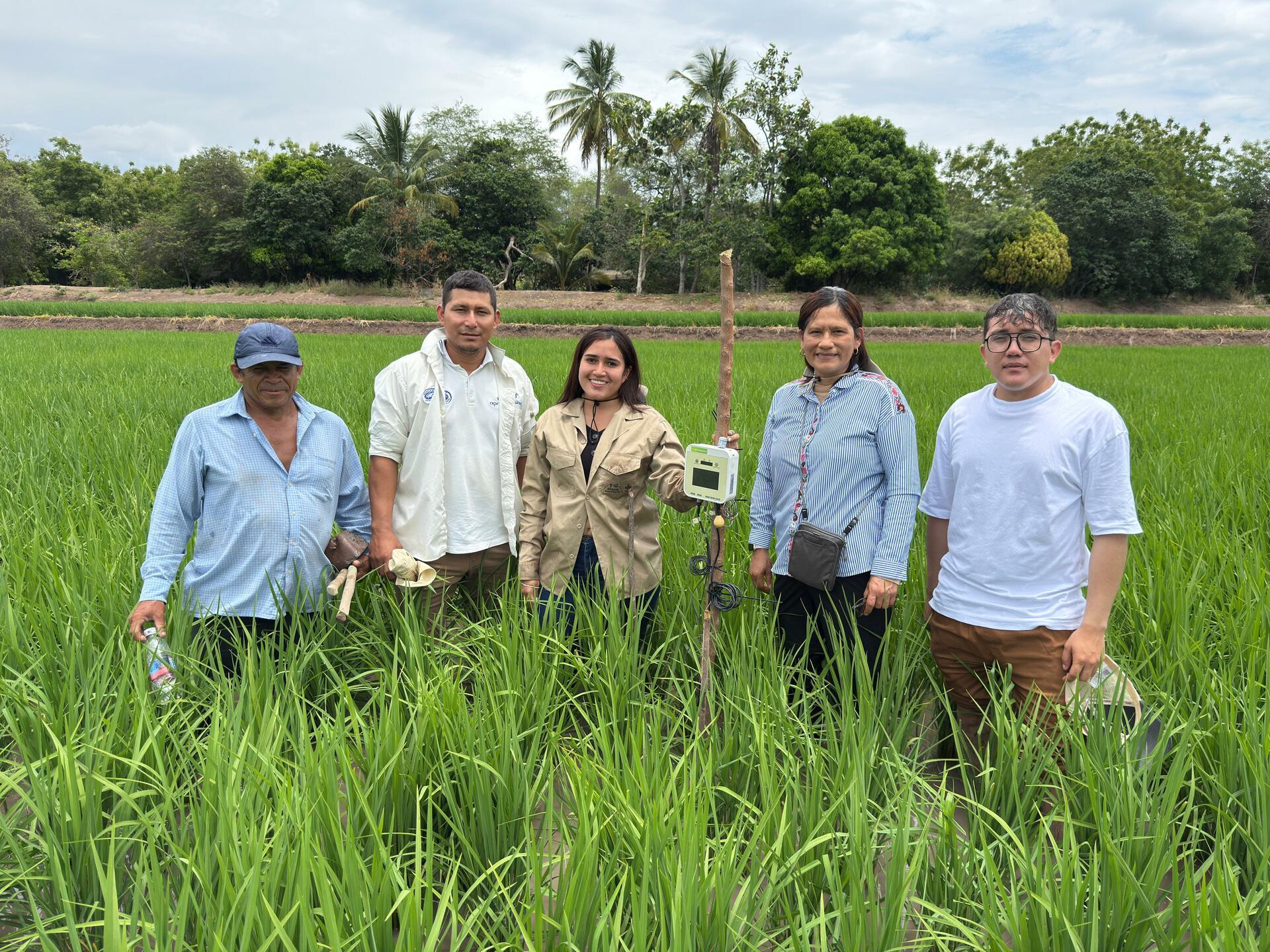
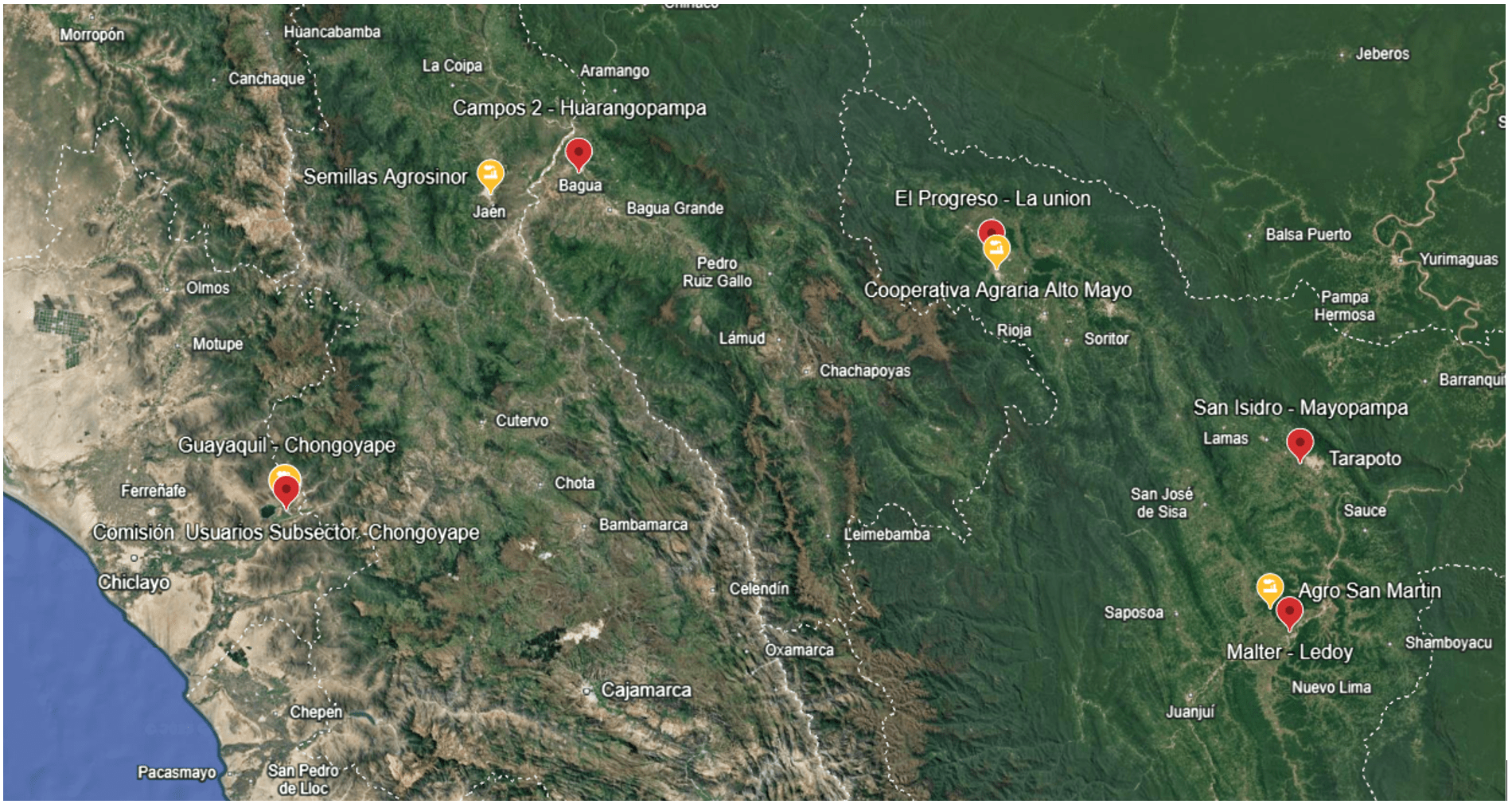
Installation of the IoT network in strategic areas: Five pilot farms were selected in regions with a high historical incidence of rice diseases, spanning coastal zones and the main sub-regions of the Peruvian high, low, and central jungle. This distribution enables the system to capture the country’s climatic and phytosanitary diversity and to assess its performance under varied production contexts. A network of 11 IoT e-kakashi systems was deployed across these sites, installed in both experimental and control plots. This setup allows for a direct comparison of crop performance under traditional management versus data-informed management.
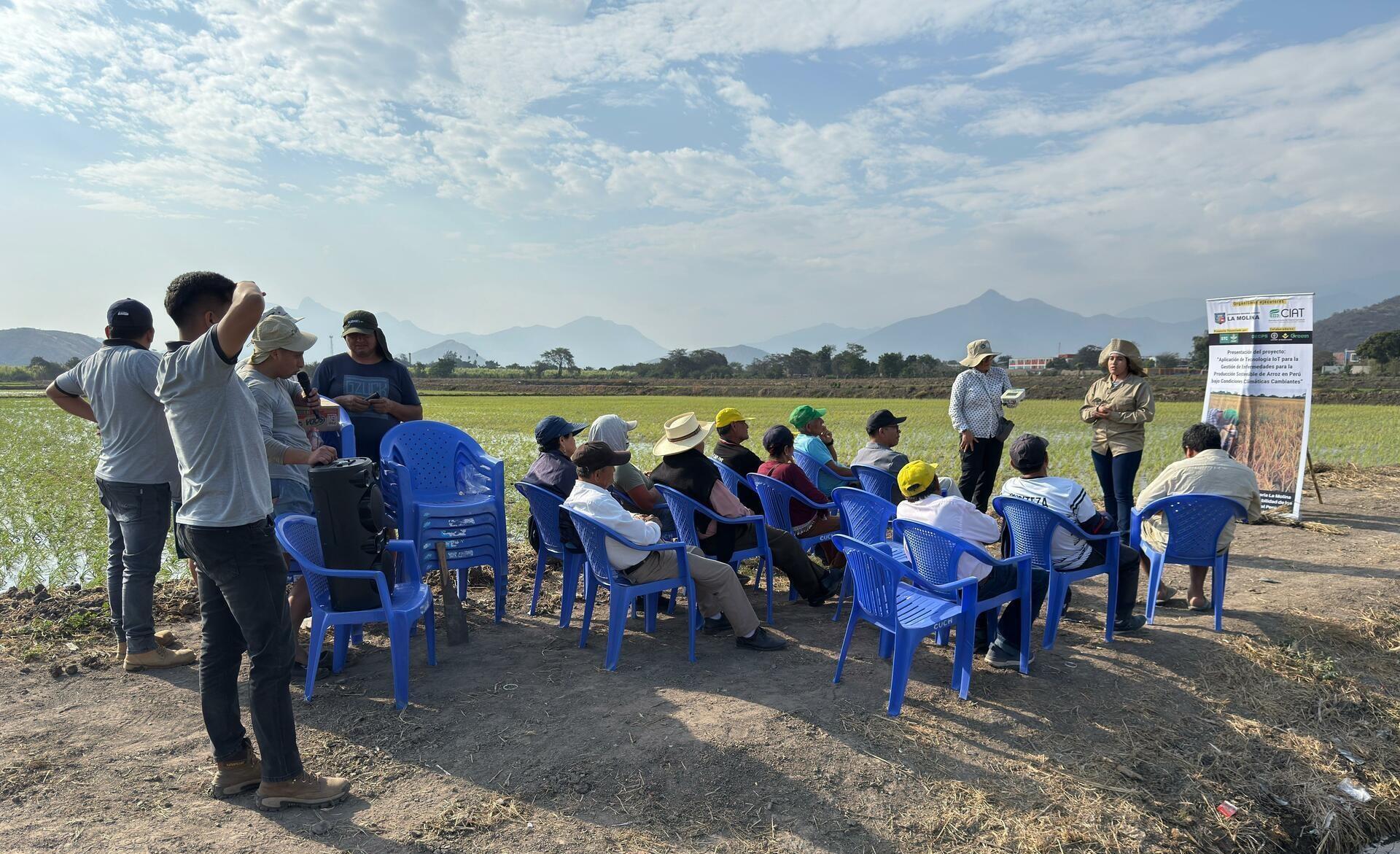
Continuous monitoring and data analysis: Digital logging began in September and is maintained on an ongoing basis. Each device collects key environmental variables and sends them to a digital platform where the research team performs a weekly review, adjusts parameters, and sets up location-specific alerts based on their climatic and agronomic conditions.
Training and articulation with local actors: In each pilot area, practical sessions are held for producers and technicians to learn how to interpret the data, operate the equipment, and use the information for decision-making.
In addition, project socialization sessions were held with farmers' associations, regional authorities, academic institutions, and other sector stakeholders, promoting the adoption of digital tools and their importance for a more sustainable rice production.
Project impact
The expected impact of the project is significant at both the local and regional level, by strengthening the sustainability and competitiveness of the Peruvian rice system. The incorporation of IoT-based early warnings will significantly reduce losses caused by diseases such as Pyricularia and bacterial blight, increasing productivity and crop stability. Continuous monitoring will help optimize the use of agrochemicals, reducing costs and environmental pressure. At the same time, training will promote capacity building for producers and technicians, facilitating the adoption of digital tools and more autonomous and informed decision making. Together, these innovations will increase resilience to extreme weather events and contribute to the country's food security by ensuring a more constant, efficient and sustainable supply of rice.
Project expectations:
- adopt new technologies, such as artificial intelligence, would allow the Universidad Nacional Agraria La Molina - UNALM, to strengthen the achievement of its objectives related to optimizing the use of resources and stay at the forefront of new technologies
- strengthen the projection of UNALM to the rice community as an academic and research entity that will help them to solve the limitations of rice production systems
- contribute to the sustainability of rice production in Peru, through the development of an early warning system for diseases, by reducing the negative environmental impact and improving the profitability of family rice farming.
"With the STC–CGIAR Peru Project, we’ve already begun using an IoT device with AI, called e-kakashi, out in the fields, and the real-time data it provides is giving us a completely new way to see what’s happening in the rice crop.
Our goal is simple: use this information to spot disease risks early, support farmers with practical advice, and make Peru’s rice production more resilient in the face of climate change." - Dr. Elizabeth Heros (Universidad Nacional Agraria La Molina)

Manabu Ishitani
Principal ScientistProject members
Project leader: Dr. Manabu Ishitani
Investigators:
- Keiry Pereira
- Dr. Elizabeth Heros (Universidad Nacional Agraria La Molina)
Additional information on e-kakashi’s contributions to this project can be also found on the website below: https://www.e-kakashi.com/en/news/20251203