Research Articles What makes a local technical agroclimatic committee work (and last)?

A look at 26 climate decision-making platforms in Latin America, and what they teach us about governance, sustainability, and local climate action.
- Peer-Reviewed Publication – Diana Giraldo et al. – Published in Climate Risk Management (2025).
- Conducted with the support of the Alliance of Bioversity International and CIAT
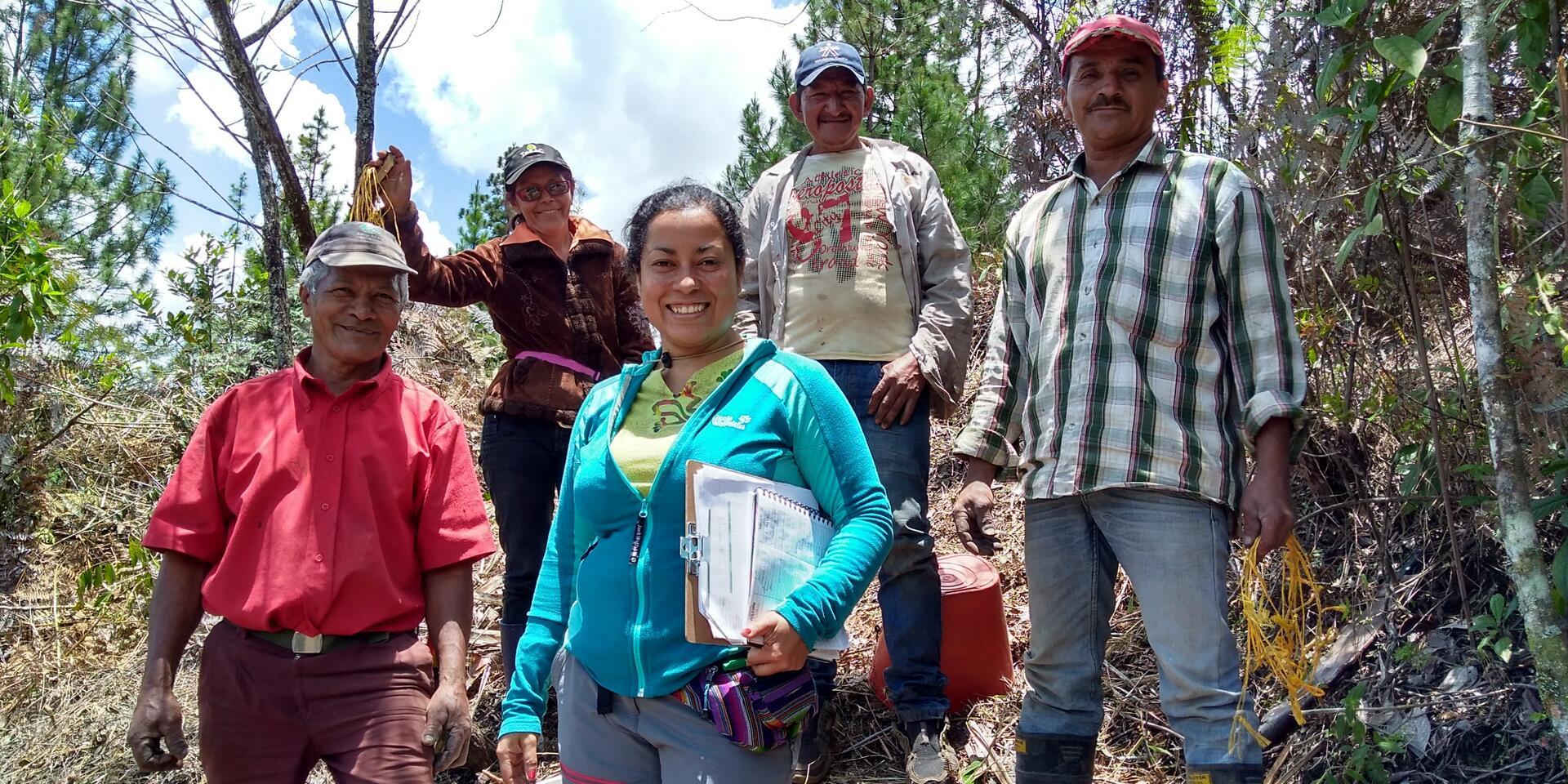
What do a farmer from Magdalena, Colombia, an agroclimatic technician from El Paraíso, Honduras, and a rural extensionist in Chiquimula, Guatemala, have in common? They all participate in Local Technical Agroclimatic Committees Committees (LTACs), spaces that aim to translate climate science into actionable decisions for agriculture.
A new comparative study published in Climate Risk Management analyzed 26 LTACs across four Latin American countries and revealed the factors that truly make these platforms effective. The research is based on network analysis, outcome harvesting, technical indicators, and dozens of interviews. Its conclusion: although LTACs share a common model, their success deeply depends on local factors such as governance, funding, and institutional diversity.
Although Local Technical Agroclimatic Committees (LTACs) are recognized as valuable spaces to translate climate information into agricultural decisions, not all operate equally nor sustain themselves over time. This variability limits their potential to support vulnerable rural communities facing increasing climate variability.
What are Local Technical Agroclimatic Committees and why do they matter?
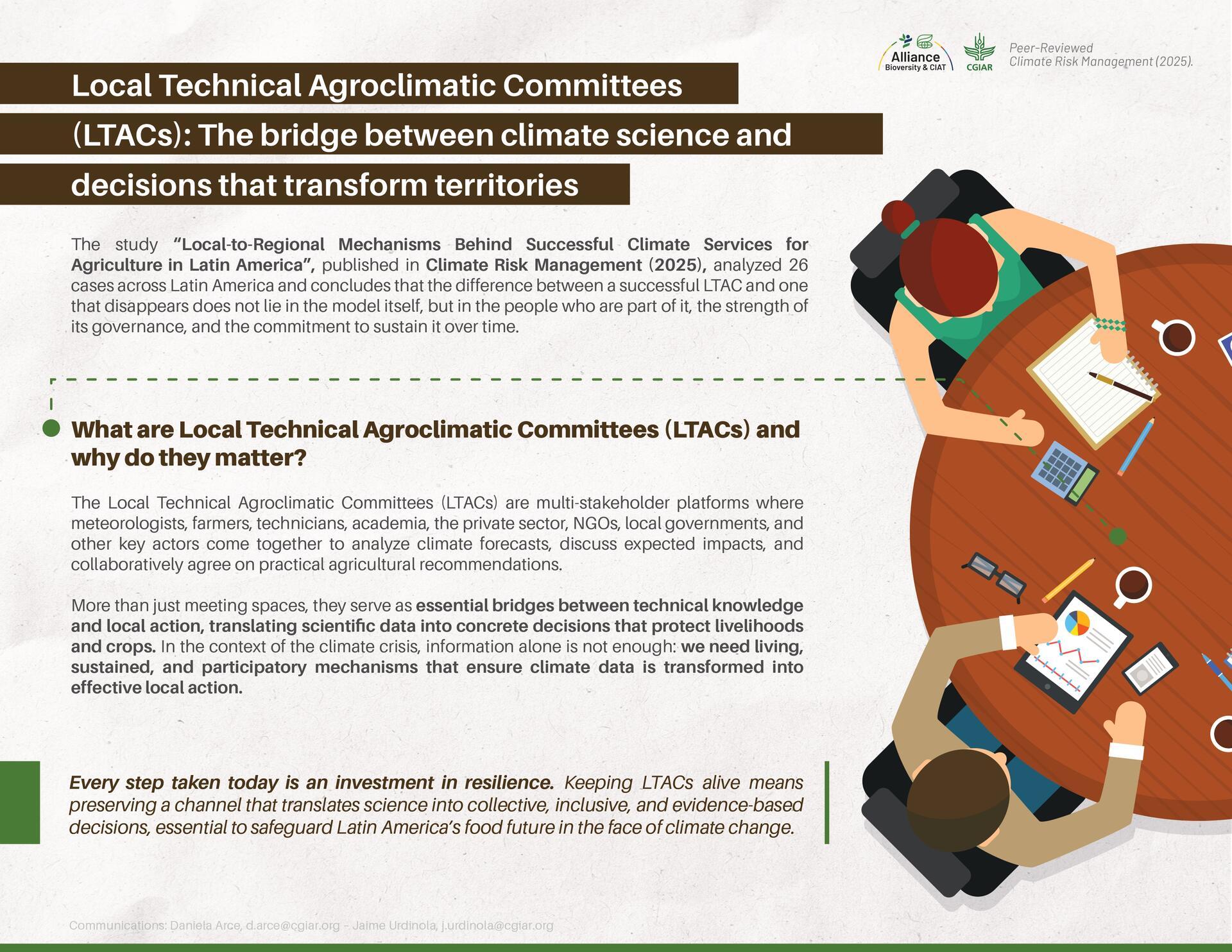
LTACs are multi-stakeholder platforms where meteorologists, farmers, technicians, NGOs, and local governments analyze climate forecasts, discuss expected impacts, and agree on practical recommendations. They act as bridges between technical knowledge and field action, promoting evidence-based decision-making in response to climate variability. However, not all LTACs operate the same way. While some produce influential agroclimatic bulletins and convene key institutions, others barely sustain meetings or engage users. This study sought to understand why.
A comprehensive framework combining social network analysis, outcome harvesting, and multi-criteria evaluation was developed and applied to study 26 LTACs in four Latin American countries. This approach allowed identification of factors influencing their effectiveness, sustainability, and scalability.
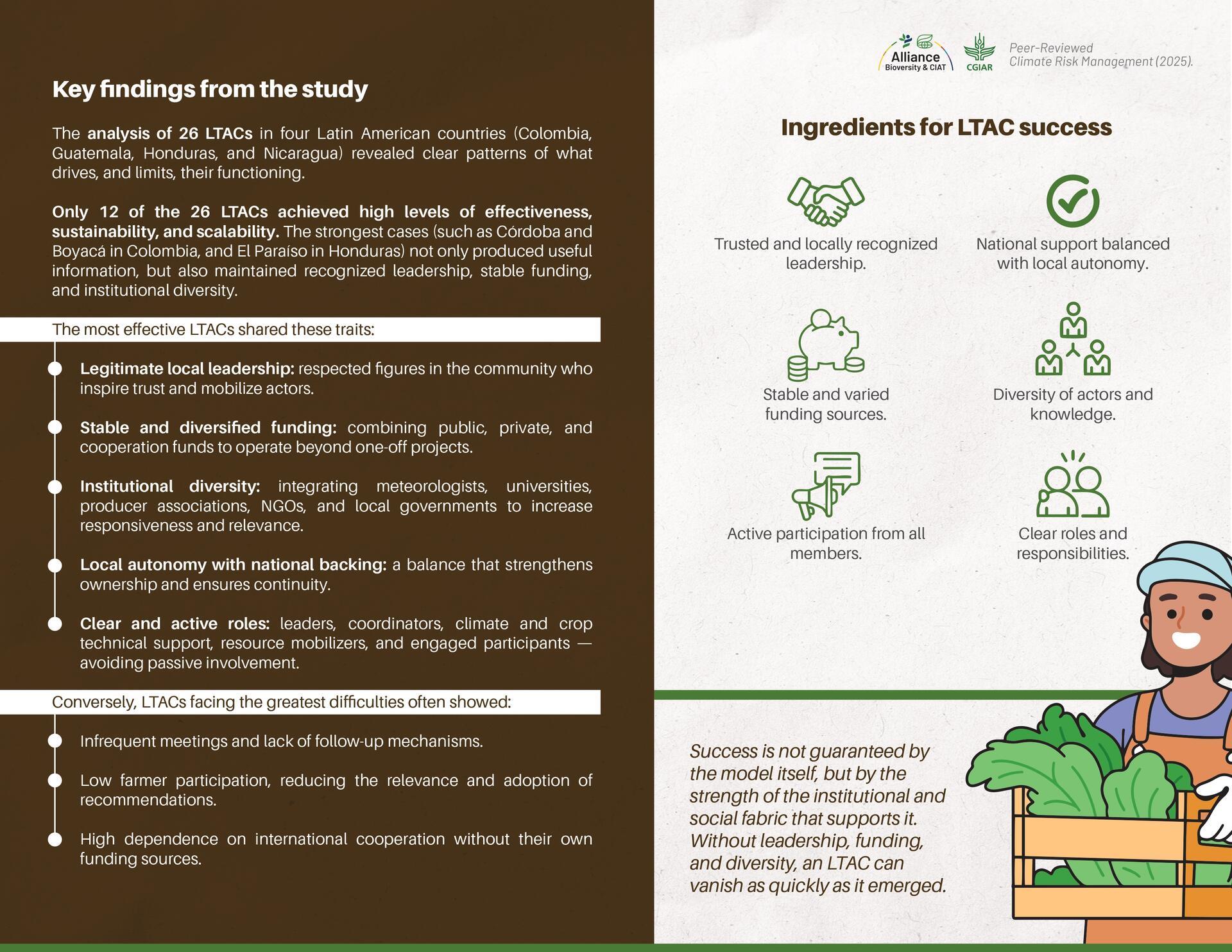
Only 12 of the 26 LTACs scored high in effectiveness, sustainability, and scalability. The best results were observed in places such as Córdoba and Boyacá (Colombia), and El Paraíso (Honduras), where LTACs not only generated useful information but also had recognized leadership, stable funding, and diverse participation from public and private actors.
The most effective LTACs integrated actors from multiple sectors: meteorological services, universities, producer associations, NGOs, and local governments. This combination better addresses agricultural challenges from technical, social, and economic perspectives.
The role of leaders and local autonomy is key
In Colombia and Guatemala, where LTACs operate with strong support from national institutions but retain local autonomy, greater continuity, ownership, and results were observed. In contrast, in Nicaragua, the absence of meteorological services’ participation and high dependence on international cooperation reduced sustainability.
It was also evident that roles within the LTACs matter, and six roles were identified: passive participants, leaders, coordinators, technical climate support, technical crop support, and resource mobilizers. Most were passive, which may limit impact if more active roles are not encouraged.
Why do some LTACs fail?
Despite their potential, not all LTACs manage to consolidate as effective decision-making spaces. The study identified several limiting factors. First, low meeting frequency and lack of follow-up mechanisms hinder continuity of collective work and weaken building sustainable agreements over time. Additionally, in many cases, farmers (the primary users of climate information), are insufficiently involved in decision-making, reducing the relevance and applicability of recommendations.
Another major obstacle is the weak integration of LTACs with rural development programs or local food systems, limiting their capacity to influence territories and to align actions with broader policies and strategies. Finally, many platforms rely heavily on external resources (such as funding or international technical assistance) and lack clear plans to ensure sustainability once these supports end. These structural weaknesses explain why some LTACs fail to reach their potential or disappear over time.
Key lessons for the future of climate services:
This analysis goes beyond diagnosis and provides essential insights to enhance Local Technical Agroclimatic Committees (LTACs):
- Lesson 1: LTACs: with longer trajectories and operational continuity show greater success, reflecting the importance of consolidated institutional processes.
- Lesson 2: A balance between national support and local autonomy strengthens sustainability and territorial ownership.
- Lesson 3: Financial sustainability (technical, human, and economic resources) is indispensable to keep LTACs operational.
- Lesson 4: Diversity of actors and flexibility in implementation promote adaptation and resilience to climate challenges.
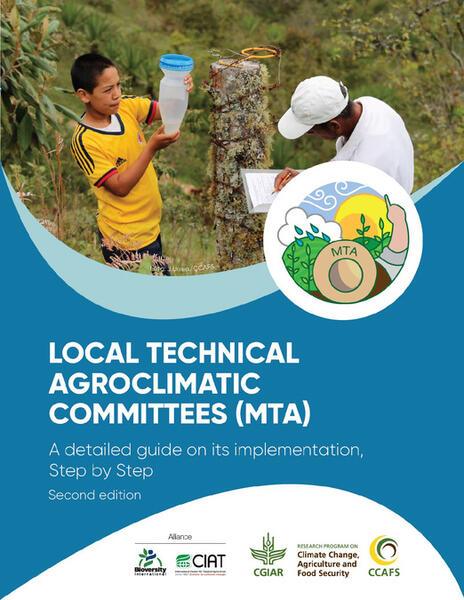
Detailed guide to implementing LTACs
Next steps to continue strengthening them:
To scale up and consolidate these spaces, the study suggests: strengthening local governance with leadership legitimately recognized by the community; securing stable funding by combining public funds with strategic partnerships including international cooperation; promoting active participation of farmers and technicians in co-creation and decision-making; incorporating digital tools to expand access to agroclimatic information and improve communication; linking LTACs with national and territorial public policies, favoring their institutionalization and alignment with rural development and climate adaptation agendas.
The results of this study offer a clear, evidence-based roadmap to strengthen and expand participatory climate services. For professionals and policymakers, this means building robust, inclusive, and sustainable platforms responsive to local realities and contributing to more resilient food systems. For the scientific community, it provides a better understanding of how to connect technical knowledge with practical field needs, facilitating informed and contextualized decision-making. Together, these insights are key to advancing sustainable rural development and ensuring food security in Latin America amid climate change.