From the Field Solving livestock feed problems can accelerate economic and social development in Ethiopia

The Alliance of Bioversity International and CIAT, in collaboration with Ethiopia’s Ministry of Agriculture (MoA), organized a training-of-trainers (ToT) workshop in Hawassa from August 8–10, 2025. The event was part of the CGIAR Scaling for Impact (S4I) Science Program, which aims to bridge the gap between research and extension systems by fostering collaboration, system integration, and collective action. The training focused on scaling up grass–legume forage technologies to improve mixed farming productivity and promote environmental sustainability.
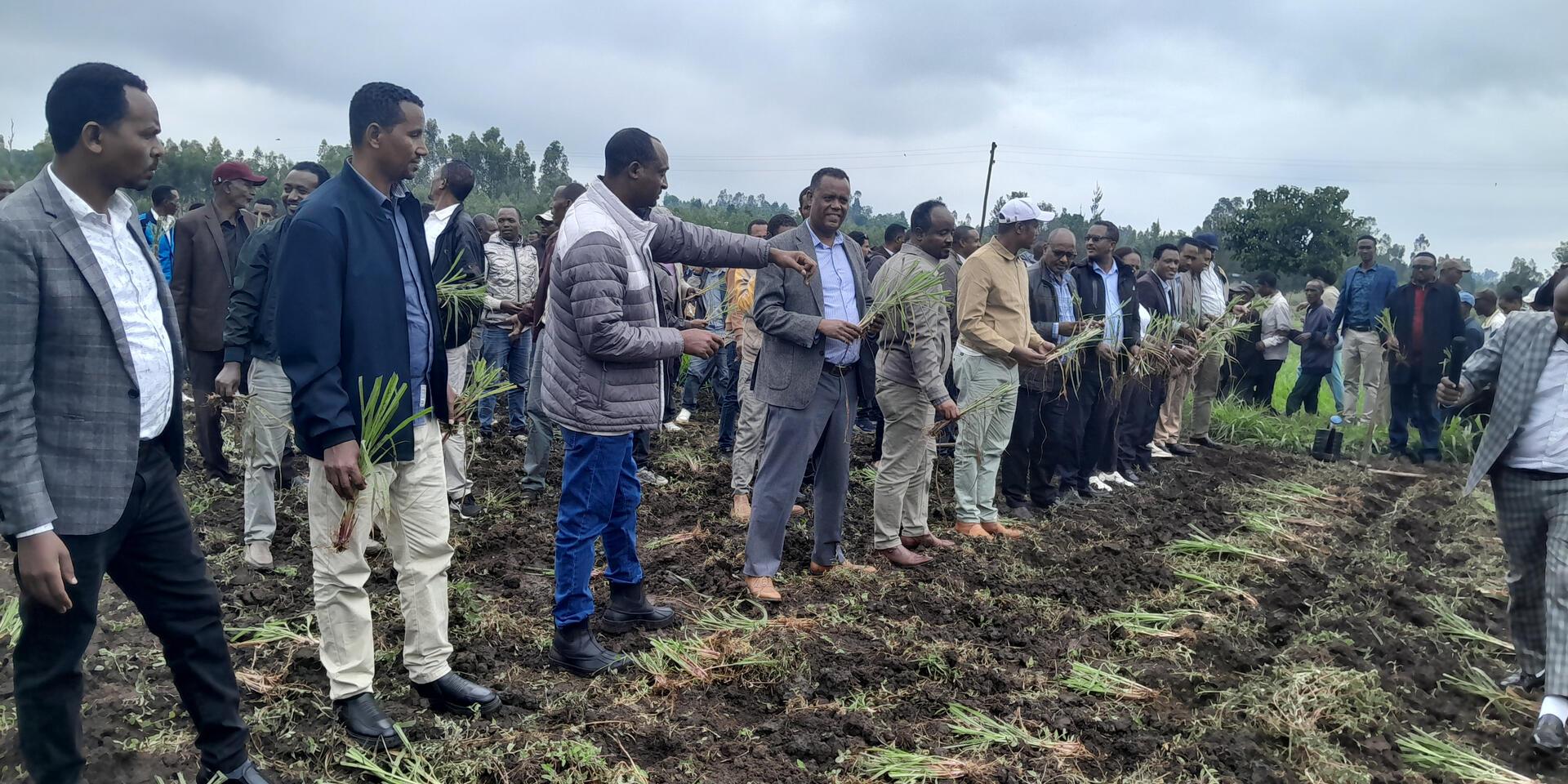
The Scaling Forages ToT drew significant attention from high-ranking officials, including H.E. Dr. Fikru Regassa (State Minister at the Ministry of Agriculture), as well as regional and local leaders and members of the farming community: elders, men, women and youth. Around 350 participants attended the event, which featured practical field demonstrations aligned with the Sidama regional campaign for multipurpose forage planting, part of the national Green Legacy Initiative spearheaded by the Prime Minister.
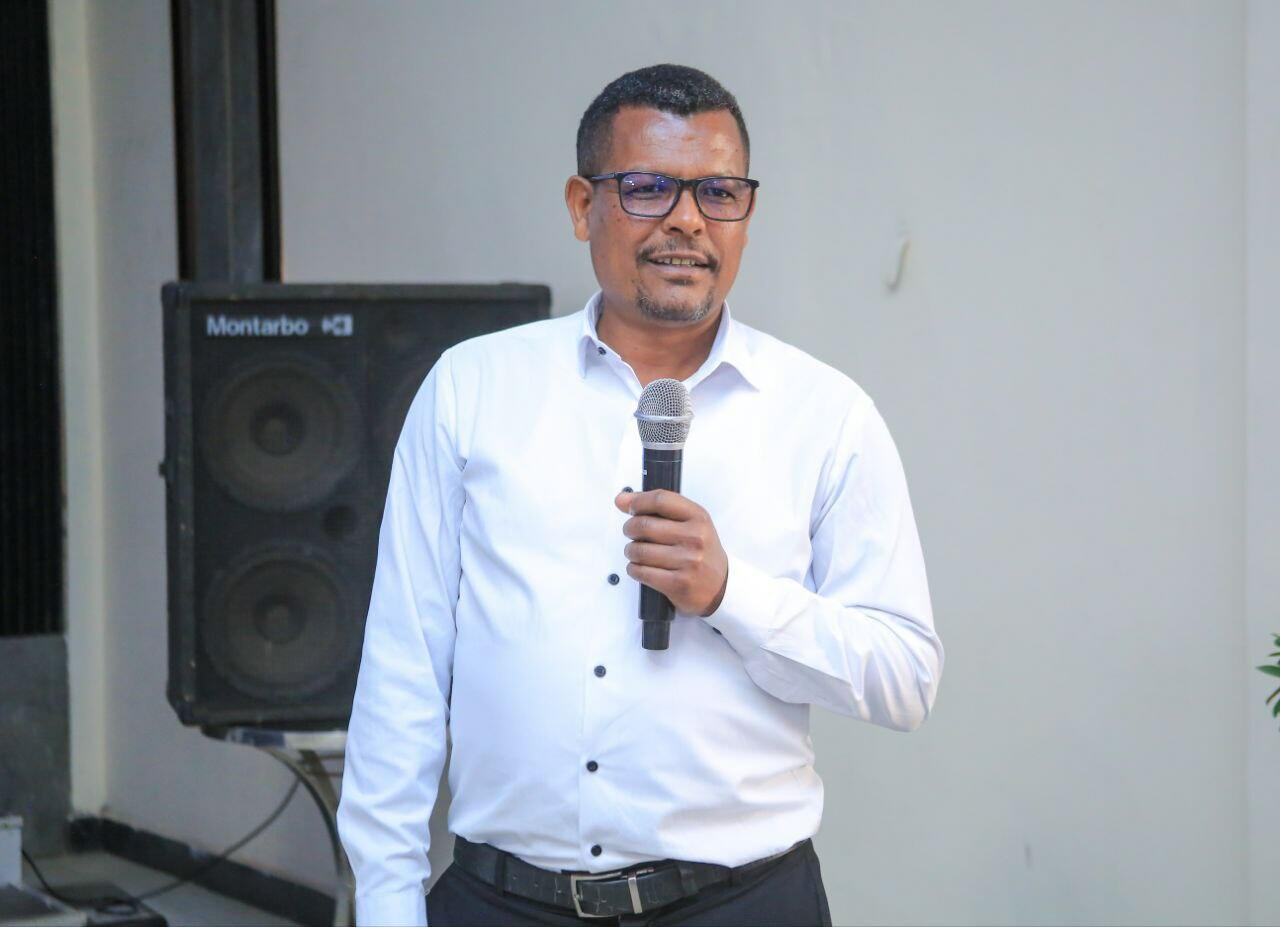
Mr. Regassa Bekele, Tropical Forage Program Researcher at the Alliance, explaining the ToT to ensure realignment of research outputs with development impacts for bridging the gaps.
In his opening remarks, H.E. Dr. Fikru Regassa emphasized the critical role of livestock feed, noting that it represents over 70% of total production costs. “Ethiopia urgently needs feed interventions, and this Scaling for Impact Forage Training Program is useful and timely.”
He added that while the production of eggs, milk and meat has increased three to five-fold since the launch of the Yelemat Tirufat Initiative (thanks to improved breeds), rising prices remain a challenge due to the high cost of feed. For this reason, feed development has become a government priority, and capacity-building initiatives such as this ToT are key to achieving sustainable progress.
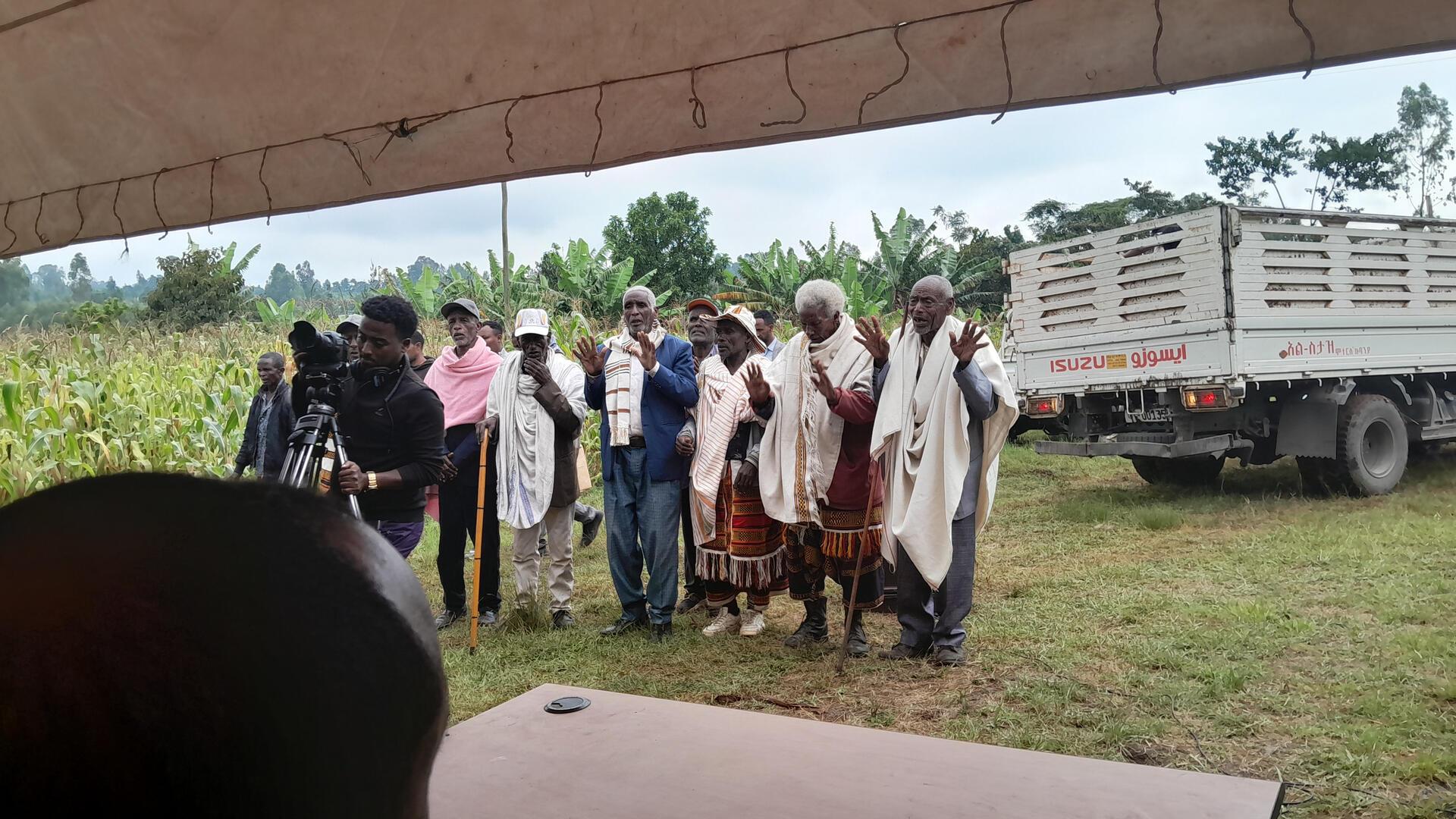
Elders blessing the fields during the event. Credits: R. Bekele / CIAT
Livestock: The nervous system of Ethiopian agriculture
Agriculture has long been described as the backbone of Ethiopia’s economy and social development. Within this system, livestock plays a pivotal role: not only providing food, nutrition and income, but also supporting crop production through manure, traction and transportation. Livestock is essential to the functioning of mixed farming systems, providing both the power and productivity that sustain rural livelihoods. Just as the nervous system enables humans to move, think and function, livestock serves as the operational core—the “nerve and brain” of Ethiopian agriculture—powering both the process and the product.
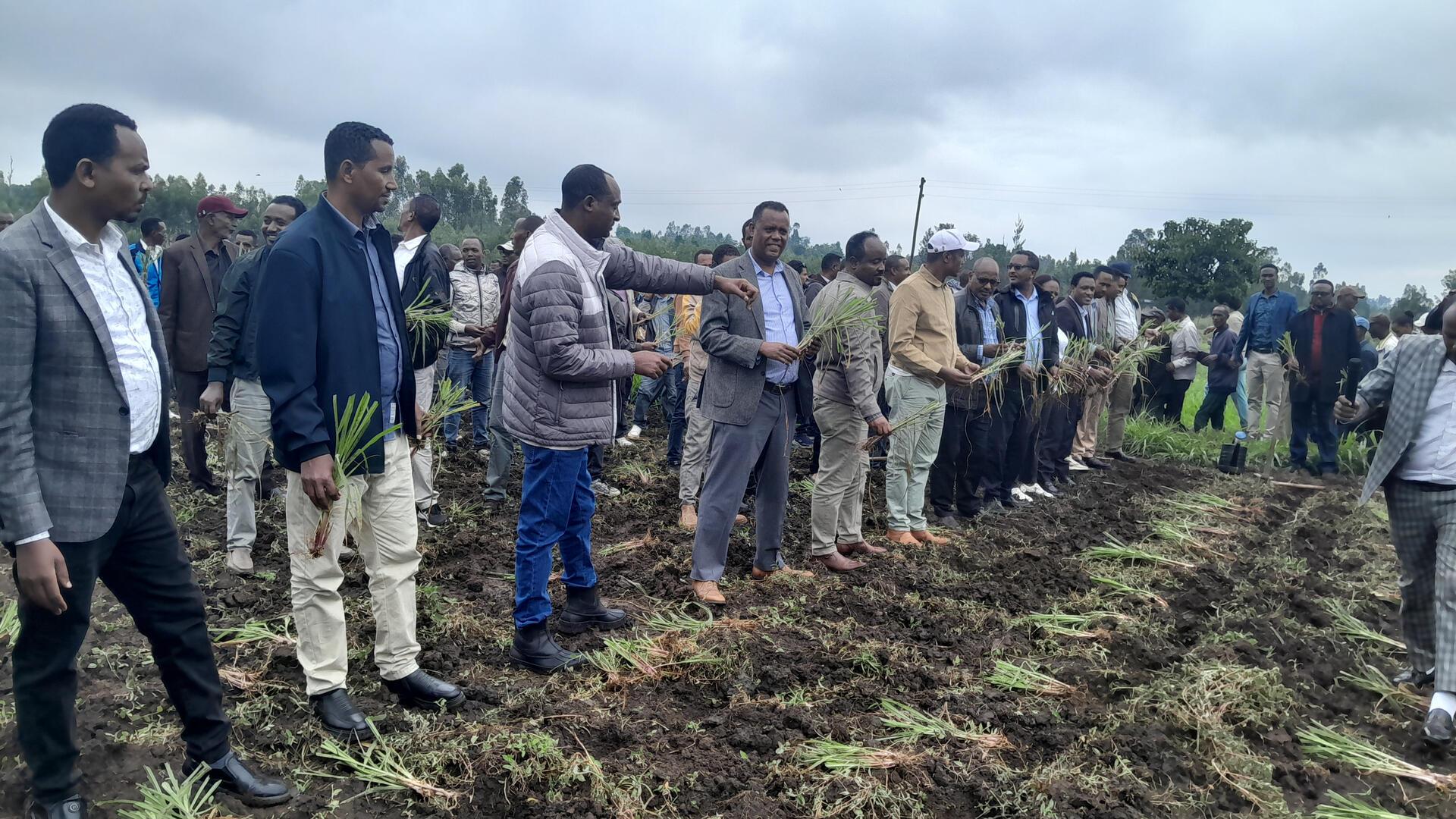

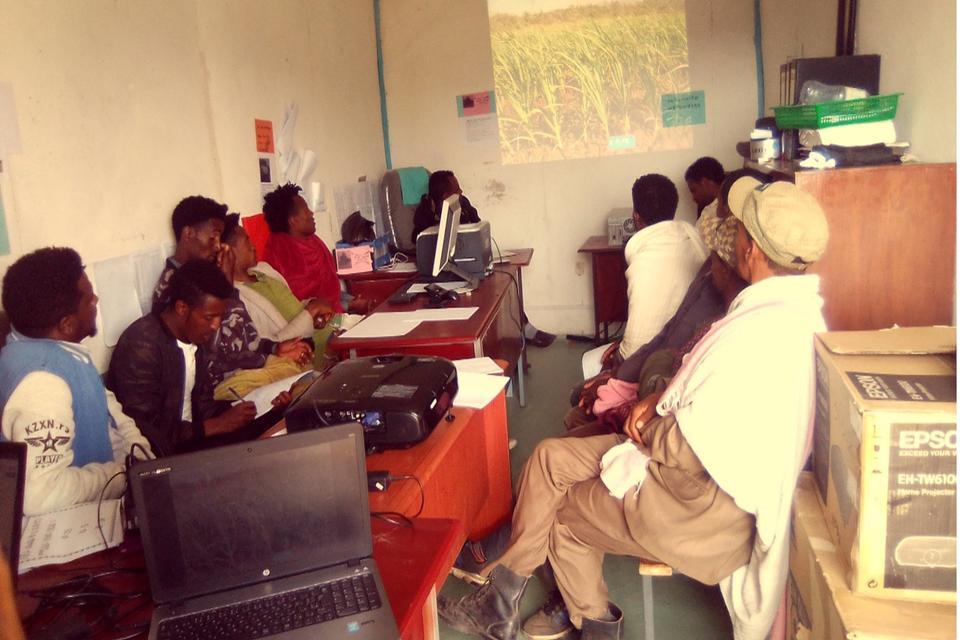
Scaling for Impact Forage ToT trainees. Credits: R. Bekele / CIAT
Given that feed accounts for more than 70% of total livestock production costs, addressing feed challenges offers one of the most direct routes to boosting productivity and profitability. Unlike compound feeds that require high investment and technical expertise, improved forage technologies offer a low-cost, accessible solution that can be widely adopted by smallholder farmers, accelerating progress toward national development goals.
Participants in the training unanimously agreed that feed scarcity and quality remain the most limiting factors to livestock productivity. Integrating grass–legume forage technologies developed by the Alliance into mixed farming systems, as the ones promoted by through the ToT, delivers multiple benefits:
- Improved feed availability and nutritional quality
- Enhanced soil fertility
- Increased household income
- Reduced greenhouse gas emissions
- Strengthened food security
Details of the Training of Trainers (ToT)
Venue: Rori International hotel, Hawassa City, Sidama Region
Duration: August 8-10, 2025
Total participants: 60 (50 trainees, five trainers, three facilitators, two higher officials) and other visitors including the state minister, higher officials and public relations
Training topics: improved forage types, their diversity ecological and economic benefits, agronomic practices (site selection, land preparation, seeding rate and sowing methods both for biomass and seed production, grass-legume mixtures, field inspection and management, post-harvest management and effective using methods and cost benefit analysis)
Training objective: to enhance regional to kebele level extension workers’ understandings knowledge and skills through providing hands-on training to help them scale up for impact forage technology bundles to 250,000 smallholder farmers
Training methodology: Instructive theoretical session and practical demonstration at field level. The theoretical training, discussions, Q&As, and experience-sharing were conducted among 55 ToT participants. They are from three regions – Sidama, Central and Southern. During the practical session, they were integrated with the Sidama Region multipurpose forages planting campaign organized in Moricho Shomboro kebele of Shambedino wored. Approximately 350 total participants including community elders, farmers, and youth groups planted multipurpose forages together with the State Minister H.E. Dr. Fikru Regassa (PhD), leaders and experts from MOA, Sidama, Southern and Central Ethiopia regions, zones, woredas and kebele development agents. The event was accompanied by elders’ blessings and cultural foods.