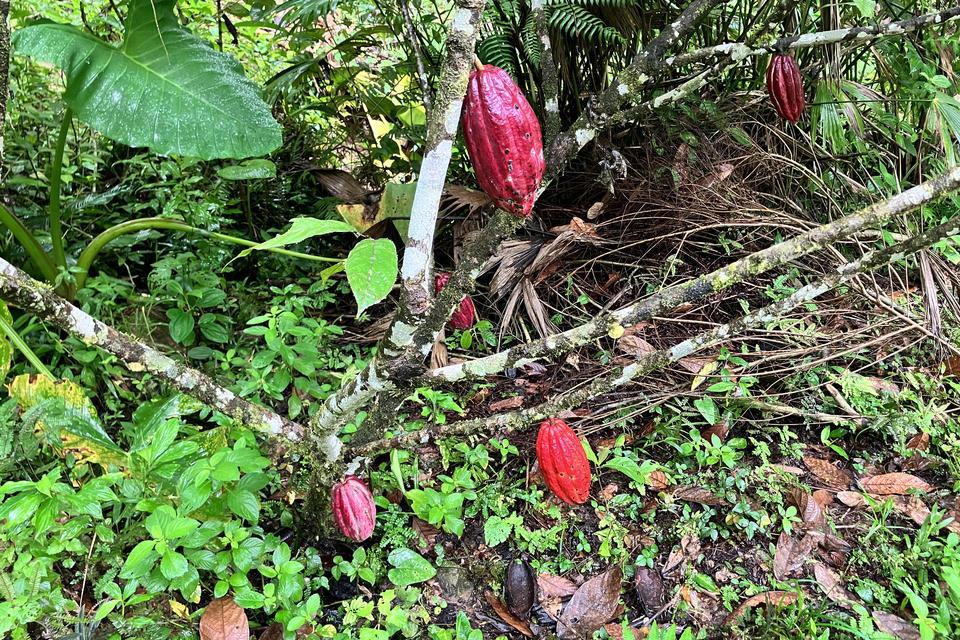
Blog Soil conservation strategies in Amazon agroecosystems: An ethnoecological approach
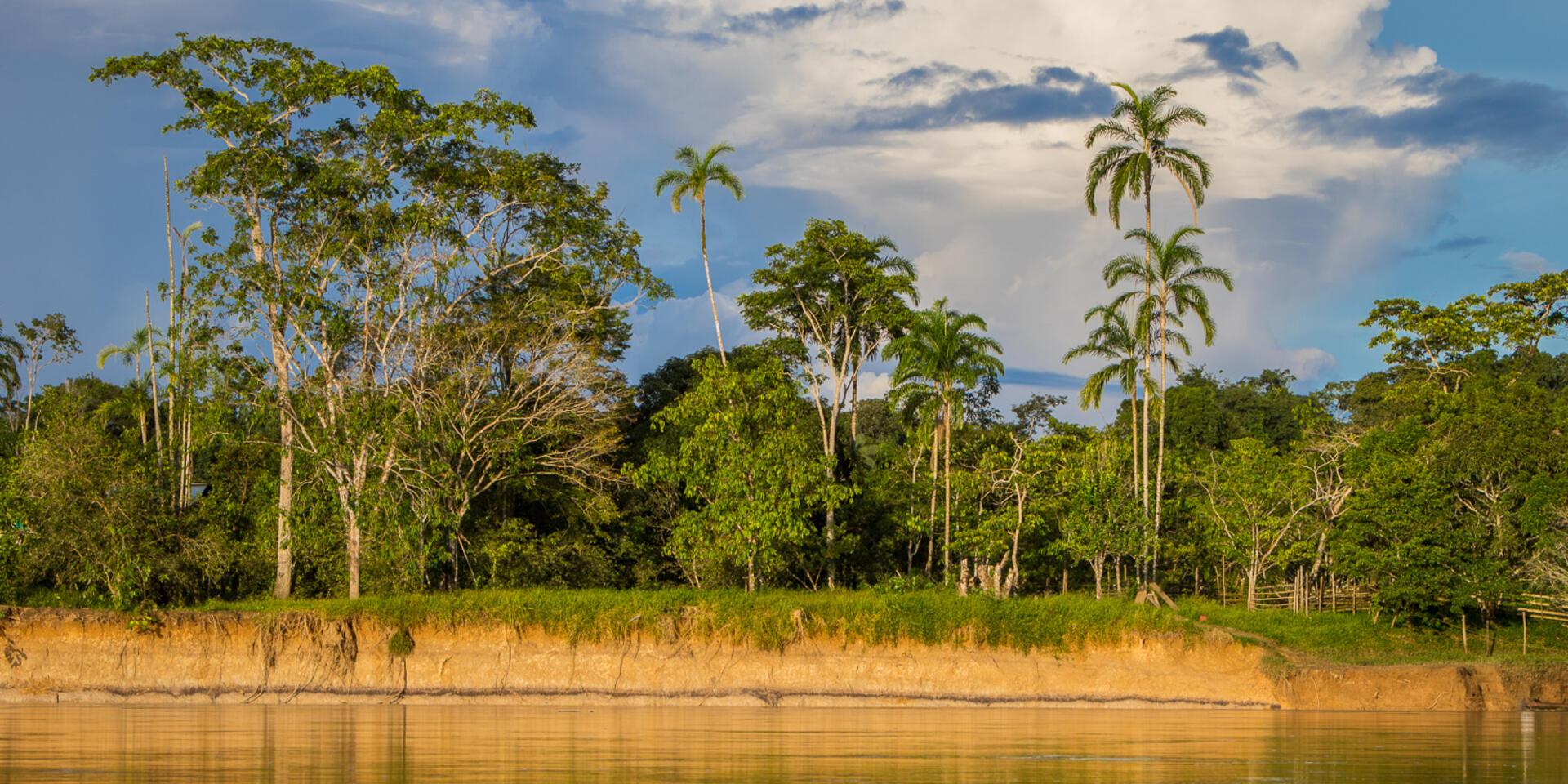

In Caquetá’s Amazon foothills, researchers studied farmers’ soil conservation strategies to understand how local knowledge and socioecological factors drive sustainable practices amid climate and land-use challenges.
Soil plays a critical role in ensuring food security, carbon sequestration, and preventing the pollution of water sources. Conservation strategies are becoming increasingly urgent to maintain these critical functions. Soils of the Amazon region present challenging conditions for agriculture, such as low fertility and high acidity. Despite this, Amazonian communities have relied for centuries on practices to sustain food production and their livelihoods.
In recent decades, however, the Amazonian foothills have experienced a series of social transformations, such as colonization, armed conflict, deforestation driven by the expansion of the agricultural frontier and illicit use crops, and the establishment of grazing lands for livestock. Nevertheless, thanks to local, national, and international efforts aimed at climate change adaptation, biodiversity conservation, and illicit crop substitution, many producers are now shifting away from extensive production practices and beginning to implement strategies focused on soil conservation and ecosystem restoration.
Supported by the CGIAR Science Program Climate Action and the CGIAR Initiative on Low-Emission Food Systems, our research aimed to explore the soil conservation and management strategies regularly implemented by farmers in the Amazonian foothills in the department of Caquetá, southern Colombia. The study adopted a complex and holistic perspective to examine the key factors influencing farmers' decisions to adopt soil conservation practices.
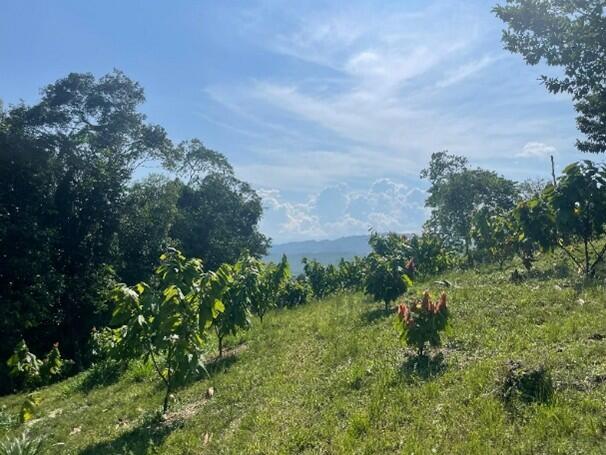
Belén de los Andaquíes, Caquetá, Colombia. Photos: María Bedoya.
Based on the principles of ethnoecology (studying how people understand the ecosystems around them and their relationships with surrounding environments), we analyzed human–nature interactions through interpretations, representations, uses, and management practices. This approach included variables such as belief systems, local knowledge, practices, and the broader socioeconomic context. The study combined qualitative and quantitative data collection during fieldwork and encompassed interviews, knowledge assessments, and associativity network mapping. In parallel, quantitative data on land use, soil characteristics, and secondary sources supported statistical and landscape analyses.
We focused on the municipalities of Belén de los Andaquíes and La Montañita, southwestern Caquetá. There, producers are engaged in a range of productive activities and income-generating strategies, with organic cacao production being a common element. Most are affiliated with organizations or cooperatives, which facilitate access to projects, benefits, market networks, and institutional support. Farm visits were conducted to carry out interviews, collect earthworm samples (used as bioindicators of soil quality), and track geographic coordinates to evaluate each farm’s ecological connectivity with the region’s main environmental corridors.
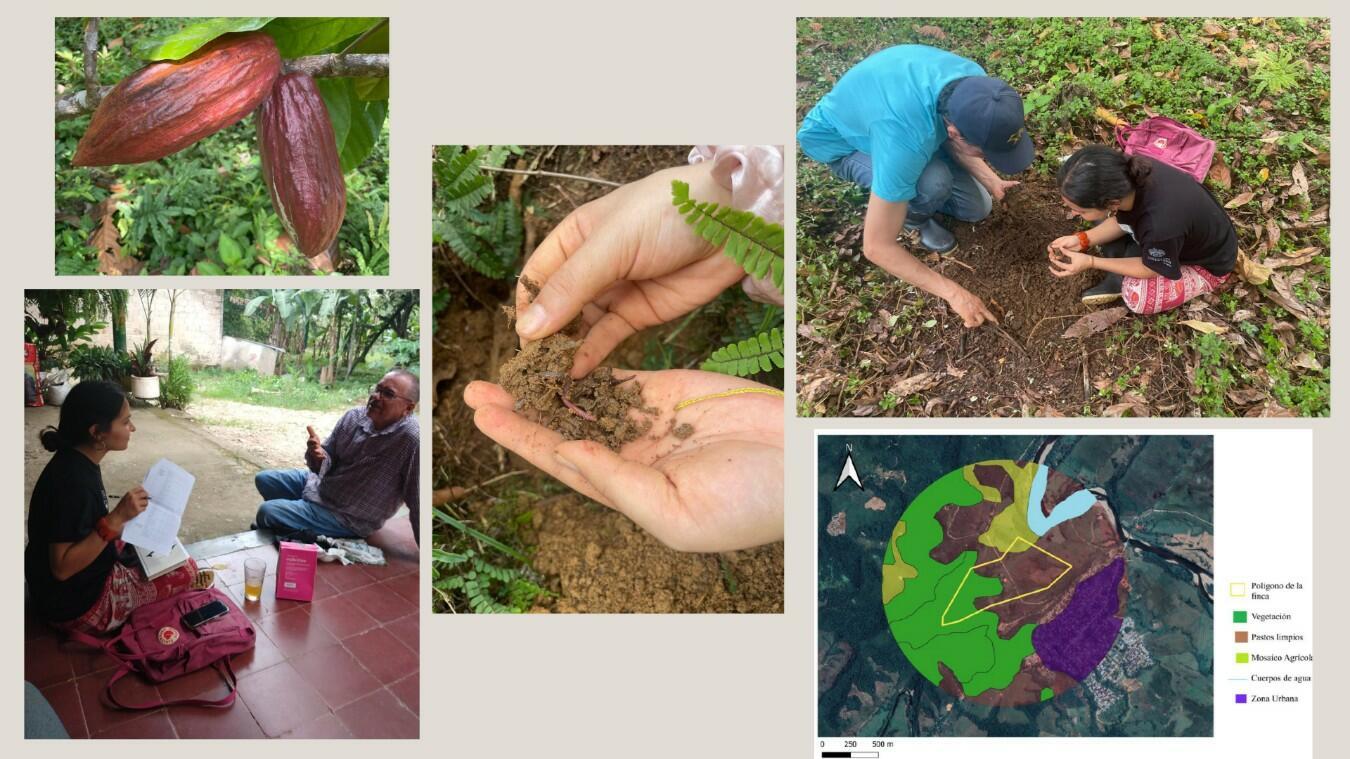
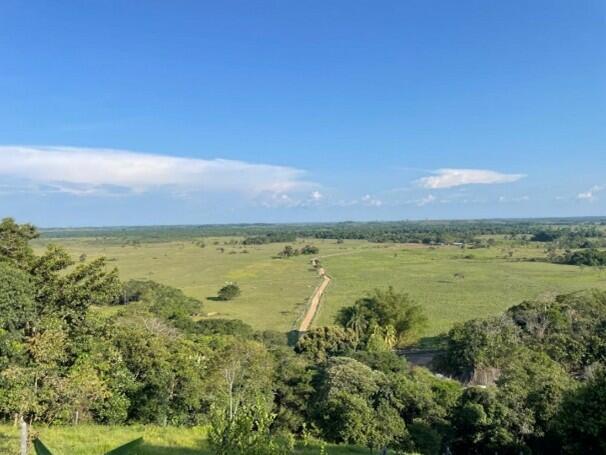
Photos of fieldwork: María Bedoya, Ricardo Bedoya - La Montañita, Caquetá, Colombia.
What are our highlights?
In terms of the biophysical characteristics, samples confirmed that the soils are mostly clayey, with low fertility and strong acidity, and with high aluminum saturation. Earthworm presence (as a fertility indicator) was heterogeneous: better conditions were found in some lowland areas. On the other hand, more than half of the farms showed high or very high ecological connectivity with surrounding forests.
Regarding the socioecological context, we observed that most producers own their land and manage it with their families. Income sources are diverse: some sell raw products (cacao, cattle), others sell processed goods (chocolate, honey-based products), with sales at both local and export levels. There is strong associativity: being part of organizations (e.g., Agrosolidaria, Asproabelén) helped them access technical assistance, projects, and markets—essential for implementing soil and biodiversity conservation strategies.
Most producers apply soil management and conservation strategies to shift from conventional to more sustainable agroecological alternatives. Key practices include the use of organic fertilizers made on-farm; application of lime to neutralize natural soil acidity; maintaining soil cover using pruning and forest residues to retain moisture and nutrients; adoption of agroforestry systems; and limited use of chemicals, with emphasis on natural pest control.
Local agricultural knowledge is deep in terms of soil conservation, fertility, and water management. There is less awareness regarding the role of microorganisms and mesofauna in the soil. This knowledge comes from empirical experience, observation, and capacity-building programs. However, there is no direct correlation between deep knowledge and better practices. Factors such as economic resources, land size, soil condition, and access to support networks influence decision-making.
Even without deep technical knowledge, some practices benefit soil health due to empirical logic or habit.
Overall, we observe that these producers are moving toward resilient and sustainable production systems, adapting to challenging ecological conditions. Their practices are shaped not only by knowledge but also by social, economic, and environmental contexts and community support systems. Through experience exchanges, training and educational programs, the formation of community-based associations, and the expansion of market networks, most producers have gained access to knowledge and practices that promote environmental conservation while also securing profitable income opportunities through the production, processing, and commercialization of organic products, like Andaki chocolate.
Factors such as institutional presence (both governmental and non-governmental), internal social conflicts, the sociopolitical context, and the degree of community organization can significantly influence the adoption of climate change mitigation, adaptation, and ecosystem preservation strategies. Considering these factors when designing context-specific strategies can greatly enhance their effectiveness and social impact. For this reason, research of this nature can inform decision-making and guide the development of environmental strategies, such as capacity-building programs, ecosystem restoration or conservation projects, climate change initiatives, and the implementation of bioeconomic business models at a local level. It is especially recommended for socioecologically diverse and complex contexts like the Colombian Amazon and other territories across the Global South.
*Maria Alejandra Bedoya Lancheros is an Ecologist from Universidad Javeriana. Blog based on research carried out thanks to the CGIAR initiative Low Emission Food Systems (Mitigate+), and the CGIAR Climate Action Science Program, under the direction of Neidy Lorena Clavijo and supervision of Luz Ángela Rodríguez, Assistant Professors at Pontificia Universidad Javeriana, and with the support of Martha Vanegas Cubillos, Senior Research Associate of the Alliance. Edited by José Luis Urrea-Benítez, Science Communications Specialist of the Alliance. Cover photo credit: Flickr/ Diego Lizcano (CC BY-NC-ND)
If you are interested in reading the full research, you can contact the author via email: [email protected] for the full document.