From the Field Scaling for Impact: from innovation to real change in agrifood systems
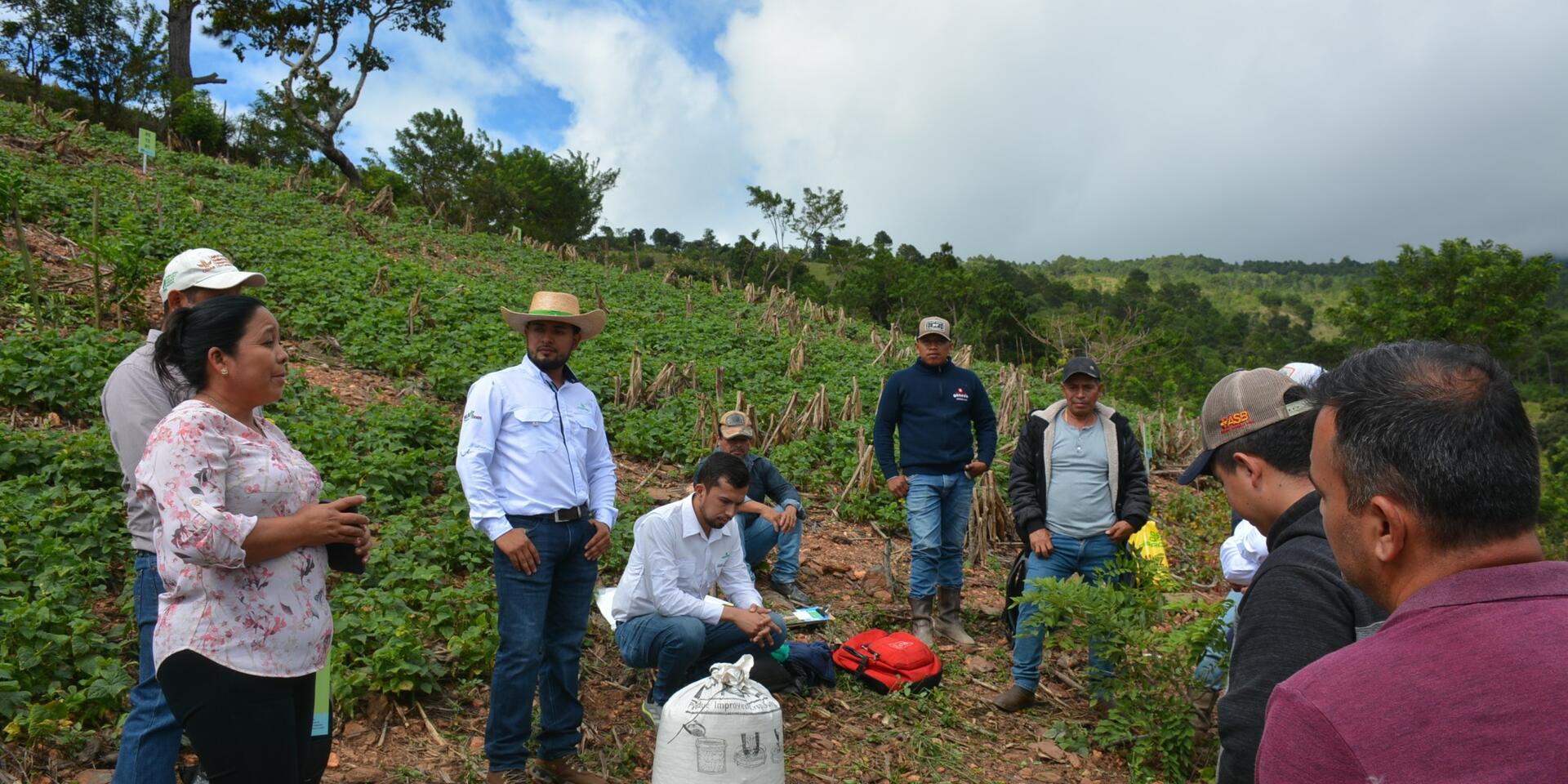

Between what works in pilot settings and what transforms territories, there is a gap. Scaling helps understand how to adapt, connect, and sustain innovations to bridge it.
Over recent decades, agrifood systems have been the setting for significant knowledge generation. New technologies, sustainable practices, digital tools, and methodological approaches have been developed to respond to increasingly complex challenges.
Many of these innovations have shown positive results in pilot contexts, where conditions are controlled and there is constant technical support. However, transferring them to other territories and scales remains a challenge.
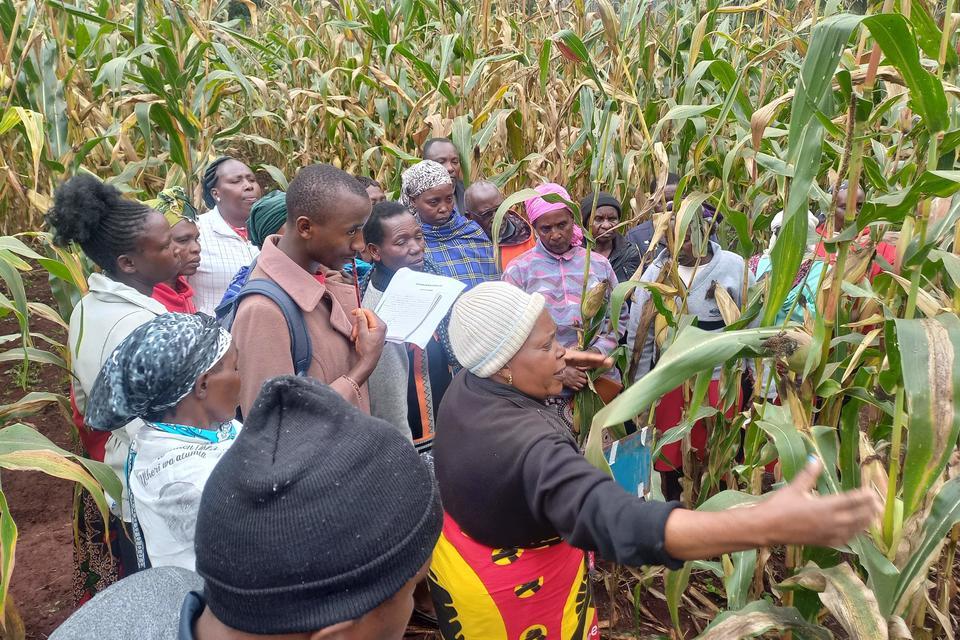
As solutions are implemented in real-world contexts, new variables come into play: conditions, actors, and local dynamics change. As a result, outcomes do not always hold in the same way, revealing a gap between what works in specific environments and what can be sustained across different contexts.
In this scenario, scaling is becoming increasingly relevant. More than simply expanding the reach of an innovation, it involves understanding how to adapt it, how to facilitate its adoption by different actors, and how to sustain its impact over time.
Thus, the challenge is no longer only to develop new solutions, but to advance in how existing innovations can function effectively in diverse and changing contexts.
What is scaling and why does it redefine the way we innovate?
Scaling has traditionally been understood as the expansion of an innovation to new users or territories. However, this definition is limited given the complexity of agrifood systems.
Today, scaling is understood as a dynamic process through which innovations are adapted, integrated, and sustained within diverse social, economic, and institutional systems. This implies that impact does not depend solely on the solution itself, but on its interaction with the environment in which it is implemented.
From this perspective, scaling means acting across multiple dimensions: expanding reach, influencing policies and institutions, transforming capacities and practices, and even replacing models that are no longer sustainable.
This approach redefines innovation itself. It is no longer just about developing effective solutions, but about designing them with an impact-oriented vision from the outset.
Scaling for Impact: towards a more integrated approach
In response to scaling challenges, the CGIAR Scaling for Impact (S4I) program proposes a more integrated way of addressing the process, based on a key idea: scaling should not be seen as a stage that follows innovation, but as a component incorporated from the beginning.
This means designing solutions while considering their applicability in real contexts, the conditions that will enable their adoption, and the pathways that will support their long-term sustainability. From this perspective, impact is not the result of a single intervention, but of the interaction between multiple factors such as scientific evidence, public policies, financing mechanisms, local capacities, and collaboration among actors.
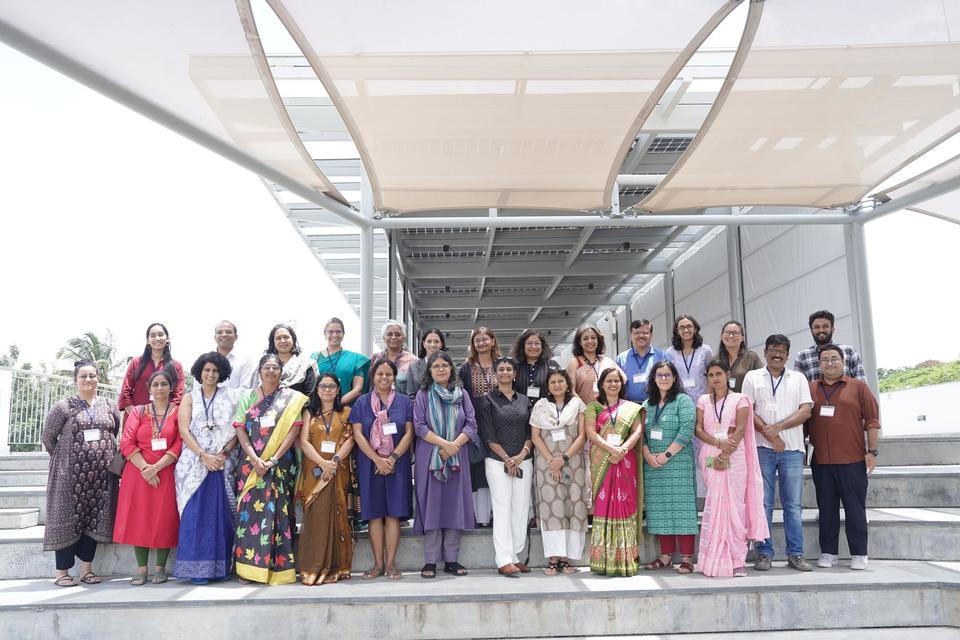
Regional dialogues in Latin America, Africa, and Asia have helped consolidate this vision, showing that scaling does not follow linear trajectories or universal formulas. Instead, it is an adaptive process where continuous learning, coordination among actors, and connections across regions are essential.
Linking experiences from different territories makes it possible to identify common patterns, anticipate challenges, and strengthen implementation strategies based on previous lessons.
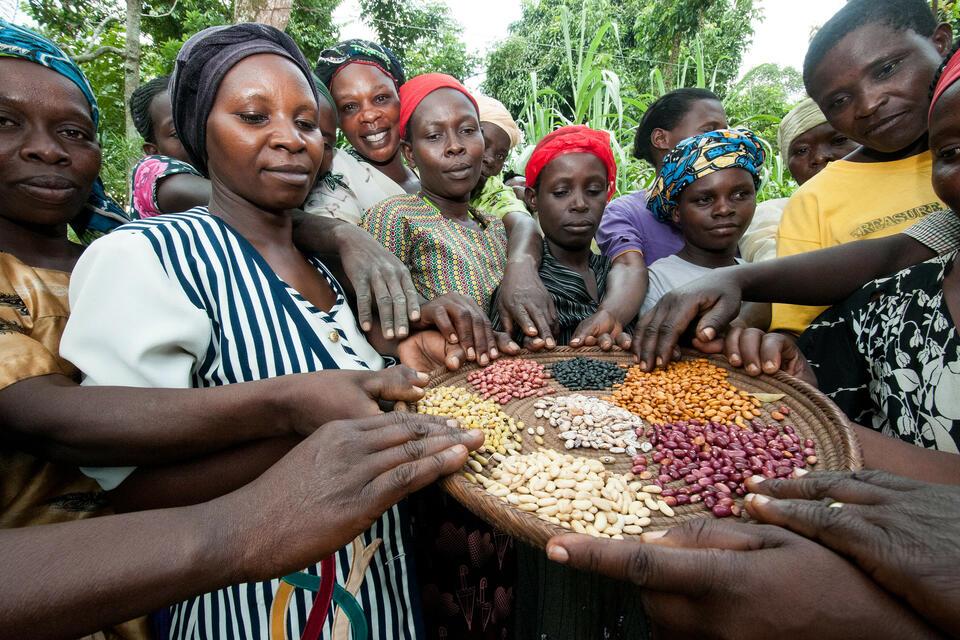
This exchange does not mean directly replicating solutions. Each context has specific conditions that require adjustments, reinforcing the idea that scaling is fundamentally a process of adaptation. At the same time, it enables greater efficiency by avoiding duplication of efforts and strengthening the ability to respond to shared challenges.
The Scaling Hub: connecting knowledge, actors, and action
Given that scaling is influenced by coordination among actors, cross-regional learning, and the effective use of knowledge, it is essential to have spaces that facilitate these connections. The Scaling Hub positions itself as a strategic element.
More than a repository, the Hub functions as a platform designed to support the use of knowledge in real processes. Its purpose is to organize, translate, and make available evidence, methodologies, and lessons learned for different actors in the agrifood ecosystem, while also keeping the community informed and promoting the exchange of experiences.
Its design integrates understanding and application: on one hand, it explains the scaling approach and its lessons; on the other, it provides direct access to technical resources such as reports, tools, and training materials that can be used in practice—strengthening not only the dissemination of information but also its use in decision-making and action in the field.
From knowledge to practice: resources to understand and apply scaling
The Hub brings together a range of activities and resources that help understand scaling through accumulated experience:
- Scaling Week 2025 provides a space for exchange where approaches, challenges, and lessons learned across different contexts are discussed.
- The S4I, AgriLAC, and NORAD training cycle focuses on strengthening territorial capacities to implement scaling processes.
- Reports from the Regional Dialogues on Scaling for Impact in Latin America and the Caribbean, Africa, and Asia synthesize key lessons on responsible scaling and methodological approaches, while offering a comparative perspective across contexts:
These resources help answer a fundamental question in scaling:
what works, for whom, and under what conditions.
Scaling transforms how we understand innovation: not as an endpoint, but as a process that adapts, connects, and evolves. Today, the challenge is not only to innovate more, but to make better use of what we already know. In that ability to adapt and sustain existing solutions lies one of the keys to advancing toward more sustainable agrifood systems.