Blog Rwanda takes on child malnutrition head-on through school gardens

From mere 600 grams of seed to community-wide change, Rwanda’s Sustainable School Feeding Innovations project is helping schools grow high-iron beans, improve child nutrition and share seed and knowledge with surrounding farmers.
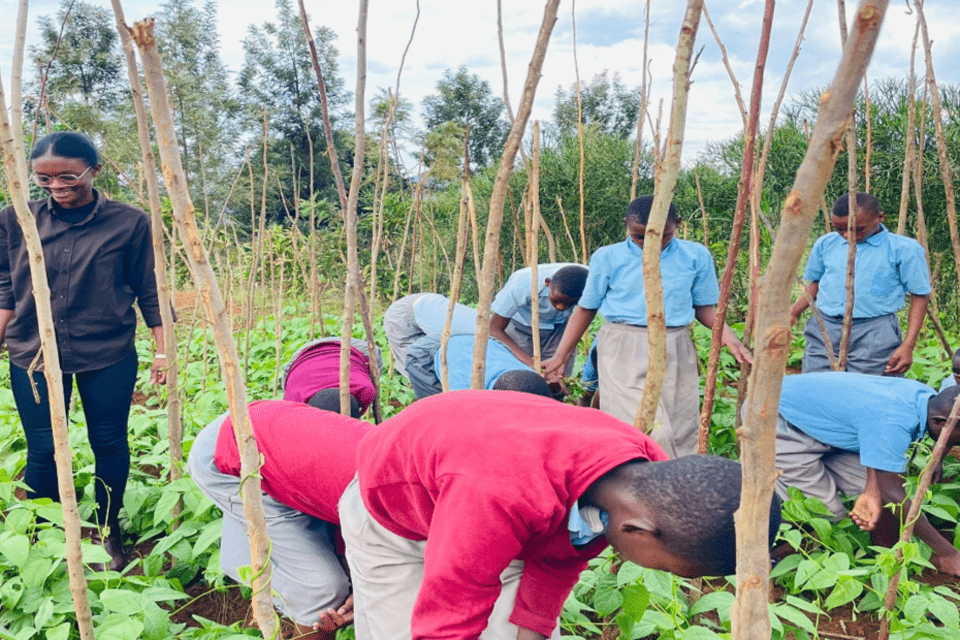
The story starts with a handful of bean seed. At GS Kayanga in Rwanda, the school received just 600 grams of seed. The first harvest produced 15 kilograms. School representative Hycinthe Nyirahabumugisha recalls that teachers kept five kilograms for replanting and shared the other 10 kilograms with ten parents. The next harvest was 48 kilograms. It may sound as a simple story, but it captures what is happening in school gardens across Rwanda. It began in a small plot behind a classroom, but it is increasingly finding its way onto children’s plates, into parents’ fields and, eventually, into the wider community.
Today, high-iron beans are becoming part of school meals and farmers’ fields, while also changing conversations about nutrition. Iron deficiency and stunting remain significant barriers to children’s development across the country. But some of the responses are being grown only a few metres from the classrooms.
The Sustainable School Feeding Innovations (SSFI) project, implemented by the Alliance of Bioversity International and CIAT through the Pan-Africa Bean Research Alliance (PABRA), with support from the Clifford Chance Cornerstone Initiative is helping schools put some of those solutions into practice.
Working across Kigali, Rwamagana and Kayonza, the initiative has reached 273 schools, trained 500 teachers and established 142 demonstration plots. But the numbers tell only part of the story.
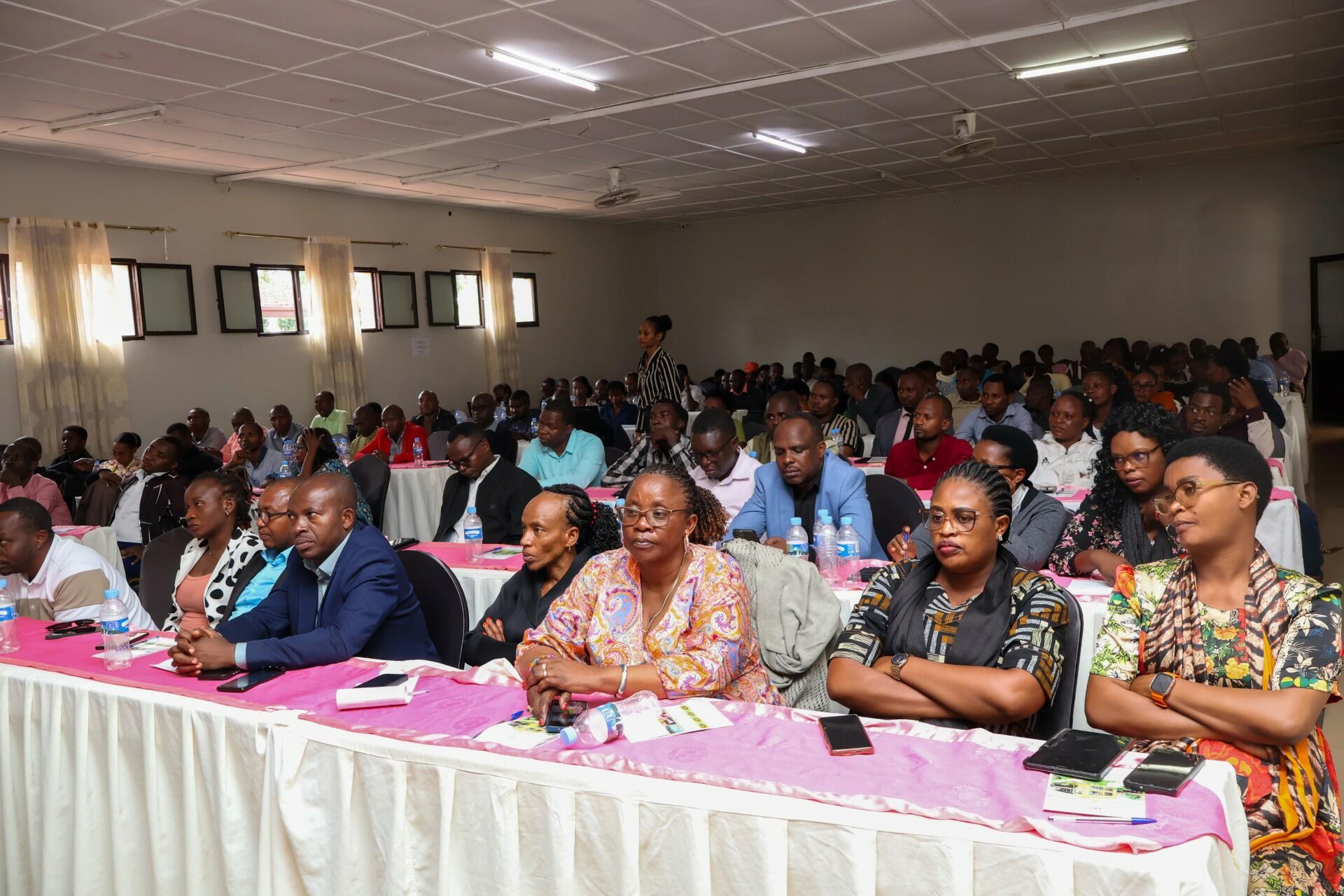
The third reflection workshop was held in Rwamagana district, uniting school representatives from Rwamagana and Kayonza Districts.
Yields that rewrote the benchmark
Rwanda’s average climbing bean yield remains below one ton per hectare, despite the crop’s potential to produce more than four tons per hectare. In some SSFI schools, farmers and teachers are showing what is possible. At EP Kamuyange, bean yields reached 4,320 kilograms per hectare, more than double the national average. GS Rusheshe harvested 2,940 kilograms per hectare, while EP Biryogo produced 2,280 kilograms on an equivalent basis.
Across 120 demonstration plots harvested during Season A of 2024/25, most schools exceeded 1.2 tons per hectare. The results point to something quite practical: improved seed, better agronomic practices and hands-on training can make a considerable difference to what farmers get from their fields.
At EP Butamwa, school representative Honoré Ishimwe and his team started with 600 grams of seed just as GS Kayanga. They kept planting, season after season, and watched each harvest grow. When the seed was spreading, so was the knowledge.