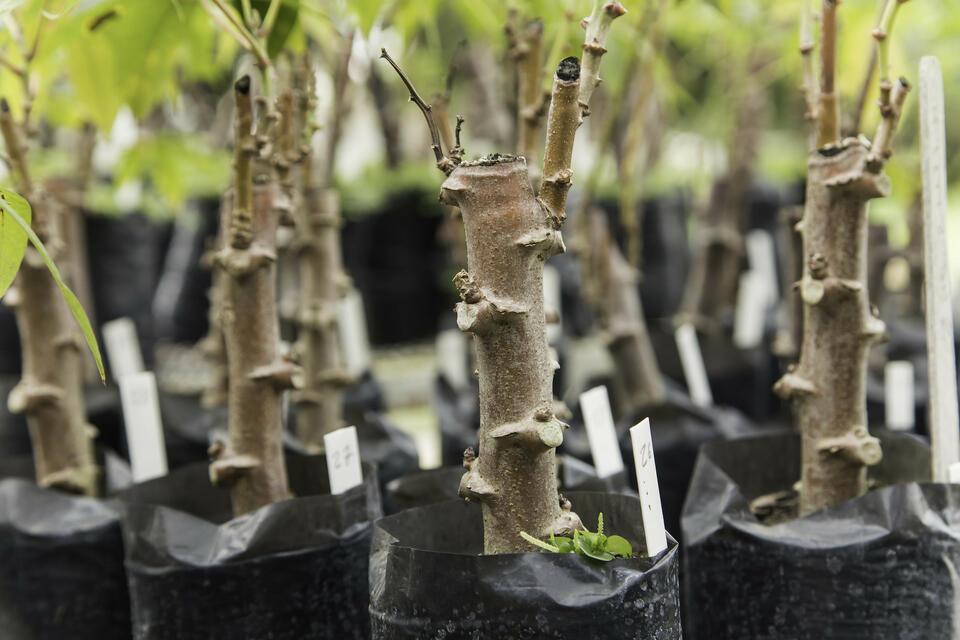
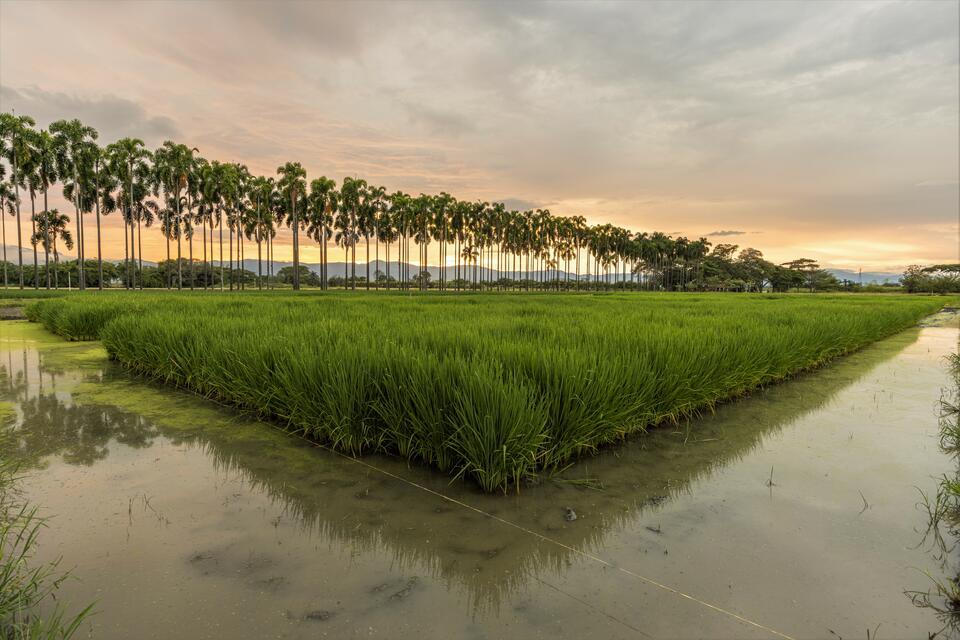
Research Articles What policymakers need to know: Steps to address challenges for banana, cassava, bean and rice production through 2050
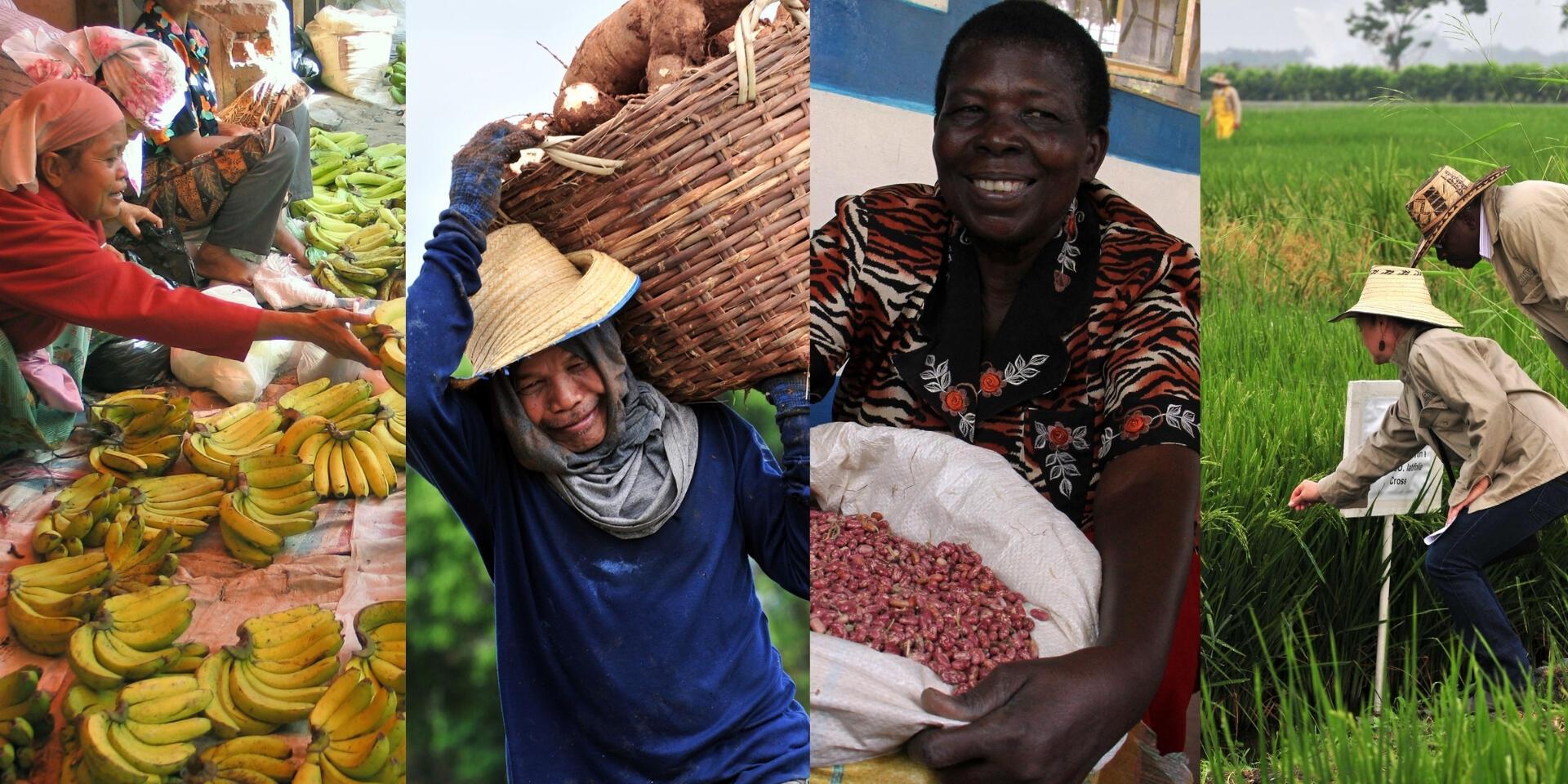

Research examines the factors influencing these important crops' future performance, and makes recommendations for policymakers to ensure that banana, cassava, beans and rice continue to play a key role in global food security and agricultural economies through 2050.
Banana, cassava, beans and rice are essential to food security, nutrition, and rural livelihoods across Asia, Africa and Latin America. These crops support millions of farmers, contribute to domestic and export markets, and underpin regional agri-food systems.
However, their production faces challenges that are expected to intensify in the coming decades. Climate variability, pest and disease pressure, and market dynamics threaten future yields, making the effectiveness of research, in seed systems, water management and policy coordination critical to securing the future of these crops.
Alliance researchers have analyzed crop performance with a focus on future yield trends. The resulting policy briefs highlight where productivity gains are slowing, where moderate growth remains possible, and where structural constraints continue to limit progress. We present them below with key takeaways.
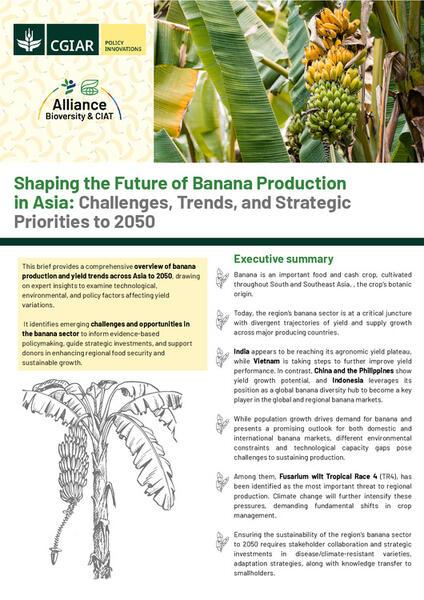
Bananas (Asia)
Key facts
- Banana remains a major staple and income crop across South and Southeast Asia, with production dominated by smallholder systems.
- Fusarium wilt Tropical Race 4 (TR4) disease is already affecting key producing areas and, together with climate change, they represent the primary long-term threats to production.
Policy-relevant actions
- Support the development and dissemination of TR4-resistant and locally adapted banana varieties.
- Strengthen biosecurity, surveillance, and extension systems to slow disease spread and improve on-farm management by promoting climate adaptation strategies.
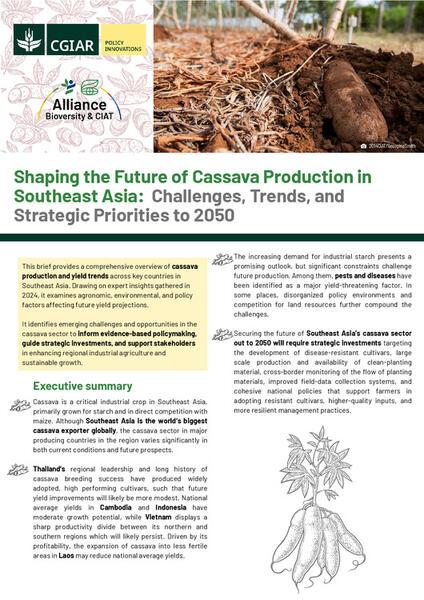
Cassava (Southeast Asia)
Key facts
- Southeast Asia supplies most of the globally traded cassava products and relies heavily on smallholder production for industrial starch markets.
- Production prospects are increasingly constrained by pests, diseases, soil degradation and inconsistent access to clean planting material.
Policy-relevant actions
- Invest in disease-resistant varieties and improve the availability and quality of planting material through formal and informal seed systems.
- Improve production and trade data and strengthen policy coordination to support sustainable intensification.
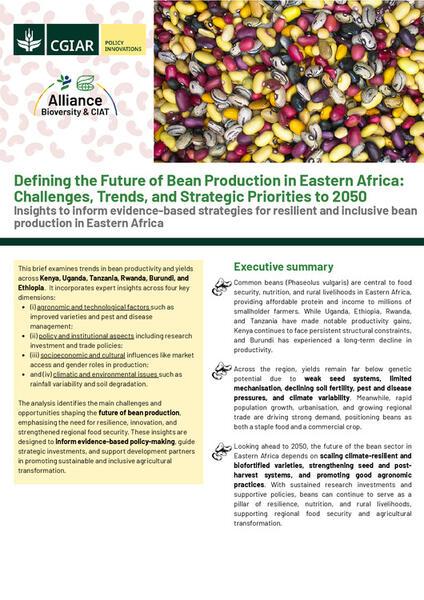
Beans (Eastern Africa)
Key facts
- Beans are a primary source of dietary protein and income for rural households across Eastern Africa.
- Yields remain well below potential due to weak seed systems, declining soil fertility, and pest and disease pressure.
Policy-relevant actions
- Strengthen breeding, seed delivery and variety replacement systems to improve productivity and resilience.
- Support soil fertility management, pest control, and market access to reduce production risks and increase farmer returns.
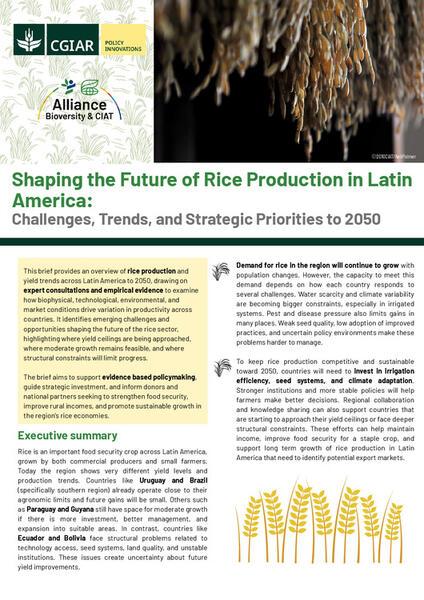
Rice (Latin America)
Key facts
- Rice is a staple food crop produced under both high-yield irrigated systems and lower-yield rainfed systems across the region.
- In several leading producers, yield growth is slowing as systems approach agronomic limits, while other countries face persistent institutional and resource constraints.
Policy-relevant actions
- Improve irrigation efficiency, water governance and crop management in high-performing systems to sustain productivity.
- Strengthen seed systems, institutional stability and access to technology in lower-performing countries to enable gradual productivity gains.
These briefs show that the future of banana, cassava, beans, and rice will be shaped less by expansion and more by how existing systems adapt to changing conditions. While some production systems are approaching yield ceilings, others retain scope for improvement through targeted investments in seed systems, water management, and institutional capacity. The evidence points to clear decision spaces where policy choices can influence productivity, resilience, and livelihoods toward 2050.