Blog Heat-proofing the Philippines’s agri-food sector in the face of threatening Super El Niño
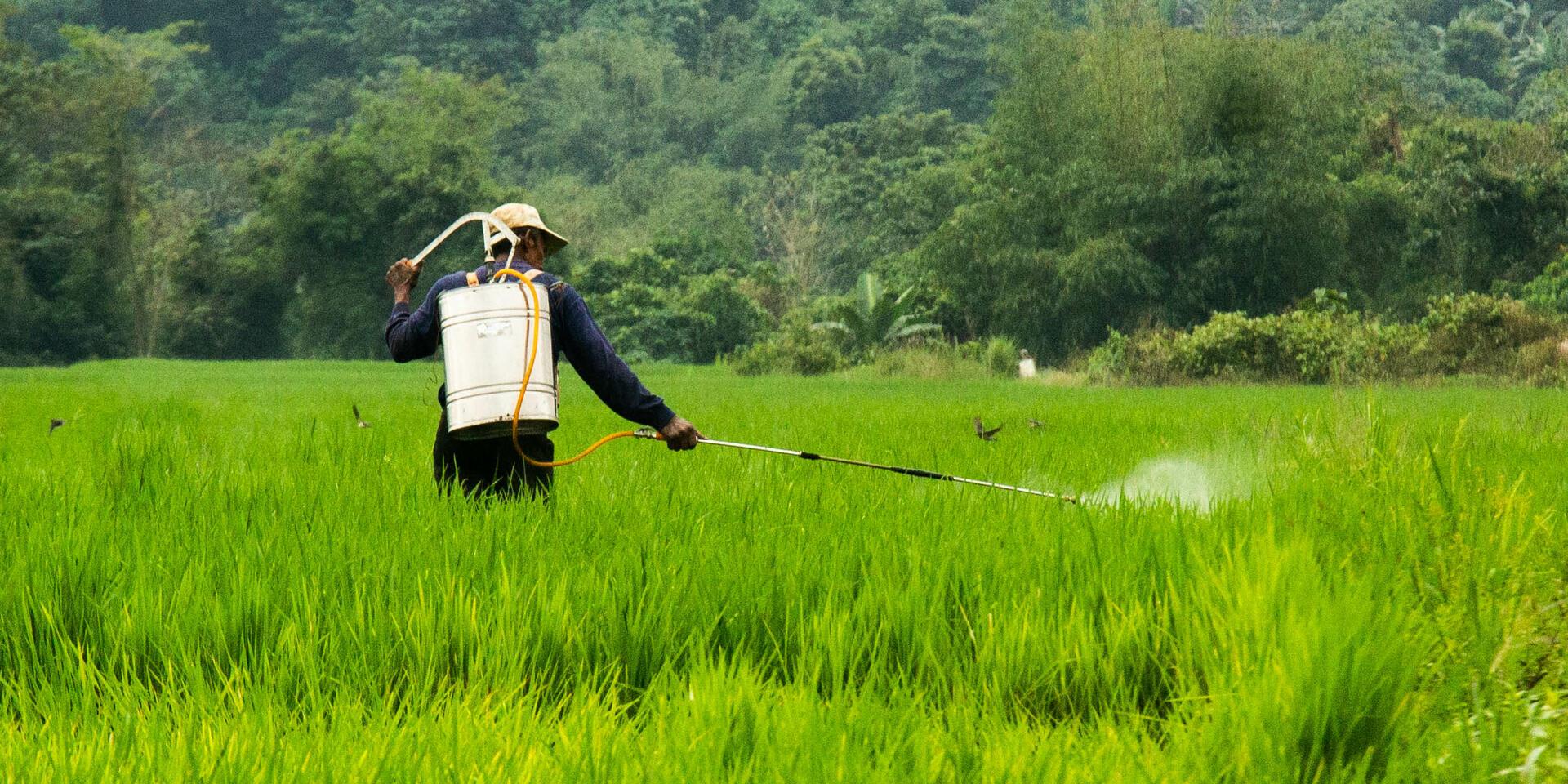
It’s one thing to live in the tropics. But to call home an archipelago of 7, 641 islands, sitting right at the doorstep of the Pacific Ocean, is to live in the frontlines and confront the climate risk firsthand.
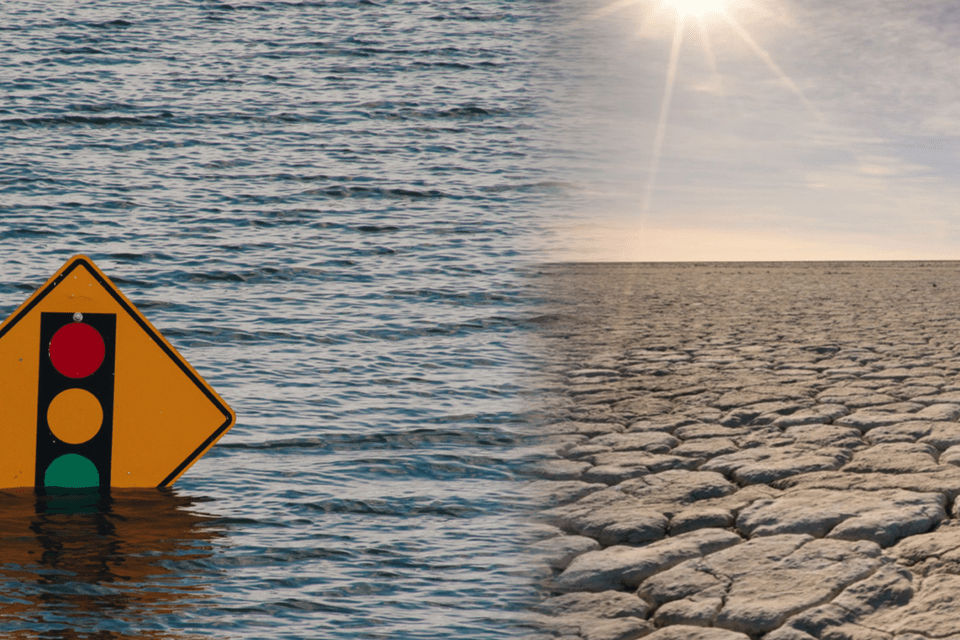
The Philippines has remained at the top of the world list of most at-risk nations in recent decades, underlined by its high exposure and vulnerability to extreme weather events as worsened by the climate crisis. This year, the country is facing what scientists describe as a rare triple threat season as the warmer than usual Pacific Ocean brews a super El Niño that may trigger prolonged drought, heavy flooding, and intense typhoons in different regions across the country.
Just this month, the Philippine Atmospheric Geophysical and Astronomical Services Administration (PAGASA) confirmed the presence of El Niño following the increase in sea surface temperature in the Pacific Ocean, reaching the +0.5°C threshold. The state weather bureau also warned that El Niño may intensify between October and December, prompting government agencies to coordinate swift preparedness measures to cushion the phenomenon’s potentially crippling impacts on the country’s food, water, and energy sectors until early 2027.
Temperature up, rice yield down
Dry conditions and high temperatures were widespread across Southeast Asia during the 2023-2024 El Niño season, one of the strongest logged in history. In the Philippines, 41 provinces experienced drought and nearly 31 faced dry spells, according to United Nations report.
In Bicol region alone, the phenomenon severely hit four of its six provinces, affecting more than 64,000 farmers, nearly 69,000 hectares of rice fields, and at least PHP 171 million (approximately USD 2.8 million) in losses. Rice farmers in the disaster-prone Camarines Sur not only grappled with dry spell and pests and diseases, but salinity aggravated by the strong El Niño.
“Once their rice fields are affected by salinity, there is no way they can still recover the crops thereby resulting in low yield to none,” says Senior Research Associate Jane Girly Balanza.
In Camarines Sur, soil salinity is primarily caused by saltwater intrusion from the Bicol River. These high salt levels in the soil make it difficult for rice plants to absorb water efficiently, leading to stress and limited plant growth.
“Since water is critical for fertilizer dissolution and nutrient uptake, insufficient water availability can lead to stunted growth and, in severe cases, crop failure.”
Rainfed rice systems without supplement irrigation are particularly vulnerable, adds Xiaojing Wei, a Postdoctoral Fellow at the Alliance Climate Action team in the Philippines. The altered weather patterns, including lower than normal rainfall, may delay planting for the wet season between June and November, which consequently reduces yield.
Fewer rainy days and warmer sea waters
Lower rainfall also poses dual risk to coffee farming. When average rainfall drops to unusual count during the dry season, Wei explained it becomes detrimental to coffee plantations as the season typically coincides with the crop’s flowering phase.
“A super El Niño's reduced rainfall and prolonged dry spells pose a direct threat as drought stresses coffee trees and raises seedling mortality, lowers cherry/bean yields and quality, and increases vulnerability to pests and diseases.”
In the Bangsamoro Autonomous Region in Muslim Mindanao (BARMM), where coffee is a significant livelihood and cultural anchor, super El Niño's effect is more pronounced for a region whose farmers already face limited access to proper and sufficient irrigation systems.
At least 3,300 farming households in Sulu and over 400 in Basilan depend on coffee farming for their livelihood.
Meanwhile, record-high seawater temperatures in the region’s coastal communities could disrupt normal growth of seaweed. An economic backbone of Sulu and Tawi-Tawi provinces, seaweed farming accounts for over half of the Philippines' total seaweed output and sustains tens of thousands of farming families.
Cottonii, the dominant cultivated seaweed species, is highly sensitive to temperature and salinity. Warmer seawater associated with super El Niño raises the risk of diseases such as ice-ice—a bacterial whitening and disintegration of the seaweed branches triggered by heat and salinity stress. With an already thin-profit margin, Wei pointed out that farmers carry little buffer to absorb the loss brought about by crop die-off and lower harvest volumes.
Heat-proofing the Philippines' commodity crops
While the impacts of super El Niño are not uniform across the archipelago, owing largely among others to its differentiated geography and rainfall dependence, the Philippines’ monsoon-dependent agriculture makes a compelling case for better access to timely, actionable, and tailored climate advisories.
Through our partnership with the Department of Agriculture (DA) and its regional field offices, the Alliance in the Philippines developed the Agro-Climatic Advisory Portal (ACAP) to bring farm level climate information advisories for priority local crops including rice, corn, cassava, and vegetables. From its pilot in 2022 in the Bicol region, the web-based platform has since earned the government’s directive for national scaling across the 17 remaining regions in 2024 to enhance farmers and local authorities’ de-risking capacities against critical risks associated with changing weather patterns.
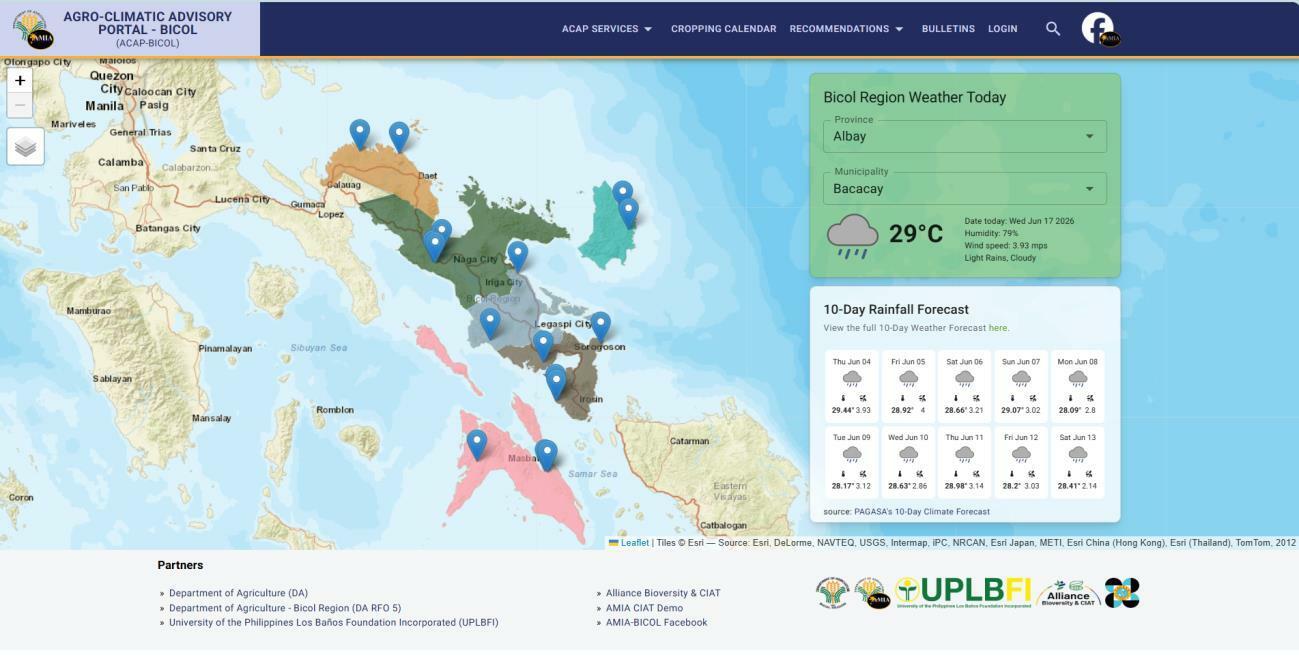
With ACAP, the Alliance worked closely with the University of the Philippines Los Baños Foundation Inc. (UPLBFI) and regional experts to co-develop and validate site-specific and climate-risk based crop recommendations that integrate weather and climate data from PAGASA as well as crop growth stages from field data collection.
“Sometimes, while weather forecasts are available, the enabling conditions that allow farmers to act on those pieces of information are absent. For example, both the rice and coffee farmers might be aware of the upcoming drought but lack access to drought-resilient seeds or irrigation,” Wei says.
ACAP's inputs were instrumental in helping the Alliance and the International Rice Research Institute (IRRI) align two digital platforms to enhance climate information services to Filipino farmers. Under the CGIAR Climate Resilience Initiative, rice recommendations from ACAP were integrated into the pre-season rice cropping calendar of Rice Crop Manager Advisory Service (RCMAS), delivering climate risk advisories and weather-responsive nutrient recommendations to farmers in Camarines Sur through text messages.
The linkage, one of the initiative’s three de-risking activities called Climate+, ensures that farmers across different regions and literacy levels can access critical climate information from the state weather bureau.
“While Climate+ targets field-level agro-advisories, ACAP will be enhanced and designed to provide municipal-level agro-advisories, supporting higher-level decision-making,” Balanza shares, noting how these changes will carry forward as the Alliance and IRRI rollout the CGIAR Climate Action Science Program in the country.
Focused on rice-based production systems, the new CGIAR program will advance more precise, farmer-centered advisories tailored to individual field conditions. With climate patterns growing more unpredictable, the program now needs to integrate multiple layers of data such as historical climate records, seasonal probabilistic forecasts, and short-term 10-day forecasts into an operational decision logic with additional weather parameters and thresholds, plus a clear list of stage-specific advisories based on rice's sensitivities.
During extreme events, for instance, municipal-level officials will have more informed decision making as to which areas should be prioritized for harvesting based on crop stage or availability of harvesters, to name a few.
More than information—finance
Super El Niño is no stranger to the Philippines. But if historical data is any indication, the country stands on the precipice of a food security crisis anticipating an only harsher weather phenomenon to hit the islands over the next few months.
While ongoing climate action work in the country promises to transform climate data into life-saving decision tool, as Balanza puts it, she also recognized another urgent adaptation measure. When timely climate information is made available along with efficient financing mechanisms, Filipino farmers are better equipped to deal with climate risks, especially in remote areas. Ensuring farmers receive crop insurance claims in a timely manner requires collective, coherent efforts from government leaders to local experts—and the Alliance remains ever ready to facilitate that process.