From the Field From paper surveys to chatbots: Advancing digital monitoring of diet quality in Guatemala

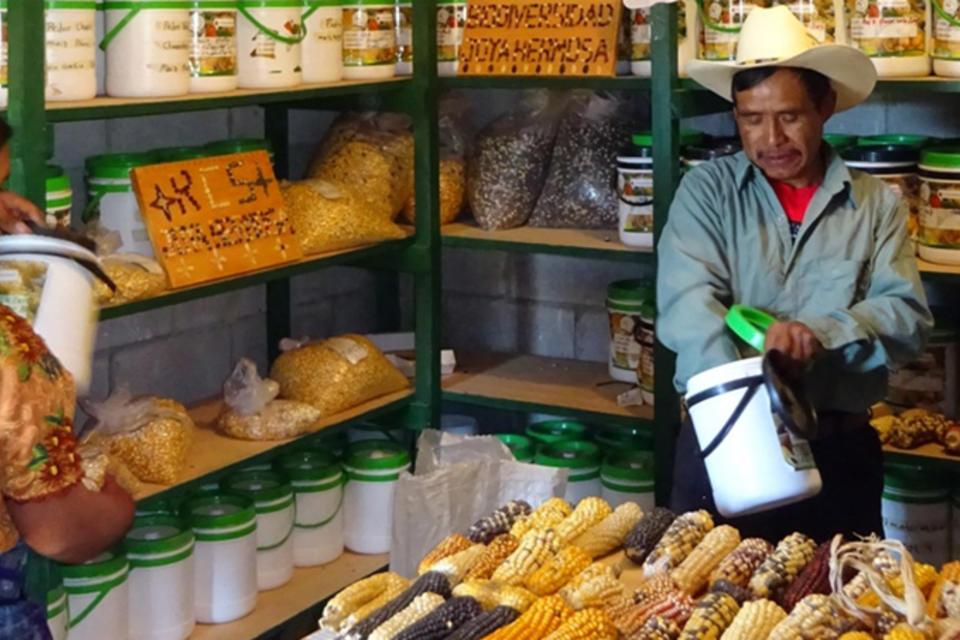
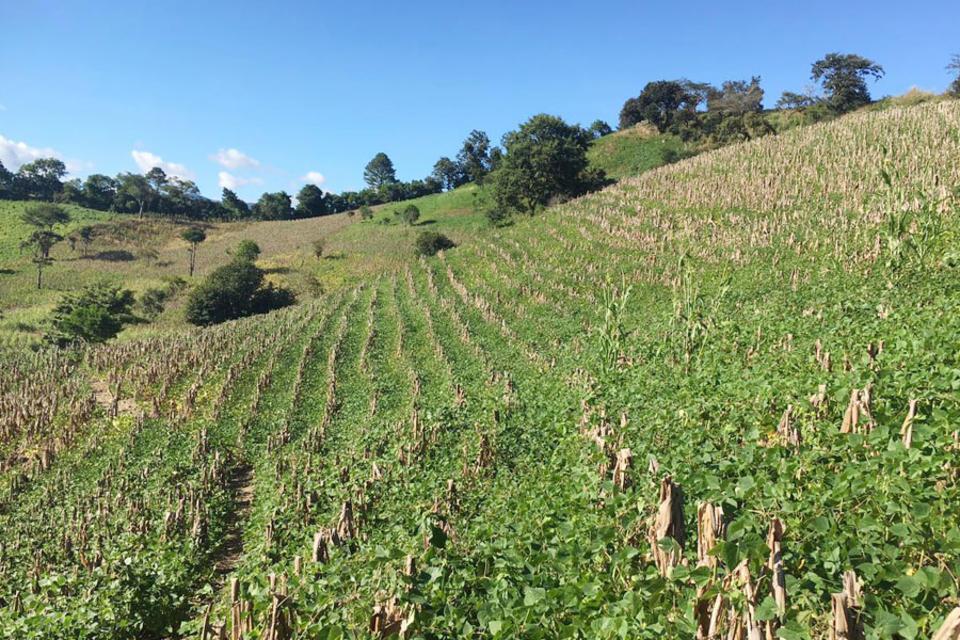
The diet of Guatemalans has deep roots in the Mayan worldview, which relied on the milpa system composed of maize, beans, and squash—foods that continue to be consumed daily by the population. However, between May and August 2025, it was estimated that nearly 19% of the Guatemalan population was experiencing an acute food insecurity crisis, struggling to access not only these traditional foods but also others essential for diet diversification. This situation stems from a combination of socioeconomic and environmental factors, ranging from rising prices of the basic food basket to extreme climate conditions that lead to crop losses and, therefore, reduced food reserves.
To understand the dynamics of these factors and quantify their impact on food availability, access, and consumption, it is essential to have dynamic and timely information systems that allow for monitoring the quality and variety of what people actually eat. Although Guatemala has the National Food and Nutrition Security Information System (SIINSAN) and other monitoring tools, there is still no real-time system that supports timely decision-making at the local level.
In the search for solutions to improve data collection on diet quality, a crowdsourcing-based study in Rwanda was identified. It consisted of sending participants the Diet Quality Questionnaire (DQQ) through automated calls (IVR) and text messages (SMS). The study generated approximately 1,800 weekly responses over one year, demonstrating the capacity and versatility of mobile phones to collect data at scale and at low cost.
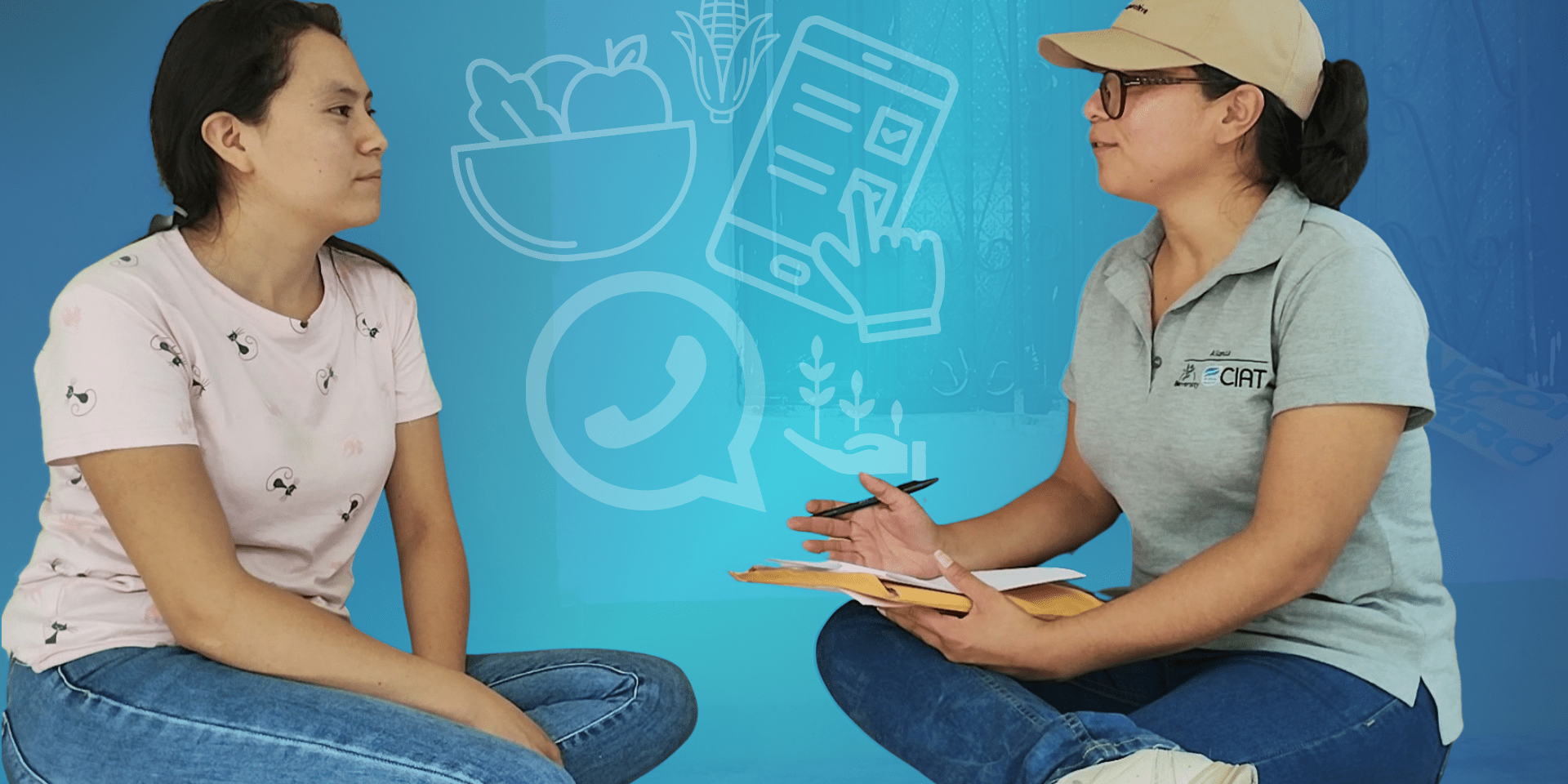
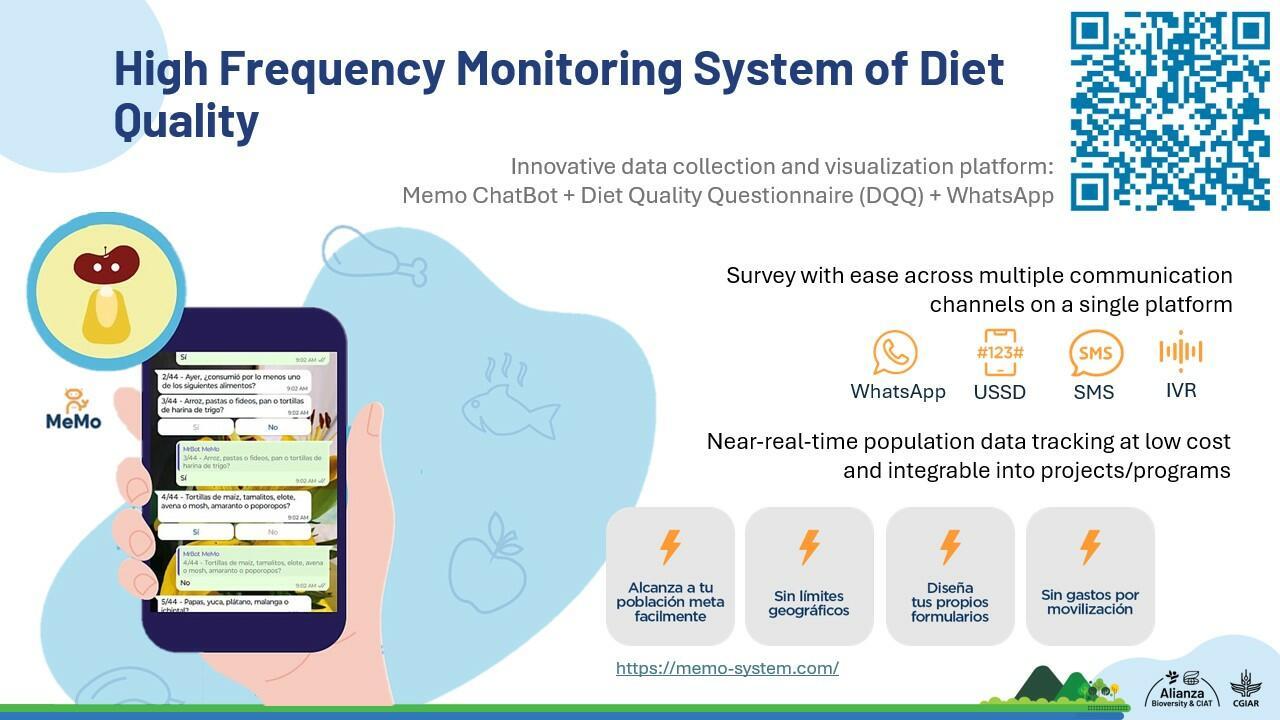
This experience provided the foundation for the first pilot of a high-frequency diet quality monitoring system adapted to the Guatemalan context in 2023. Establishing partnerships with local organizations was essential to reach target populations, especially in rural areas. These partners were introduced to the DQQ and the distribution channel, an interactive chatbot called MEMO, developed by MrBot Solutions, through which participants would receive the survey.
Key findings
Based on the pilot conducted in 2023, mobile-based monitoring has proven efficient in terms of resources, time, and cost. Through the Digital Initiative, the Digital Transformation Accelerator, the CGIAR Scaling Impact Program, and the collaboration of a network of strategic partners, this data-collection approach has become a key tool for transforming population-level information into indicators such as the Global Diet Quality Score (GDQS). This indicator evaluates how well diets align with recommendations for healthy eating established by the World Health Organization, providing partners with real-time, actionable insights at the appropriate scale.
The findings derived from this experience include:
2022
Crowdsourcing was not feasible because, in the Guatemalan context, there are no private or public institutions that manage population databases needed to implement this sampling approach. The lack of legally established and trustworthy providers limited access to an authorized, representative contact list for survey distribution.
As a result, the team sought partners interested in implementing the DQQ to generate diet quality data. This led to strategic engagement with Action Against Hunger (ACH) and the World Food Programme (WFP), who supported the identification and profiling of participants for the 2023 pilot. This step was crucial for assessing operational feasibility and defining an appropriate target population.
2023
The pilot was implemented using two delivery channels: a WhatsApp chatbot and an automated call system. Usability tests based on Human-Centered Design (HCD) showed a clear preference for WhatsApp due to its ease of use, speed, and familiarity. Automated calls had lower acceptance and higher dropout rates.
2024
The response rate, based on a population of 2,787 people, was 10%. This was influenced by widespread distrust of WhatsApp due to increasing scams in the country. The results highlighted the need to strengthen trust and design more effective participant engagement and retention mechanisms.
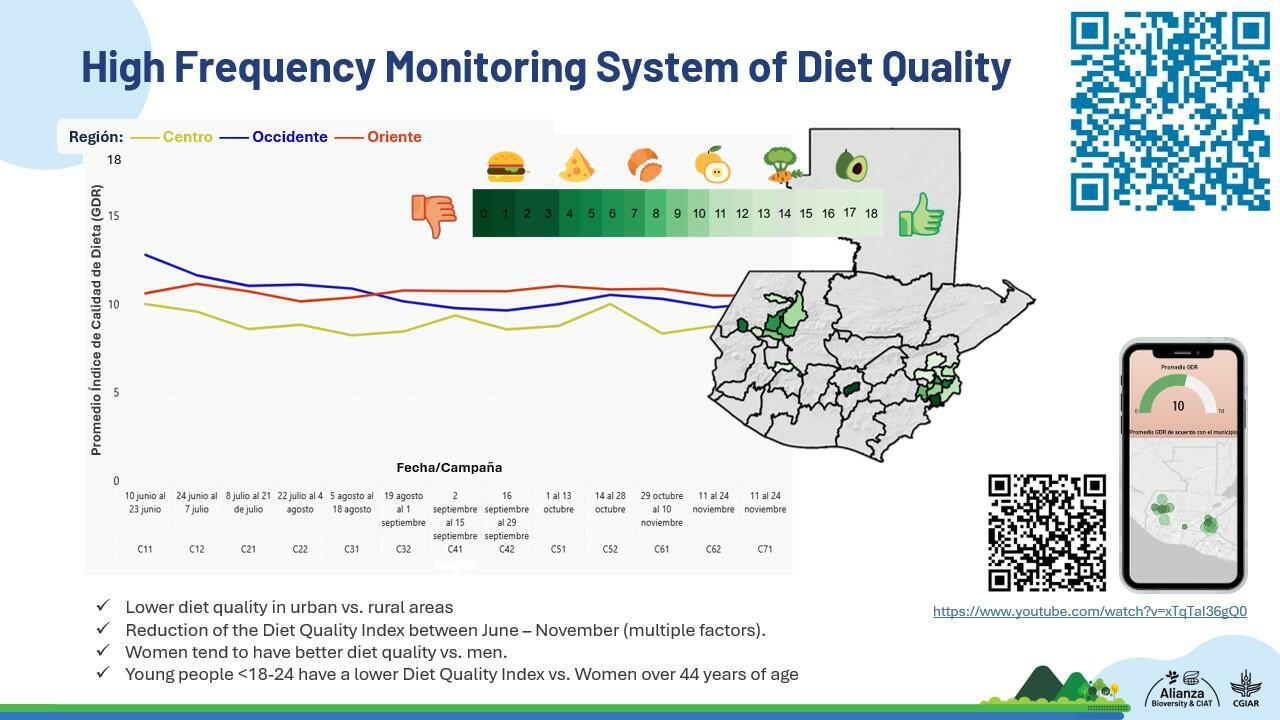
The GDQS was also calculated, showing lower adherence to healthy diet recommendations among participants from Guatemala City compared to those from rural Western regions.
Additionally, the estimated cost per survey was USD 4.10 via WhatsApp, compared to USD 33 for in-person interviews—a significant resource savings.
The partner network expanded considerably, integrating the Chortí Regional Farmers’ Association (ASORECH), CUNORI, CUNOROC, CUNZAC, Global Communities (GC), Christian Action (AC), the Association for Rural Development Cooperation in the West (CDRO), INTECAP, and Caritas Zacapa (CZ).
2025
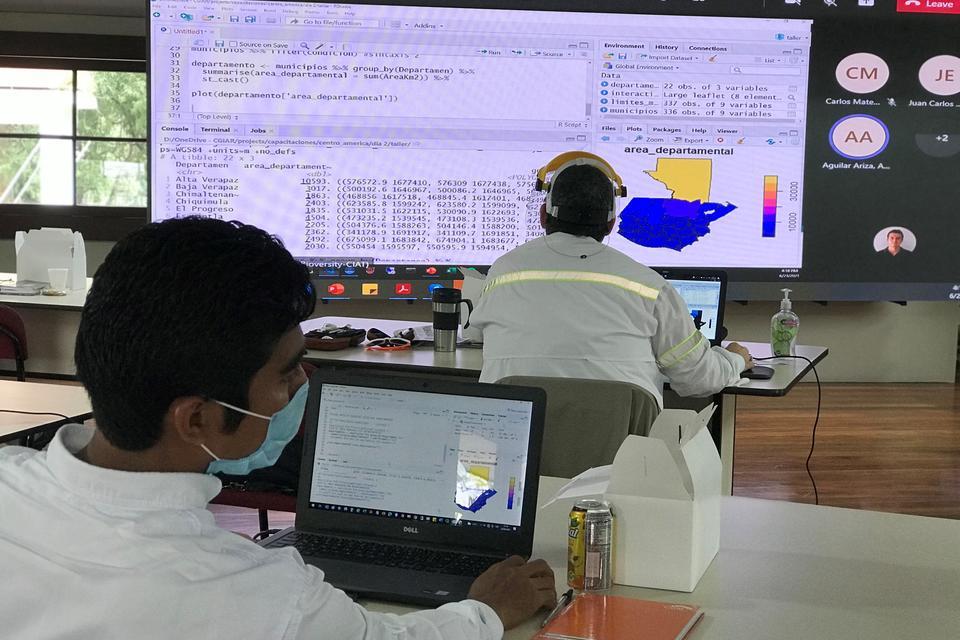
The 2024 partner network was maintained, and the departmental delegation of the Ministry of Agriculture, Livestock, and Food (MAGA) in Zacapa was incorporated—an important milestone marking the first participation of a government entity in the monitoring process. Support from the Institute of Nutrition of Central America and Panama (INCAP) made it possible to conduct a series of webinars to strengthen partner capacities on diet quality.
To increase participant trust, audiovisual materials were developed, including an interactive video of the WhatsApp chatbot.
Throughout the process, new insights emerged to improve the tool. For example, the need to design a shorter version of the survey was identified, as users reported that it takes between 12 and 15 minutes to complete.
Turning challenges into drivers of change
Throughout the participatory development and implementation of the High-Frequency Diet Quality Monitoring System, several challenges emerged that, rather than limiting progress, revealed key opportunities to strengthen and scale this digital tool among a broader range of actors. These findings fall into two main categories:
Technical–institutional challenges
Integration into existing digital systems:
Adopting new tools within established institutional platforms can be complex. However, this presents an opportunity to position the monitoring system as a complementary, low-cost solution that enhances data collection and analysis without replacing existing national systems.
Alignment of stakeholder interests:
Diverse institutions, priorities, and agendas can limit collective action. This creates an opportunity to promote technical roundtables and interinstitutional agreements that strengthen governance, coordinate efforts, and support shared goals.
System sustainability:
Ensuring continued monitoring requires integrating the process into institutional agendas and local budgets. This provides an entry point to institutionalize the system, enabling more precise, timely, and relevant data to guide territorial actions.
Socio–cultural challenges
Community engagement:
From an HCD perspective, understanding what motivates people to participate is key. This opens the opportunity to design mechanisms that support retention and sustainably boost participation.
Digital security and trust in WhatsApp:
The increase in scams has generated distrust. This challenge highlights the need to strengthen communication through local partners and community leaders to build trust, transparency, and ownership of the system.
Linguistic diversity:
The variety of Mayan languages presents operational challenges but also an opportunity to make the system more inclusive. Adapting the tool to these languages would expand participation and improve equity in data collection.
Partnerships that create impact
Working with partners has been essential, not only for implementing the monitoring system but for transforming the collected data into actions that improve diet quality across territories. Their involvement has led to a better understanding of community needs and enabled the adaptation of the tool for use at multiple levels—household, farm, institutional programs, and sectoral planning.
In 2024, this collaborative process was strengthened during the results-sharing session, where partners highlighted the usefulness of the data for guiding interventions and adjusting strategies. This exchange confirmed that monitoring not only generates information but supports more timely and context-specific programmatic decisions.
In 2025, the process advanced significantly thanks to support from INCAP, which in October hosted the webinar series “Food, Gender, and Diet Quality: Regional Experiences and Reflections.” These sessions strengthened the technical capacities of partners and the general public, helping consolidate a community that is better prepared and more committed to using evidence to promote sustained improvements in diet quality.
Today, these partnerships form an ecosystem of continuous learning, where producer associations, academic institutions, development organizations, and government actors converge. Their joint efforts have been essential for advancing toward more inclusive, sustained, and action-oriented monitoring.
Why continue strengthening the use of digital tools?
In a context where mobile devices have transformed how we communicate and access information, leveraging them for data collection and management is essential for understanding and anticipating food-related challenges. Integrating these tools into monitoring processes not only eases fieldwork but also converts information into a valuable input for institutional decision-making.
Strengthening their use contributes to sustained improvements in diet quality and supports:
✓ Generating more accurate and timely evidence for effective interventions
✓ Informing and empowering people and communities with clear data about their food environments
✓ Supporting national policies that are better aligned with local contexts
✓ Implementing actions at the right time and place, optimizing temporal and spatial scales
✓ Engaging new generations by building their capacity to make informed decisions that improve their quality of life through healthier diets and food systems