From the Field A new Indigenous community seedbank for everyone in Cumbal, Colombia
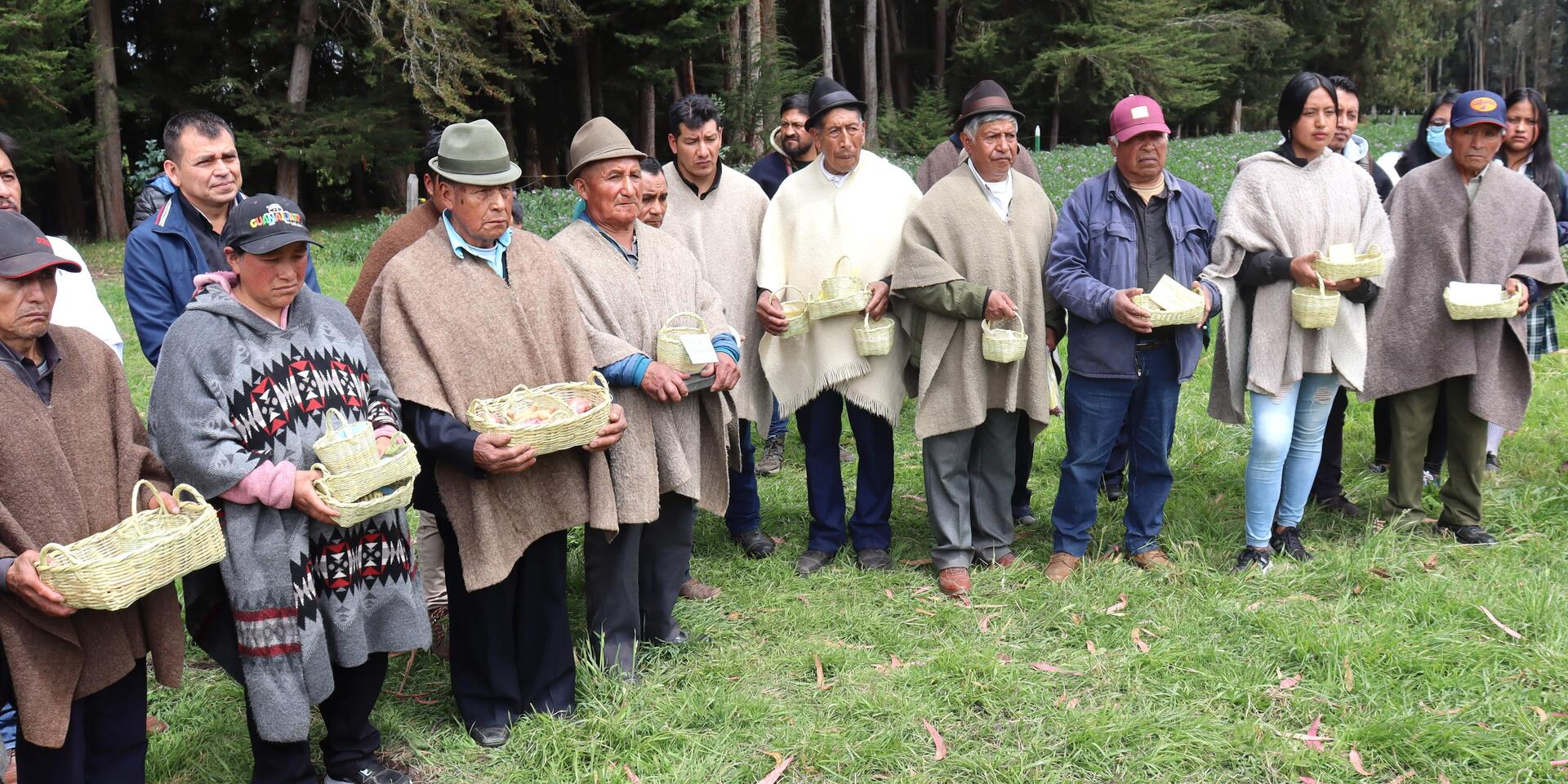

In the lush highlands of southern Colombia, farmers face pressing challenges in seed and food security, compounded by falling crop diversity and limited seed exchange between farmers. In response, a new community seedbank aims to conserve local seeds, enrich agrobiodiversity and foster seed and knowledge exchange among local farmers. With a focus on Indigenous culture and education, the seedbank will support healthy and diverse food production, local food sovereignty, and increase the next generation's understanding of the importance of agrobiodiversity.
Seed and food security challenges
When traveling to the town of Cumbal in southern Colombia - through green pastures and hedgerows of trees of the high mountainous area - one might think that there are no, or few food crops grown. It takes a sharp eye to discover the small diverse cropfields, locally known as 'chagras'. Crops cultivated on these fields include beans; faba beans; grains (barley, maize, quinoa, wheat); livestock forages; fruits such as the Andean papaya (Vasconcellea pubescens), golden berry (Physalis peruvianum), lulo (Solanum quitoense), raspberry and tree tomato; herbs and spices; lupine (Lupinus mutabilis); roots and tubers such as oca, olluco, majua and potatoes; vegetables such as cabbage, onions, Peruvian parsnip and rapeseed; and medicinal plants.

Landscape of Cumbal, Colombia. Photo: Bioversity International / R Vernooy.
In this region, diversity is high for roots and tubers (285 varieties of potato based on local nomenclature were documented in 2023). However, cultivation of most varieties is restricted to small areas by a few households. Making matters worse, farmers reported the loss of several varieties of roots and tubers in recent times. Among the factors contributing to this loss are the impact of extreme weather events (drought, frost, hailstorms), lack of market demand, lack of interest among young farmers, limited knowledge about cultivation, pests and diseases, and poor soil quality.

A typical chagra in Cumbal. Photo: Bioversity International / R Vernooy.
Results of participatory seed flow analyses carried out in 2024 for the three most important local food crops (faba bean, maize and potato), indicated that there is relatively limited seed flow and exchange happening in the area. It was also found that the local seed custodians - members of the community that collect high levels of varietal diversity of potato - seldom share their seeds. On the other hand, nodal seed farmers - those farmers who regularly supply other farmers with seeds - were not identified for any of those crops. Low levels of local seed exchange are not uncommon in rural areas around the world, but such a situation can impede agricultural experimentation, the adaptation of crops and varieties to new conditions, and diversification.
The dwindling level of diversity and the lack of seed exchange pose a risk to the seed and food security of the area. When asked, farmers are clearly aware of the problem. What can be done to address this challenge? The CGIAR Initiative on Nature-Positive Solutions implements solutions to agrifood systems challenges while supporting local food and livelihoods, and one of the strategies includes supporting the establishment of community seedbanks. In summary: “a community seedbank is a local organization whose core functions are to maintain, safeguard and exchange local and farmer-preferred seeds for local use. It is managed collectively by women and men farmers from the community who care about seeds, often but not always with the support of an organization working in agriculture”. The town of Cumbal seemed ready to welcome one.
‘Yel-Pue Cumbe’ inauguration
On 14 November 2024, a festive audience of 150 people assembled in the Auditorium of the Institución Educativa Técnica Agropecuaria Indígena Cumbe in Cumbal (the Indigenous Technical Agricultural Education Institution of Cumbe) to attend the inauguration ceremony of the new community seedbank ‘Yel-Pue Cumbe’ (Cumbal’s Seed House in Pasto, the local Indigenous language) hosted by the Education Institute. Among the inauguration attendees were local authorities, staff and students at the Cumbe Education Institution, staff of other education centers in the area, farmers from the nine sub-districts (veredas) of Cumbal, as well as national and international researchers working in the area.

Inauguration of the community seed bank. Photo: Bioversity International / R Vernooy.
The initiative of the new community seedbank was set in motion in March 2024, based on the results of the participatory seed flow analyses combined with complementary, participatory community seedbank feasibility exercises. In the latter, farmers assessed the feasibility of establishing a community seedbank in the area, based on an evaluation of 14 indicators. Aspects included farmer motivation, local leadership, number of beneficiaries, potential to increase crop and variety diversity, and the potential to increase seed exchanges, among others. The Cumbe Education Institution was asked to host the new community seedbank for two reasons: First, to promote and facilitate seed and knowledge exchanges between farmers of all nine sub-districts, and second, to use the community seedbank for educational purposes, engaging staff and students in its daily management.

Dance performance of 11 graders. Photo: Bioversity International / R Vernooy.

Yel-Pue Cumbe (Cumbal’s seed house in indigenous language). Photo: Bioversity International / R Vernooy.

Registration of the first seeds donated to the community seed bank. Photo: Bioversity International / R Vernooy.

Interior of the community seed bank with first seeds shelved. Photo: Bioversity International / R Vernooy.
Following the ceremony in the Auditorium, the new facility was officially opened, and farmers deposited the first seeds in the community seedbank, including local varieties of barley, faba bean, lupine, maize, quinoa and wheat. The goals of the community seedbank are to support the production of healthy and diverse food, maintain local food sovereignty, enrich Indigenous culture and educate the younger generation about the importance of agrobiodiversity. ‘Yel-Pue Cumbe’ will have the following functions: 1) conserve local crops, seeds, knowledge and culture; 2) create awareness about local crop variety diversity; 3) increase the diversity of the crops cultivated in the chagras; and 4) exchange seeds and related knowledge.

Traditional seed mandala based on the lunar calendar. Photo: Bioversity International / R Vernooy.
Next steps
The new initiative is off to a good start. Key organizational and technical tasks that will be taken on are the formation of governance and management committees, organizational and seed storage training, storing more seeds, promotion of the community seedbank, networking with other educational centers in the area, seed multiplication and distribution, development of a community seedbank curriculum for the Cumbe Education Institution, and collaboration with other research organizations.
The Alliance Team

Ronnie Vernooy
Senior Scientist, Genetic Resources and Seed Policies
Marleni Ramirez
Honorary Research Fellow, Country Representative For Peru
José Luis Urrea-Benítez
Communications Specialist*Blog written by Ronnie Vernooy and Marleni Ramirez, from the Alliance of Bioversity International and CIAT; with the support of Jorge Humberto Chiran Chiran and Esteban Julian Gangotena Rosero, from Institución Educativa Técnica Agropecuaria Indígena Cumbe; Nestor Romero Perilla and Sylvanus Odjo, from Centro Internacional del Mejoramiento de Maíz y Trigo (CIMMYT); Olga Perez Cardona and Claudia Villota Caicedo, from Agrosavia. Edited by José Luis Urrea-Benítez, Science Communications Specialist.
Photos by Ronnie Vernooy