Blog Meteorologists merge enhanced traditional methods with AI and machine learning

Strengthening seasonal forecasting with tools and technologies to produce faster and more accurate seasonal forecasts is key to building climate resilience in West Africa and the Sahel.
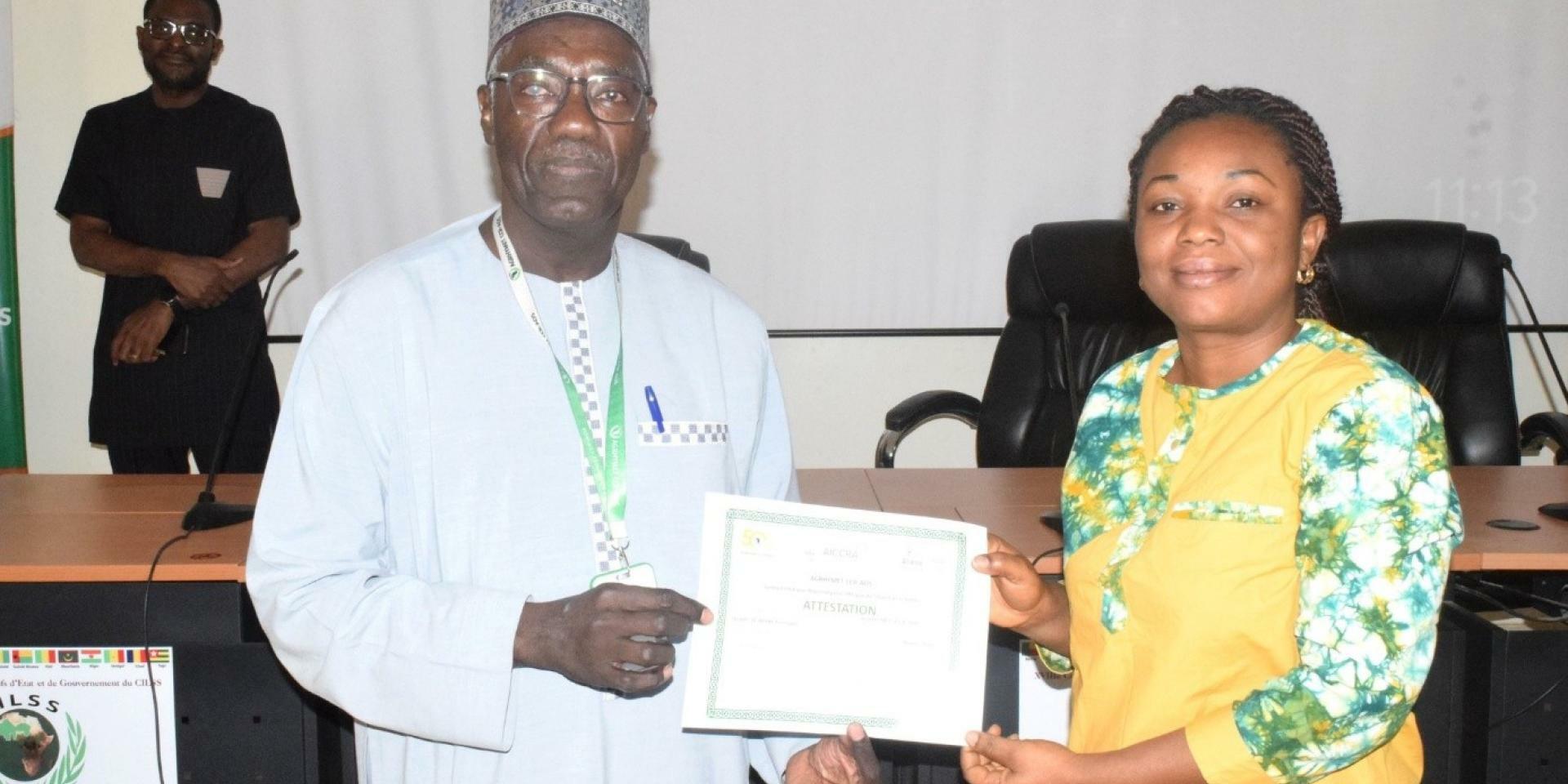
Through in-depth trainings and targeted capacity building efforts supported by AICCRA, the AGRHYMET Regional Center is equipping regional meteorological experts in the delivery of actionable climate services that empower farmers, policymakers, and water resource managers to adapt to a changing climate.
Building resilience through enhanced capacity
Climate information services (CIS), including various methods of seasonal forecasting, are essential for helping farmers in West Africa and the Sahel region to anticipate, manage, and address the impacts of climate change.
The AGRHYMET Regional Center, a key AICCRA partner, is mandated to play a central role in enhancing these processes to strengthen climate resilience. By enhancing the capacity of national meteorological and hydrological services (NMHSs) in West Africa and the Sahel, particularly in the use of next generation seasonal forecasting systems (often referred to as ‘NextGen’), AGRHYMET has made important progress in equipping NMHSs with the knowledge and skills for both traditional methods and new technologies.
Previously, a focus in regional capacity building has been the Python interface to the Climate Predictability Tool (CPT), known as PyCPT. PyCPT is a tool that automates the statistical methods used in seasonal forecasts, improving the traceability and reproducibility of data, enabling users to evaluate and refine forecast methodologies with greater efficiency.
Despite these advancements, PyCPT does not yet integrate certain regional forecasting methods commonly used during West African Regional Climate Outlook Forums (RCOFs), such as analog methods and observation-based forecasts. In addition, the tool does not currently cover the full range of climate variables essential for comprehensive forecasting in West Africa and the Sahel.
To address these limits, AGRHYMET has introduced an integrated methodology that is operationalized through a specialized Python tool named WAS_S2S (West Africa and Sahel Seasonal to Sub-Seasonal), representing a significant leap forward in seasonal forecasting. This approach synthesizes traditional statistical methods with state-of-the-art artifical intelligence (AI) and machine learning algorithms, enabling to deliver more accurate, reliable, and adaptable forecasts.
While AI offers groundbreaking opportunities to enhance climate forecasting, these tools require skilled individuals who can effectively operate, interpret, and adapt them to the organization’s specific needs. Recognizing this, AGRHYMET conducted a robust training program to equip its staff with the knowledge and technical skills necessary to effectively leverage AI and machine learning technologies.
These capacity building efforts are critical in fostering innovation, enabling AGRHYMET to harness the full potential of advanced forecasting tools tailored to the region’s unique climatic and socio-economic contexts.
"West Africa and the Sahel are highly vulnerable to climate change and rely heavily on forecasts to strengthen their resilience. In this context, AICCRA is committed to supporting AGRHYMET’s mandate of enhancing forecasting processes. By providing tailored training to National Meteorological and Hydrological Services, we are enabling them to become active contributors to decision-making systems, ultimately improving climate resilience across the region." - Alcade Segnon, Science Officer for AICCRA in West Africa and Alliance scientist