From the Field In the Intensive Care Unit: The Race to Save a Wild Bean
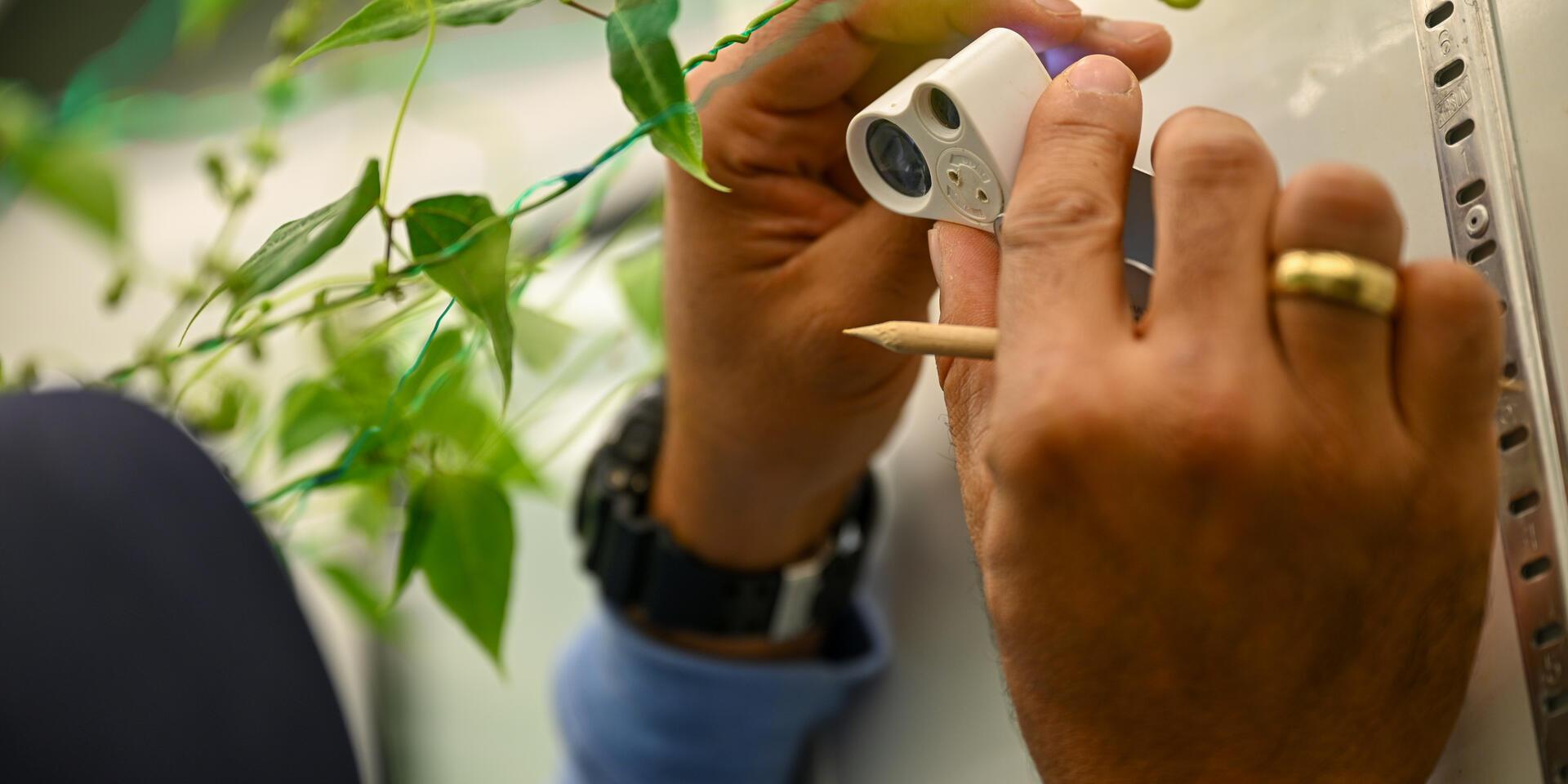

At the Genetic Resources Unit of the Alliance of Bioversity and CIAT, researchers are working to conserve a wild bean species at risk of extinction that is extremely difficult to propagate. Under controlled conditions, every seed is almost a miracle.
On December 11, 2003, in San Isidro de El General, south of San José, Costa Rica, scientist Daniel Debouck was on one of his many expeditions to find different varieties of beans. In a humid mountainous area, at an altitude of over 1,000 meters amid mist, vines, and ferns, he discovered a new species of wild bean.
At first glance, it looked like an ordinary bean. To many, just another one in the midst of so much forest. Debouck, however, who had spent years traveling through the region in search of wild relatives of the bean and had a trained eye for finding a needle in a haystack, stopped and collected some seeds of Phaseolus hygrophilus.
As the years passed, the same path Debouck once traveled no longer offered the same view. The lands where this wild bean once grew began to change; in its place, coffee plantations took over, making the hygrophilus increasingly difficult to find.
Some time later, Phaseolus hygrophilus began to be recognized as an endangered species.
An ICU for plant varieties in critical condition
Every day at eight o’clock sharp, the rounds begin. In the intensive care unit, the routine unfolds: opening the logbook, examining the plants one by one, assessing their condition, recording their vital signs, and providing the care needed to recreate, as closely as possible, the conditions of their place of origin.
Inside six growth chambers more than three meters tall—resembling vaults from the outside—the plants’ temperature, humidity, and light levels are carefully monitored and regulated, much like pulse, blood pressure, and breathing in a hospital patient. Each chamber has a small glass window, and a quick glance through it is enough to confirm that everything is progressing normally, without exposing the plants to external air, light, or humidity.
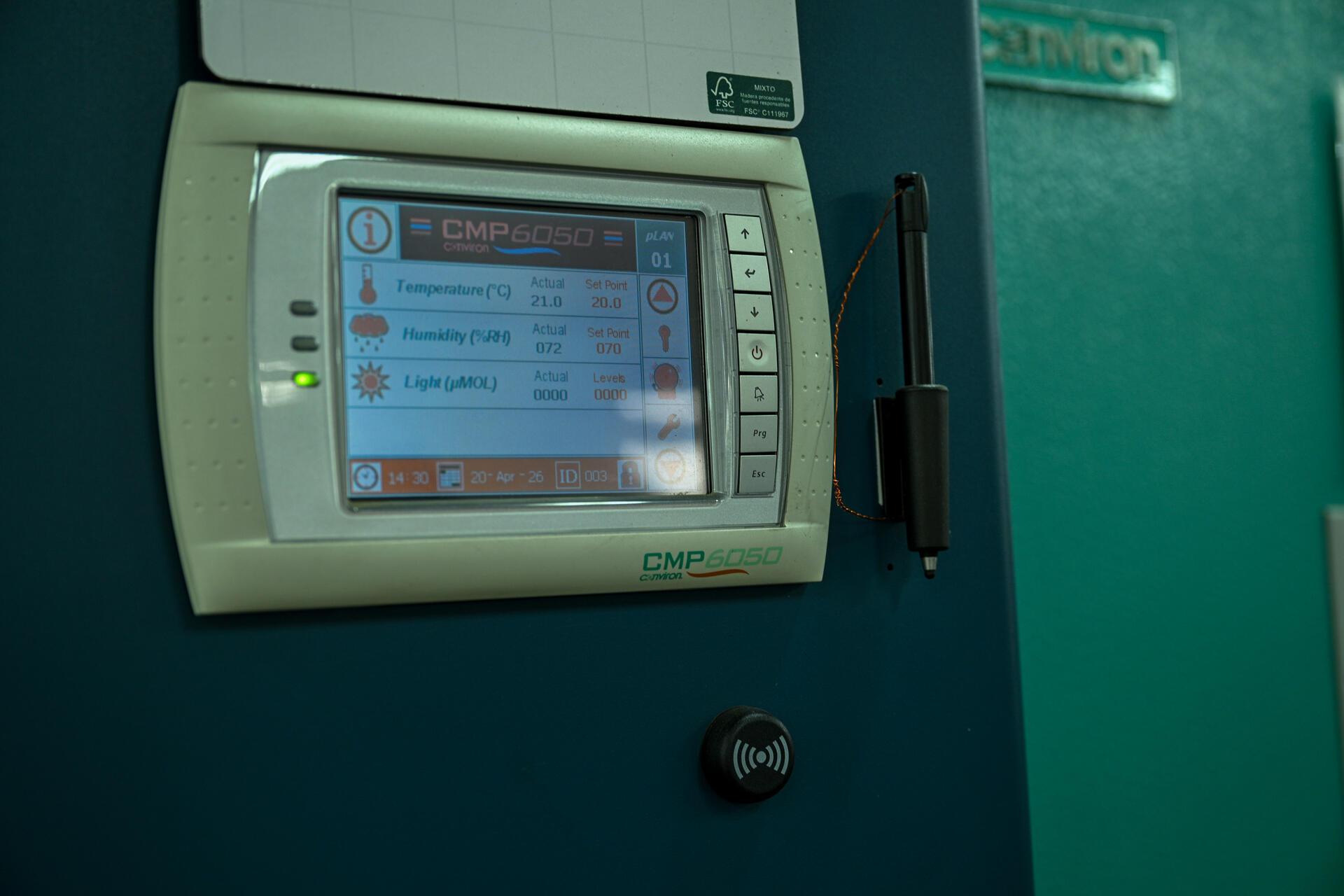
Conviron growth chamber.
"The Conviron growth chambers, acquired 10 years ago with support from Germany's Federal Ministry for Economic Cooperation and Development (BMZ), allow us to precisely control environmental factors such as temperature, light, photoperiod, and relative humidity. This enables us to simulate extreme conditions—from páramo ecosystems to deserts and other habitats that are difficult to access directly—while ensuring optimal conditions for the conservation and regeneration of plant genetic resources," says Marcela Santaella, Operations Manager of the Germplasm Bank.
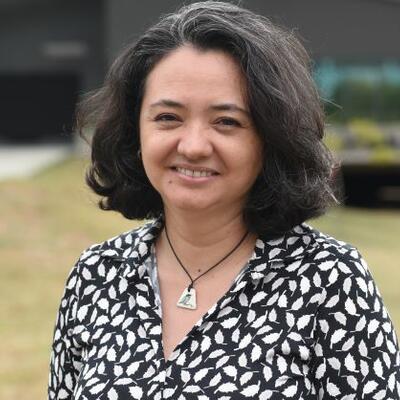
Marcela Santaella
Research Team LeaderSince 2019, the wild bean species Phaseolus hygrophilus and Phaseolus albicarminus from Costa Rica have been housed at the Alliance of Bioversity International and CIAT campus in Palmira. There, a new chapter began for them: far from the forests where they evolved, yet surrounded by the care needed to safeguard their survival.
For researcher Ramiro Sabogal Carvajal and technician Edgar Hernán Escobar, the caretakers of this plant "ICU," keeping these species alive has become a personal challenge. Their work goes far beyond checking chambers or monitoring temperature and humidity. The real goal is to help these plants—so difficult to regenerate and multiply—produce seeds once again.
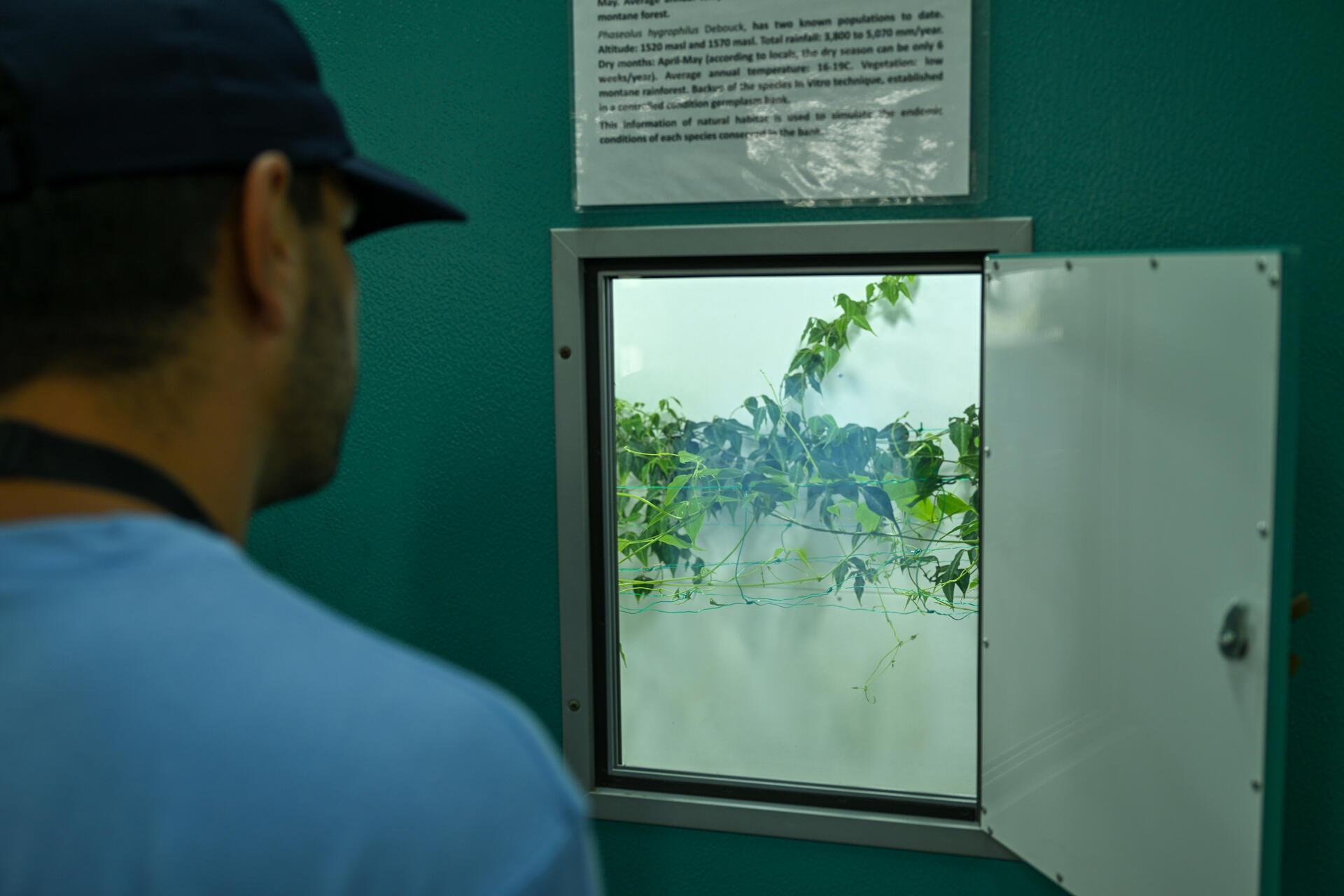
Ramiro Sagobal Carvajal in the "ICU" for critical varieties explaining the operation of growth chambers.
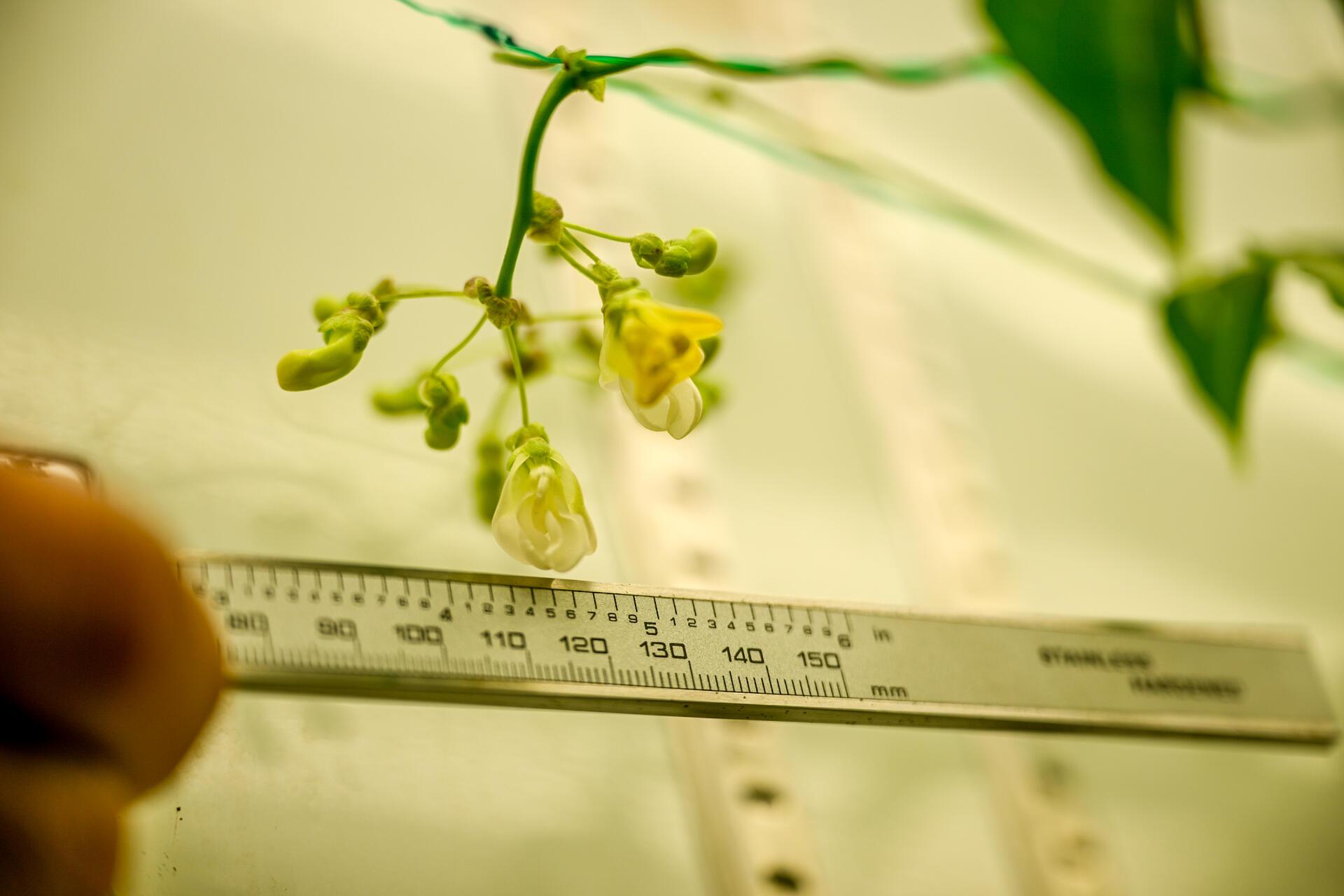
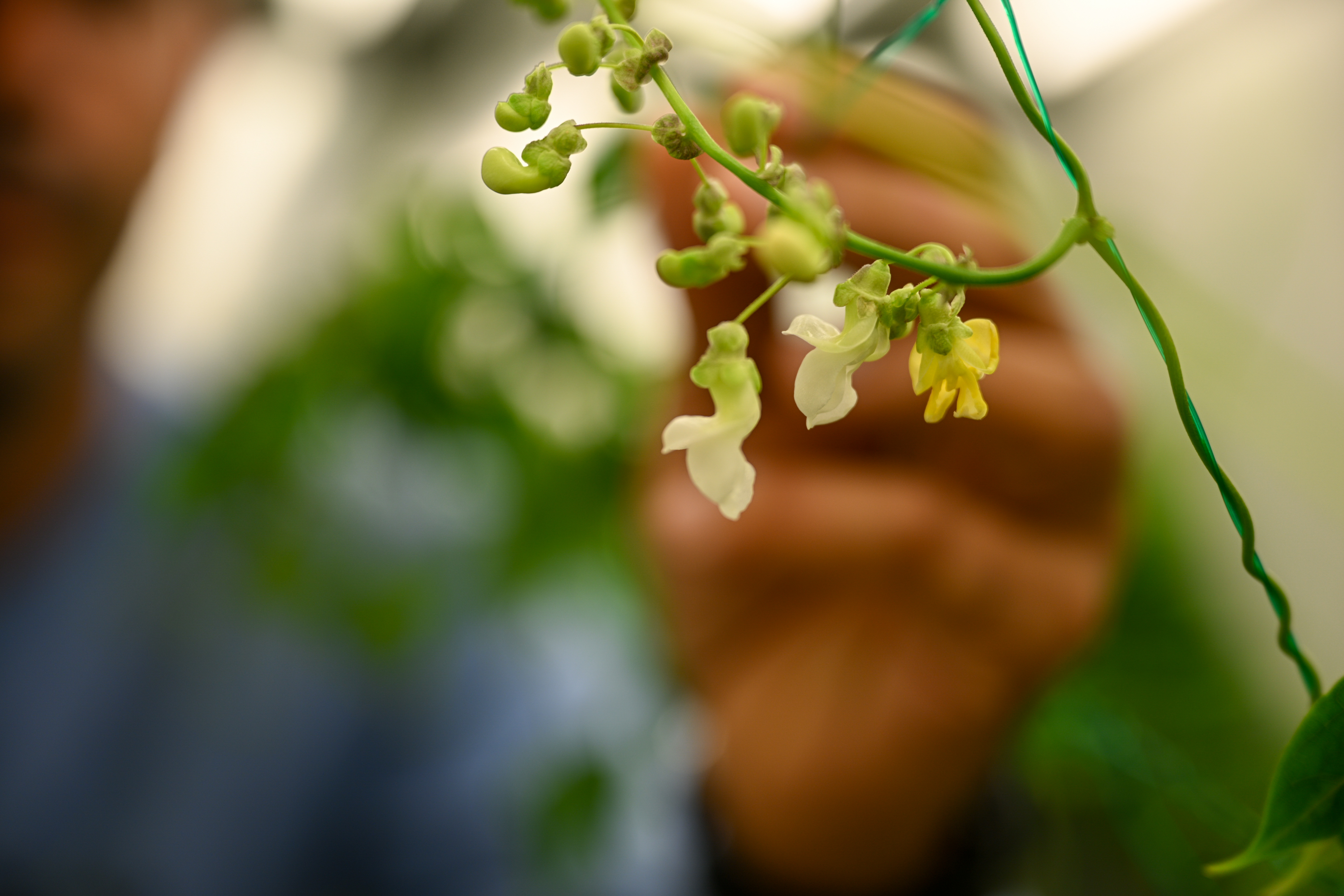
Flowers of Phaseolus hygrophilous
"It's not that it's difficult for them to produce seeds, it's that we haven't found the specific conditions needed," the now-retired scientist Daniel Debouck once told them.
In this "ICU," as in any other, every moment counts. A single hour without the right conditions can mean the difference between keeping a plant alive and losing it forever.
Once a year, if conditions are favorable, the plant blooms, revealing white flowers—sometimes tinged with pink—among glossy, dark green leaves. With each flower comes a period of waiting: the care that follows may determine whether a bean pod forms and, inside it, new seeds.
Since arriving in its new habitat seven years ago, the miracle has happened only once, after many attempts. In 2023, at the station that previously operated in Tenerife, Phaseolus albicarminus managed to produce seven seeds. Yes, seven seeds.
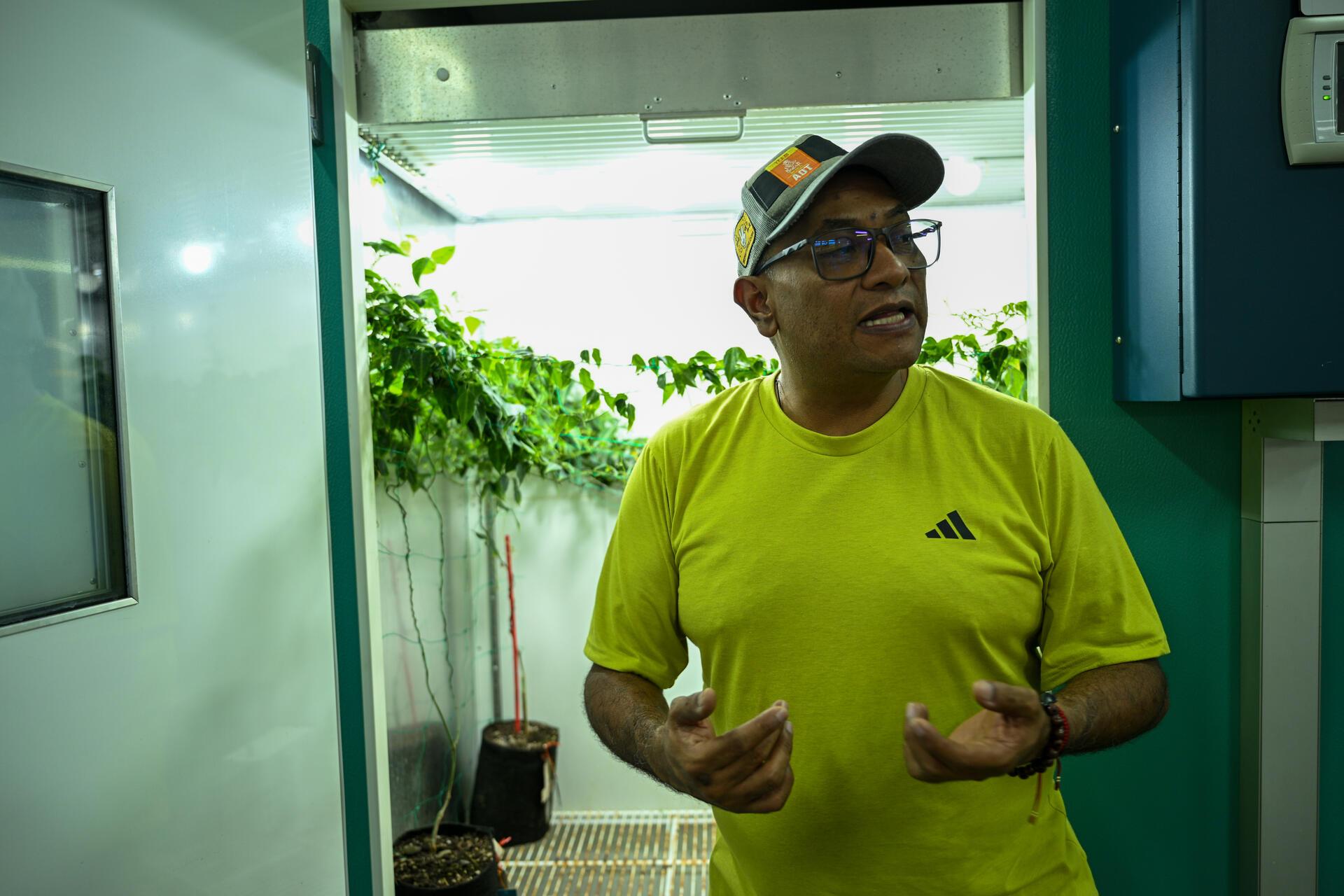
Javier Gereda, coordinator of the Germplasm Regeneration and Multiplication team of the Genetic Resources Unit, next to the growth chambers.
For Javier Gereda, coordinator of the Germplasm Regeneration and Multiplication Team in the Genetic Resources Unit, the challenge is not only to keep the plants alive, but to help "his girls"—as he affectionately calls them—produce enough seeds for long-term conservation. To properly conserve, monitor, and distribute this species, at least 2,000 seeds are needed.
This plant "ICU" is part of the Future Seeds genebank, which houses more than 67,000 accessions of crops such as beans, cassava, and tropical forages—genetic resources essential for global food and nutrition security.
For Marcela Santaella, the challenge goes beyond conserving seeds; it is also about understanding what each species needs to reproduce successfully. "The Alliance of Bioversity International and CIAT's genebank in Palmira faces the important task of keeping these varieties alive and multiplying their seeds so they remain available, in perpetuity, to researchers, plant breeders, and farmers around the world," she explains.
Conserving these plants and helping them produce seeds is not only about preventing a species from disappearing; it is also about maintaining a genetic backup that can be called upon in times of crisis. An example comes from Rwanda. Following the 1994 genocide and civil war, the Alliance of Bioversity International and CIAT's genebank served as a form of genetic life insurance for the country's agriculture. The Genetic Resources team was able to provide 1.5 tonnes of bean seed representing more than 275 distinct genetic lines, helping restore bean production and support the recovery of farming communities across the country.
"Saving seeds means safeguarding the food future of a community, a region, and potentially generations to come. Among the seeds we conserve today may be varieties that once sustained Indigenous communities and that could prove vital again in the future—we simply may not know it yet," says Javier Gereda.
In the chambers of this plant ICU, a flower is more than a flower. A pod is more than a pod. And seven seeds, though they may seem few, can represent the beginning of a future for a species on the brink of disappearing.
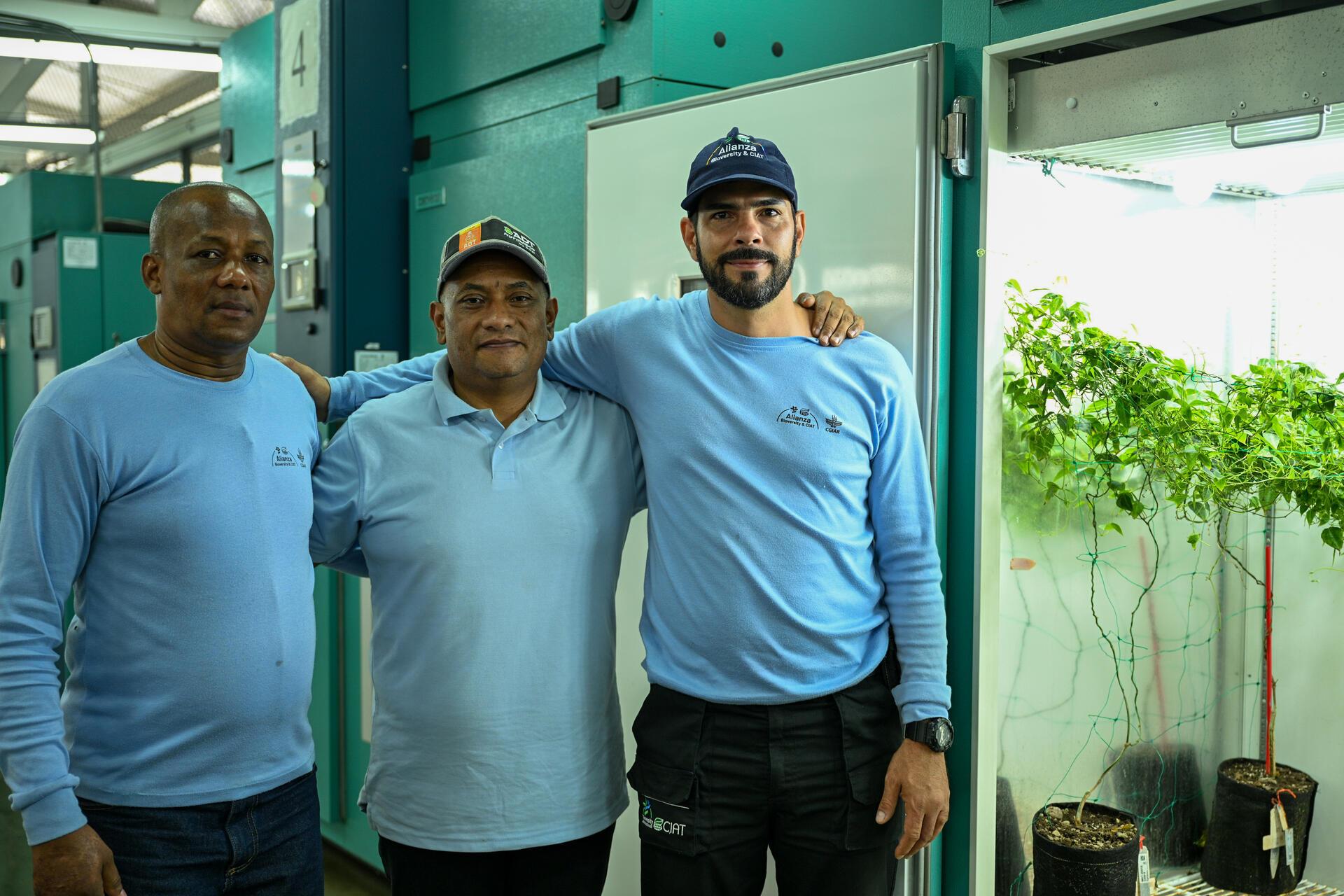
Equipo de Regeneración y Multiplicación de Germoplasma. De izquierda a derecha: Edgar Hernán Escobar, Javier Gereda y Ramiro Sabogal Carvajal.