Blog How integrated nexus planning could secure a resilient and sustainable future for Africa

Many African nations face significant, interconnected development challenges, including over-reliance on rain-fed agriculture, heavy dependence on hydropower for electricity generation, rapid population growth, and related economic pressures. These vulnerabilities are heightened by the impact of climate change and the increasing frequency of extreme weather events such as droughts, which reduce hydropower output and diminish agricultural productivity.
The water–energy–food–environment (WEFE) nexus is recognized as a critical framework for sustainable development, emphasizing the intricate interdependence of these key resources and domains. Addressing issues that arise within the WEFE nexus requires coordinated, multi-agency planning to foster coherence across sectors and ultimately build long-term resilience and sustainability in line with the United Nations Sustainable Development Goals (SDGs) and Agenda 2063.
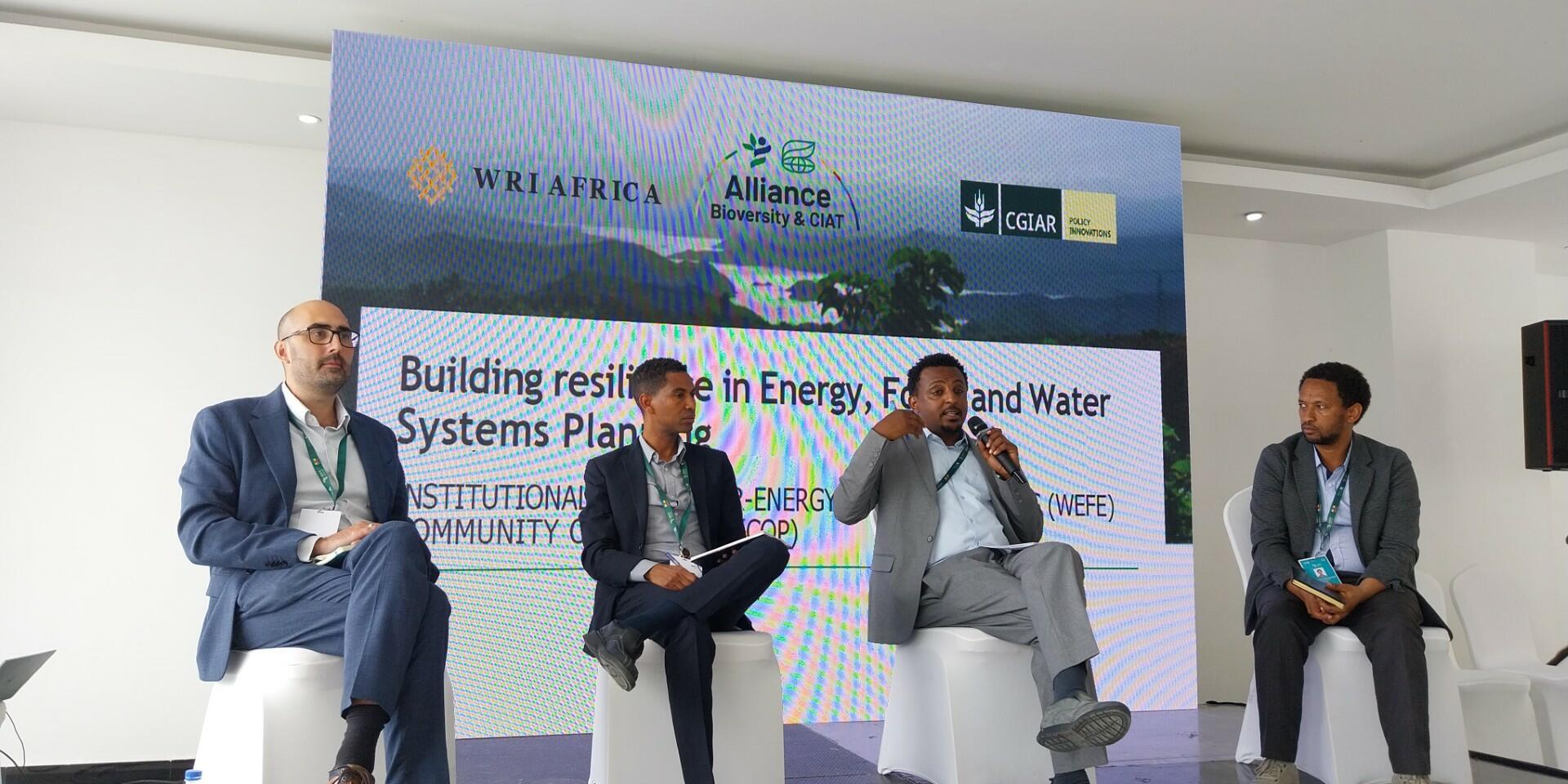
These topics were explored during a session at the recent Africa Climate Summit 2 (ACS2) co-hosted by The Alliance of Bioversity International and CIAT and the World Resources Institute (WRI). Opening the session, Mbeo Ogeya (WRI) emphasized that fragmented, siloed decision-making often leads to competing priorities, while nexus approaches help bridge gaps and create shared benefits. This set the tone for subsequent presentations that illustrated the power of the WEFE nexus approach in real-world policy and planning scenarios.
Nexus for peace, security, and social cohesion
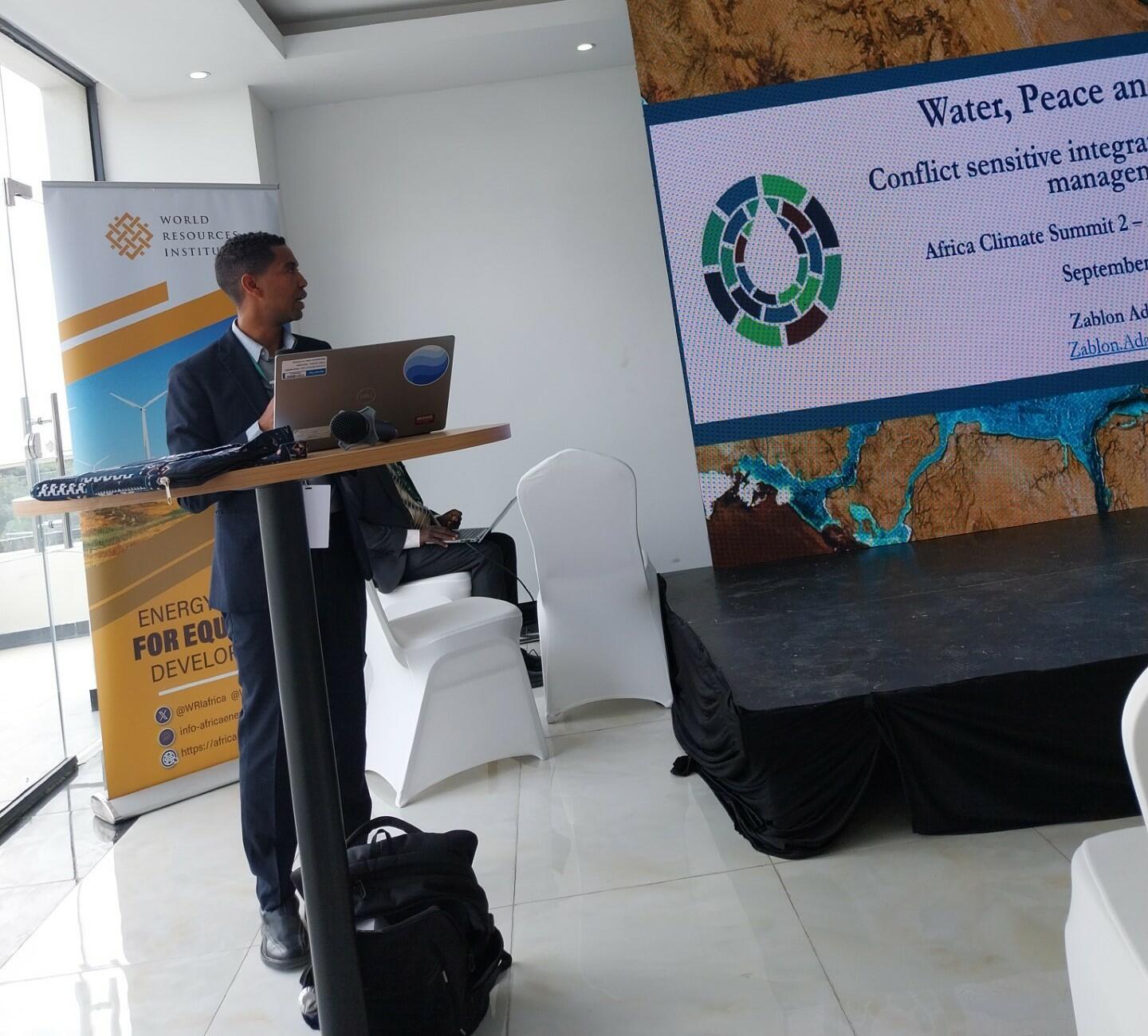
Photo credit: Yodit Balcha/Alliance of Bioversity International and CIAT
The first presentation highlighted the increasing pressures on shared water resources across the eight countries of the Intergovernmental Authority on Development (IGAD) – Djibouti, Eritrea, Ethiopia, Kenya, Somalia, South Sudan, Sudan, and Uganda. Here, water scarcity is intensifying competition within and across borders. As African countries pursue ambitious development goals, demand for water from agriculture, the energy sector, and households is increasing sharply. However, water availability fluctuates widely across seasons and regions, meaning fair and coordinated allocation is essential to reduce conflict risks. Dr Zablon Adane (WRI) illustrated how a WEFE nexus-based approach can support peacebuilding and resilience through strategies such as:
- Holistic water demand assessments, integrating national and sectoral development plans;
- Scenario modelling, revealing synergies and trade-offs between water allocation, hydropower production, and agricultural expansion;
- Equitable allocation strategies that minimize conflict potential and enhance regional cooperation.
Africa’s development ambitions will require deliberate, equitable water governance anchored in integrated planning tools, rather than sector-by-sector decision-making, Dr Adane said, adding that water management is not only a technical issue, but a matter of peace, security, and social cohesion.
Aligning food systems, land use, and climate commitments
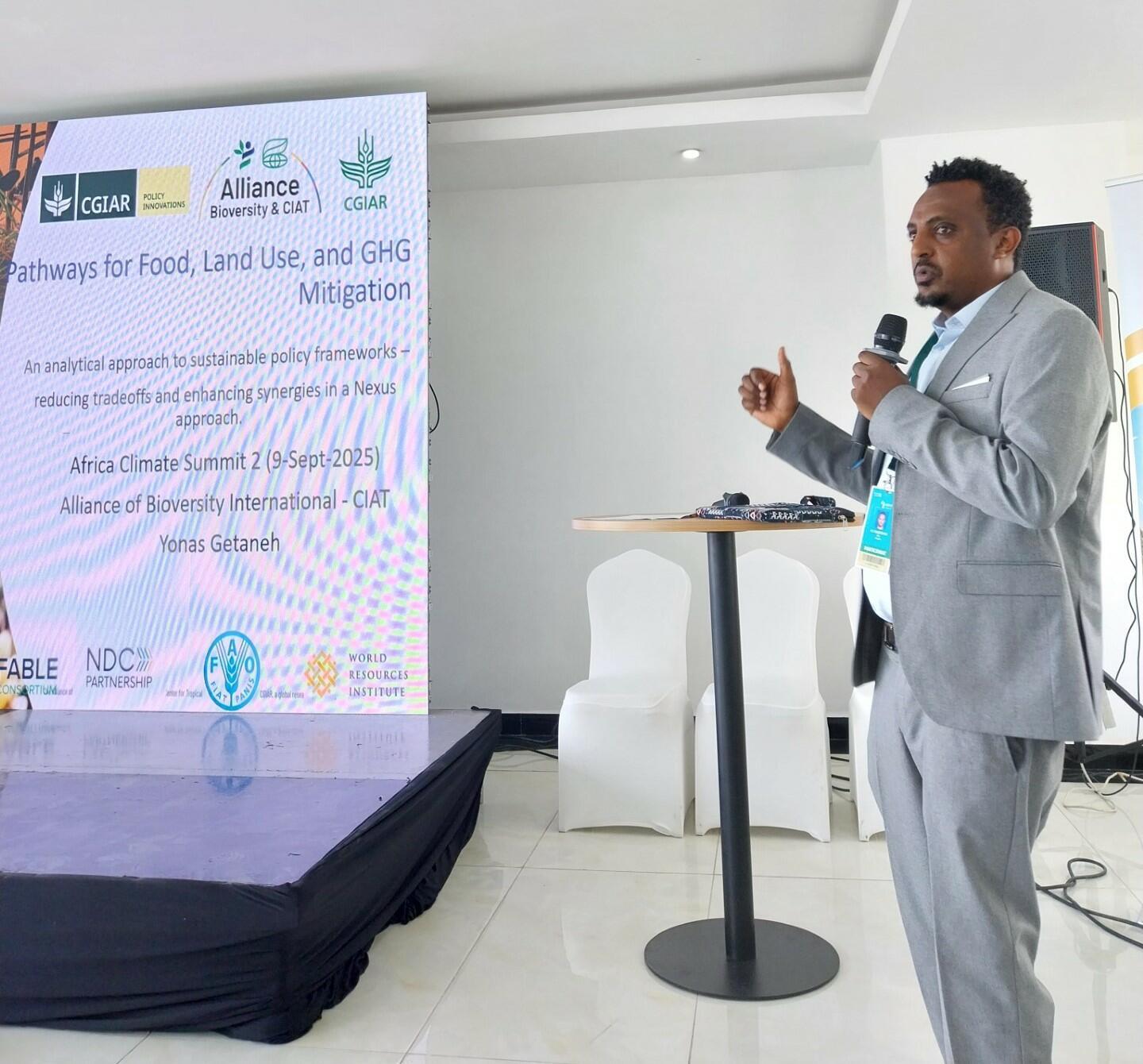
Photo credit: Yodit Balcha/Alliance of Bioversity International and CIAT
The second presentation focused on the disconnect between food systems, land use planning, and national climate strategies across Africa. Yonas Getaneh from the Alliance provided a compelling analysis of Africa’s agrifood systems and their alignment with national climate goals. Because agriculture and land use are central to emissions, livelihoods, and national development, treating them separately from climate planning limits the impact of policy efforts.
Using Ethiopia as a detailed case study and applying the Food, Agriculture, Biodiversity, Land Use, and Energy (FABLE) Calculator, the analysis showed how integrated cross-sectoral strategies can help countries meet both food security targets and climate commitments as the basis for long-term sustainability. Key pathways highlighted included:
- Closing agricultural yield gaps to approximately 10% by 2050,
- Promoting climate-smart and agroecological practices across cultivated land to strengthen resilience,
- Accelerating afforestation to boost carbon storage.
The presentation underscored the value of integrated modelling in helping decision makers understand trade-offs in terms of land competition, emissions trajectories, and ecosystem pressures while at the same time identifying win–win strategies that support food security, climate action, and nature-positive development.
Practical lessons from the Omo Gibe Basin
Continuing the focus on Ethiopia, the final presentation turned to the Omo Gibe Basin - an important hub for hydropower generation and agro-industrial growth. Carlos Guerrero Lucendo (VITO) presented a detailed case study underscoring the challenges and opportunities of practically applying the WEFE nexus approach in the basin. With 2.5 GW of operational hydropower and significant agricultural expansion, the basin is a critical hub for Ethiopia’s industrialization efforts. Decisions in one sector, such as expanding industrial crops, directly influence water demand, electricity needs, and environmental sustainability. Using a suite of linked models (SWAT+, AquaCrop, LEAP), the assessment revealed that:
- Electricity demand for agro-industrial processing is projected to triple by 2030, driven primarily by sugar and oilseed production;
- Thermal energy use is expected to increase 15-fold, with raw sugar processing and diesel-fueled irrigation pumps as the main contributors;
- Transitioning to local fertilizer production will raise energy needs further, requiring future investments in natural gas infrastructure.
Managing trade-offs and supporting sustainable industrialization calls for improved power transmission to agro-industrial zones, assessing the energy footprint of selected crops, and replacing diesel pumps with solar and electric alternatives. This could save around 6 PJ of energy and avoid approximately 440 kt CO₂e by 2030, Guerrero Lucendo explained. The analysis demonstrated how integrated modelling helps identify resource bottlenecks early and guides smarter decisions that reduce emissions, strengthen productivity, and safeguard ecosystems for resource management and climate resilience.
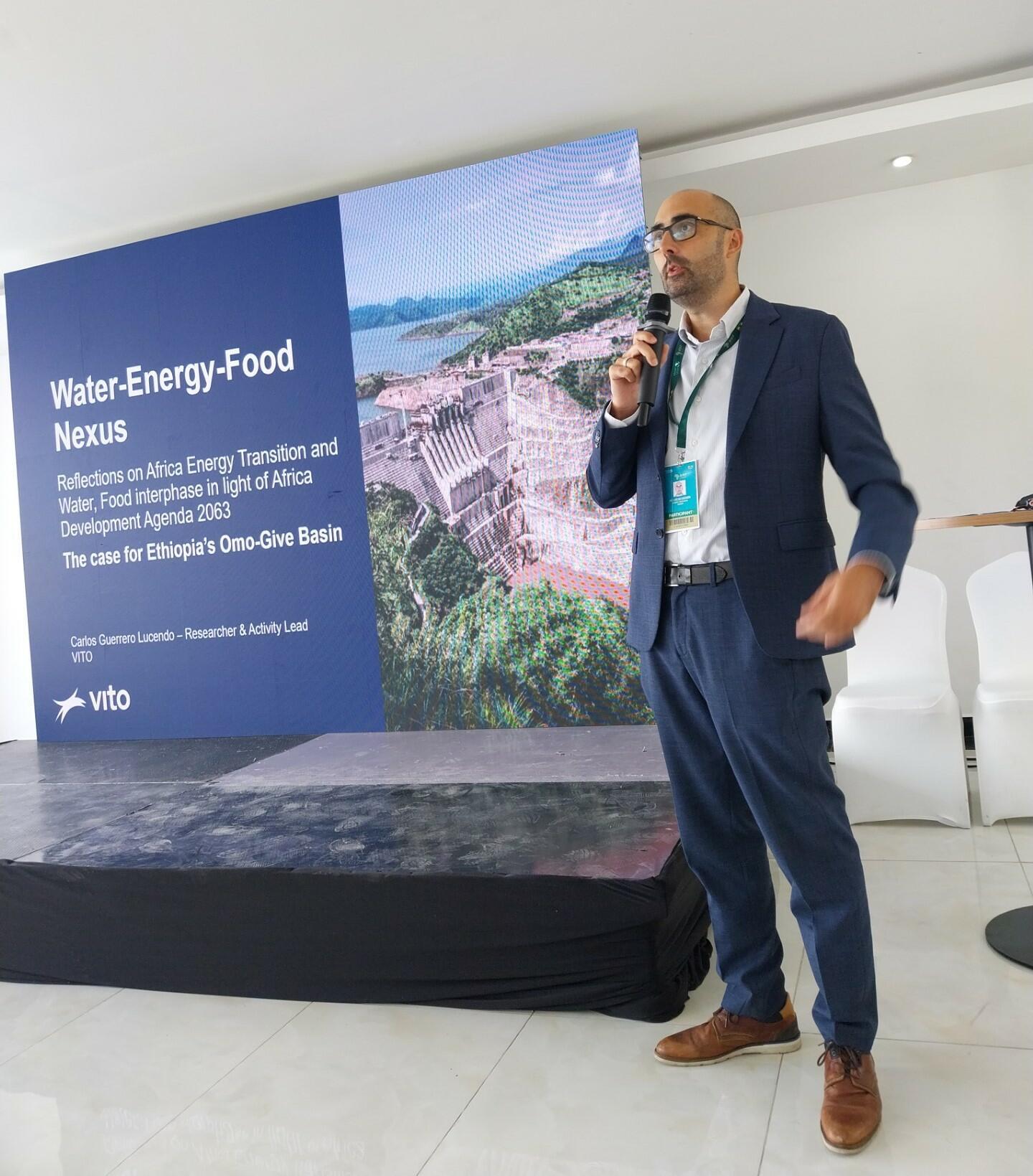
Photo credit: Yodit Balcha/Alliance of Bioversity International and CIAT
A community of practice for Ethiopia
The evidence and scenarios presented by the speakers set the stage for the announcement of the WEFE Community of Practice (CoP) in Ethiopia, marking an important collaborative milestone and a shift toward more coordinated ways of working. During the development of the CoP, the Alliance, WRI, and WEFE stakeholders considered and refined possible structures, governance options, and areas of focus for the CoP – ensuring that the ideas remained grounded in real-world practicalities. This process helped shape four priority workstreams: Policy and Advocacy, Capacity Building, Research and Evidence, and Resource Mobilization. With the Alliance and WRI committed to guiding the process, the CoP is expected to grow into a space for shared learning, coordinated planning, and more connected decision-making – supporting Ethiopia’s long-term resilience and climate-smart development goals.
Overall, the session proved to be more than a presentation of technical findings; it was a powerful meeting of perspectives that showed clearly how Africa’s resilience depends on bringing water, energy, food, and ecosystems together rather than treating them separately.
Yodit Balcha is a Climate Change Adaptation Researcher at the Alliance of Bioversity International and International Center for Tropical Agriculture (CIAT). Mbeo Ogeya is Senior Research Associate, Energy, at the World Resources Institute. Zablon Adane (PhD) is Associate, Water Program, at the World Resources Institute. Yonas Getaneh is a researcher at the Alliance of Bioversity International and International Center for Tropical Agriculture (CIAT). Carlos Guerrero Lucendo is Senior Researcher on Energy and Climate Strategies and Policies at VITO / EnergyVille.