Blog Growing into Pumpkin Custodians: Women farmers in North Vietnam discover the power of participatory variety selection
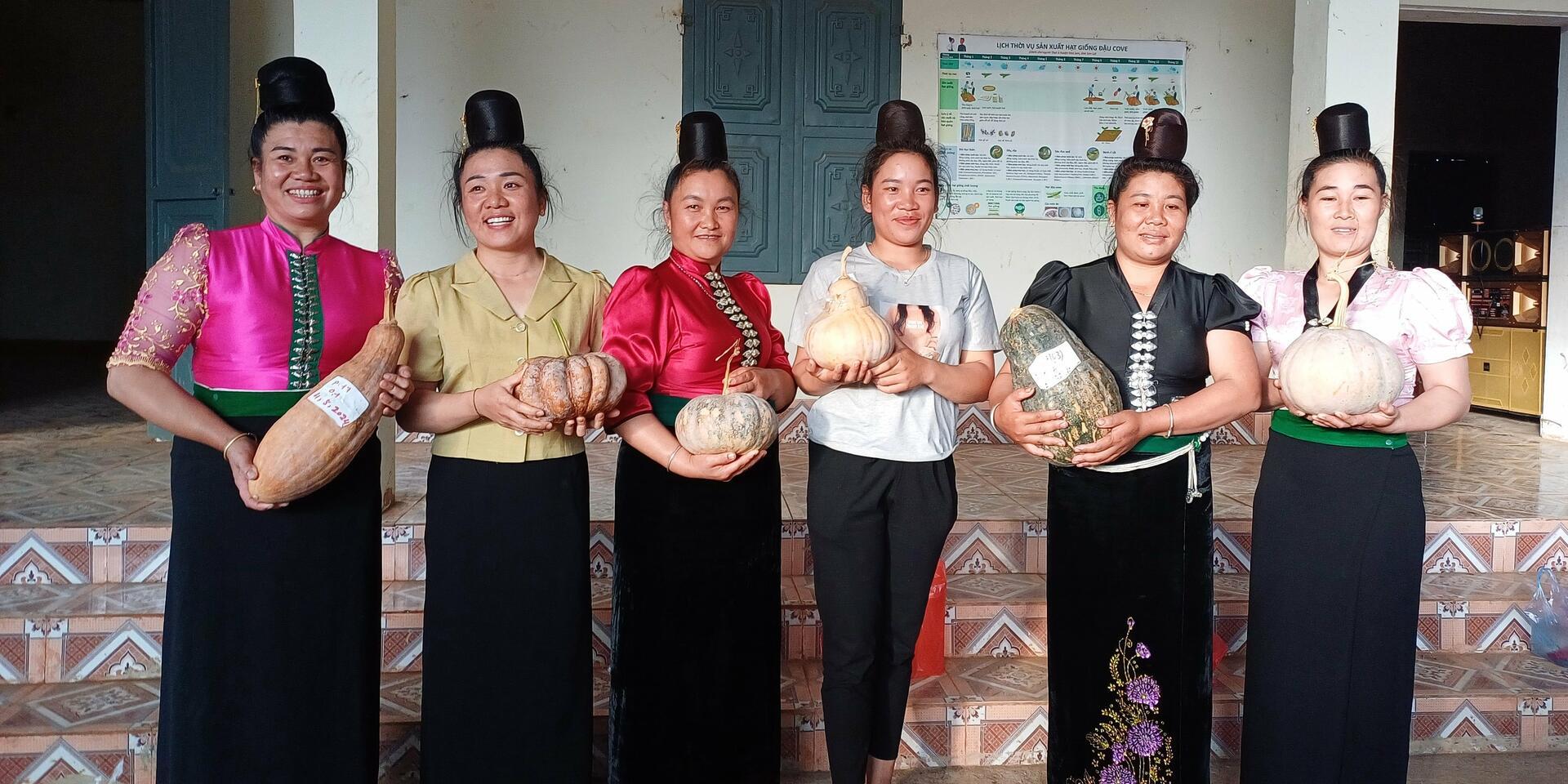

In the northern highlands of Vietnam, ethnic minority farmers grow a diversity of crops on small landholdings. Pumpkin, managed by women, is an important vegetable in this crop mixture, but the number of varieties is declining. Members of two local Diet Health Clubs decided to turn the tide.
By: Nguyen Thi Phuong, Hoang The Ky, Do Thi Hong Quyen, Deborah Nabuuma, Ronnie Vernooy
As Typhoon Yagi wreaked havoc across parts of Vietnam in early September 2024 - leaving 299 people dead and 34 missing - many farming communities in the northern region found their fields flooded, crops destroyed, and land eroded. The Vietnamese government estimated that the costs of the damage and destruction add up to 81.5 trillion Vietnamese dong (US$3.31 billion). In Mai Son district (Son La province) and Sa Pa township (Lao Cai province), where Typhoon Yagi struck during the rice harvest season, farmers suffered severe losses in crop and livestock, as well as significant damage to farmhouses, greenhouses, community buildings and electricity and water facilities.
Despite these difficult conditions, two small farming groups of ethnic minority women (core members of local Diet Health Clubs) from the typhoon-stricken communities continued their on-farm research on pumpkin variety selection. The experiment - a new experience for the women as they were allowed to actively participate from beginning to end of the process - aimed to increase the diversity of key crop varieties and animal feed crops, and to build farmer awareness and skills in variety selection. Producing several interesting results, the research was set up earlier in the year with technical support from the Alliance, the Fruit and Vegetable Research Institute (FAVRI), and the Plant Resources Centre (PRC) under the Vietnam Academy of Agricultural Sciences (VAAS).
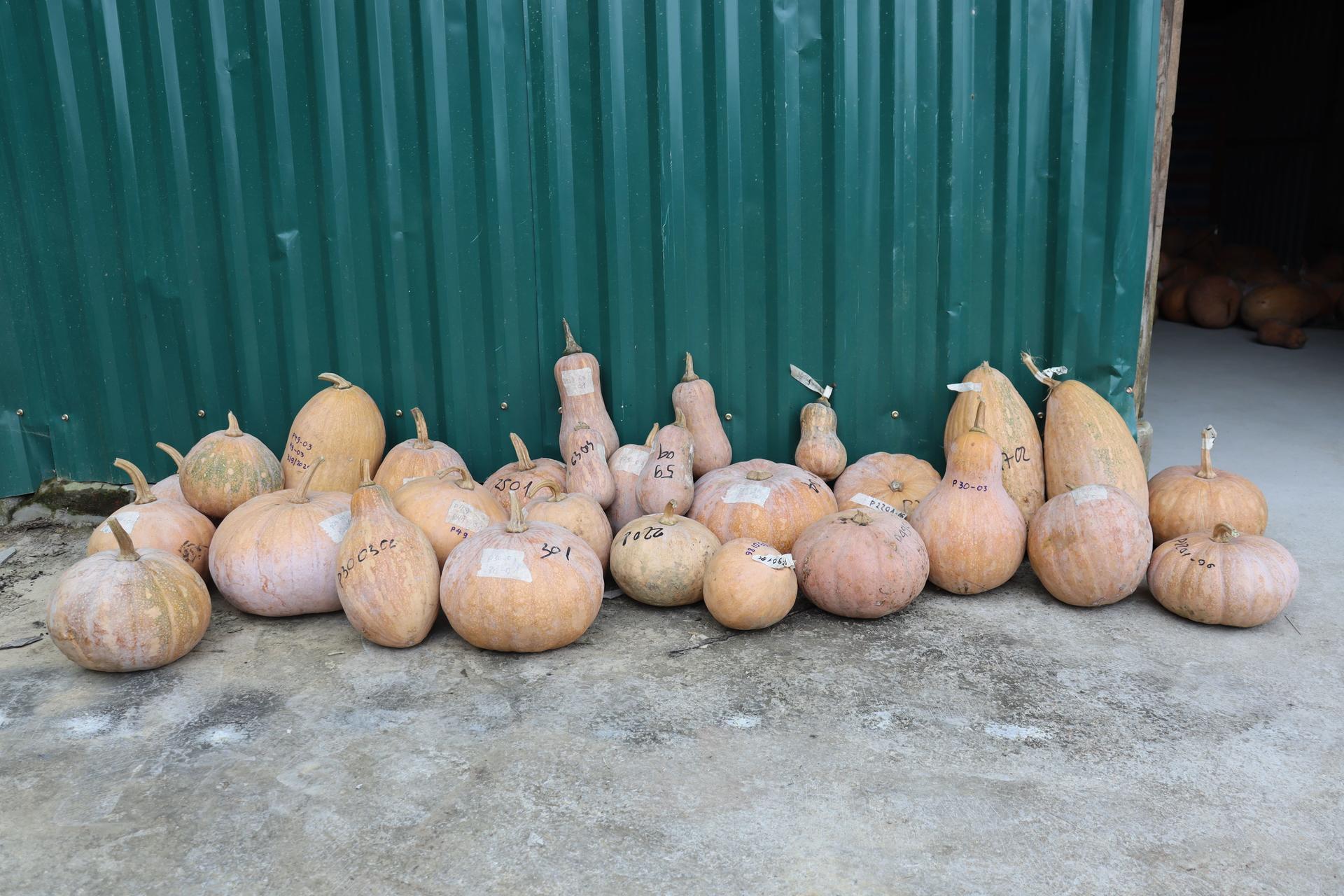
Pumpkin diversity Pho Hin village. Credit: Bioversity International/R. Vernooy
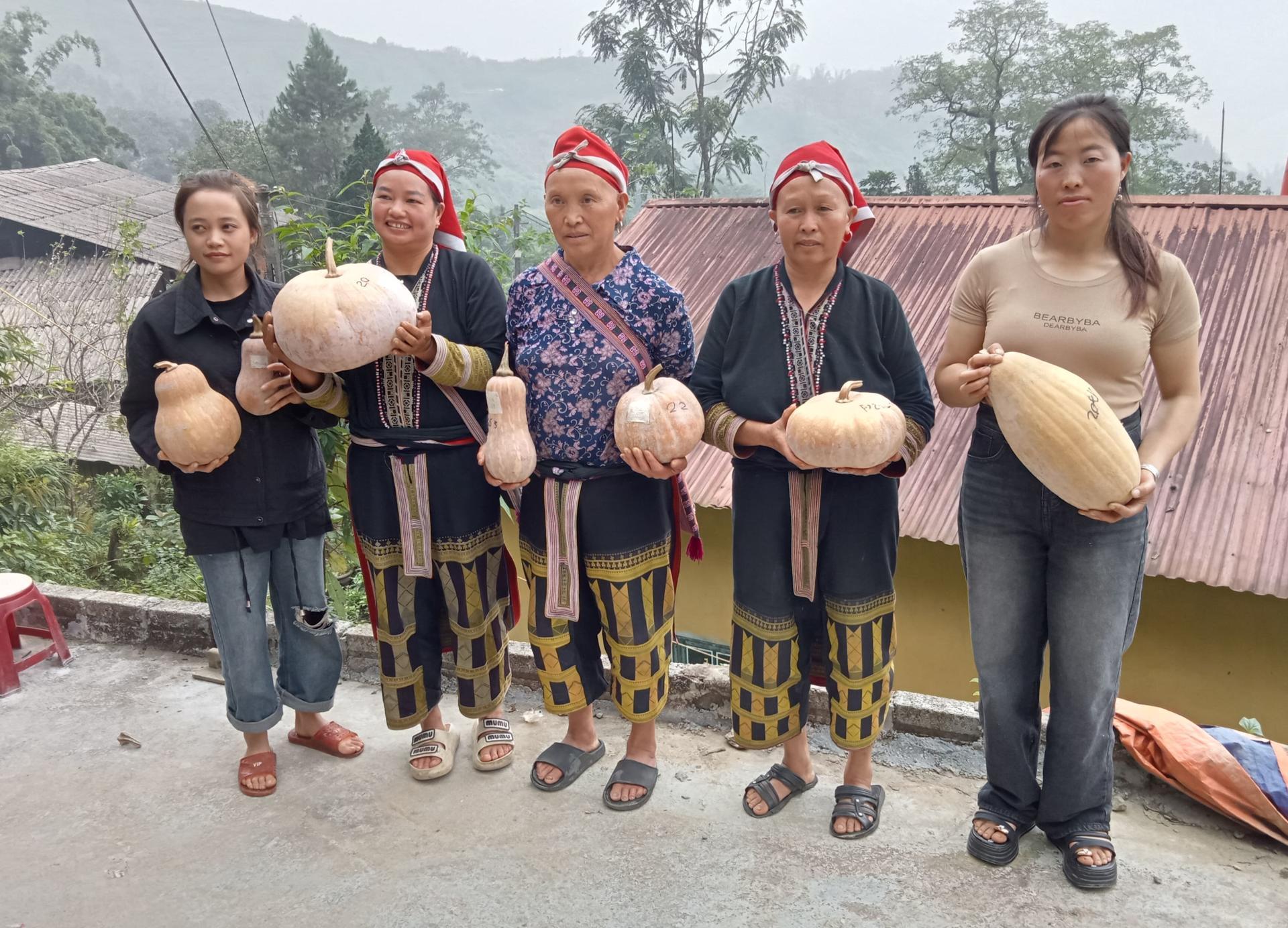
Phin Ho women group (Sa province). Credit: Bioversity International/R. Vernooy
The participatory variety selection process, which included eight varieties of different shaped pumpkins grown in the regions (six farmer varieties from the communities and from the PRC, and two hybrids obtained from a commercial seed company), opened women farmers’ eyes about the importance of deliberately maintaining varietal diversity to benefit from the multiple uses of this versatile crop. As observed by Ms. Lo Thi Thanh (Leader of the Thai women's group in Mai Son): “We did not know some of the varieties that were included in the experiment, but we discovered their useful characteristics. Each variety has its advantages and disadvantages, but all of them are useful.”
Farmers evaluated the growth of the pumpkins at the middle and end of the growing season based on a set of 14 indicators including flowering time, plant vigor, pest and disease incidence, fruit size, fruit shape, taste of leaves and taste of fruit. Considering all the scores given during the two evaluation times, they ranked the best-performing varieties, which in both sites included some local varieties and one or two of the hybrids.

Mid-term evaluation of pumpkin experiment. Credit: Bioversity International/Nguyen Thi Phuong
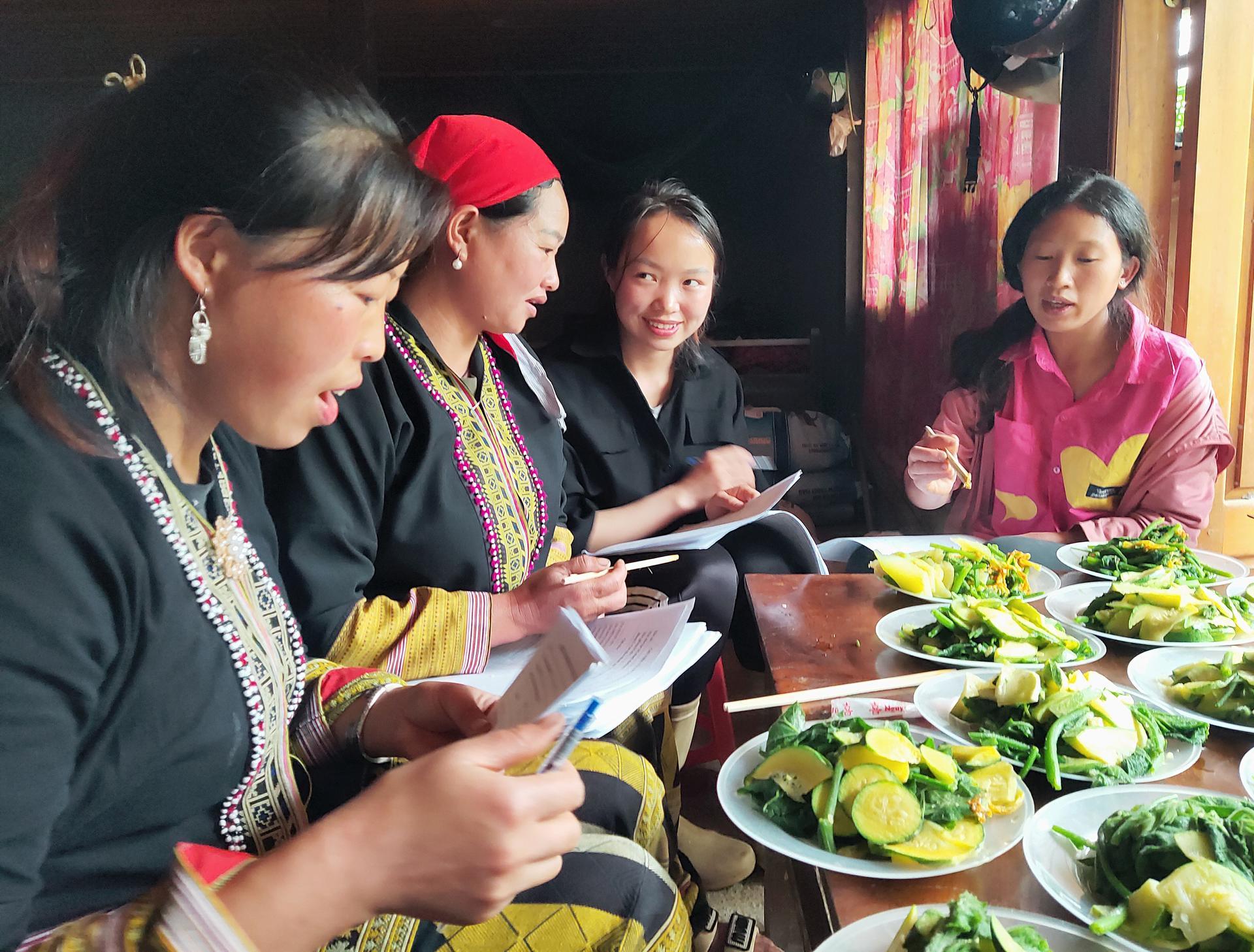
Evaluating the taste of pumpkin fruits and leaves. Credit: Bioversity International/Nguyen Thi Phuong
Experimental benefits
The experiment not only increased awareness, but also strengthened crop management knowledge and skills. The benefits of improved crop management practices - such as transplanting, proper fertilization, spacing and trimming plants - became more evident as farmers observed the impact across the different varieties and plots in the experiment. The process solidified the collective action of women, the collaboration with the researchers, and the social relationships of seed exchange and knowledge. During the participatory final evaluation discussions, all the women farmers expressed satisfaction with the dynamic experimental process.
The discussions were divided into two sessions, one with the experimental groups (the six members that managed and directly evaluated the experiment), and one with a larger group of farmers from the commune and neighboring communes. At the latter, the technical results and insights gained from the experiment were presented by the farmers themselves with inputs from the technical staff, and small quantities of seeds of the experimental varieties were freely shared with non-participating farmers. Farmers explained which varieties performed best according to their own assessment. “We learned how to compare different varieties and we now want to repeat the experiment with other crops, such as common beans, Hmong mustard, local cucumber, pea, and rice,” remarked Ms. Tan Pa May, the leader of the Dao women group in Sa Pa township.
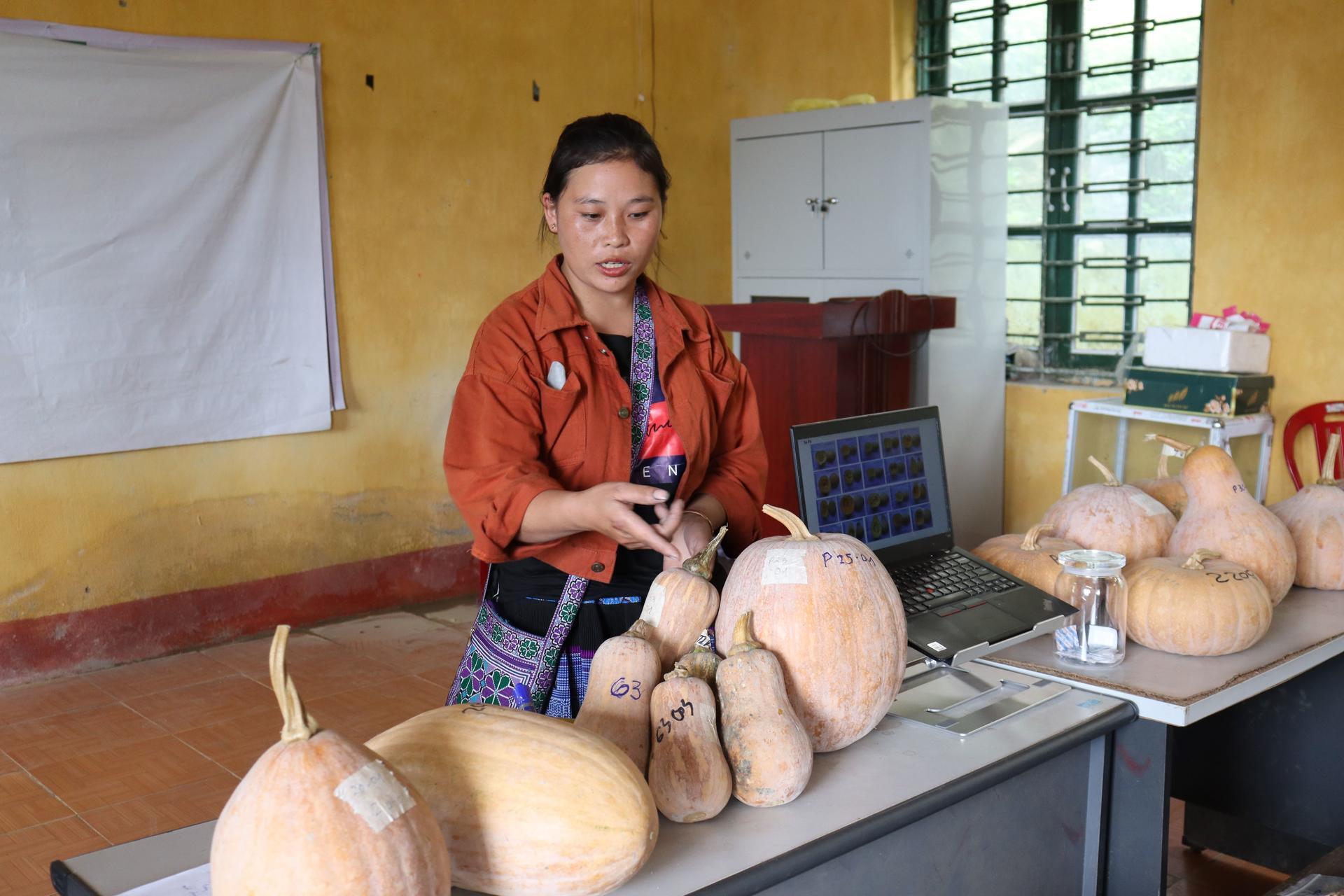
Farmer feedback during the end of the season evaluation. Bioversity International/R. Vernooy
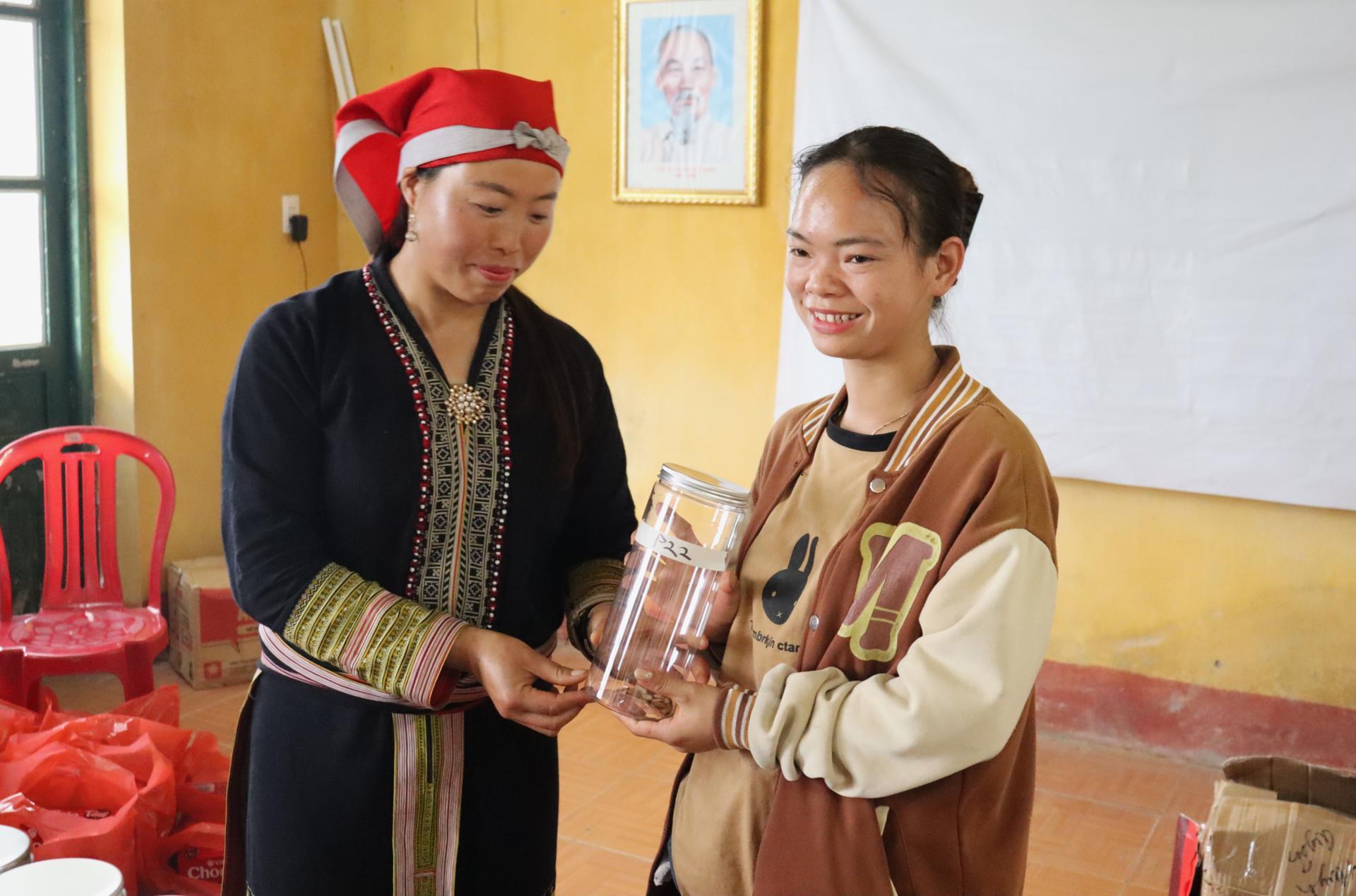
Sharing pumpkin seeds during the end of the season evaluation. Bioversity International/R. Vernooy
Next steps
The experimental groups have a few priority activities under way, including expanding the production of the best-ranked varieties and looking for new market opportunities (such as agrotourism). They also expressed interest in establishing a community seedbank to collectively conserve pumpkin diversity, and, in the future, the diversity of other crops. As Dr. Vu Dang Toan (Curator of the PRC), remarked: “The time has come to support farmers’ conservation efforts through the establishment of one or two pilot community seedbanks in northern Vietnam.”
The participatory pumpkin variety selection experiment was conducted in Vietnam as part of Work Package 2 of the CGIAR Initiative on Nature-Positive Solutions. Work Package 2 is implemented by the Alliance of Bioversity International and CIAT, and the Fruit and Vegetable Research Institute of Vietnam.
The CGIAR Initiative on Nature-Positive Solutions aims to re-imagine, collaboratively create and implement nature-positive solutions for agri-food systems that equitably support food and livelihoods and ensure that agriculture is a net-positive contributor to biodiversity and nature.
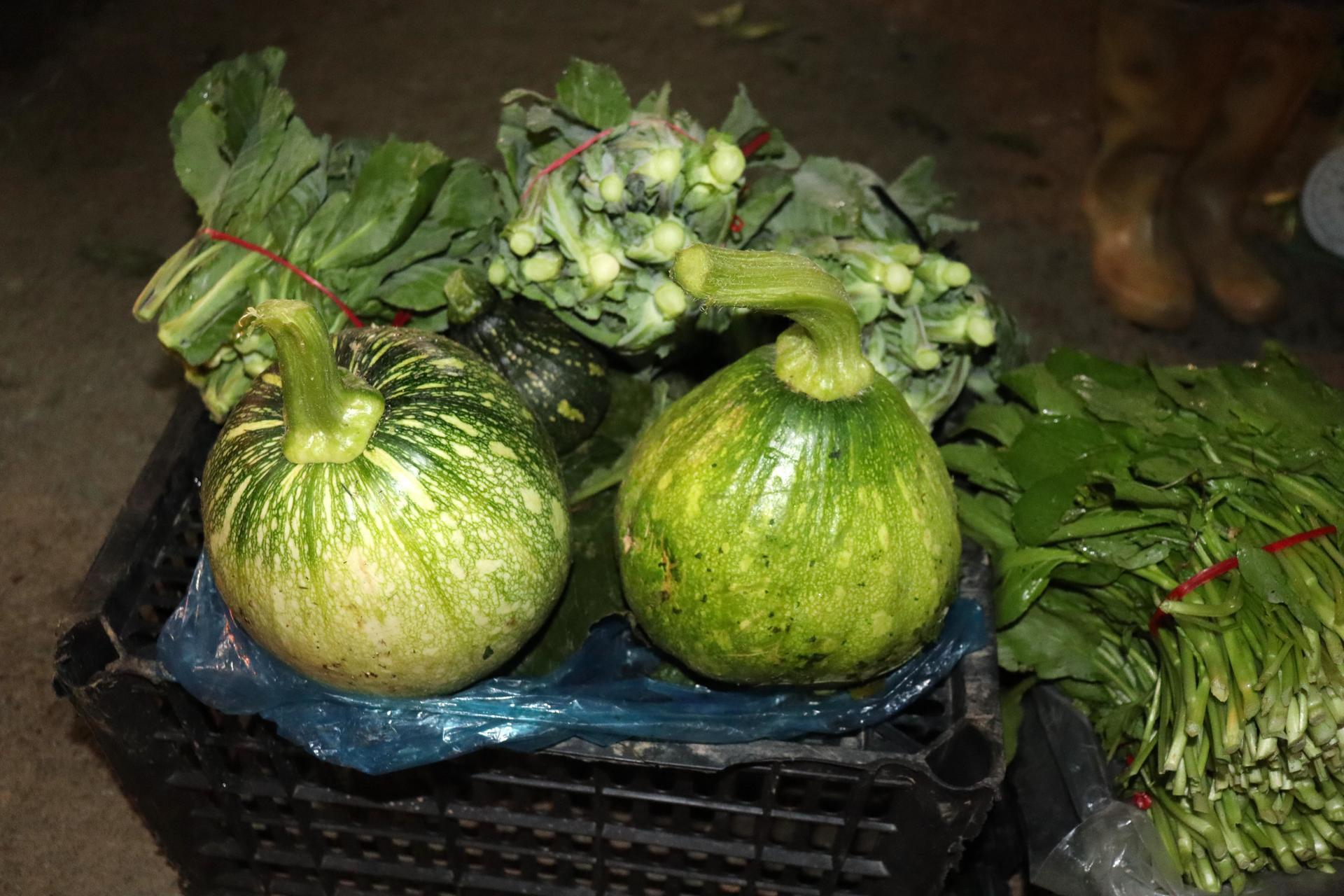
Pumpkins for sale in Sa Pa. Credit: Bioversity International/R. Vernooy
The Team

Ronnie Vernooy
Senior Scientist, Genetic Resources and Seed Policies
Deborah Nabuuma
Scientist IHeader Image: Nong Quynh women group (Son La province). Credit: Bioversity International/D. Nabuuma