Impact story Fertile ground for innovation: When science, business, and farmers unite

Agriculture needs allies to face well-documented challenges: climate change, soil degradation, and limited access to seeds, technologies, and best practices. If we rely solely on the good will of a few (and especially in a global context where funding priorities shift rapidly) we risk falling short of the pace required to meet present and future demands.
What do a group of rice farmers, a family-run forage business, and a research hub have in common? When they combine their strengths toward a shared goal, they create fertile ground to grow, innovate, and overcome these challenges. Such is the case of the Latin American Fund for Irrigated Rice (FLAR, for its Spanish acronym) and Grupo Papalotla, who, together with the Alliance of Bioversity International and CIAT, are celebrating three decades of significant contributions to agriculture and the building of strong cooperation networks between farmers, academia, and the public and private sectors.
These partners understand that, beyond acknowledging the value of agriculture, we must ensure it has the incentives, innovation, and support needed to remain the pillar of our food systems, a fundamental human right. Over the past three decades, the Alliance has worked with FLAR and Papalotla as a key partner, aligning visions across sectors and jointly creating science-based solution packages. This work extends beyond products, offering technologies and methodologies that add value to agricultural production, complementing one another with a broad regional reach that even transcends continental borders.
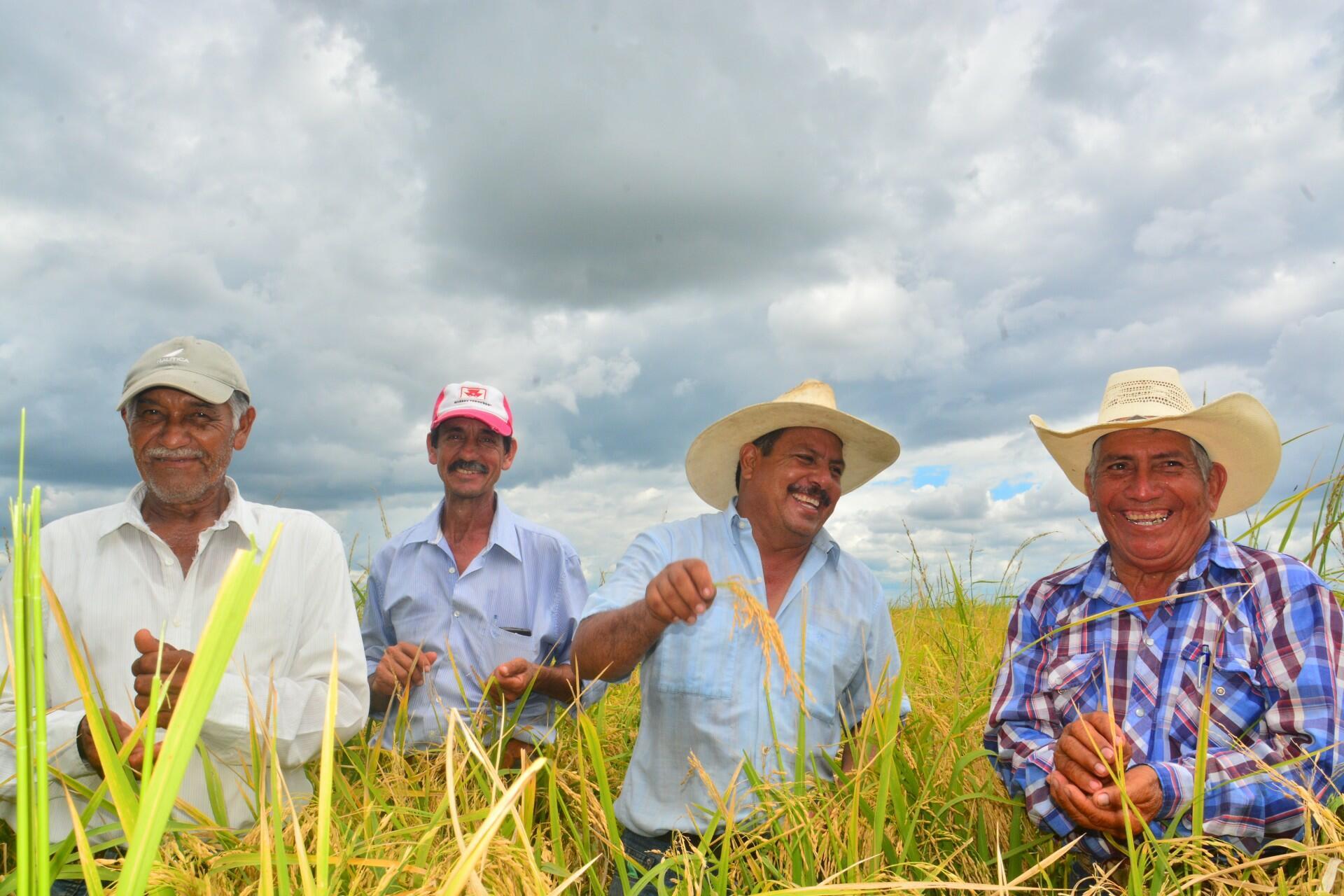
Latin American rice farmers have improved their production thanks to the technologies and varieties developed by FLAR over the past 30 years.
A Shared 'Fund' for Rice Farmers’ Dreams
FLAR brings together more than 30 organizations from 17 countries linked to rice, from Mexico to Argentina and the Dominican Republic, with the Alliance as its strategic partner. Founded in 1995, FLAR generates and shares knowledge, technologies, and innovations to strengthen the competitiveness and sustainability of rice production. Its operational headquarters in Palmira, Colombia, benefits from access to state-of-the-art laboratories, experimental fields, and scientific networks.
This collaboration has produced tangible results: in three decades, 110 varieties have been released in 15 countries. Through the HIAAL Consortium (Hybrid Rice for Latin America), FLAR develops high-yielding, resilient hybrids. Over 500 rice hybrids have been evaluated in multi-environment trials, 86 advanced to advanced stages, and 2 are already registered for commercial use. These varieties deliver high yields and resistance to pests and diseases, achievements backed by top-tier research.
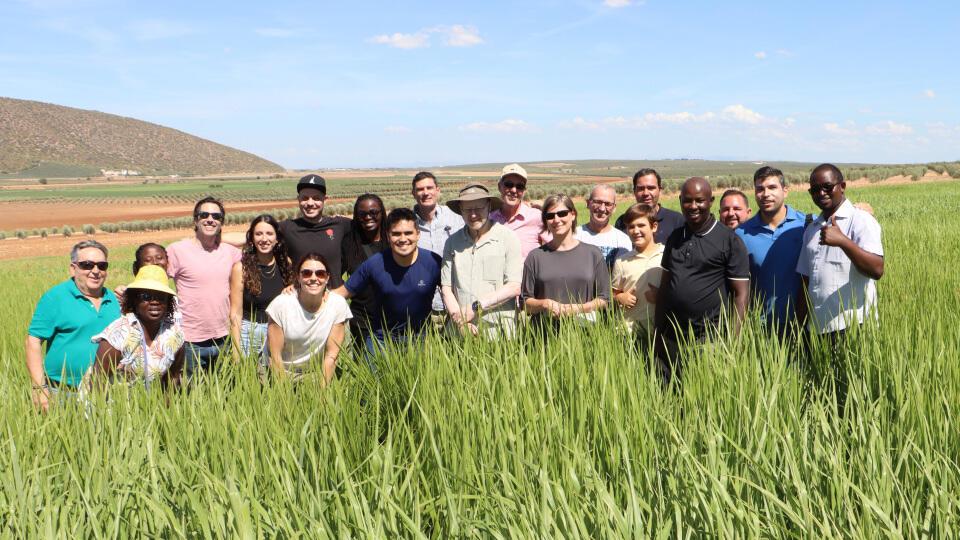
Alliance's Tropical Forages Program leaders and representatives from Papalotla on a visit to an experimental field in Andalusia, Spain, in 2022.
When Paths Cross, Everyone Wins
In the 1990s, Papalotla began as a family business importing and selling forages, along with technology transfer. What seemed like a regular market opportunity soon became the foundation for a profitable, sustainable business group committed to innovation. Meanwhile, the Alliance's Forages Program was making breakthroughs in the genetic improvement of the Urochloa (or Brachiaria) genus, achieving a milestone: crossing two apomictic species (U. decumbens and U. brizantha) using U. ruziziensis as a bridge. This made it possible to combine the best traits of those species and produce hybrid varieties for commercial use.
Papalotla and the Alliance’s paths crossed in the late 1990s through a strategic agreement that merged scientific capacity for hybrid development with the infrastructure and channels needed to evaluate them and bring them to market. To date, they have released six Urochloa hybrids adapted to diverse conditions, now planted on nearly two million hectares in more than 70 countries, benefiting around 12 million people. In addition to quadrupling pasture productivity, these hybrids help reduce deforestation and greenhouse gas emissions. The agreement, valid until 2038, keeps the Alliance leading research, while Papalotla handles evaluation, production, and international commercialization.
The Whole Is Greater Than the Sum of Its Parts
In Latin America, collaboration between the public sector, private companies, and research centers is transforming landscapes, increasing agricultural production, and delivering environmental benefits. The Alliance not only generates cutting-edge science but also builds bridges between sectors, integrates platforms, and multiplies the impact of each partner. The lesson is clear: when we work together as one for agricultural innovation, the whole truly exceeds the sum of its parts.