From the Field Strengthening livelihoods and seed systems in Magwi and Nimule districts, South Sudan

Climate change, limited access to quality seed, and weak market opportunities are making it increasingly difficult for farming households in Magwi and Nimule districts, South Sudan, to sustain their livelihoods. Baseline findings from the two districts show how strengthening seed systems, promoting crop diversity, and improving agricultural support can help build more resilient farming communities and enhance food security.
Background
Northern Uganda and South Sudan are home to large numbers of internally displaced persons and refugees. In Northern Uganda, there are over 1.5 million South Sudanese refugees. They live in communities in dire living conditions: limited access to healthcare, persistent food and nutritional insecurity, and degradation of natural resources. The erosion of biodiversity, particularly of staple crops such as cereals, legumes, and vegetables, contributes to their vulnerability. Without diverse and resilient seed systems, farming households cannot access timely, affordable, and high-quality seed and planting material. Crop production and livestock raising remain fragile activities. Women farmers face even greater obstacles due to entrenched socio-cultural and religious norms that limit their participation in community meetings, training opportunities, and decision-making processes. Their exclusion weakens collective resilience, as women are central to household food production and seed management.
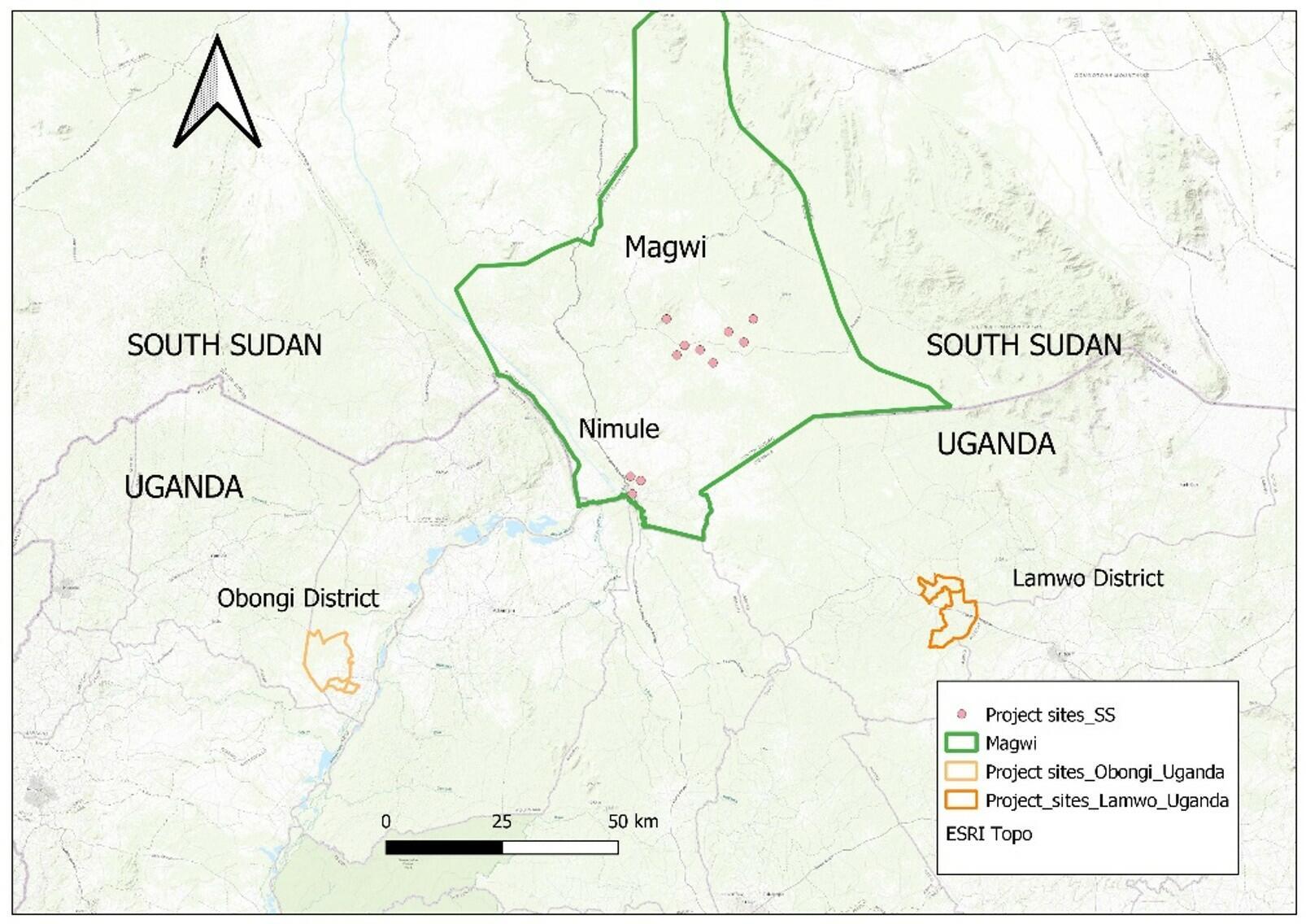
Map. Project sites in South Sudan and Uganda. Sources: UNHCR, National Bureau of Statistics South Sudan, and Uganda National Bureau of Statistics
The project
Despite these challenges, there are opportunities to strengthen resilience and improve livelihoods through more effective use of plant genetic resources. Harnessing crop diversity can support sustainable farming, improve household nutrition, create income-generating opportunities, and enable timely responses to the adverse effects of climate change. Our project, supported by the Fifth Cycle Benefit Sharing Fund of the International Treaty on Plant Genetic Resources for Food and Agriculture, emphasizes South-South learning and includes livelihood diversification and value addition, sustainable use of crop diversity, seed system assessment, and seed system resilience building.
The project is implemented in Lamwo and Obongi districts in Northern Uganda, where the Palabek and Palorinya Refugee Settlement camps are located hosting populations of 75,000 and 122,000 refugees respectively, the large majority from South Sudan. In South Sudan, two Uganda bordering counties in Eastern Equatoria State, are included: Magwi and Nimule. These sites were selected based on agricultural potential, population densities, accessibility, security conditions, and connections with Uganda. The map depicts the sites.
To obtain a better understanding of livelihood conditions, a qualitative agricultural baseline survey was designed to capture local perspectives of women and men. Survey data were collected through a series of Focus Group Discussions. In South Sudan, 20 people participated in the survey. Questions asked concerned crop and variety cultivation choices, food consumption, production constraints including climate change, seed access and management, access to information and training, and government and NGO support. Given the project focus, in-depth data were collected for bean, cowpea and sorghum. This brief summarizes the South Sudan survey results. A companion brief focuses on Uganda.
The South Sudan baseline assessment highlights that farming communities in Magwi and Nimule districts face significant and interrelated challenges that undermine agricultural productivity, food security, and household income. Increasing climate variability is aggravating these problems.
Farming and livelihood activities
In Magwi, crop farming is the dominant livelihood activity followed by charcoal burning and teaching. Very few people spend time on casual labor. Crop types and cultivated area/crop type are classified as follows:
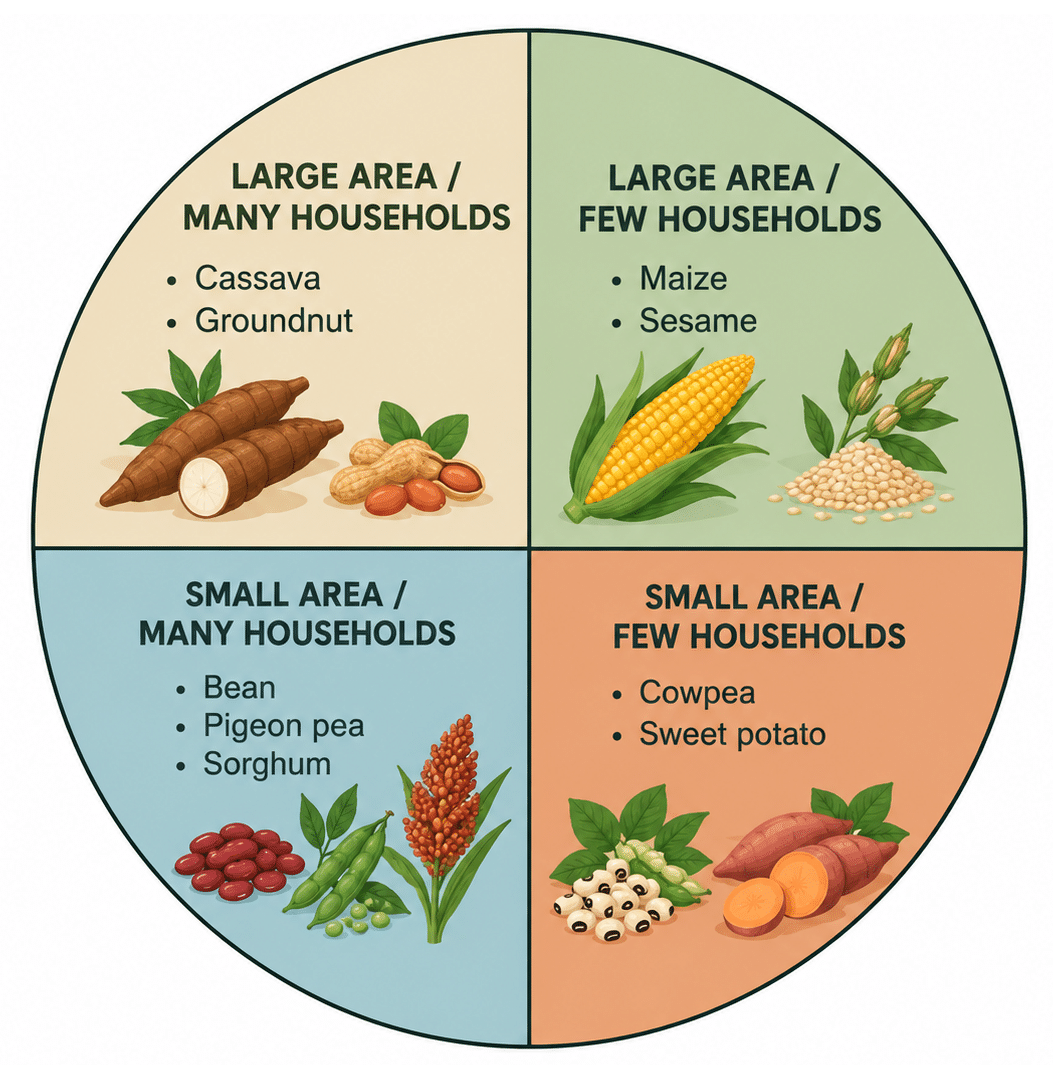
Among the crop varieties used, red sorghum scores by far the highest, followed by K132 large bean, K131 small bean, Serena red sorghum (a variety introduced by relief agencies), and seso 1 sorghum. Household daily food consumption crops are very largely bean, cowpea, sesame and sorghum.
Rainfed crop farming is the dominant system, with significant contributions from agro-pastoral (crop–livestock mixed) systems and agroforestry, and a only a minor contribution from irrigated and lowland/wetland agriculture. This represents a good level of farming diversity, which supports the spreading of risks and can increase resilience. Of the land cultivated, about 55% is regarded fertile while 45% less fertile. About half of the farmers cultivate medium-sized plots (2–5 acres), with about 40% working on small plots of less than 1 acre. About 20% has to do with very small plots (100m × 50m or less). Thus, agricultural production in Magwi is predominantly small- to medium-scale. 55% of survey respondents reported production mainly for home consumption. The remaining 45% practice mixed farming, combining both subsistence and commercial activities. Farmers use low levels of industrial inputs and rely on organic fertilizers, traditional seeds, and minimal chemical use.
The households surveyed identified improved access to seed and better market linkages as main challenges to improve their farming followed by training on improved farming techniques, better government (financial) support and improved irrigation and water management.
In Nimule, households engage in mixed livelihood strategies, combining crop farming and charcoal burning. Only few people work as teachers. The difference is likely due to different market access, availability of economic opportunities, and proximity to trade routes and the border with Uganda. Crop types and cultivated area/crop type are classified as follows:
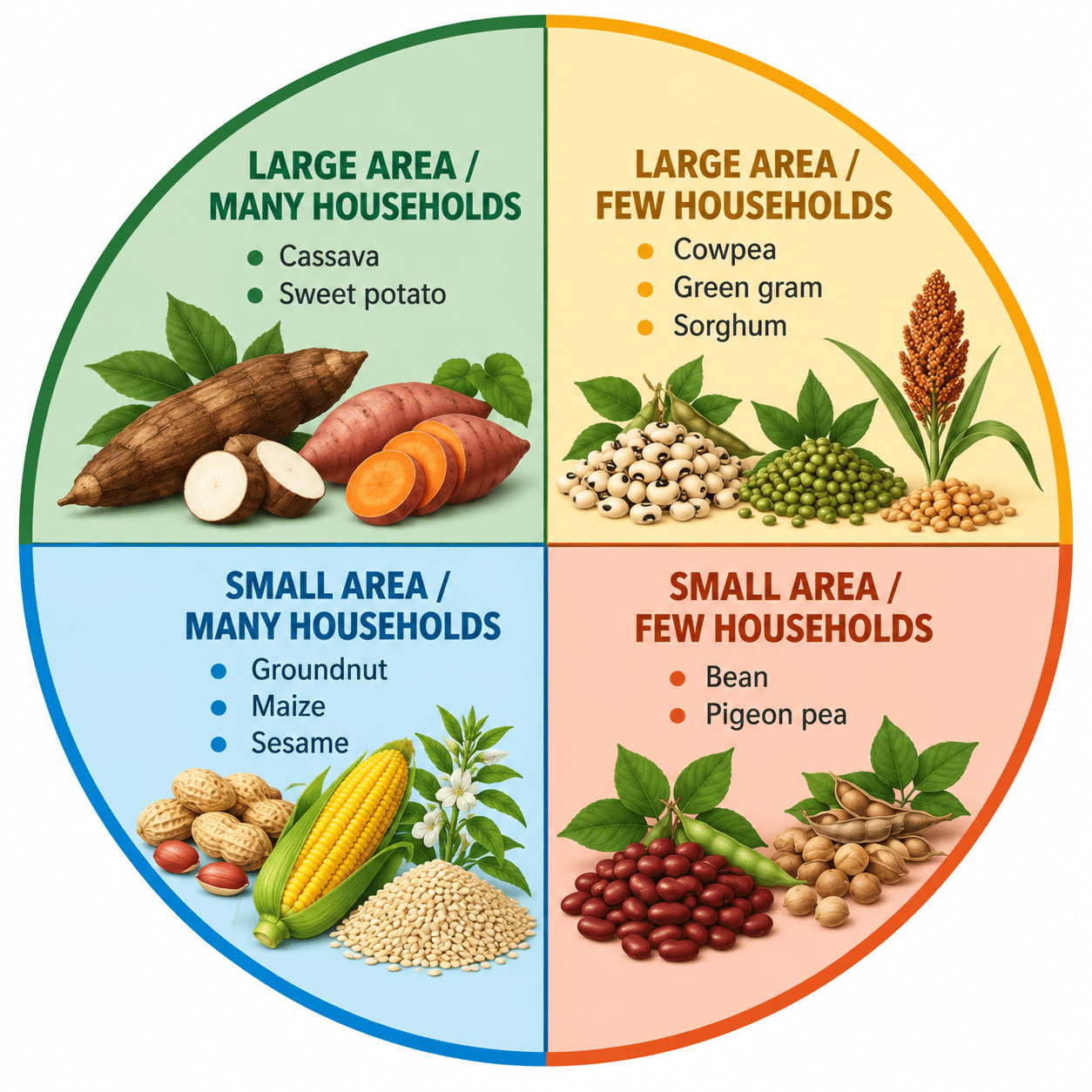
Widely used crop varieties include Nase 1 cassava and Serena red sorghum, and to a lesser extent red sorghum. Household daily food consumption crops are very largely bean, cowpea, sesame and sorghum.
Nimule is characterized by a higher dependence on rainfed crop farming, which accounts for 54% of households. This indicates a stronger reliance on rainfall and potentially greater vulnerability to climate variability. About 70% of the cultivated area is reported to be fertile while 30% less fertile. Agroforestry emerges as the second most practiced system, followed by agro-pastoral systems and irrigated farming. As a result, the district’s reliance on rainfed farming may increase vulnerability to erratic rainfall and climate change. Medium-sized farms (2–5 acres) are dominant (about 70%) and over 30% of farmers operate farms exceeding 6 acres. Notably, there are no reported small or very small plots in Nimule. Relatively larger farm size could be a plus regarding commercialization opportunities (compared to Magwi). All respondents reported engaging in mixed commercial and subsistence farming, with no households relying solely on subsistence production. Farmers rely entirely on traditional practices, organic fertilizers, and minimal chemical usage.
Here, the households surveyed listed improved access to seed as the priority challenge, followed by better market linkages and training on improved farming techniques; government (financial) support was the lowest ranked challenge.
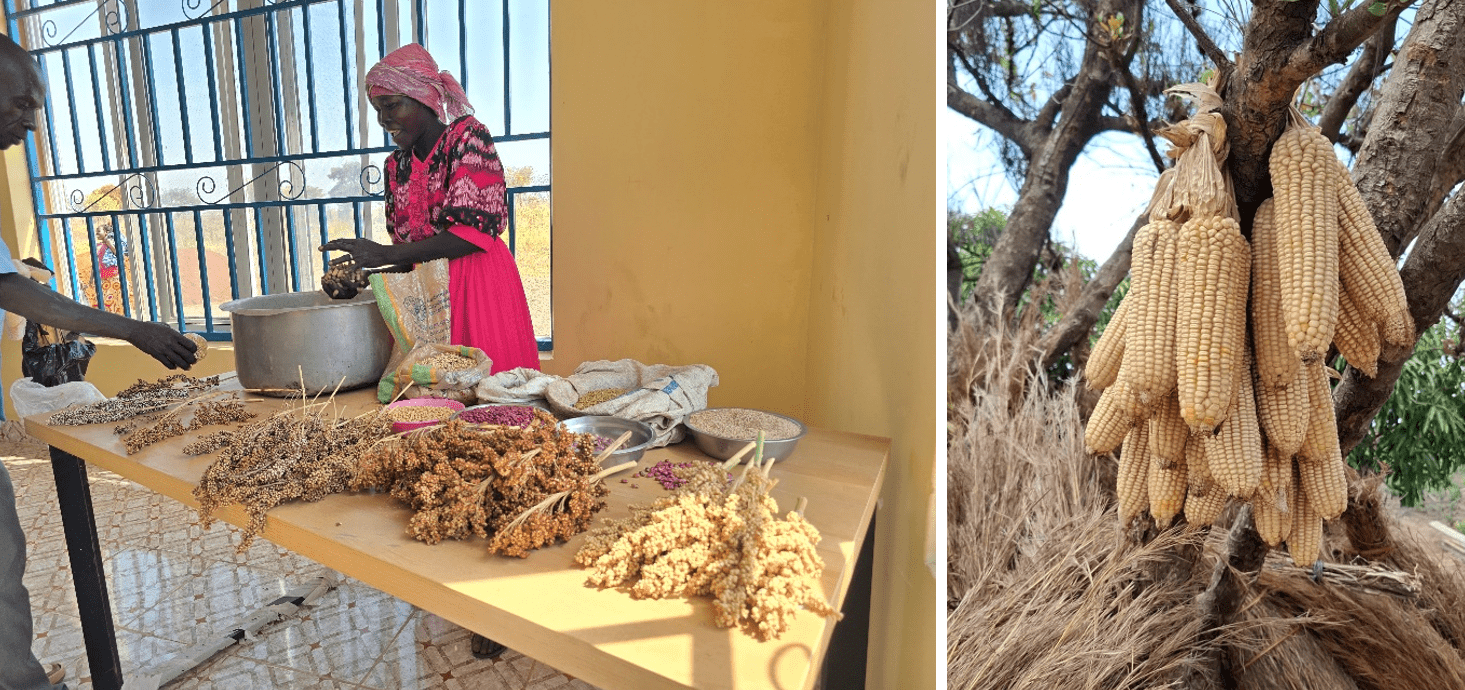
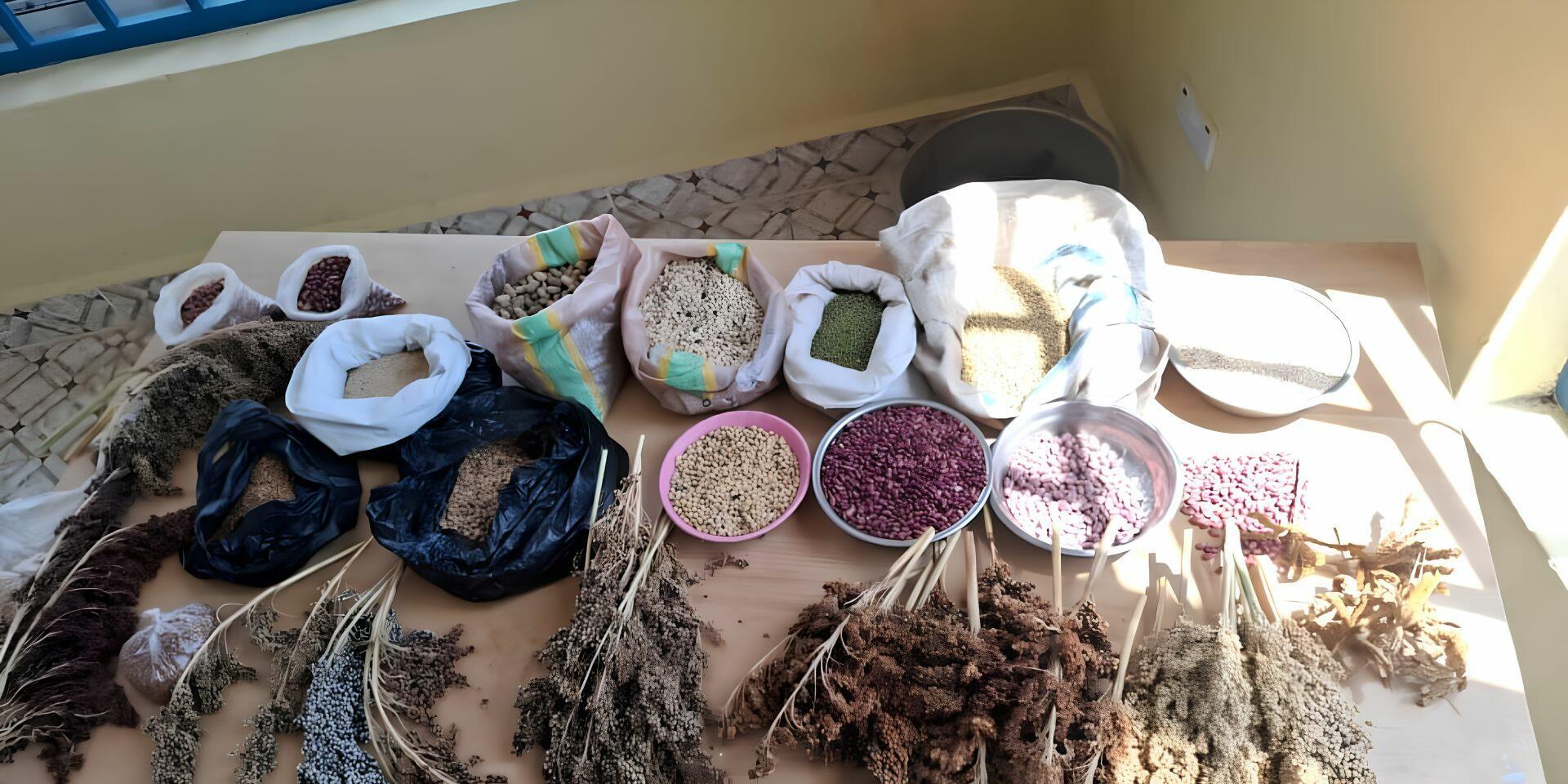
Photos: Display of local sorghum varieties, Abara Boma, Iwire Payam, Magwi county. Credit: Tony Ngalamu. Traditional way of drying maize seeds, Pogae Boma of Pajok Payam, Magwi County. Credit: Tony Ngalamu.
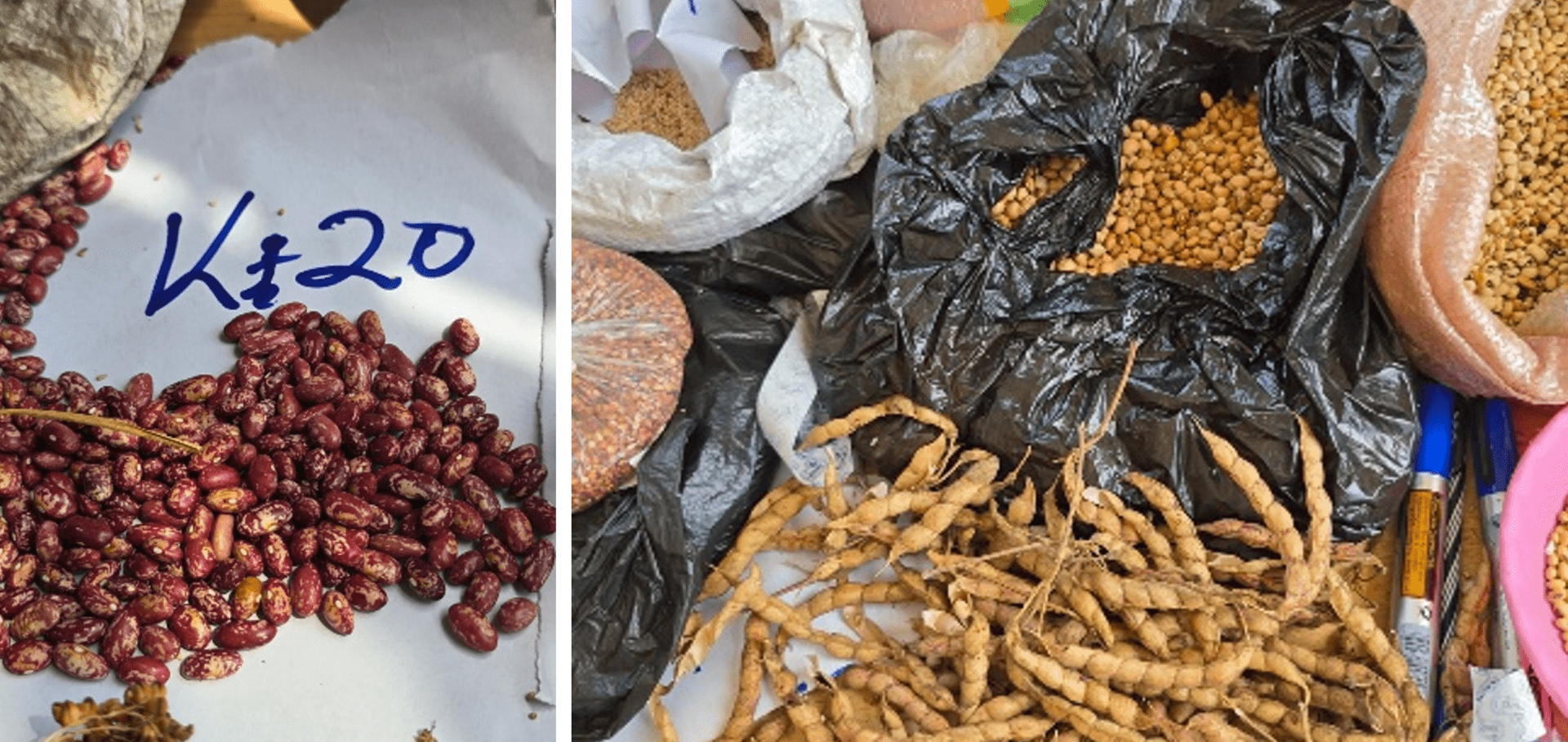
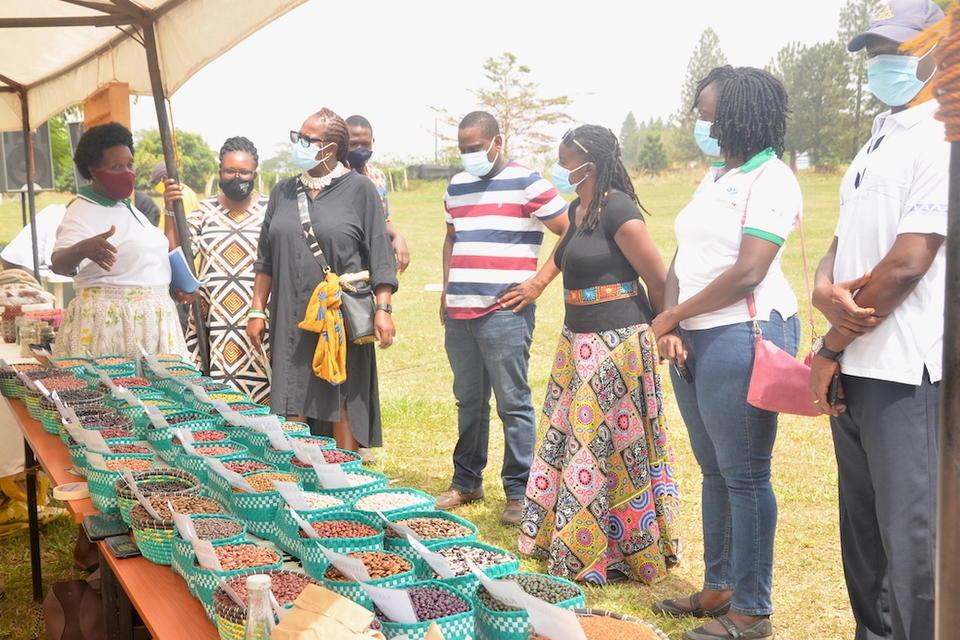
Photos: Display of beans. Credit: Liza Taban
Acknowledgement
We thank the 20 key informants from the two districts for sharing their knowledge with us. We acknowledge the technical guidance and financial support from our implementing partners and the funding agency, the Food and Agricultural Organization of the United Nations (FAO), through the Benefit Sharing Fund of the International Treaty on Plant Genetic Resources for Food and Agriculture.