Blog Enabling structured grain trade in Kenya: Lessons from Uasin Gishu County


In Uasin Gishu County, Kenya, smallholder farmers, cooperatives, and agriGHALA are transforming grain trade through structured systems, improving storage, finance, and market access to reduce losses and increase incomes.
In Kenya, the challenge facing smallholder farmers is not just how to produce more. It is how to protect and sell what they produce. Across grain-producing regions, the period immediately after harvest is when farmers are most vulnerable. Prices are low, storage is unreliable and urgent cash needs often force early sales.
A recent field visit to Eldoret under the P4G-supported agriGHALA initiative offered a closer look at how structured grain systems can change this dynamic and what it takes to make them work.
What emerged is a clear insight: structured grain trade is not just a technical innovation. It is an ecosystem that depends on an enabling environment.
For many farmers, the current system offers limited choices. Selling at harvest often means accepting low prices, while storing grain at home exposes it to pests, theft and spoilage. Formal market channels can be slow and unpredictable, while brokers offer speed but at a cost.

Emma Leitich,Uasin Gishu farmer and early WRS adopter, shares her experience.
One woman farmer, Emma Leitich, reflected on this reality, describing the long queues, hidden losses, and frustrations of traditional systems:
“You can spend days trying to deliver your maize, and still lose some along the way. By the time you sell, you’ve already lost value.”
In this context, farmers often prioritize immediate cash over long-term value.
The agriGHALA model introduces a different pathway.
Built on three core pillars, safe storage, access to finance and market access, it allows farmers to store grain in certified warehouses, receive a warehouse receipt, and decide when to sell. This shifts grain from being a burden into an asset. For some farmers, that shift is already tangible.
Stephen Cheluget, Chairman of Kuona Mbele Cooperative Society in Burnt Forest one of the cooperatives whose members are actively depositing with agriGHALA captured this shift clearly:
“Storing maize at Agrighala is like keeping money in the bank.”
Instead of rushing to sell, farmers can wait, plan and make decisions on their own terms.Across interviews with farmers, cooperatives and warehouse operators, the benefits of the system were clear.
At the warehouse level, grain is no longer exposed to the risks farmers face at home such as rodents, theft and poor storage conditions. Instead, it is tested, graded, and stored in controlled environments.
As Johannes Ogallo, General Manager at Agri-bora Warehousing Limited (agriGHALA), explained:
“We ensure the grain is safe, tested and maintains quality over time. Farmers can store for months and sell when prices improve.”
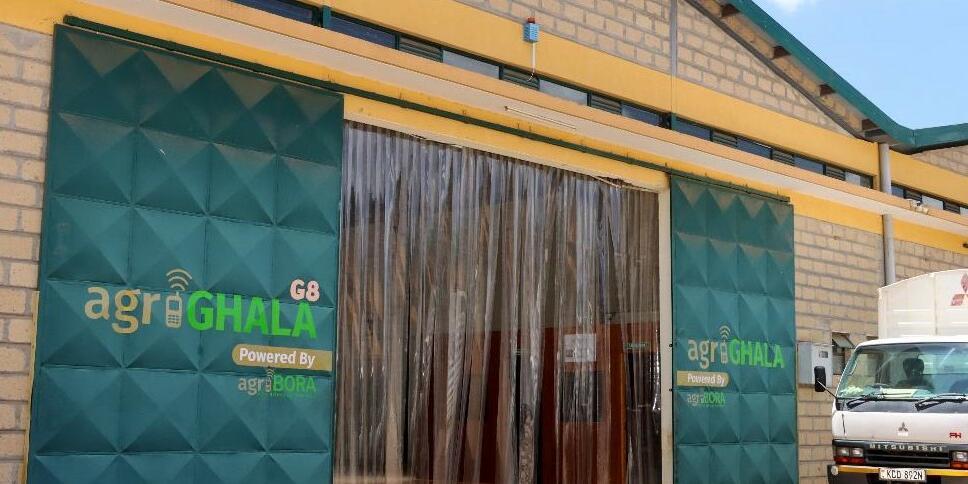
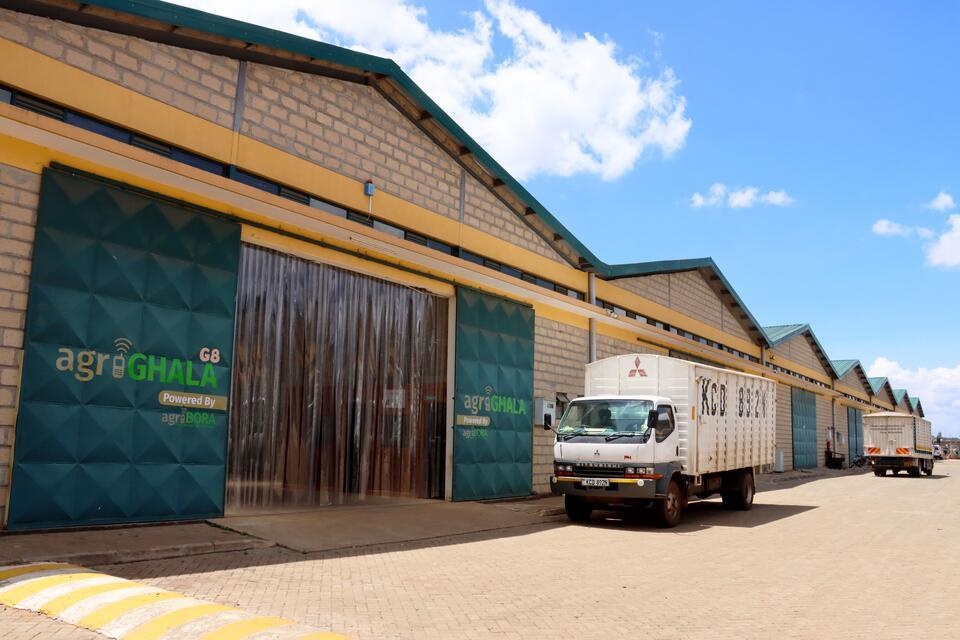
agriGHALA warehouse facility in Eldoret (left) and its operating licence (right), highlighting the role of regulation in enabling structured grain trade.

For farmers, this creates both security and opportunity. Emma, described how once her grain was stored, it changed how she planned her finances:
“Once I know my maize is safe, I have time to think. I can plan what I want to do instead of rushing to sell.”
That sense of control is central to the model. At the same time, warehouse receipts are opening new doors. Farmers can use them to access loans, meeting immediate needs without selling their produce. In practice, this means farmers are no longer forced into the difficult choice between liquidity and value.
What became clear during the visit, however, is that this model does not work in isolation.
It is supported by a network of actors such as regulators, financial institutions, cooperatives, and local leadership, each playing a role in making the system function.
At the regulatory level, the Warehouse Receipt System provides the foundation. It ensures that warehouses are certified, receipts are legally recognized and transactions are recorded. This creates trust not just for farmers, but for banks and buyers as well.
County governments are also playing an increasingly important role. In Uasin Gishu, local authorities have taken steps to support warehouse licensing and coordination, helping to create a more structured environment for grain trade. As noted by the Chief Officer in the Department of Cooperatives, Uasin Gishu County:
“Initiatives like agriGHALA are important for the county because they help farmers reduce post-harvest losses, access better markets, and improve their incomes. As a county, we are committed to supporting such systems through coordination, licensing, and farmer sensitization to ensure they can scale and benefit more farmers.”

The Chief Officer for Livestock and Enterprise Development, speaking on the role of county government in supporting the sector.
As Jonaness noted, this support is critical:
“We are not just a normal warehouse. We are regulated, and that gives farmers confidence that their grain is safe and the system is accountable.”
Financial institutions form another key part of the system. By accepting warehouse receipts as collateral, they enable farmers to access credit. Yet alignment is still evolving.
As Ronald Simiyu, Branch Manager, Agricultural Finance Corporation (AFC), North Rift, explained:
“The Warehouse Receipt System is a game changer because it allows farmers to use their grain as collateral. This is especially important for farmers who do not have land or traditional assets, including youth and women who are often locked out of credit. With WRS, a farmer does not have to sell at harvest. They can access financing, wait for better prices and still meet their immediate needs.”
Farmers often need money immediately, while bank processes can take time highlighting the need for financial systems that better match the realities of agriculture. Encouragingly, progress is already underway. The Agricultural Finance Corporation (AFC) has developed the necessary credit products and trained officers up to the branch level, positioning the institution to support warehouse receipt financing. What remains is the full rollout of these credit facilities, which will be critical in bridging the gap between farmer needs and access to timely finance.
Market infrastructure also plays a critical role, particularly in price discovery. Having a clear and trusted reference for market prices helps ensure transparency and reduces disputes across the value chain. In the case of agriGHALA, this is supported by the use of COMEX, the commodity exchange platform, which provides real time price signals. This gives both farmers and financial institutions a reliable benchmark, helping to align expectations and build confidence in the system.
Perhaps the most powerful enabler, however, lies at the local level. Cooperatives, farmer groups, and community networks are often the true entry point for adoption because they are spaces where trust is built and new ideas are tested in practice.
Peter Kiprop, Secretary of Kuona Mbele Cooperative Society, described how this process has unfolded within his community:
“We started with just a few farmers. Now others are seeing the benefits and joining. When farmers see results, they follow.”
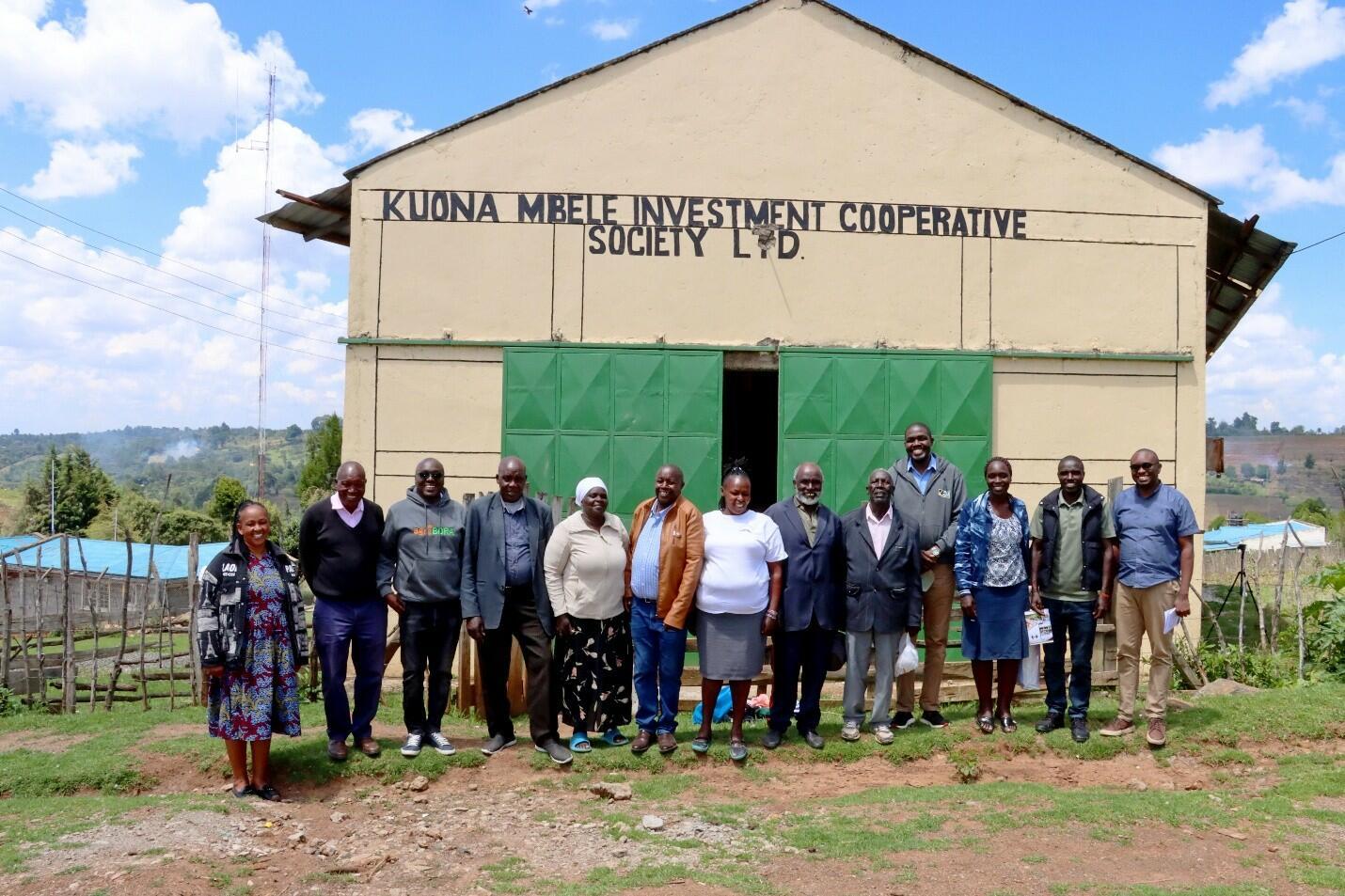
Members of Kuona Mbele cooperative society in Uasin Gishu county.
This highlights the importance of peer experience. Farmers are far more likely to adopt new systems when they see others like them succeed.
Despite this progress, significant barriers remain. Trust continues to be a major challenge, as many farmers have been disappointed in the past and remain cautious about new systems. As one farmer in Uasin Gishu reflected,
“If you’ve been hit once, you become careful,” capturing the hesitation that still exists among farmers.
At the same time, brokers remain highly competitive. Their ability to offer immediate cash and collect grain directly from the farm gives them a clear advantage, one that structured systems must work hard to match.
Perceptions around cost also play a role. While storage offers long term value, many farmers focus on upfront expenses, particularly when the benefits are not immediately visible. Logistics further complicate participation, as distance to warehouses and transport costs can discourage smaller farmers from engaging with the system.
For many women, these challenges are even more pronounced. Participation is often shaped by deeper structural dynamics around decision making and control over resources. As one farmer shared candidly,
“Many women don’t make the final decisions. Even if they understand the benefits, they still need approval.”
Yet even within these constraints, change is beginning to emerge through women’s groups, cooperatives and peer networks that are gradually expanding access and shifting norms.
The Uasin Gishu experience offers a clear lesson: systems like agriGHALA only work when the broader environment supports them. It is not simply about building warehouses, but about aligning regulation, finance, infrastructure and community systems in a way that makes the entire model function.
At its core, it is about building trust ensuring that farmers not only have access to solutions, but understand them, believe in them and see their value. It also means recognizing the central role of local institutions, from cooperatives to community leaders, in making these systems work in practice.What emerges is not just a model, but a shift.
The agriGHALA experience shows what is possible when these elements come together. Farmers are able to reduce losses, access finance and sell at better prices. More importantly, they begin to move from reacting to the market to actively participating in it.
As Emma put it simply:
“Now I don’t have to sell when I’m desperate. I can wait.”
That shift from urgency to choice is what structured grain systems are ultimately about. And with the right enabling environment, it is a shift that can scale.