From the Field The conservation and sustainable use of plant genetic resources for food and agriculture in South Sudan and Uganda in context
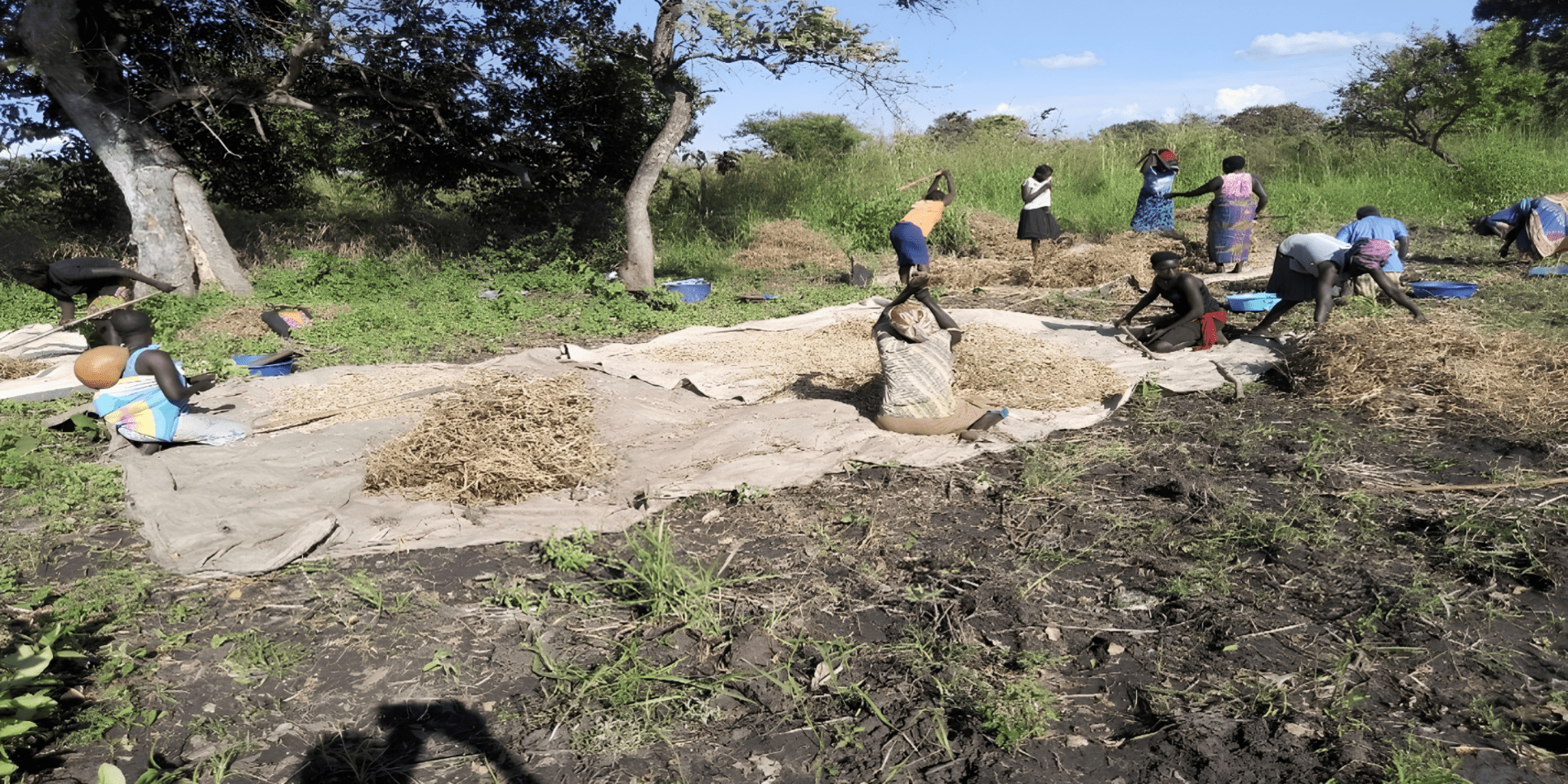

This brief offers a synthesis of the macro-level baseline survey results on the policy, institutional, and technical context for targeting the conservation and sustainable use of plant genetic resources for food and agriculture South Sudan and Uganda. It is based on input received from seed sector stakeholders and a review of secondary literature.
The survey is part of our project supported by the Fifth Cycle of the Benefit Sharing Fund of the International Treaty on Plant Genetic Resources for Food and Agriculture. The project emphasizes South-South learning and includes livelihood diversification and value addition, sustainable use of crop diversity, seed system assessment, and seed system resilience building. The project is implemented in Lamwo and Obongi districts in Northern Uganda, where the Palabek and Palorinya Refugee Settlement camps are located hosting populations of 75,000 and 122,000 refugees respectively, the large majority from South Sudan. In South Sudan, four Uganda bordering counties in Eastern Equatoria State, are included: Nimule, Ikwoto, Kapeota South, and Magwi. These sites were selected based on agricultural potential, population densities, accessibility, security conditions, and connections with Uganda. The map depicts the sites.
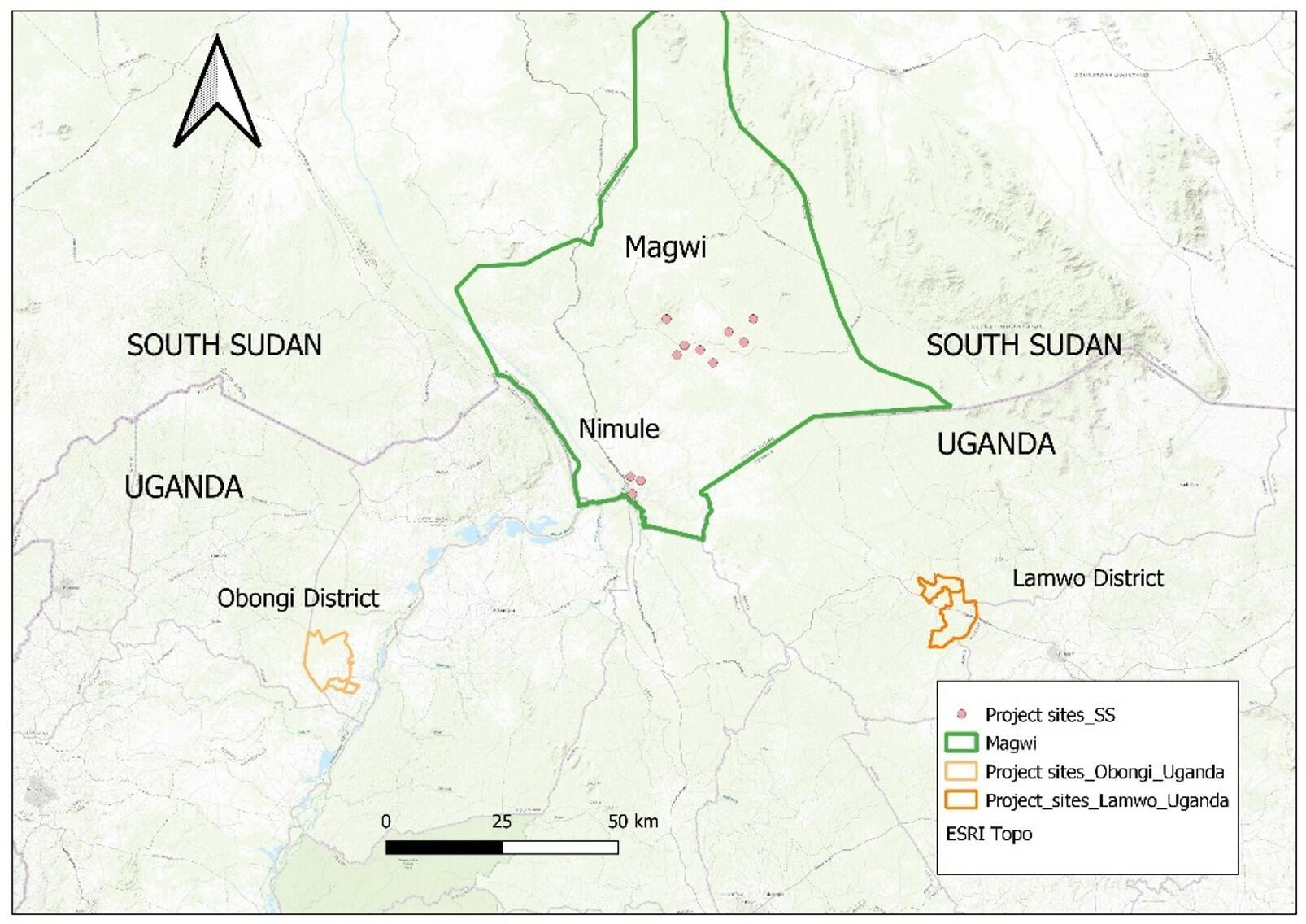
Map. Project sites in South Sudan and Uganda. Sources: UNHCR, National Bureau of Statistics South Sudan, and Uganda National Bureau of Statistics
Background
Northern Uganda and South Sudan are home to large numbers of internally displaced persons and refugees. In Northern Uganda, there are over 1.5 million South Sudanese refugees. They live in communities in dire living conditions: limited access to healthcare, persistent food and nutritional insecurity, and degradation of natural resources. The erosion of biodiversity, particularly of staple crops such as cereals, legumes, and vegetables, contributes to their vulnerability. Without diverse and resilient seed systems, farming households cannot access timely, affordable, and high-quality seed and planting material. Crop production and livestock raising remain fragile activities. Women farmers face even greater obstacles due to entrenched socio-cultural and religious norms that limit their participation in community meetings, training opportunities, and decision-making processes. Their exclusion weakens collective resilience, as women are central to household food production and seed management.
The national policy environment
In South Sudan, the 2018–2027 National Biodiversity Strategic Action Plan (NBSAP) outlines national priorities for biodiversity management and seed system development. It outlines 24 targets for restoring and conserving the country's biodiversity. NBSAP emphasizes stakeholder coordination, capacity building, ecosystem restoration, and information management. It also aims to strengthen biodiversity-inclusive environmental impact assessments, establish gene banks, and restore lost species diversity. A draft National Seed Policy and Act have been under development for some time with further discussion and review on the agenda. Farmer-managed seed systems, including community seed banks and community-based seed production are included in the draft document.
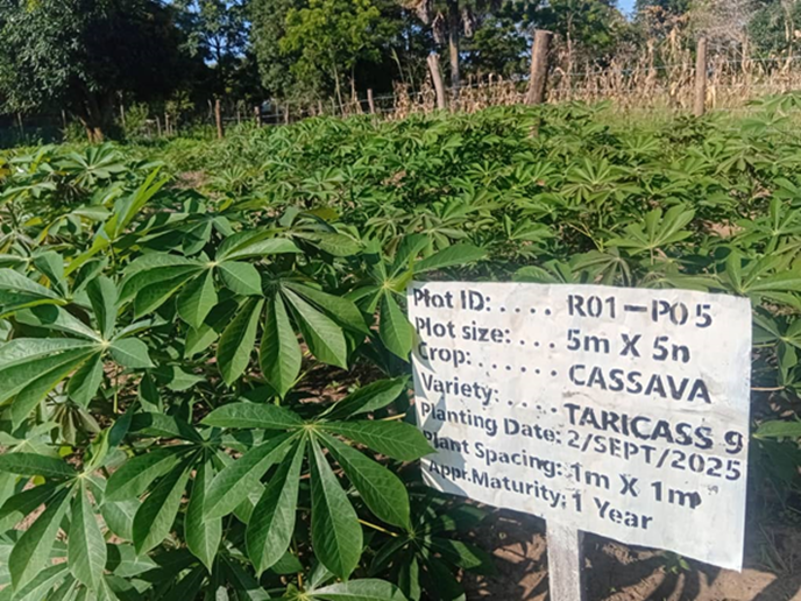
Newly introduced improved cassava variety TARICASS 9 from IITA in a mother trial field, at CTC Yei, South Sudan. Credit: B.C.M. Langwa
The country’s major crops include cassava, groundnut, maize, millet, oilseeds, okra, rice, sorghum (the most important crop) and sweet potato. Bean and cowpea are cultivated but to a lesser extent. The conservation and sustainable use of these crops is a policy objective. South Sudan does not yet have a national genebank, but a plan is under development to establish one. Breeders maintain small collections of varieties of some crops. Released improved bean varieties Jube-1, Jube-2, Jube-3, and several local cultivars. Improved varieties of sorghum are Macia, Kari-Mtama 1, and Sesso-3. There is no inventory of cowpea varieties and improved varieties are not available.
The strengthening of institutional capacities has been hampered by political instability, yet some initiatives, such as the South Sudan Seed Hub supported by international partners, are fostering multi-stakeholder coordination and farmer engagement in policy and legal development.
In Uganda, National Development Plan IV, and National Biodiversity Strategy and Action Plan III support PGRFA conservation, sustainable use, agro-industrialization, biotechnology, equitable benefit sharing, and farmer variety recognition. Institutional capacity for PGRFA conservation is anchored in the National Agricultural Research Organisation-Plant Genetic Resource Center, a functioning national genebank, and an expanding network of community seed banks supporting in situ conservation and participatory plant breeding. The country has pre-basic, basic and certified seeds as defined in the Seed and Plants Act, and specified in the National Seed Policy of 2018, in line with the Organisation for Economic Co-operation and Development (OECD). The National Seed Policy of 2018 establishes a pluralistic seed system and formally recognises Quality Declared Seed (QDS) as an intermediate class to improve farmer access to quality seed. QDS is operationalised through the Seed and Plant (Quality Declared Seed) Regulations of 2020.
Important crops include bean, banana, cassava, maize, potato, sorghum and sweet potato. Cowpea cultivation is limited. Extensive collections of common bean (more than 8,000 accessions), cowpea (more than 100 landraces and over 300 accessions from the global mini-core collection), and sorghum (300 accessions) exist, alongside a pipeline of improved varieties released by NARO, offering significant genetic resources for scaling climate-resilient cultivars. NARO has released a large number of improved bean varieties and 12 improved cowpea varieties. Improved sorghum varieties include Epurpur, Sekedo, Seredo, Serena and NAROSORG 1, 2, 3 and 4.
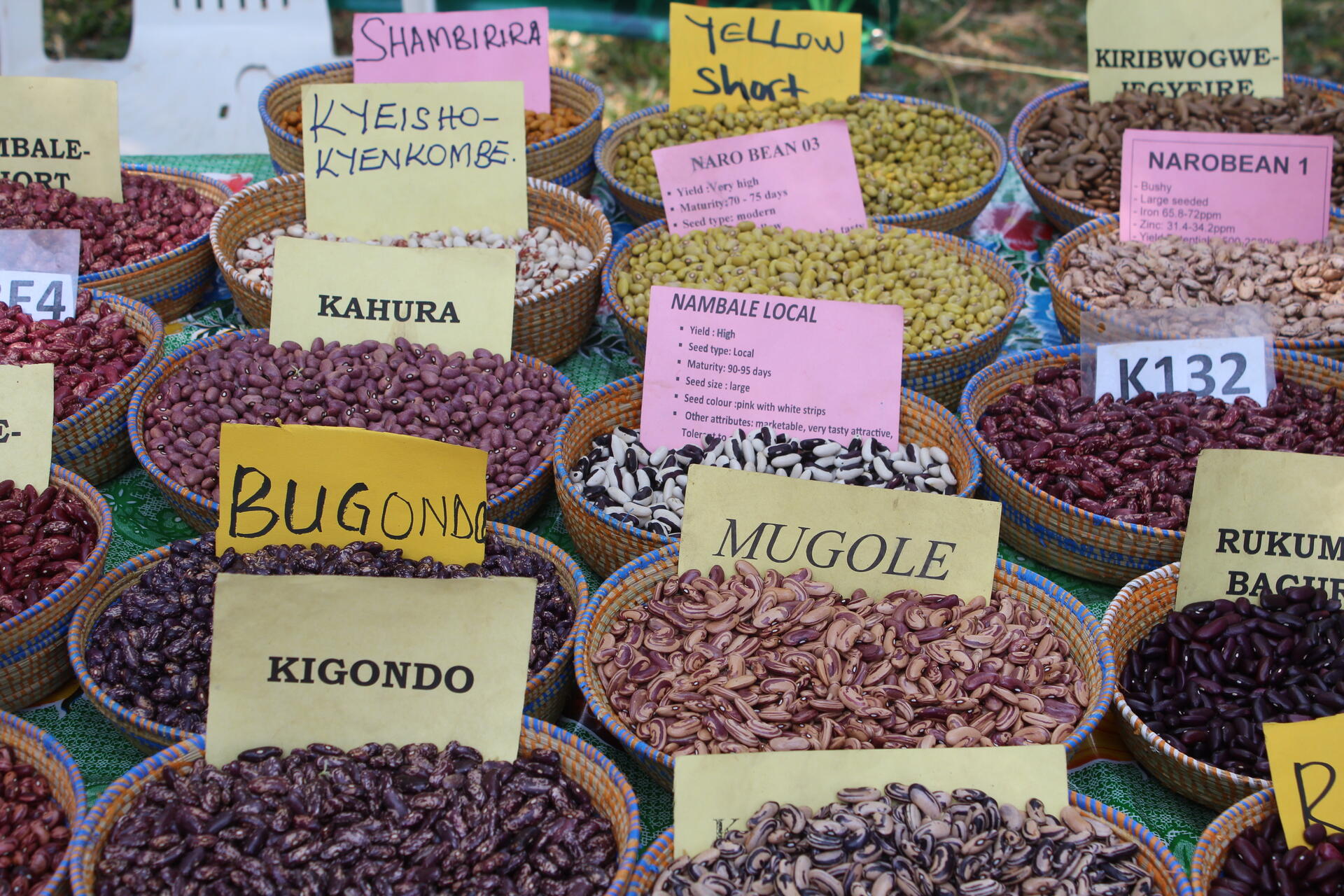
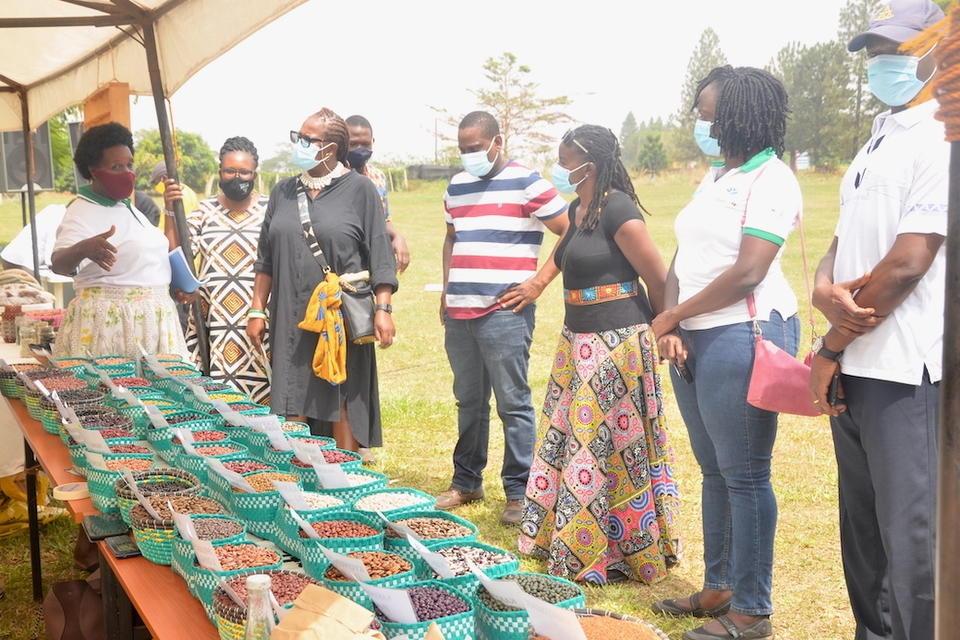
Part of Uganda’s bean diversity on display. Credit: Bioversity International/R. Vernooy
Institutional context
In South Sudan, the Directorate of Agricultural Research (DAR) - Ministry of Agriculture and Food Security (MAFS), is responsible for all agricultural research activities being conducted by the National Agricultural Research Systems (NARS). The DAR’s mandate is to conduct basic and applied research, promote, coordinate agricultural research and advise the government and other stakeholders on matters related to agricultural research for sustainable agricultural development. MAFS collaborates with several international and national organizations on ex situ and in situ conservation of PGRFA and seed sector development, including the EU, FAO, IFAD, Norwegian’s People Aid, and the Ministry of Foreign Affairs of the government of the Netherlands.
The University of Juba, through its College of Natural Resources and Environmental Studies (CNRS), trains human resources to address the country’s developmental needs and the sustainable management of its natural resources, including agrobiodiversity. Among its priority areas are food and seed security, disaster risk management, natural resources management, value chain development, and seed sector development. CNRES coordinates the National Seed Hub, a multi-stakeholder platform, that promotes concertation and coordination of the country’s and sub-region’s seed sector actors. The Seed Hub was developed with the support of the Alliance and WUR. CNRS has developed a national agenda to establish and support community seed banks in the country, of which there are a few at this moment in time.
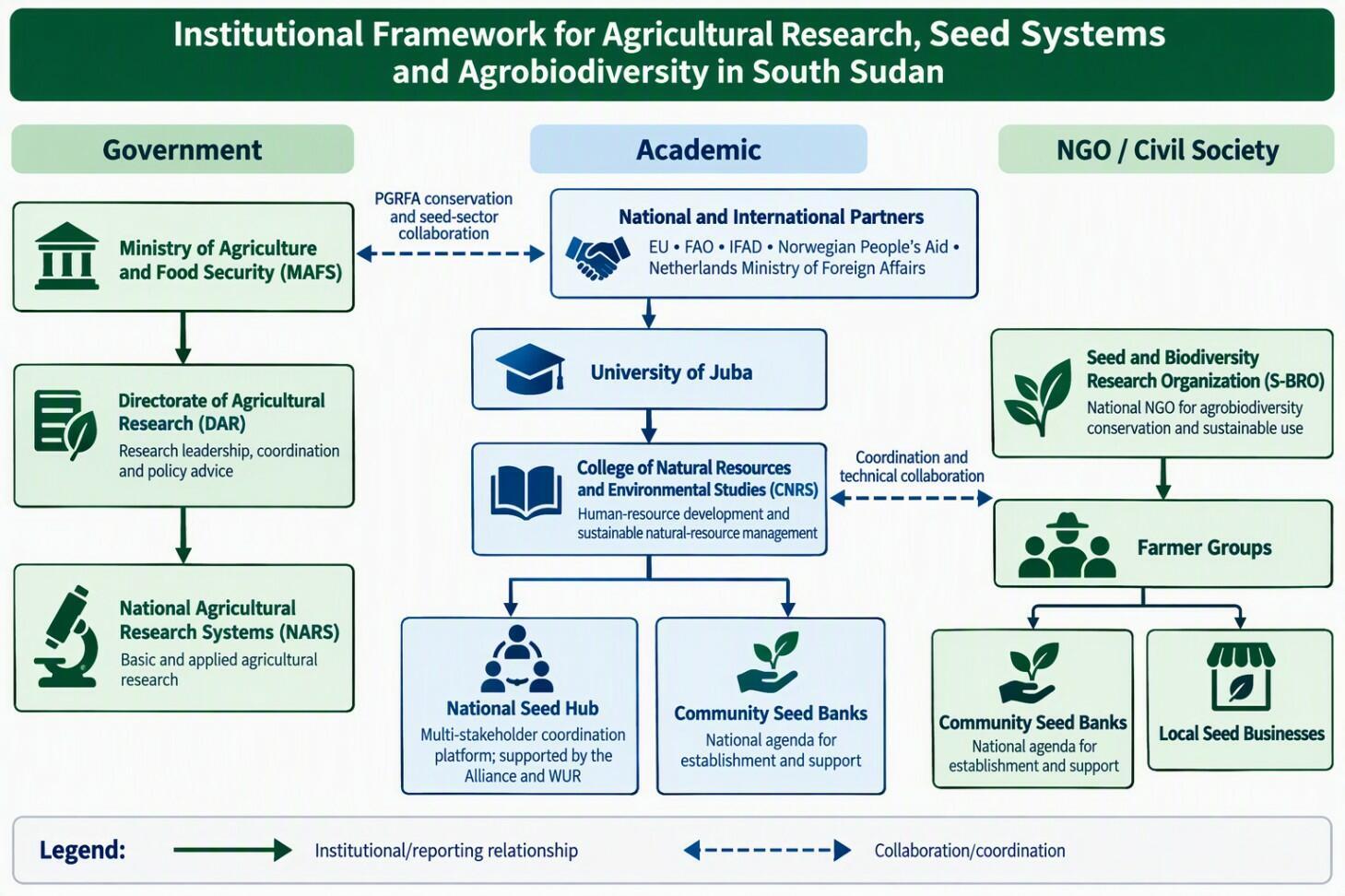
This is the institutional flowchart depicting relationships, Click here to view the chart.
Seed and Biodiversity Research Organization (S-BRO) is a new national NGO of experienced professionals with the mission to conserve and sustainably use agrobiodiversity through the empowerment of farmers groups, such as community seed banks and local seed businesses.
In Uganda, the Plant Genetic Resources Centre is part of the Biodiversity and Biotechnology Program under the National Agricultural Research Laboratories (NARL) of the National Agricultural Research Organization (NARO).
NARO-PGRC also coordinates and supports the National Community Seed Bank Platform (http://www.csb.naro.go.ug/index.php). The first community seed bank in Uganda was established in 2010 in Sheema district by NARO and the Alliance of Bioversity International and CIAT and other stakeholders.
The platform currently connects 30 community seed banks, although many others operate across the country. These community banks conserve diverse local crop varieties, including varieties improved through participatory plant breeding.
The National Seed Certification Agency, under the Ministry of Agriculture, Animal Industry and Fisheries, oversees seed production standards, certification, and quality assurance. Additionally, the Ministry’s Directorate of Crop Resources promotes sustainable, market-oriented crop production; coordinates pest and disease control; and safeguards the quality and safety of plants and plant products. Together, these functions contribute to improved food security and higher household incomes.
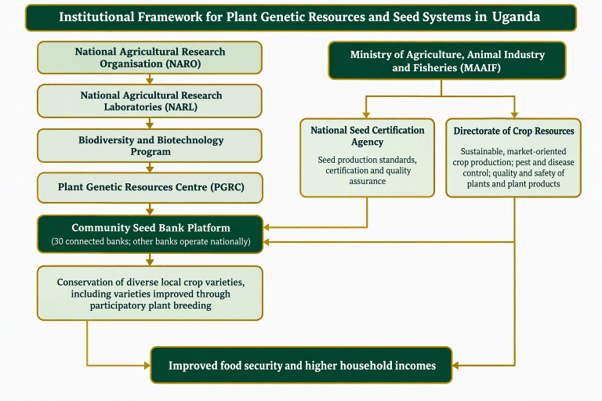
This is the institutional flowchart depicting relationships, Click here to view the chart.
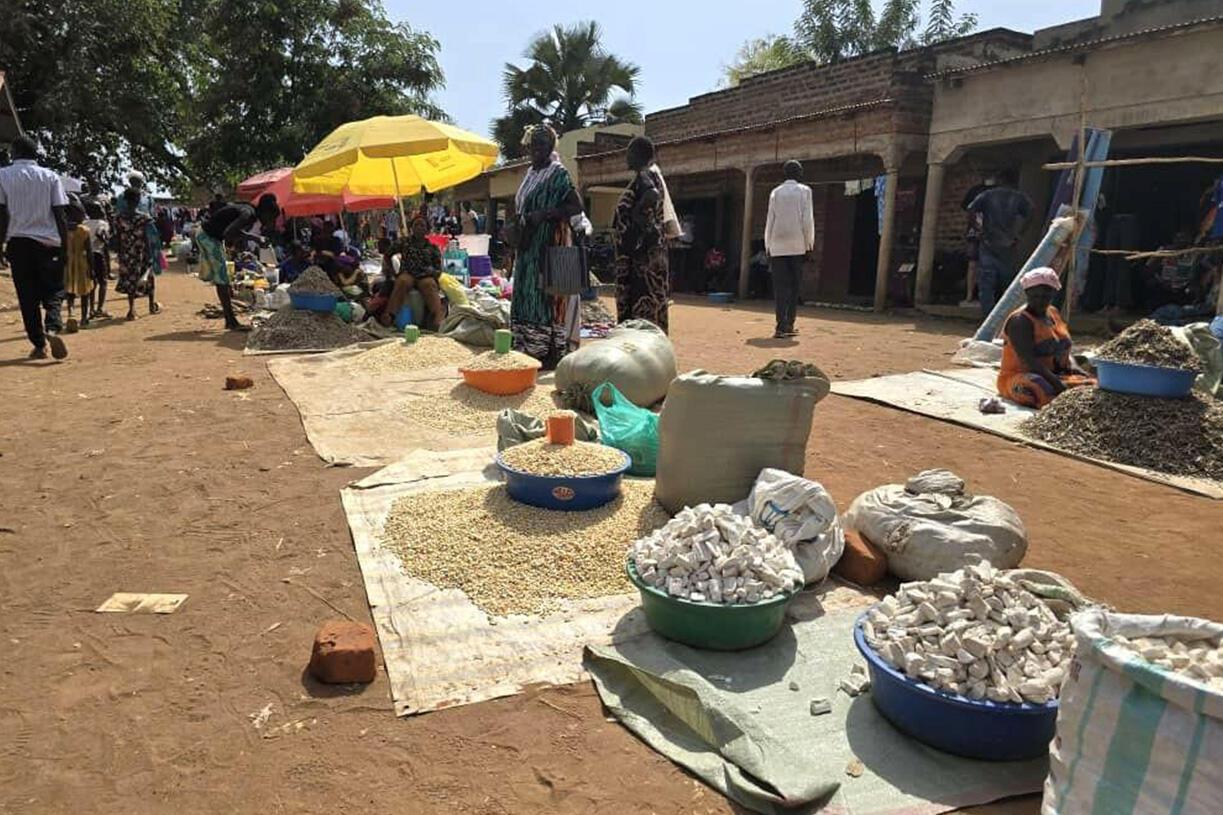
Rural market, South Sudan. Credit: WUR/G-J van Uffelen
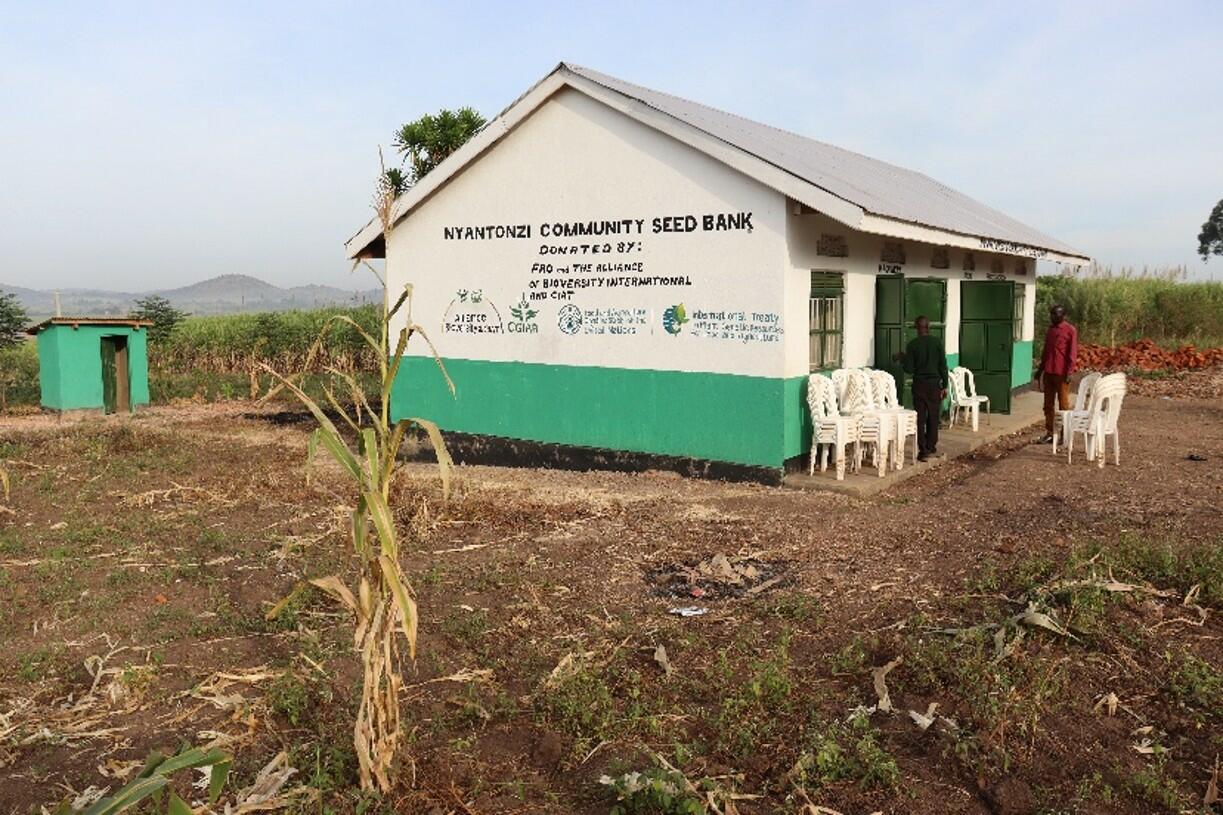
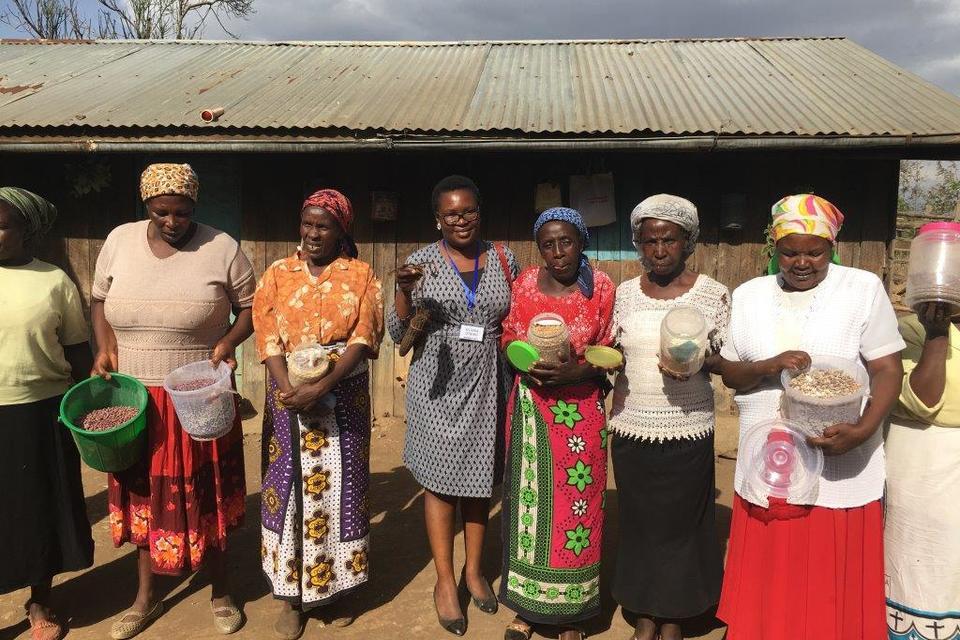
Nyantonzi community seed bank, one of the newest supported by NARO-PGRC, Uganda. Credit: Bioversity International/R.Vernooy
Acknowledgement
We acknowledge the technical guidance and financial support from our implementing partners and the funding agency, the Food and Agricultural Organization of the United Nations (FAO), through the Benefit Sharing Fund of the International Treaty on Plant Genetic Resources for Food and Agriculture.