Blog Colombia drives non-deforestation with technology

A recent workshop held under the MRV Zero Deforestation project trained technicians from various companies on a key digital platform for collecting and standardizing information, with a view to reducing deforestation, improving traceability and opening new markets for products such as cocoa and livestock.
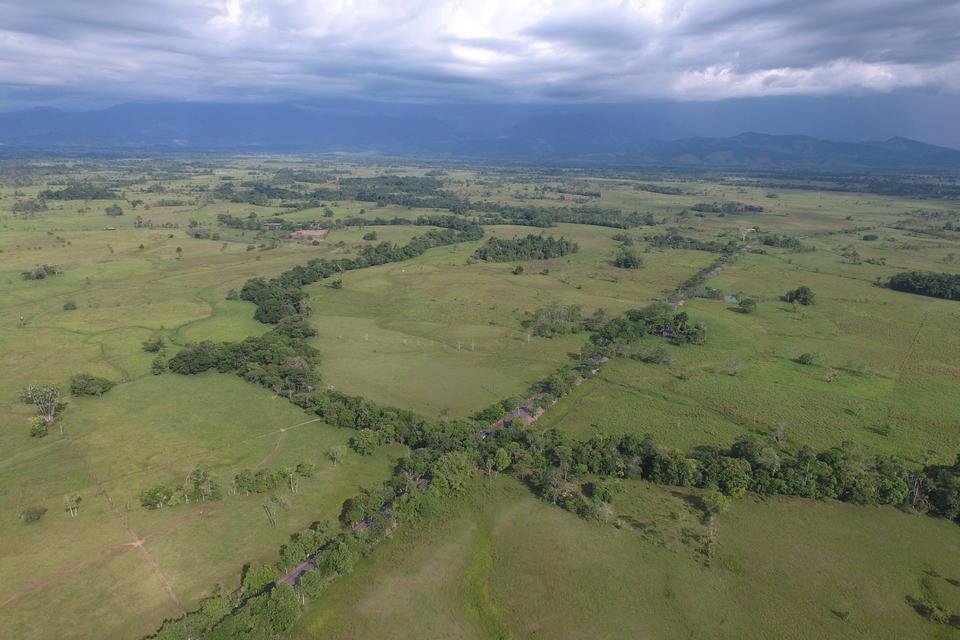
The sustainability of the Colombian agricultural sector is crucial for its future and that of the planet. With the potential to become a global "agricultural pantry," the country faces the challenge of developing its sector sustainably. This implies complying with protocols and standards that allow productive sectors such as cocoa and livestock to reach new national and international markets.
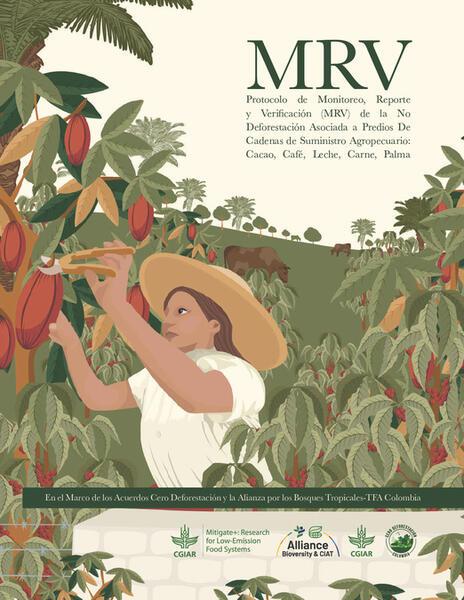
One of the most important aspects of sustainability is reducing deforestation associated with agriculture. For this reason, the Monitoring, Reporting and Verification (MRV) Protocol for No Deforestation on Agricultural Land, recently published by Alliance researchers, is a key milestone in the implementation of sustainable practices and traceability.
To move the protocol from formulation to implementation, the project “Transformando las cadenas de suministro para un futuro sin deforestación: Integración del protocolo MRV en los sectores agroalimentarios de Colombia” was initiated, funded by the UK PACT Colombia Just Rural Transition program. Launched last November, the project involves key partners in the cocoa and livestock value chains (meat, milk, and dual purpose), including Nacional de Chocolates, Okanta Cacao, Colácteos, Carnatural, and the Wayuu Livestock Farmers Federation, and is being implemented across 11 of the country's departments.
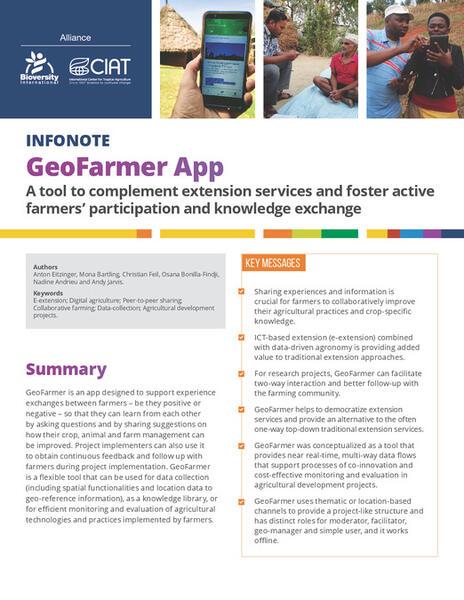
As part of the project's start-up activities, a training workshop was held on March 13 and 14 on the use of the GeoFarmer tool developed by Alliance researchers, which will be used by technicians from the partner organizations to collect information in the field.
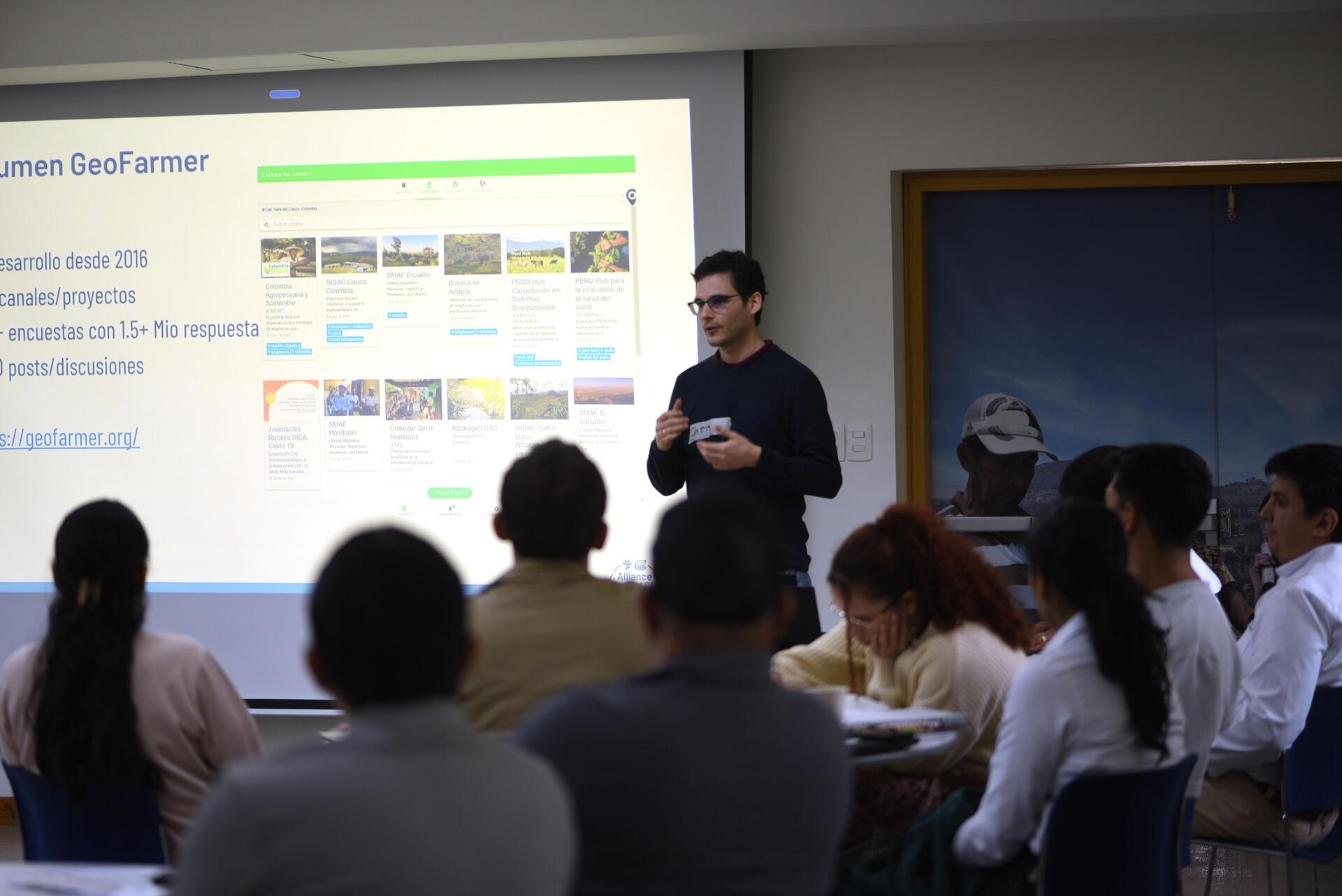
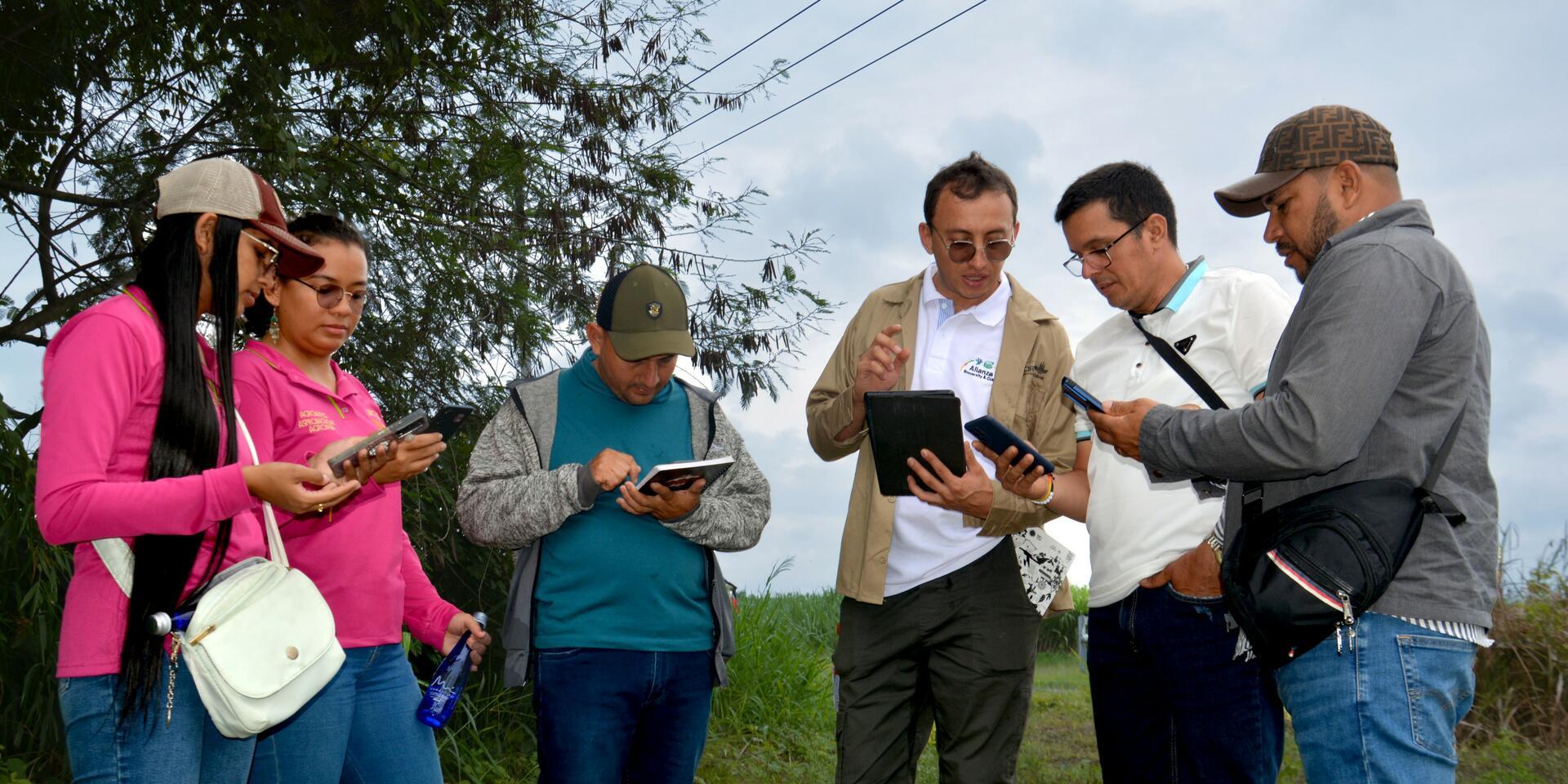
Christian Feil, one of the developers of GeoFarmer, explains how to use the tool on mobile devices. Photo: E. Ramirez/CIAT
This platform, which can be installed on cell phones and tablets, facilitates the collection of information in the field in an efficient and participatory manner, and has a host of functions that are modularly adapted to the project, such as the geospatial separation of productive, conservation and infrastructure areas; it collects socioeconomic information relevant to the project, complementing agricultural extension services and encouraging the participation of producers in the exchange of knowledge.
Technicians from participating organizations of the #MRVCeroDeforestation project were trained in the use of GeoFarmer, a platform designed to facilitate the collection of field information to achieve more sustainable production in different value chains🍫🐄 pic.twitter.com/ELkih1QV2O
- Alliance of Bioversity International and CIAT (@BiovIntCIAT_eng) 14 March 2025
Over two days, technicians from the project partners familiarized themselves with the platform, its purpose and relevance to the project, downloaded the application to their mobile devices, and received training on its configuration and use, focusing on the modules for creating polygons and forms. Finally, they completed practical exercises by filling out forms and collecting data in the field, using experiments on the Alliance campus, such as the silvopastoral trial for livestock and an experimental plot of an agroforestry system for cocoa.
At the end, feedback was conducted with all participants on the experience of using the tool, to identify opportunities for improvement and resolve concerns for effective implementation. Participants expressed that it was an easy way to share information, that it was intuitive and simple to use, as well as highlighting the feature of creating polygons to accurately map relevant areas in farms and production systems.
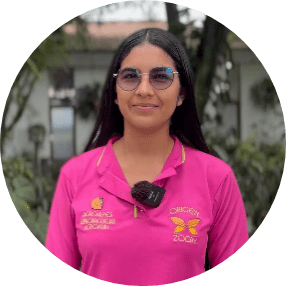
GeoFarmer is a useful tool for generating traceability and, at the same time, tracking sustainable practices to curb deforestation. The tool lets us consolidate information we already have from our social base and, at the same time, characterize new cocoa farms. Dayana Parra, Operations Leader of Okanta Cacao.
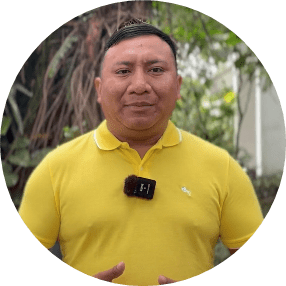
GeoFarmer is a very important tool because it speaks a lot about social inclusion: that we have to link women and children, that we have no distinction of color, and I know that it will help us a lot to develop and take this project forward, which is a blessing that has come to the territory. Luis Arpuchana, Representative of Federación de Ganaderos Wayuu
As mentioned by Sandra Durango, project leader: "With the implementation of the MRV Protocol we contribute to the conservation of our natural resources, the conservation of biodiversity and build together a sustainable future for all. The protocol also helps us to implement sustainable practices that strengthen the existing traceability mechanisms in our country so that we can open up to new markets both nationally and internationally."
These first steps are fundamental to establishing a standard that guarantees sustainability, traceability, and transparency in agricultural supply chains. The integration of gender and social inclusion considerations ensures a comprehensive and accessible approach for all stakeholders, promoting practices that contribute to the reduction of deforestation and the sustainable development of Colombian agriculture.
Related Content