Blog Collaborative Learning and Joint Creation Workshop on Agroecological Transitions in Ethiopia

The PSii project plays a crucial role in co-creating the essential building blocks for agroecological transitions. We are engaged in exploring new perspectives, sustainable business models, and context-specific approaches, and share knowledge on incentives and investments supporting agroecological strategies. We work in a collaborative way across value chains to address challenges and envision a sustainable future for Ethiopia's food and agricultural systems transformation with a focus on wheat production, exemplified by the co-creation and vision workshop held in April 2024 in Addis Ababa, Ethiopia.
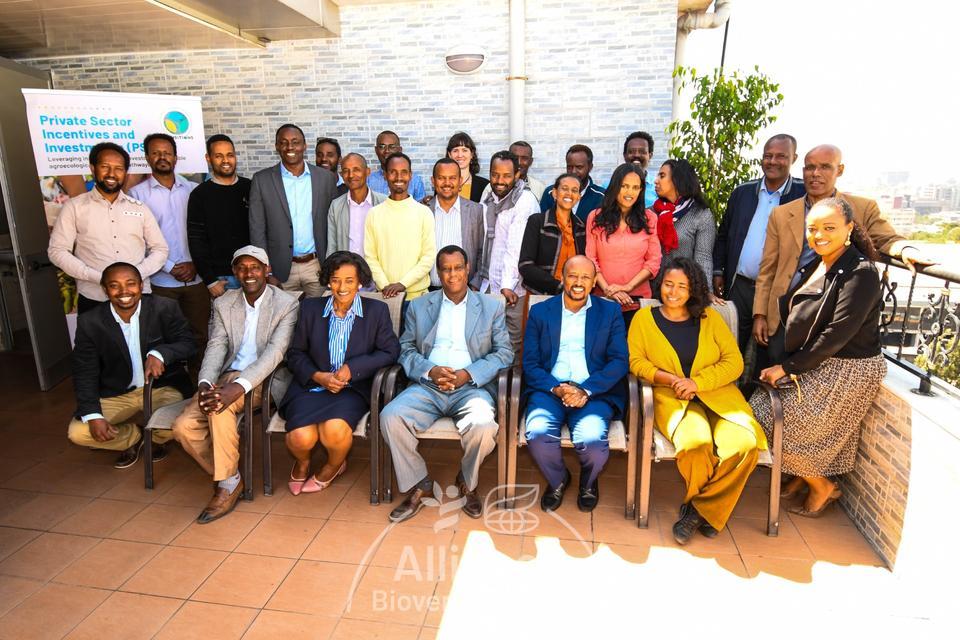
In April 2024, the Private Sector Incentives, and Investments (PSii) project of the Agroecological Transitions program convened a two-day collaborative learning and joint creation workshop at the Swiss Inn Nexus Hotel in Addis Ababa, Ethiopia. Building upon Ethiopia's Agroecological policy framework, 2030 Vision, the National Food System Transformation pathway and related policies, this workshop brought together a diversity of actors with the specific objectives of co-creating key building blocks and shared knowledge on incentives and investments that can support agroecological strategies as well as facilitating engagement and cross-pollination between public and private sector actors for agroecological transitions.
The workshop brought together a diverse group of stakeholders, including government bodies, universities, regional organizations, and a consortium of NGOs working on the agroecological transition at the production level. These participants engaged in discussions and debates about the different barriers and successes in the Ethiopian food and agricultural system, particularly the wheat-based production system.
Some of the key questions that were raised and discussed during the workshop include:
- What new perspectives or approaches are being introduced that have not been discussed before?
- Should the focus remain on smallholder agriculture, or is a transition to a different model necessary? If a transition is needed, how can it be achieved in an environmentally and holistically sustainable manner?
- What kind of evidence or data have been generated so far to support the proposed approaches?
- What metrics have been used to quantify the effectiveness of wheat cluster farming as an agroecological practice?
- It is crucial to understand the realities on the ground and how the transition can be implemented by examining the available resources and options that can be easily customized for efficient adoption.
- Agroecology is context-specific, and there is no one-size-fits-all solution. Instead, recommendations should be based on the specific context and conditions.
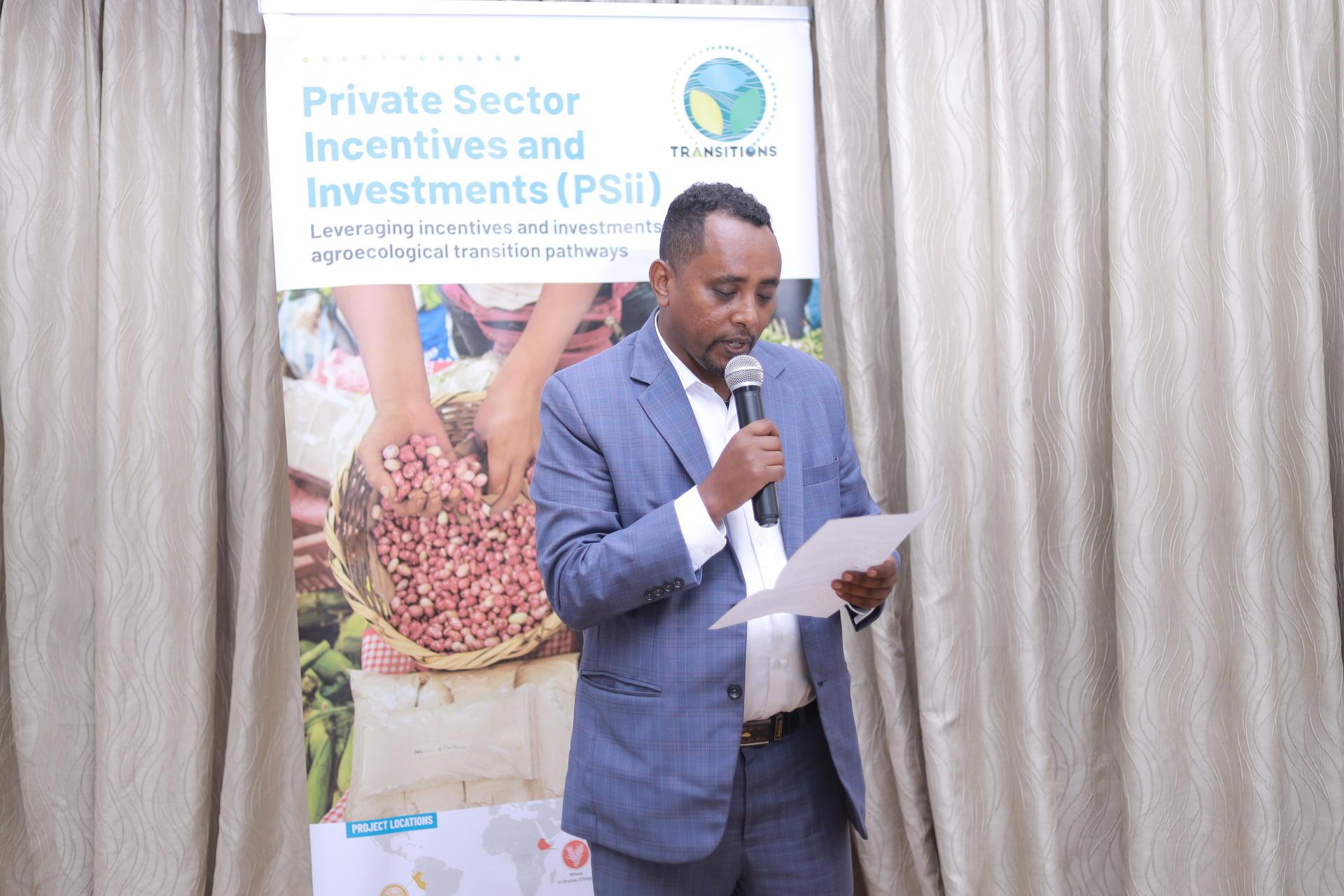
Dr. Dessalegn Molla country representative, Alliance of Bioversity International and CIAT Ethiopia. Photo Credit: Alliance Ethiopia Team
During his welcoming remark, Dr. Dessalegn Molla - the Alliance's Country Representative for Ethiopia - highlighted that “this co-creation and co-learning workshop is much needed to collectively transform the agricultural and food production systems in Ethiopia. By working together across the value chain, we can unlock the potential for a truly sustainable future for our farmers and our nation.” Furthermore, "as the Alliance, we believe that 'value chain transformation' is key to driving sustainable change, where retailers, food processors, and other actors in the agricultural supply chain must be encouraged or required to source from sustainable producers. Certification schemes, Participatory Guarantee Systems (PGS) and transparency initiatives can help drive this critical shift; this shows the importance of the contribution of the PSii project in the wheat value chain”
The workshop provided a platform for the diverse stakeholders to engage in constructive dialogues, share visions and knowledge, and explore strategies to address the challenges and opportunities in the Ethiopian food and agricultural system, particularly in the context of the wheat-based production system. The discussions centered around the need to look at the landscape as a unit to make suggestions for agroecological practices, as the whole production system needs to focus on the different available value chains and not just on a specific crop. Particular attention was paid to the sensitive issue of wheat farming, as the government's focus on monoculture cultivation of wheat conflicts with the need to include a diversity of crops for food security and environmental sustainability.
The scope of this co-creation activity with different institutions and backgrounds was to build a locally owned vision for sustainable food and agricultural systems in Ethiopia and come up with innovative solutions. As highlighted by Dr. Tsedeke Abate (Founder of the 'Homegrown Vision' NGO): “Although various terminologies are being used, whether we say it is agroecological practice, regenerative agriculture or climate-smart agriculture, the overarching goal is to achieve sustainability, improve livelihoods and food security. The added value of focusing on the private sector incentives is that the fragmented involvement of the private sector in agroecological transitions has been a challenge for Ethiopia so far.” He also said that "farmer incentives are equally important. Direct financial incentives like payments for ecosystem services can motivate farmers to transition to more sustainable practices. These incentives should be tied to outcomes like reduced emissions, improved soil health and increased biodiversity”.
The workshop benefited greatly from the introduction of a visioning and back-casting approach, which proved to be a valuable cross-sectoral tool. This approach enabled participants to consider various factors such as political, economic, social, environmental and food security when contributing to a governmental-led campaign of wheat cluster farming. The Agroecology Transition program aims to support such campaigns with the added value of integrating environmentally sound practices that maintain soil health, minimize greenhouse gas emissions, and promote the diversification of crops at the landscape level.
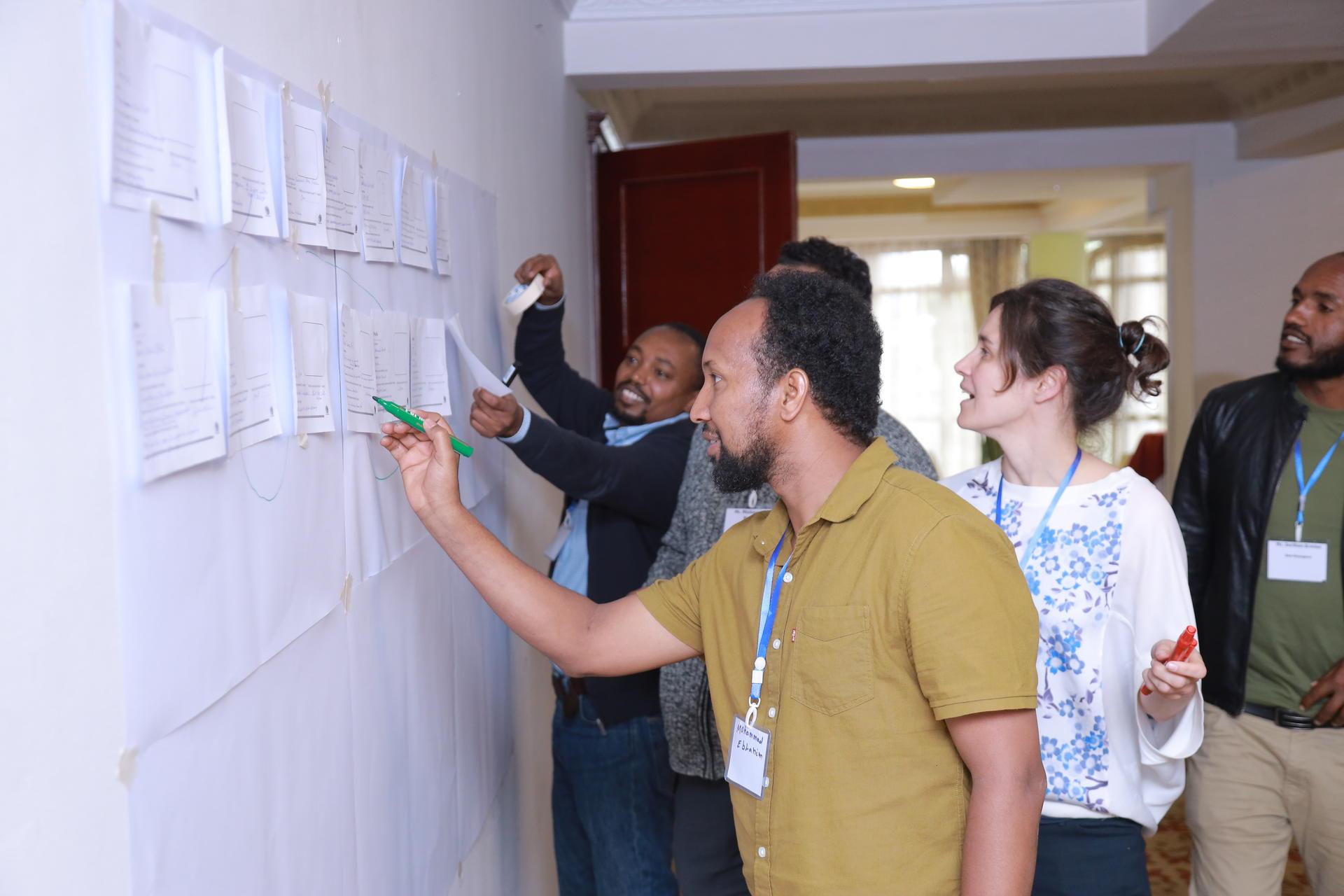
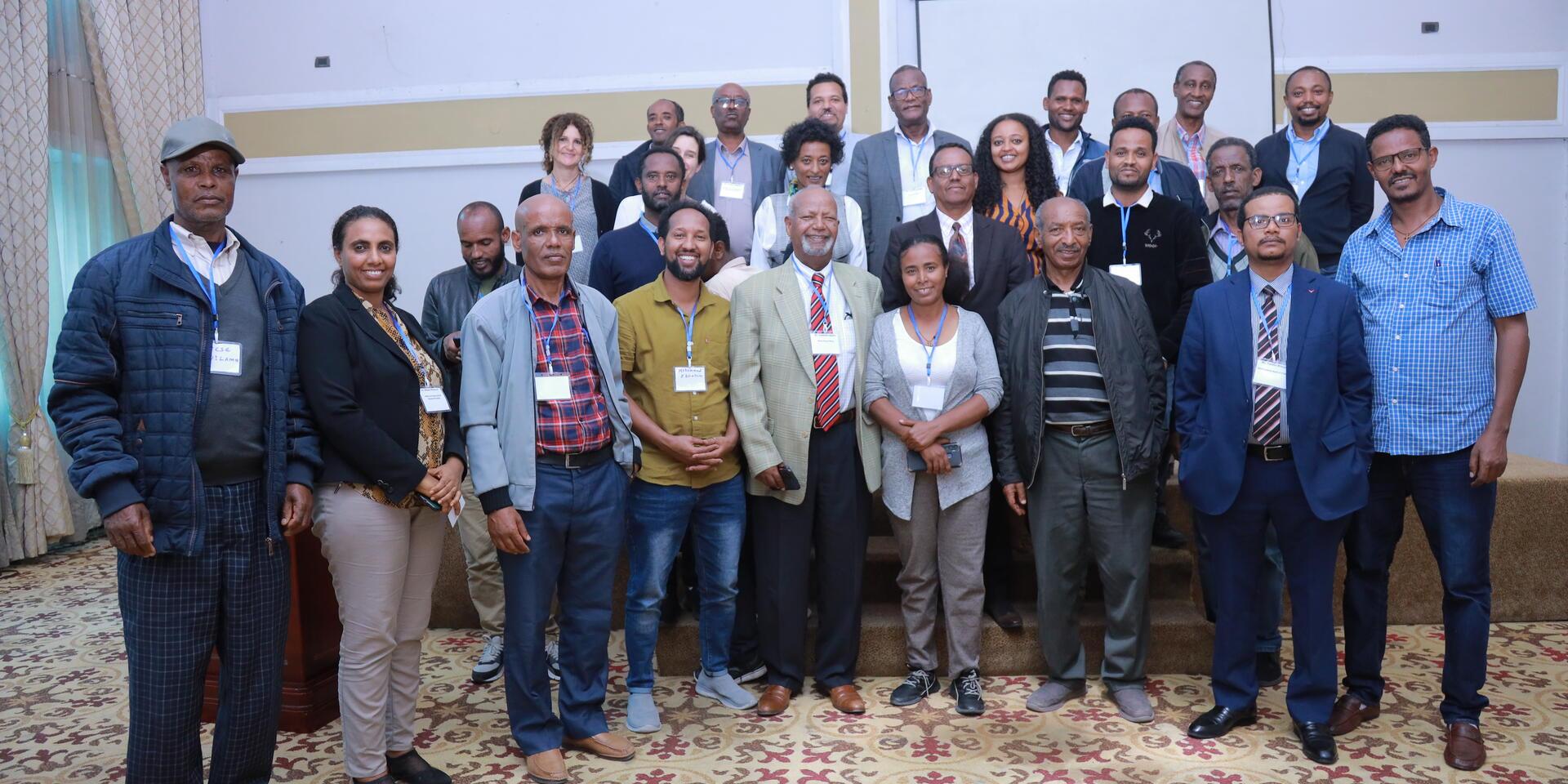
Participants engaged in networking and interactive exercises. Photo Credit: Alliance Ethiopia Team
The discussions also highlighted the urgent need for context-specific agroecological approaches to develop an integrated adaptation strategy and foster open dialogue among essential stakeholders. Key questions were raised and debated, including the need to define a clear transition pathway, the evidence generated so far and the appropriate metrics to quantify the impact of interventions.
The lively discussions and the different learnings, reflections, and breakout activities employed during the workshop have generated a consensus among participants for the different public and private sector actors to engage and flourish in this sector. This includes institutional strengthening in wheat-certified seeds, the provision of seed varieties resilient to changing climate conditions, the provision of seeds for crop rotation and increased on-farm diversity, continued legal support in motivating holistic approaches to maximize productivity while minimizing resource inputs through integrated agronomy bundles, and enhancement of water efficiency at the farm level.
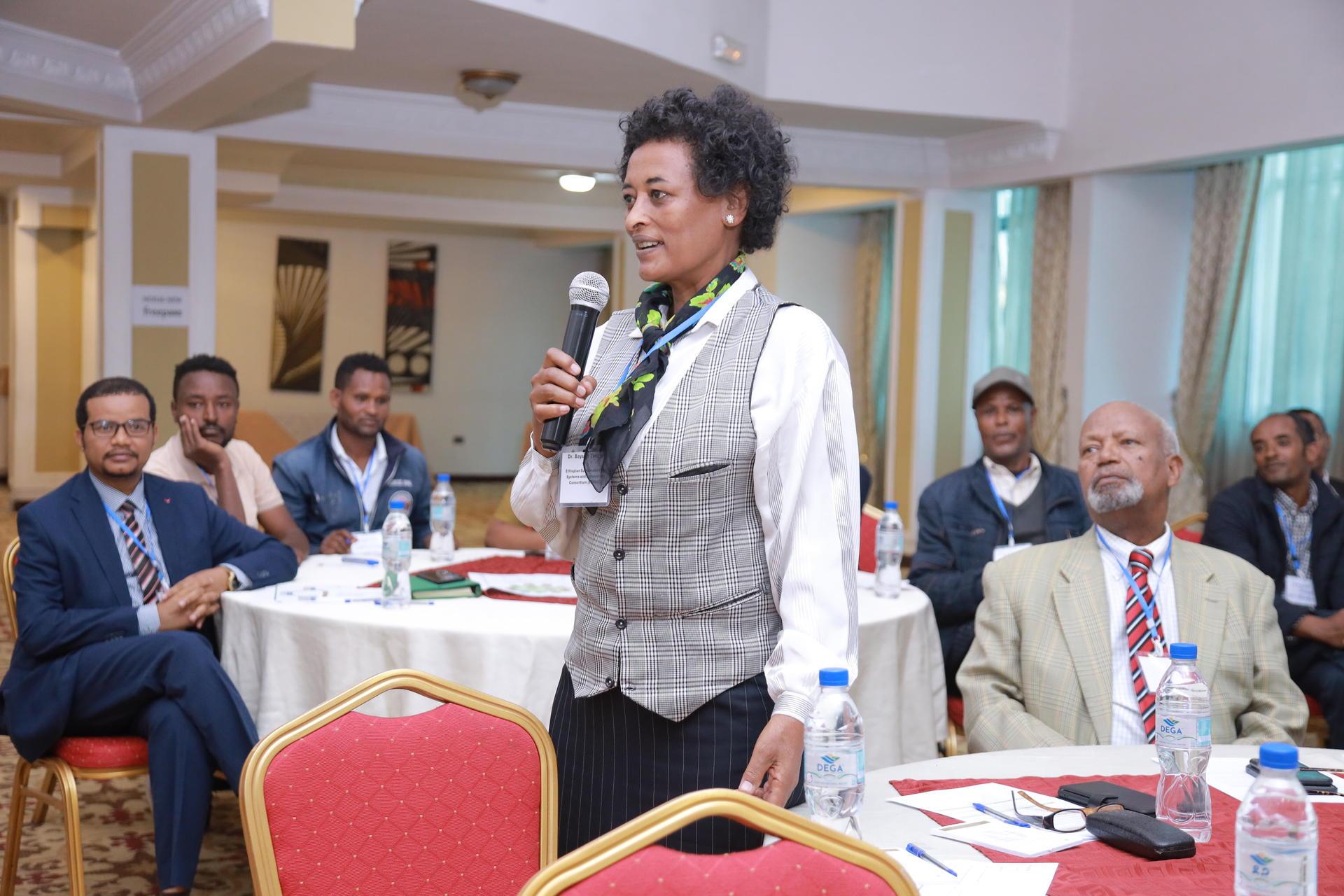
Dr. Bayush Tsegaye, the Agroecology Consortium Photo Credit: Alliance Ethiopia Team
As emphasized by Dr. Bayush Tsegaye - Manager of Ethiopian Sustainable Food Systems and Agroecology Consortium (ESFSAC) - collaboration with national partners such as the ESFSAC is a great priority for the PSii project to support ongoing efforts to develop the Ethiopian agroecological policy framework.
The meeting showcased the power of collaboration in driving agricultural resilience. By strategically prioritizing adaptation measures and fostering stakeholder engagement, it has set the stage for concrete actions that promise to benefit Ethiopian agriculture, promote sustainable practices, and address the challenges a changing climate poses. This collective effort is a strategic step towards securing a more resilient agricultural future for Ethiopia.
See Also