Blog CGIAR outlines strategic opportunities to G20 ministers for sustainable livestock
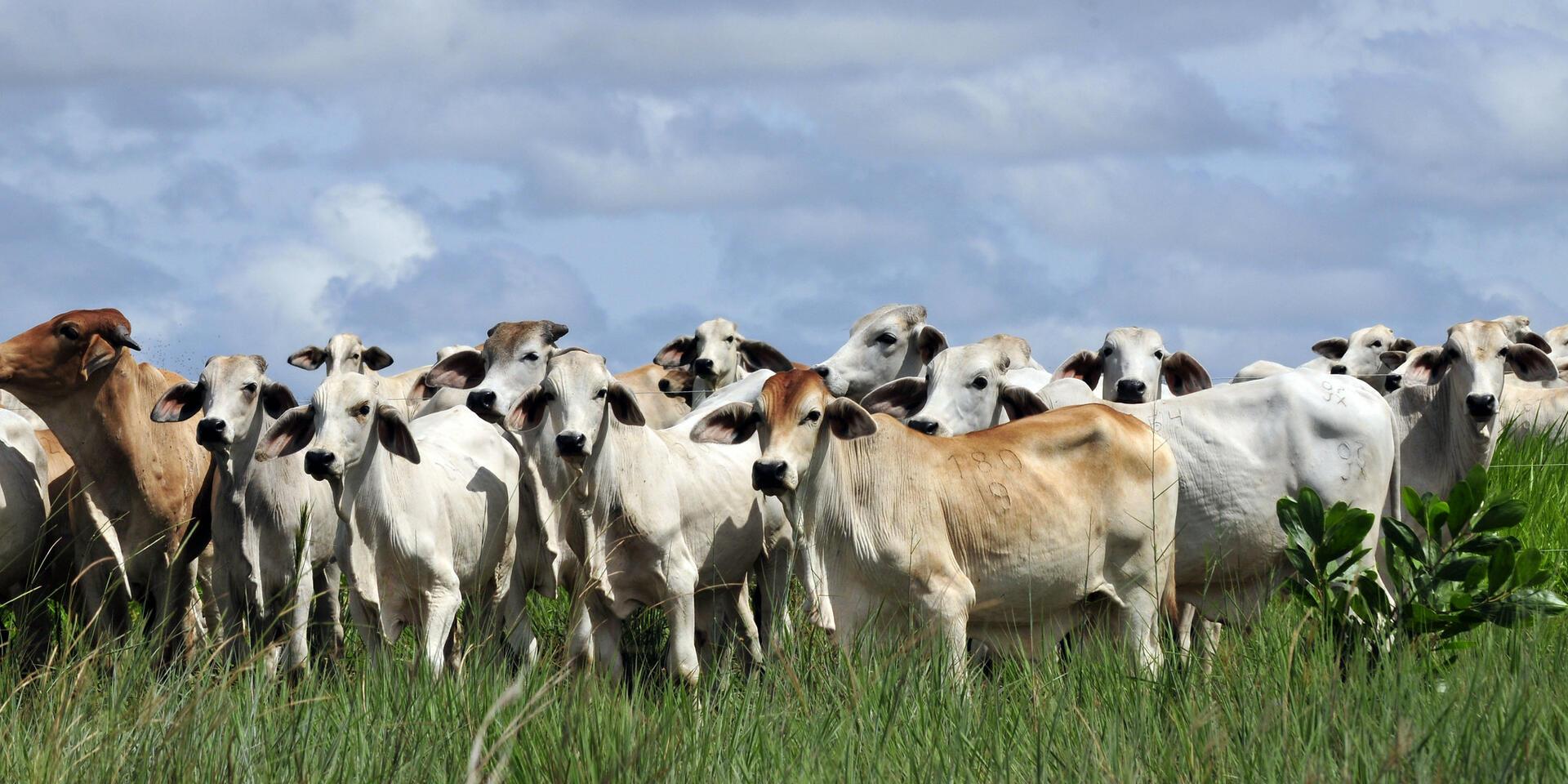

Cape Town, South Africa, Sept. 18th, 2025 – Investment in improved livestock practices can deliver a dual benefit for farmers and the environment, as demonstrated by CGIAR researchers to agriculture ministers at G20. Evidence shows that sustainable livestock interventions have the potential to more than double beef production in sub-Saharan Africa to meet growing demand while also cutting related greenhouse gas emissions by up to 60%.
The compelling case for transformative livestock development was presented by IFPRI Director General and CGIAR Global Leadership Team member Dr Johan Swinnen, drawing on the finding of the policy brief developed by the Alliance of Bioversity International and CIAT, the International Food Policy Research Institute, and the International Livestock Research Institute.
The presentation highlighted how Latin America's sustainable intensification strategies could reduce livestock emissions by 50% while producing 40% more beef by 2050—proving that climate action and food security can go hand in hand.
"Livestock systems are central to food security and economic growth across the Global South, contributing up to 40% of agricultural GDP across Africa," said Dr Ciniro Costa, lead author of the policy brief on ‘Harnessing livestock for climate action and food security: A strategic opportunity for Africa and the Global South.’ Yet, “despite livestock's significant mitigation potential, only 1% of climate finance reaches the sector that generates 12% of global greenhouse gas emissions”, the brief notes.
Supporting South Africa's G20 leadership
The presentation formed part of CGIAR's ongoing support for South Africa's G20 Presidency Agriculture Working Group and the Food Security Taskforce, providing evidence-based policy feedback on key priorities including fostering innovation and technology in agriculture and agro-processing. CGIAR has contributed to the development of ministerial communiques and organized side events throughout the year.
Complementing CGIAR's global perspective, South Africa also presented their national experience with climate-smart livestock practices, showcasing how indigenous breeds like the Afrikaner and Nguni cattle demonstrate remarkable resilience to climate variations while maintaining productivity under harsh conditions.
Five priority actions for increased investment in sustainable livestock solutions
The CGIAR brief recommends five priority actions to tap the potential for massive co-benefits in terms of productivity and income growth, climate resilience and emission-reduction in the livestock sector:
- positioning livestock centrally in global climate and food security dialogues, recognizing its dual role in both mitigation and adaptation strategies
- mobilizing accessible climate finance specifically targeted at livestock solutions through instruments like the green climate fund and emerging carbon markets, moving beyond the current 1% allocation to match the sector's mitigation potential
- investing in robust monitoring systems with system-specific emission factors rather than generic estimates that overlook crucial factors like feed quality and grazing regimes
- strengthening South-South partnerships to enable countries to adapt and scale innovations in low-emission livestock practices through shared science and policy experience
- repurposing agricultural support toward emission-reducing research and ecosystem service payments that incentivize sustainable livestock practices.
Evidence-based interventions
The policy brief outlines three high-impact interventions with strong evidence for implementation: improved grazing and feeding practices to enhance grassland quality and increase soil carbon sequestration; comprehensive animal health and disease prevention systems; and optimized market systems that maximize both animal productivity and farmer income.
"These mitigation co-benefits are feasible using well-tested practices," the brief emphasized, highlighting improved tropical forages, strategic grazing management, and integrated market systems as proven pathways forward.
Moreover, the evidence indicates that strategic investments and institutional support can unlock substantial co-benefits. Investment in Global South countries can offer opportunities to develop climate-resilient livestock systems that serve both environmental and development goals.
The work was conducted as part of projects funded by the Bezos Earth Fund, Gates Foundation, Global Methane Hub, and CGIAR Science Programs on Climate Action and Sustainable Animal and Aquatic Foods.