Blog Beans in the classroom: Teachers fuel nutrition and empowerment in eastern DRC
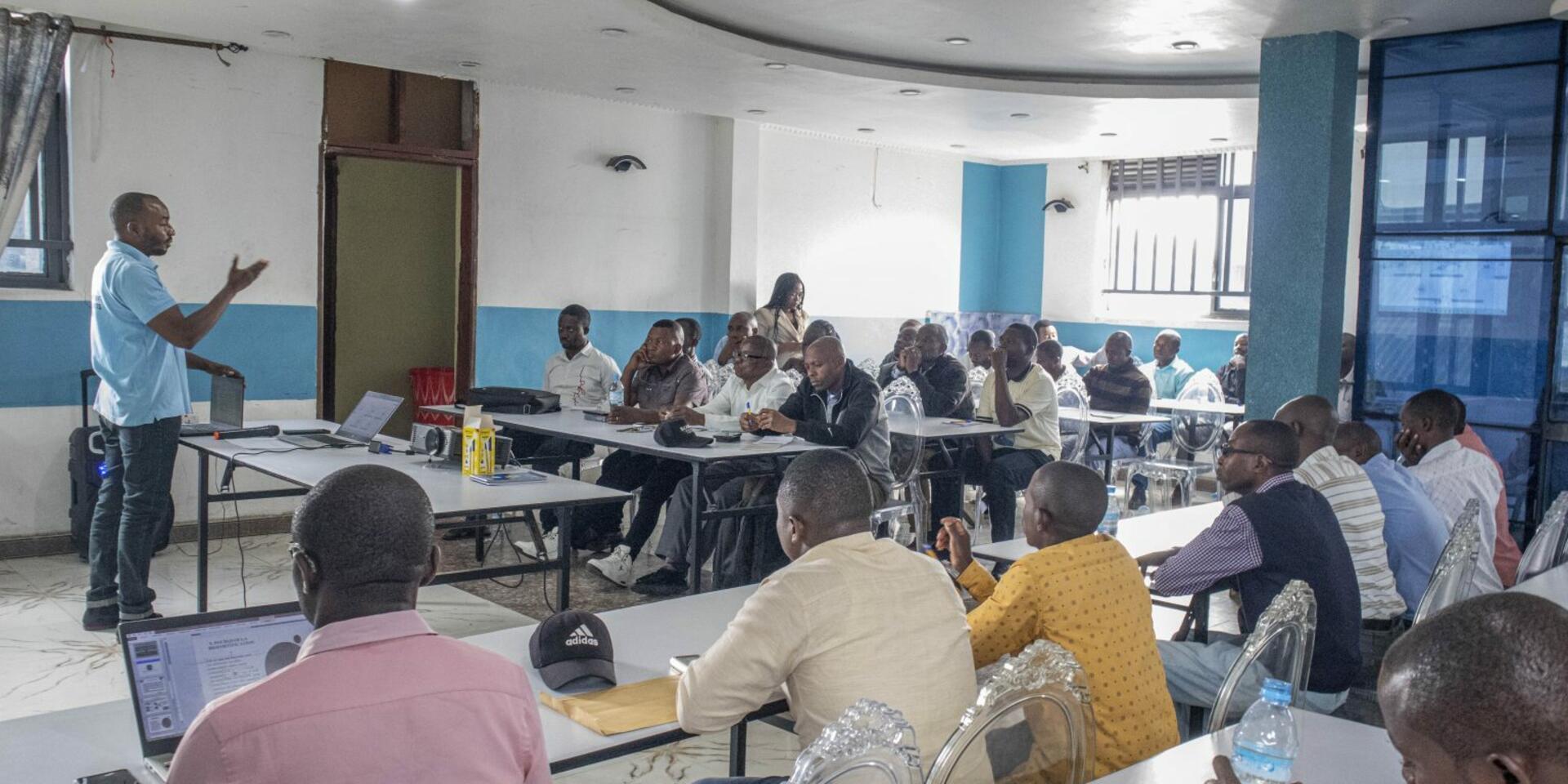

Teachers in eastern DRC are being trained to use beans as tools for better nutrition, resilience, and women’s empowerment, bringing nutrition education, demo plots, and community change to schools through the B4WE project.
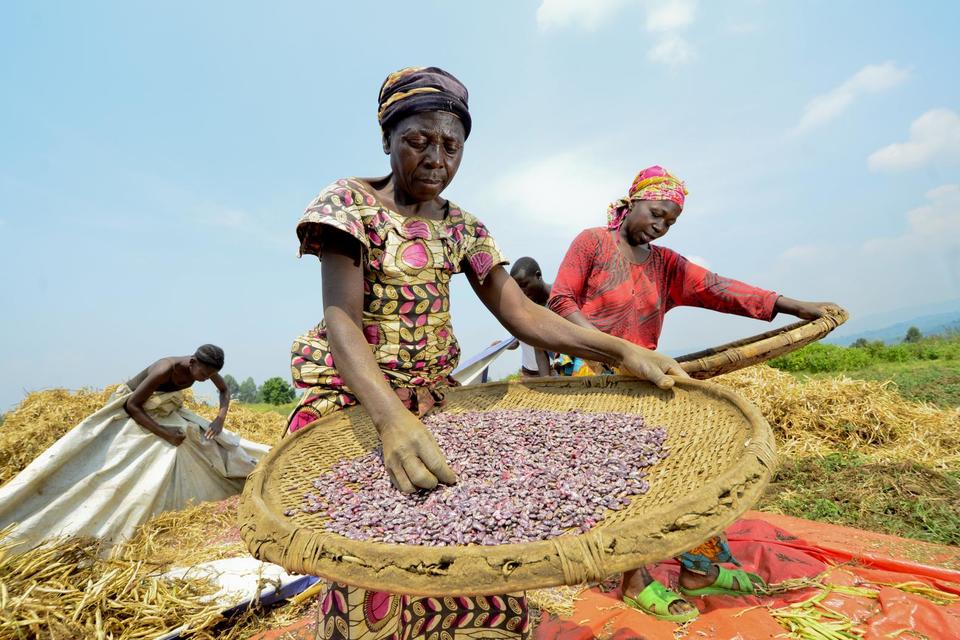
The skies of eastern Democratic Republic of Congo (DRC) have witnessed decades of conflict and hardship that have taken a heavy toll, but amidst such struggles, a special revolution is unfolding, led by schoolteachers. In early September, classrooms in North and South Kivu traded their usual lessons for an extraordinary curriculum centered on one of the region’s most vital crops: beans. From Bukavu to Goma, educators and school leaders are embracing the humble bean not just as food, but as a powerful tool for improving nutrition, fostering resilience, and empowering women in their communities.
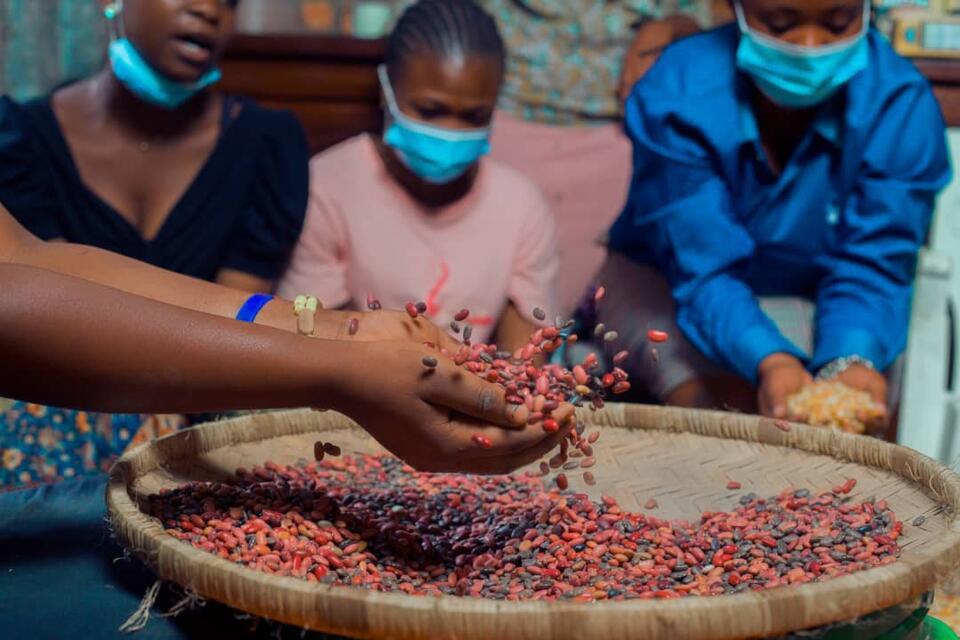
Between September 5 and 6, 2025, the Alliance of Bioversity International and CIAT through the Pan-Africa Bean Research Alliance (PABRA), trained 50 teachers - designated as Trainers of Trainers - from 20 schools in South Kivu in areas such as Kabare, Walungu, Kalehe, and Idjwi and 30 schools in North Kivu, specifically in Rutshuru, Nyiragongo, and Masisi. This initiative is part of the Beans for Women Empowerment (B4WE) Project, funded by Global Affairs Canada (GAC), which targets malnutrition, women’s leadership, and economic growth through the promotion of beans.
Beans as catalyst for change
In a region where poverty and food insecurity are daily realities, beans offer more than sustenance. Rich in protein, iron, and zinc, they are a frontline defense against malnutrition and a doorway to economic empowerment, especially for women.
“Teachers are powerful conduits for knowledge. When equipped with the right tools, they become catalysts for community transformation,” said Roger Ndiruhirwe of National Nutrition Programme (PRONANUT), who led the South Kivu session.
Napoléon Kajunju, a Nutrition Researcher at the Alliance, highlighted the broader vision:
“Our goal is to promote widespread consumption of protein- and mineral-rich beans through a social and behavioral change communication approach. These teachers will carry this knowledge to thousands of students and their families.”
The same message echoed in North Kivu, where Théophile Sunzu, a nutritionist at PRONANUT, emphasized the importance of biofortified beans in combating hidden hunger.
“We revisited nutrition fundamentals and biofortification techniques to empower school leaders to sustain the culture of beans in their communities.”
The team
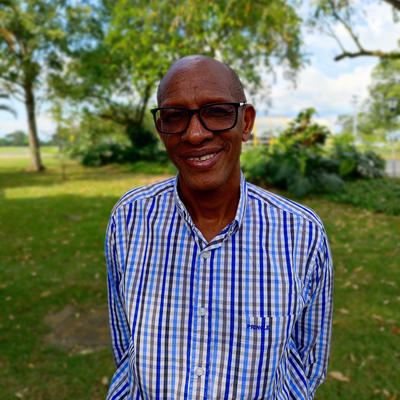
Jean Claude Rubyogo
Leader, Global Bean Program, and Director, Pan Africa Bean Research Alliance (PABRA)
Bola Amoke Awotide
Research Team Leader, Country Representative for the Democratic Republic of the Congo