Research Articles CGIAR Accelerate for Impact Platform launches new report on Morocco’s agri-, food- and climate-tech ecosystems

The CGIAR Accelerate for Impact Platform (A4IP) is pleased to present The State of the Agri-, Food-, and Climate-Tech Innovation Ecosystem in Morocco, 2025—an in-depth look at the country’s growing innovation landscape and its potential to address pressing agricultural challenges.
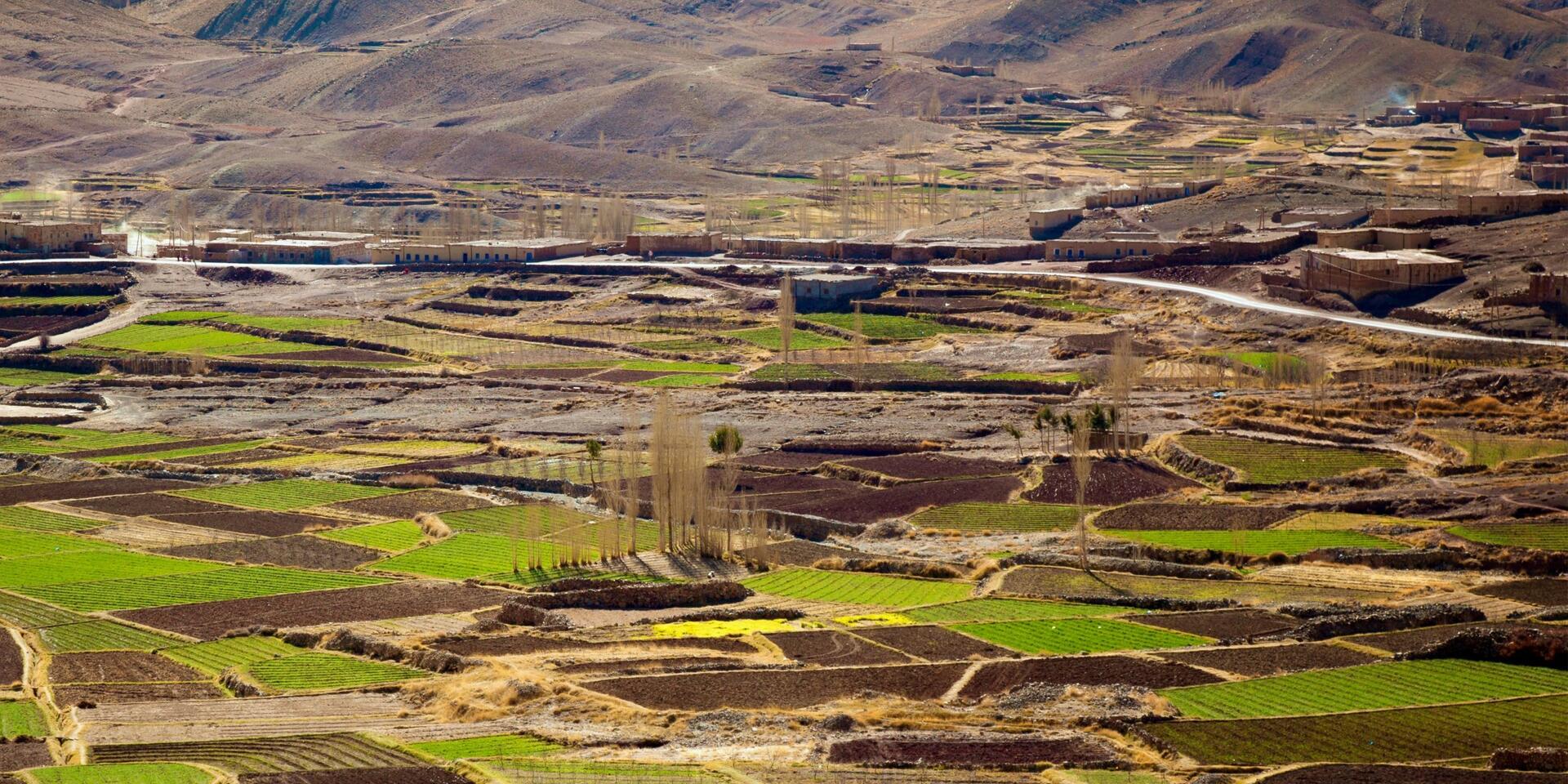
Over the past two decades, Morocco’s agricultural sector has undergone a significant transformation, characterized by the expansion of irrigated land, increased domestic and foreign investment, and significant growth in agricultural production and exports. Today, agriculture remains a substantial contributor to Morocco’s economy and rural livelihoods. However, the sector is increasingly vulnerable to the impacts of climate change, including reduced water availability, soil salinization, and advancing desertification. Additional challenges stem from the need to modernize irrigation systems, farming practices and equipment—while ensuring the inclusion of rural populations and smallholder farmers, both socially and financially.
As the report highlights, agri-, food-, and climate-tech innovations will be pivotal in solving many of these challenges in the years ahead. In this context, the past decade has seen the emergence of a dynamic agrifood-tech ecosystem—now home to nearly 40 agrifood-tech startups and a growing network of public and private stakeholders, including public agencies, universities and research institutes, incubators and accelerators, venture capital and private equity firms, as well as corporates and industry associations.
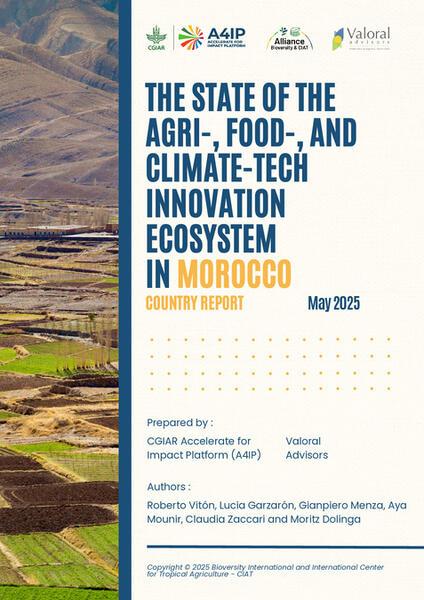
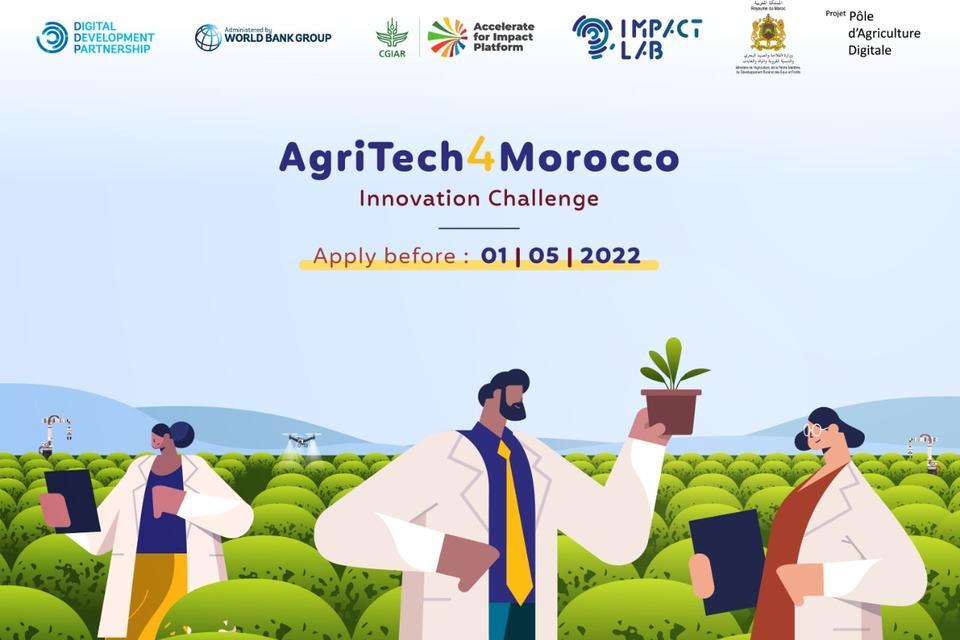
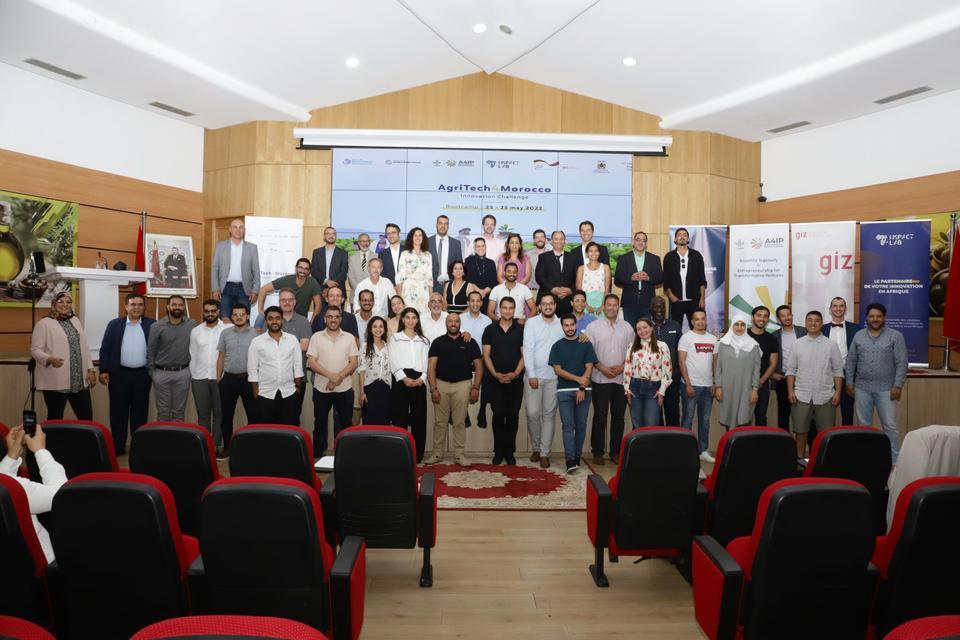
Authored by A4IP, in collaboration with Valoral Advisors, the report provides a comprehensive overview of Morocco’s agrifood-tech innovation ecosystem identifying its key stakeholders, main challenges, and opportunities for impactful innovations. Drawing on insights from the 2022 AgriTech4Morocco Innovation Challenge and interviews with ecosystem stakeholders, it outlines practical recommendations for further strengthening the ecosystem’s capacity to develop, adapt, and scale relevant agrifood-tech solutions, while supporting farmers to adopt new technologies into their practices:
- Sustain the shift towards a more market-oriented economy | Morocco continues to benefit from economic reforms that promote local innovation. Simplifying legal processes for startups and creating financing mechanisms tailored to their needs will help unlock entrepreneurship potential in agri-, food-, and climate-tech.
- Increase engagement across stakeholders, with entrepreneurs playing a central role | Despite recent progress, Morocco’s innovation ecosystem needs more support for entrepreneurs. Access to centers of excellence, increased collaboration between public and private stakeholders, and the identification of local champions can inspire talent and support the development and scaling of impactful solutions.
- Focus on key priority innovations | The report identifies technologies such as precision irrigation, mechanization, digital tools, improved inputs, fintech, and supply chain solutions as high-impact areas to address the sector’s challenges and support smallholder farmers.
- Attract funding pools aimed at fostering sustainable, climate-smart agriculture | To unlock Morocco’s innovation potential, more targeted investment is needed. Building a compelling, climate-aligned investment case for Morocco’s agrifood-tech ecosystem can help mobilize capital from both local and international sources.
- Educate farmers on novel Agri-Food-Tech innovations | Farmer-focused training and awareness programs—especially for women and youth—are critical for scaling innovations and enabling inclusive, tech-driven transformation in rural areas.
We hope this report serves as a valuable resource for policymakers and ecosystem stakeholders working to strengthen Morocco’s agrifood-tech landscape. By fostering inclusive innovation and collaboration, Morocco can build a more sustainable and resilient agricultural sector.
We extend our gratitude to the ecosystem stakeholders and partners of the AgriTech4Morocco Innovation Challenge, whose insights helped shape this work:
12Tree, Agripole Innovation Meknès (AGRINOVA), CGIAR IITA Business Incubation Platform (IITA-BIP), Climate Launchpad Morocco, Deutsche Gesellschaft für Internationale Zusammenarbeit (GIZ), Domaines Zniber, Fondation Crédit Agricole du Maroc pour le Développement Durable (FCAMDD), IMPACT Lab, Initiative for the Adaptation of African Agriculture (AAA), Institut National de la Recherche Agronomique (INRA) (Morocco), International Center for Agricultural Research in the Dry Areas (ICARDA), International Institute of Tropical Agriculture (IITA), L'Institut Agro Montpellier, Les Domaines Agricoles, Ministry of Agriculture, Fisheries, Rural Development and Water and Forests (MAPMDREF), Mohammed VI Polytechnic University (UM6P), Office National du Conseil Agricole (ONCA), Plug and Play Morocco Accelerator, Pôle d’Agriculture Digitale (PAD), RRG Capital Management, The World Bank’s Digital Development Partnership (DDP).
As well as to the AgriTech4Morocco Innovation Challenge’s shortlisted projects:
Agri Scan, AgriCapture, B.Green, BE IN AGRICULTURE, CITY FARMERS, EJ Agritech, Fila7a, Green Growth, IBS Technologies, Intellexia, IrriSmart, Jodoor, MANHAT, OBENS, PCS AGRI, PIPA, Sand to Green, Tensor Leaf, yieldsApp.
To learn more about the AgriTech4Morocco Innovation Challenge: https://agritechchallenge.org/projects/agritech4morocco
To learn more about the CGIAR Accelerate for Impact Platform: https://alliancebioversityciat.org/alliance-in-cgiar/a4ip-accelerate-impact-platform
Connect on LinkedIn: https://www.linkedin.com/company/97931647/admin/dashboard/
Further reading