Building Agricultural Systems Resilience in Nigeria (EWS) Project
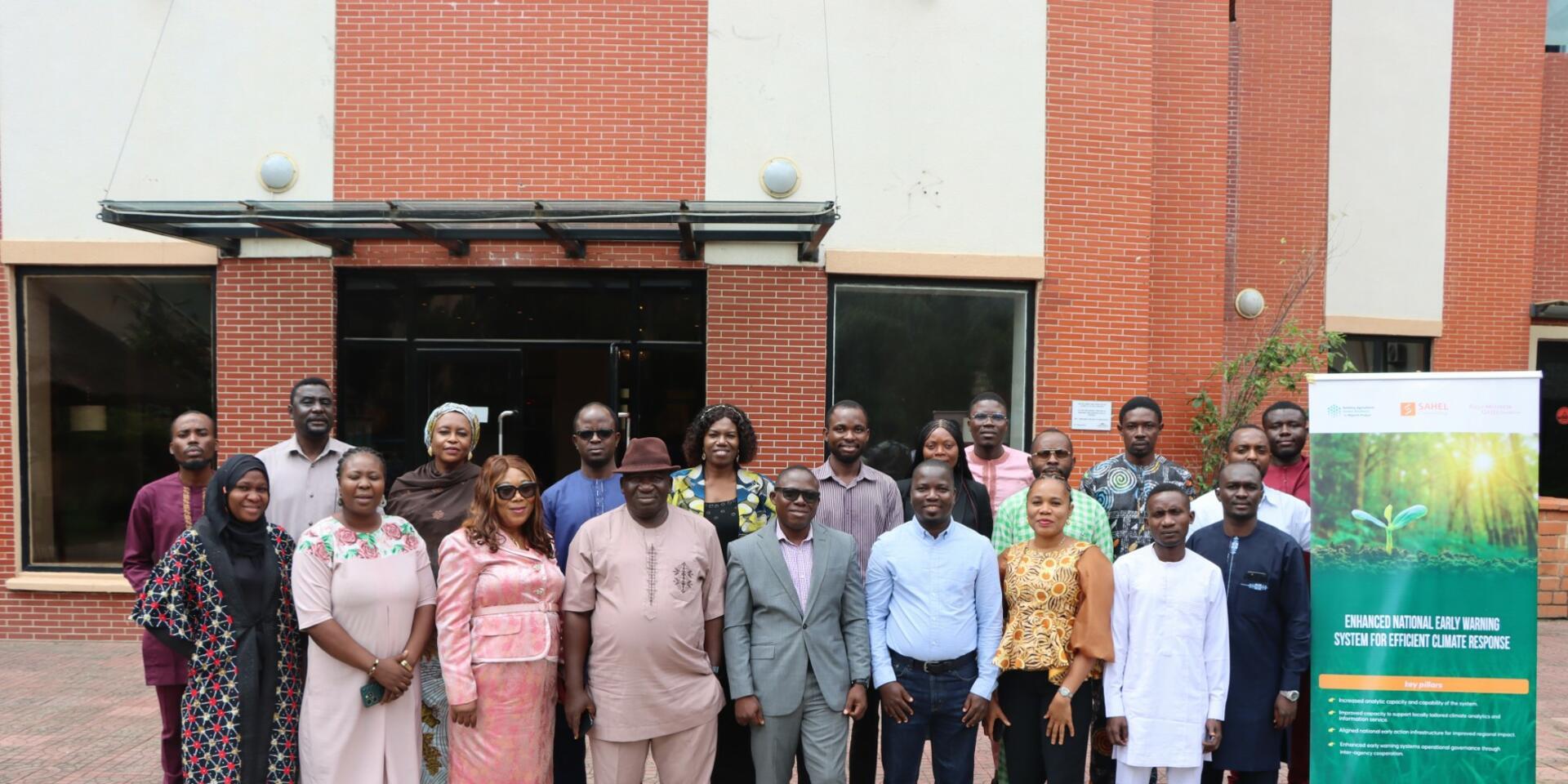
The 'Building Agricultural Systems Resilience through an Effective Early Warning System in Nigeria' (EWS) Project aims to enhance operational capacity for key early warning actors, bolstering Nigeria’s agricultural resilience to climate change by: (i) improving analytic capability of key climate stakeholders; (ii) expanding capacity to support locally tailored climate analytics and information services; (iii) aligning national early action infrastructure for improved impact; (iv) enhancing early warning systems operational governance through inter-agency cooperation
Project Name (full): Building Agricultural Systems Resilience through an Effective Early Warning System in Nigeria
Start and end year: 2024-2026
Region, countries: Africa, Nigeria
Funders: Gates Foundation
Partners: Sahel Consulting, Nigerian Meteorological Agency (NiMET), Nigeria Hydrological Services Agency (NIHSA), Federal Ministry of Agriculture and Food Security (FMAFS), International Research Institute for Climate and Society (IRI)
Brief description
Nigeria’s agriculture, which sustains over 200 million people and the livelihoods of most rural families, is increasingly exposed to climate variability and extreme weather risks. While valuable weather and climate data exist, information often remains fragmented, delayed, or inaccessible to farmers, limiting their ability to make timely and informed decisions.
The Building Agricultural Systems Resilience in Nigeria Project (EWS) addresses this gap by strengthening the country’s early warning systems. Supported by the Gates Foundation and implemented by a consortium of national and international partners including the Alliance of Bioversity International and CIAT and Sahel Consulting, the project aims to enhance the analytical capacity of climate stakeholders, improve the production of locally tailored climate intelligence, strengthen inter-agency coordination, and modernize the dissemination of weather and climate information using digital solutions. A participatory process involving government agencies, research institutions, private sector actors and farmer organizations ensures that services are user-driven and operationally sustainable.
EWS stands out for is its system-wide approach: it connects data generation, translation, delivery and farmer uptake within a single coordinated framework, transforming climate information into actionable, trusted tools that support resilient agricultural decision-making across Nigeria.
Key activities
- Stakeholder needs assessment for tailored and localized climate information services (CIS): Map key actors and review existing CIS products to inform current demand, gaps, and future needs in Nigeria
- Participatory development of CIS communication and delivery mechanisms: Identify appropriate CIS delivery mechanisms, including digital tools, and develop public–private partnership models for scaling
- Capacitating NIMET to translate CIS into actionable decision-making through crop modelling: Strengthen technical skills and operational use of crop models to improve the practical application of climate information
Relevant blogs, stories and news coverage
Project leaders

Robert B. Zougmoré
Director, AICCRA