Research Articles Strengthening data-driven policymaking in Kenya: a dialogue between Kenya National Bureau of Statistics and the Alliance
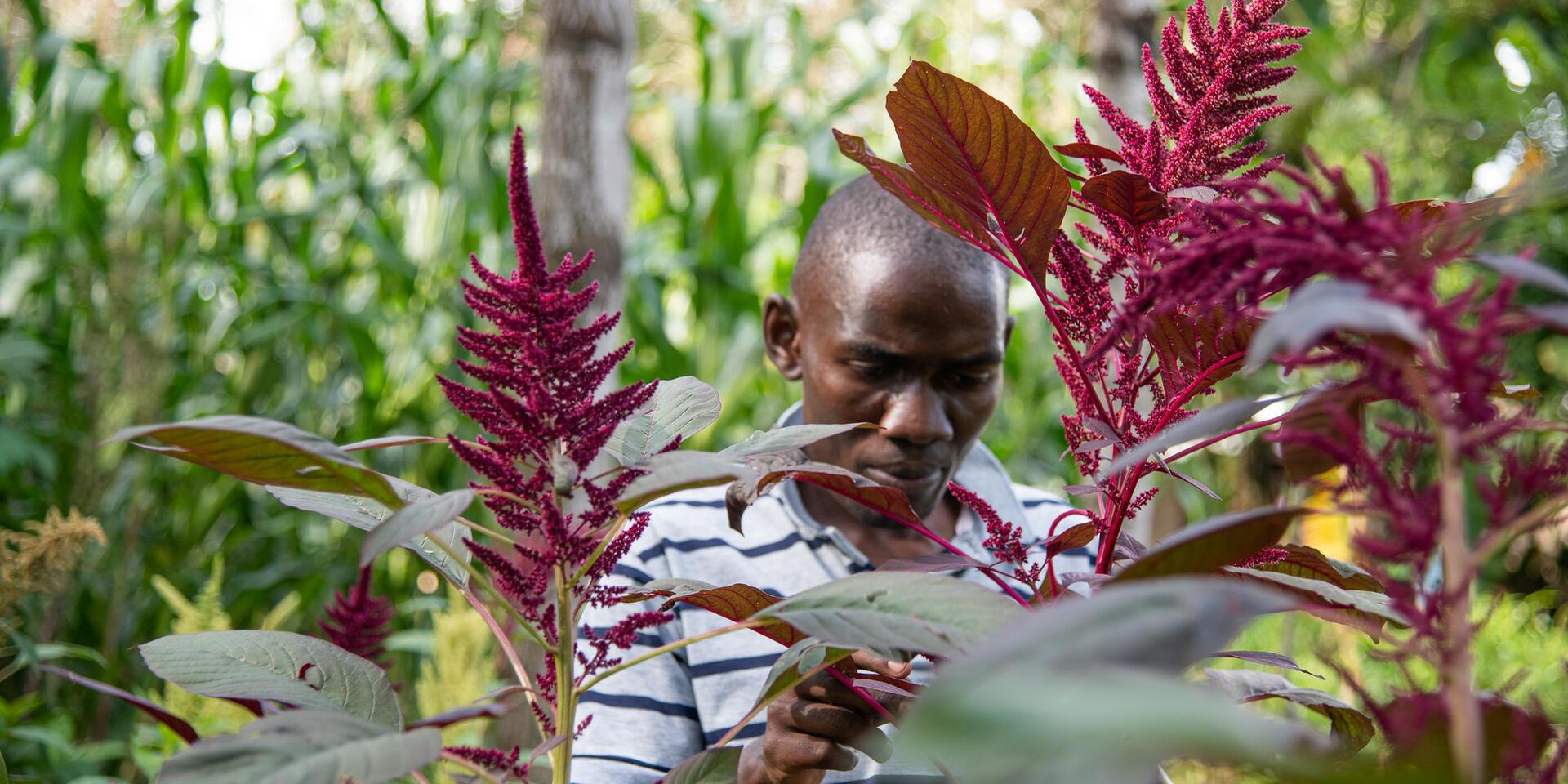

A recent dialogue in Kenya brought together the Kenya National Bureau of Statistics (KNBS) and scientists from the Alliance of Bioversity International and CIAT to explore how stronger collaboration on statistics, geospatial data, and spatial analytics can support more targeted, evidence-based policymaking to address the country’s development and environmental challenges.
High-quality census data and statistics are at the heart of policymaking. As governments face complex challenges such as climate change, food insecurity, biodiversity loss, urbanization, and agricultural transformation, the need for robust, well targeted statistical systems has never been greater.
This was the focus of a recent dialogue between the Kenya National Bureau of Statistics (KNBS) and scientists from the Alliance of Bioversity International and CIAT. Experts from census, statistics, geospatial analysis, agricultural economics, environment, and policy research came together to explore how closer collaboration can improve data collection and support evidence-based decision making in Kenya.
A shared commitment to quality statistics
As Kenya’s official national statistical agency, KNBS is responsible for producing socioeconomic statistics, maintaining quality standards, and coordinating the national statistical system under the Statistics Act of 2006. Benjamin Avusevwa, Director for Statistical Coordination and Methods at KNBS, highlighted the Bureau’s ongoing efforts to modernize data systems, particularly through geospatial technologies and improved sampling frameworks.
Rosemary Bowen, Director for Population and Social Statistics at KNBS, underscored the Bureau’s mandate goes beyond data production; it encompasses quality assurance, system coordination, and supporting Kenya's broader data ecosystem. She emphasized the central role of mapping and GIS in KNBS operations, and the value of institutional partnerships in filling data gaps and improving analytical analyses.
Where is action most needed? The role of spatial analytics
A key theme of the discussion was the growing importance of knowing not just what is happening, but where. James Ng’anga from KNBS's Sampling and Quality assurance team described how the Bureau has built its geospatial capabilities over time, including through the Kenya Household Master Sampling Frame and GIS integration into census and survey operations. GPS-enabled household surveys now allow statistical data to be linked with spatial information such as climate conditions, land use, infrastructure, and market access.
Researchers from the Alliance presented how they combine household surveys, census data, satellite imagery, land use information, and economic modelling to support policy analysis. Chun Song, Spatial Econometrician at the Alliance, explained that this work focuses on identifying where policy interventions are most needed and how they can be better targeted across landscapes and populations, connecting macro-level trends with local realities across food systems, climate resilience, and agricultural transformation.
Connecting environmental and social data
Many of Kenya’s most pressing policy challenges cannot be understood through environmental or socioeconomic data alone, they require both. The dialogue highlighted strong alignment between KNBS and the Alliance on this point.
Silvester Maingi Mwendwa from KNBS's Environment Statistics Division presented the Bureau’s work on environmental-economic accounting, biodiversity statistics, land use reporting, and ecosystem accounts, noting the growing role of spatial analysis in monitoring natural resources.
Alliance researchers shared complementary work on food demand downscaling, land use modelling, spatial impact evaluation, and AI-supported policy analytics, all integrating biophysical and socioeconomic datasets to generate localized, context-specific evidence.The foundations that matter and next steps Throughout the dialogue, both teams returned to a consistent point: good policy depends on the often-unseen work of statisticians, survey specialists, and GIS experts who build and maintain the systems that make quality data possible.
This dialogue marked the beginning of a promising collaboration between KNBS and the Alliance of Bioversity International and CIAT. Both institutions expressed interest in future capacity exchange events, joint technical discussions on spatial analytics and geospatial data systems, and collaborative research on agriculture, food systems, environmental statistics, and land use in Kenya.
By combining KNBS’s leadership in official statistics with the Alliance’s interdisciplinary research and spatial analytics expertise, this partnership has real potential to support more informed and evidence-based policymaking and ultimately better outcomes for people and landscapes across Kenya.