Blog Roots of change: How Niger's schoolchildren are rediscovering forgotten foods
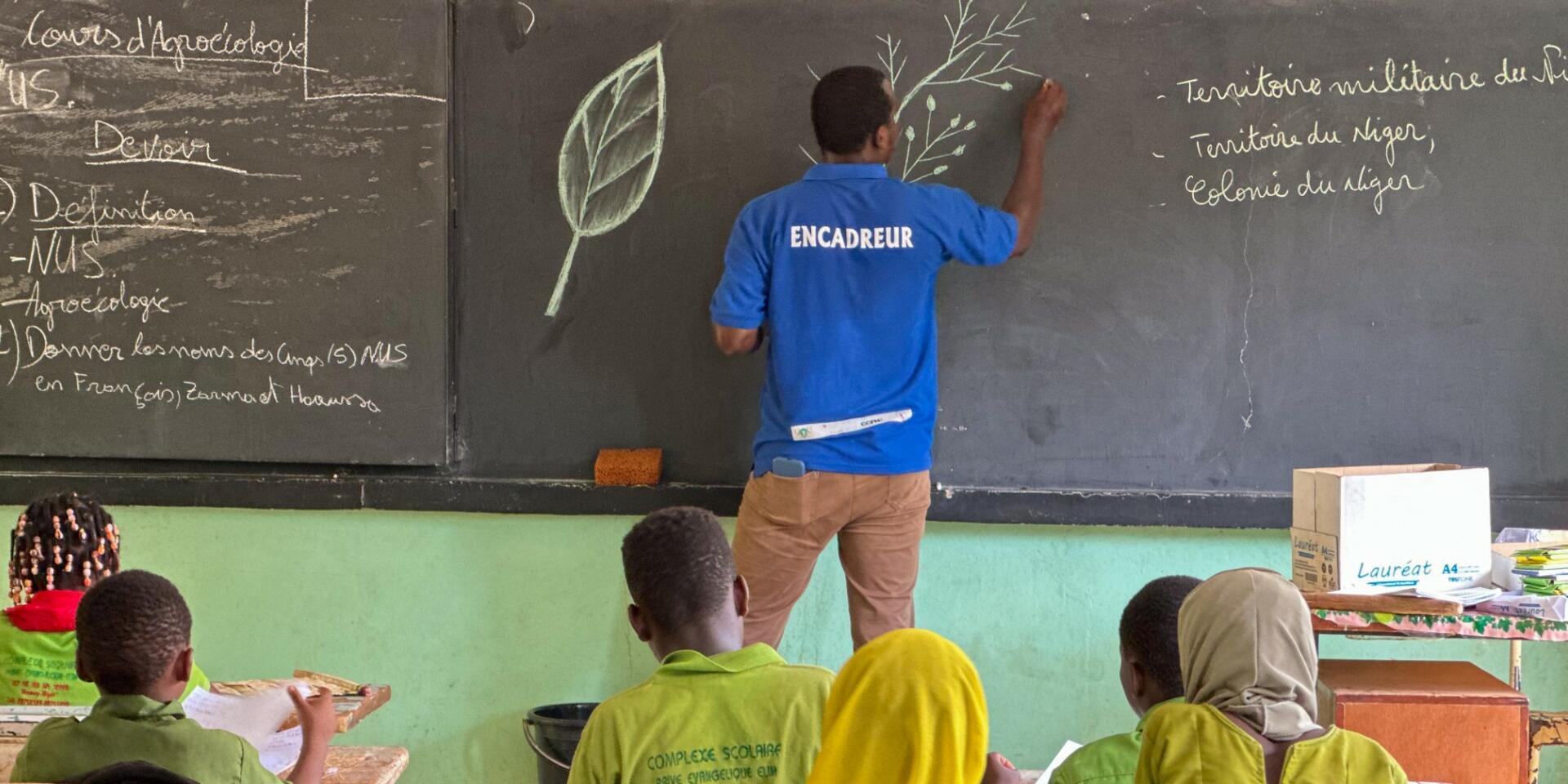

In the heart of Niamey, Niger, the courtyard of École Elim has been buzzing—not just with the usual hum of children’s laughter, but with the sounds of shovels, storytelling and discovery.
From February to May 2025, 68 students aged 9 to 12 were part of something truly transformative: a hands-on educational journey into the world of neglected and underutilized species (NUS). Supported by the Alliance as part of the EU-funded SUSTLIVES project and guided by a dynamic team from the NGO Forge Arts trained by Association Watinoma, these children became gardeners, researchers, artists—and, most of all, agents of change.
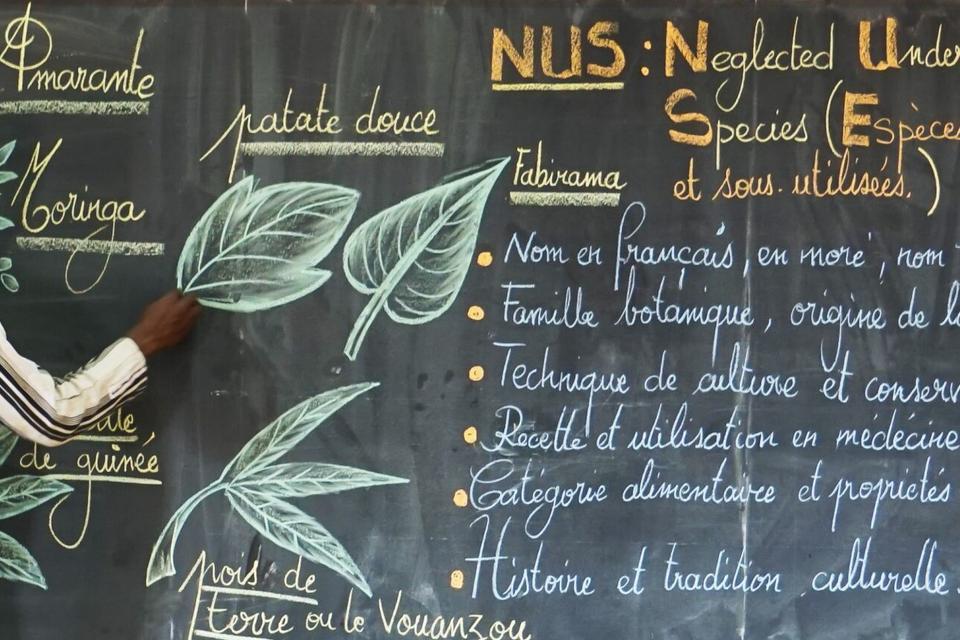
The journey began with a simple question: Why are some local plants forgotten? That spark of curiosity ignited a months-long learning experience where students discovered the nutritional, agricultural, and cultural value of five key NUS—amaranth, sweet potato, Bambara groundnut, roselle and moringa.
In a blend of theory and practice and using the training module on NUS developed by the Alliance in collaboration with Association Watinoma, the students learned to prepare soil, plant seeds, and care for crops in their school garden. “It was so exciting to see their hands in the soil, their notebooks full of questions,” shared one of the teachers.
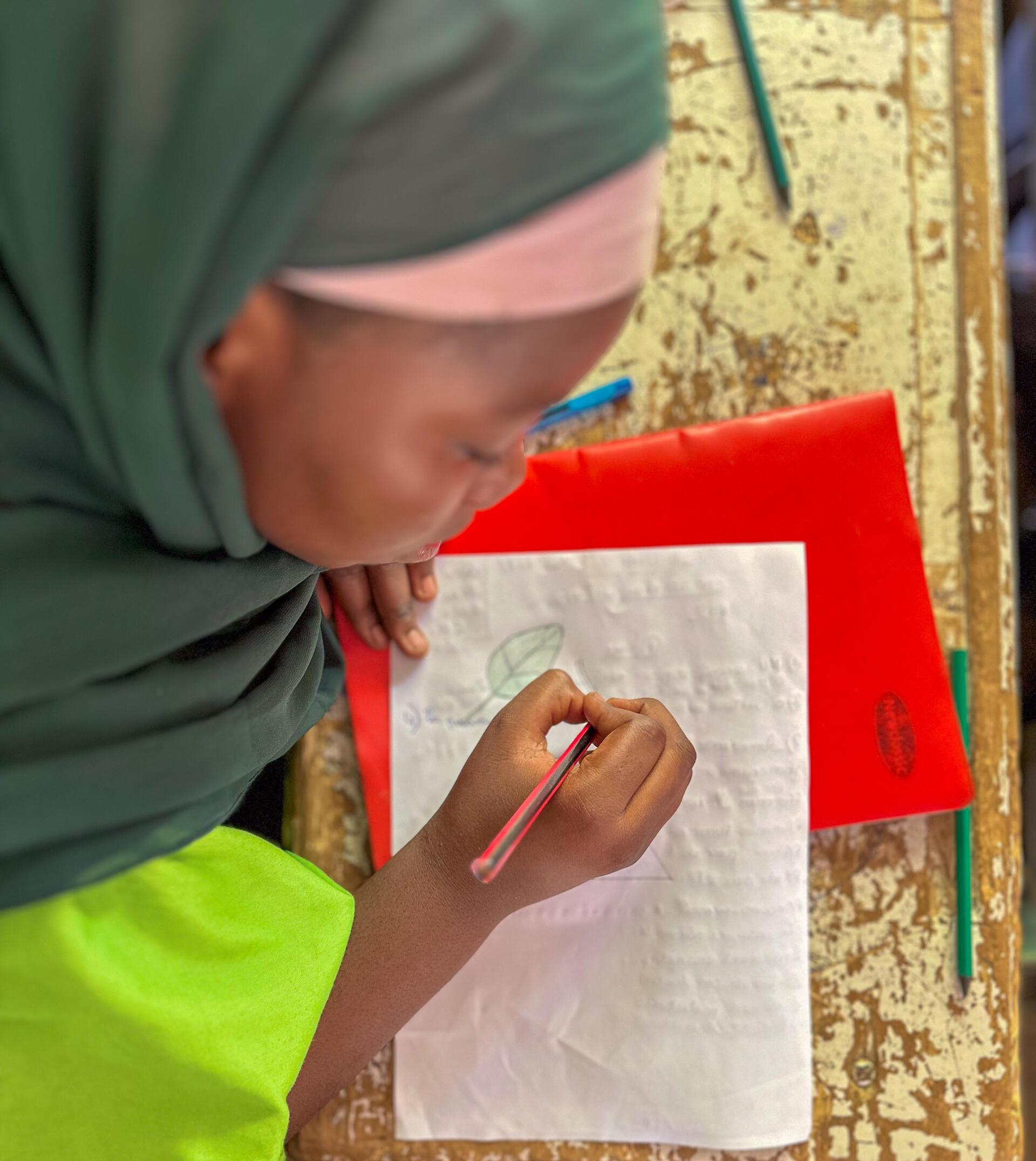
Photo Credit: Bioversity International/Hyacinthe Combary
But the learning didn’t stop in the classroom or garden. Through drama, music, drawing and storytelling, children expressed what they learned. They created posters, wrote poems, and performed skits based on community interviews they conducted themselves.
They even established a mock 'NUS Government', complete with a Prime Minister and Ministers of Health, Education, and Environment—reinforcing civic engagement and leadership.
The grand finale? A community celebration that brought together over 150 people. Students proudly showcased their art, shared findings, and sang original NUS-themed songs. The highlight: a delicious buffet featuring dishes and drinks made from NUS—evidence that tradition and nutrition can go hand in hand.
Beyond vegetables and roots, something deeper took root: confidence, pride, and a growing sense of purpose. As one parent put it, “Now our children teach us the value of what we used to overlook.”
Room to grow—Together
While the initiative in Niamey was a great success, it also highlighted key areas for improvement. More time is needed for rehearsals before public presentations, and students would benefit from personal follow-up tools like journals or home-based observation activities. These lessons echo similar experiences in Burkina Faso, where school gardens also became hubs of community revival. As described in “Sowing the Seeds of Tomorrow”, education through biodiversity is proving to be a powerful catalyst for change.
Call to Action: scaling across the Sahel
If one garden can transform a school, imagine what dozens could do for a region. It's time to scale up and scale out these activities across the Sahel. Governments, NGOs, educators, and communities must unite to embed NUS education into national curricula, support teacher training, and invest in agroecological learning spaces. The future of food security in the Sahel might just begin with the next child who plants a seed at school. This small school garden in Niamey reminds us that sustainable food systems begin with knowledge, care, and a few brave kids willing to get their hands dirty.
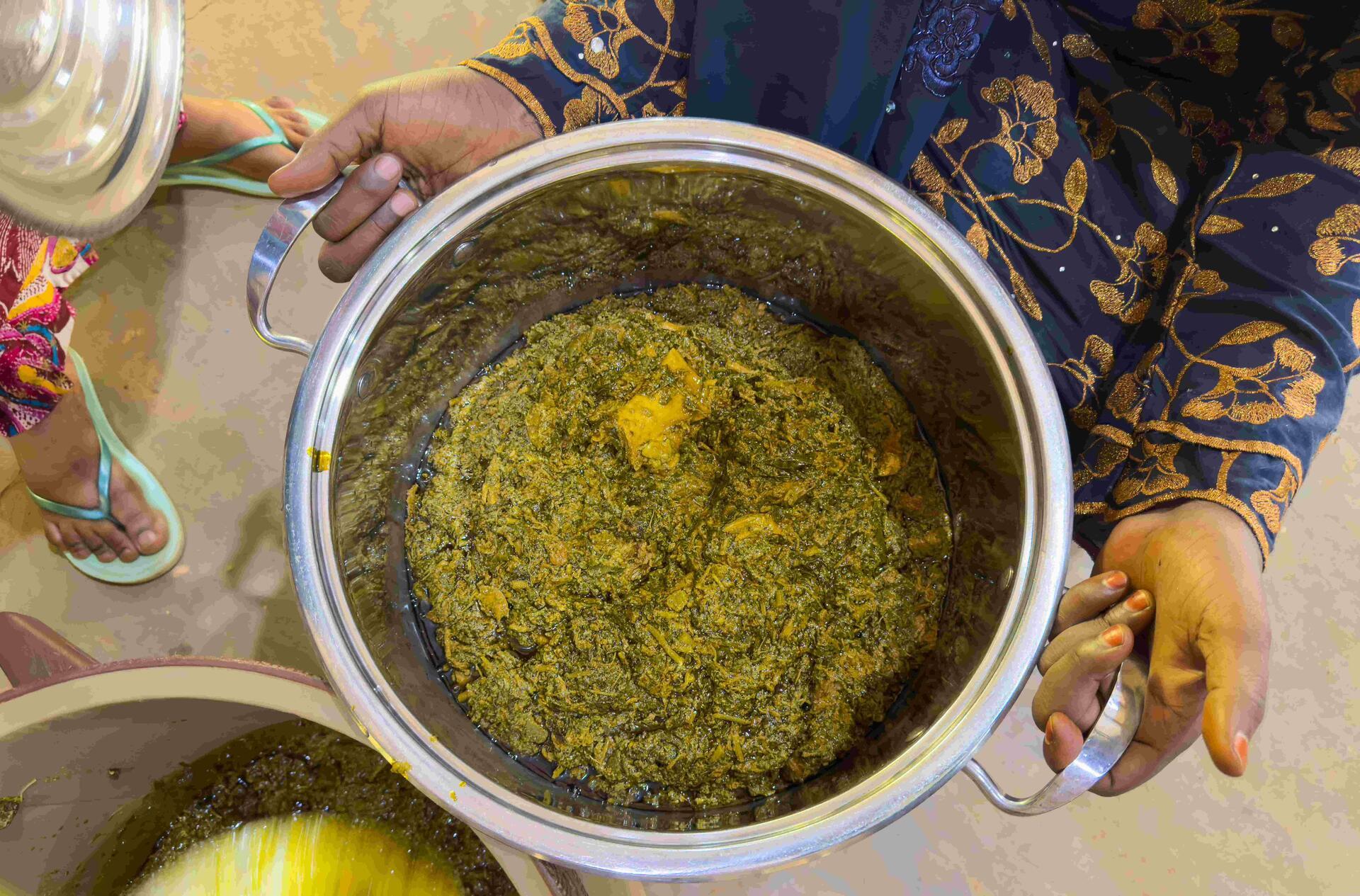
Photo Credit: Bioversity International/Hyacinthe Combary
Cover Photo Credit: Bioversity International/Hyacinthe Combary
This blog was produced with financial support from the European Union. Its contents are the sole responsibility of the Alliance of Bioversity International and CIAT and do not necessarily reflect the views of the EU, the Italian Agency for Development Cooperation (AICS) or the Mediterranean Agronomic Institute of Bari (CIHEAM Bari).