Press and News Harnessing data storytelling for climate resilience in African agriculture
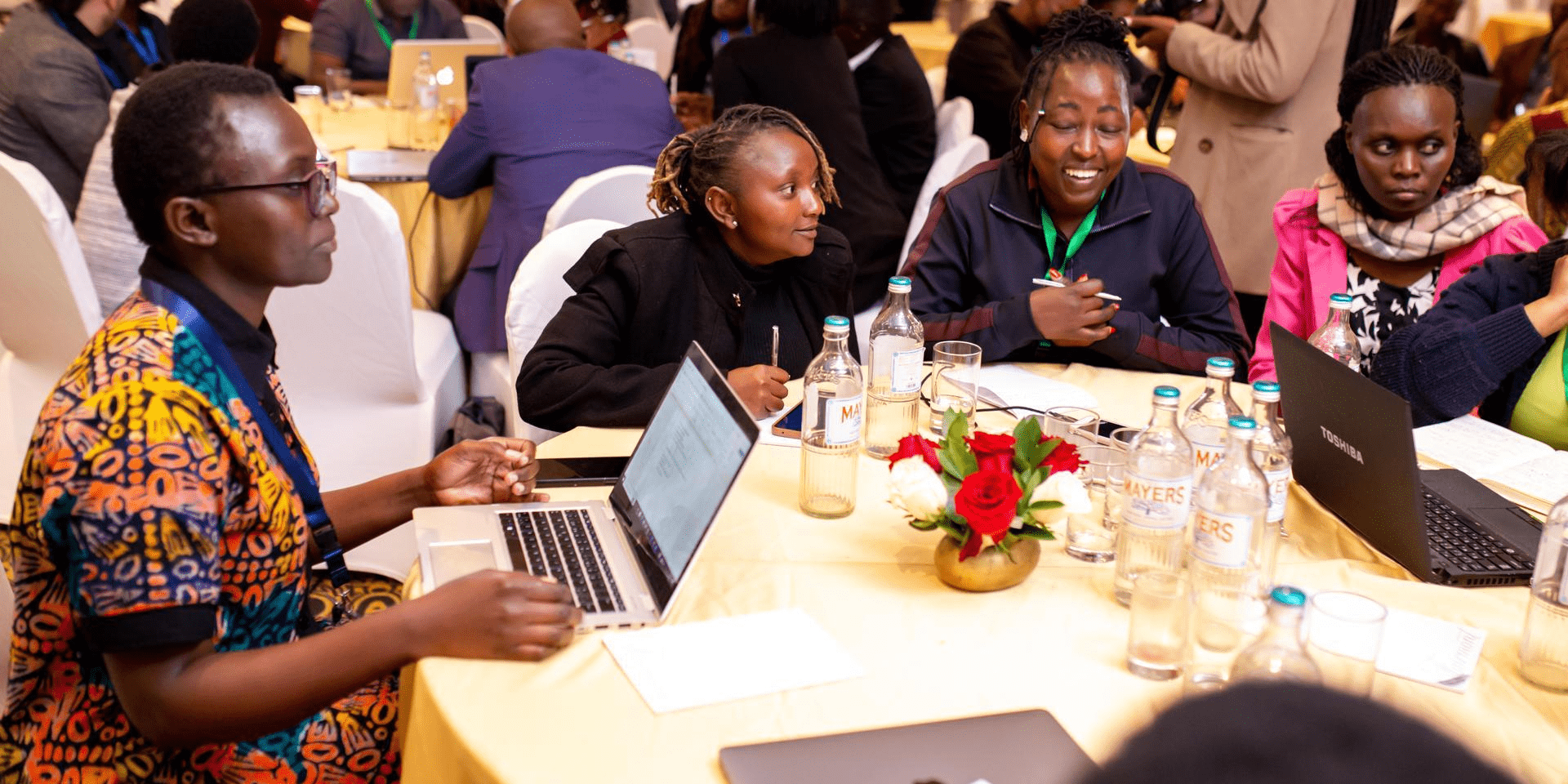

On Friday, August 5th, 2025, the Adaptation Atlas Data Storytelling Challenge officially launched on Zindi, marking a bold step toward reimagining how climate data can be transformed into knowledge that directly strengthens the resilience of African farmers.
The initiative is jointly led by the Alliance of Bioversity International and CIAT, CGIAR, and Zindi, alongside partners such as data.org, the Capacity Accelerator Network (CAN), the Sustainable Agriculture Foundation, and several African research and policy institutions. It reflects the recognition that although climate change is one of the most urgent challenges facing agriculture on the continent, valuable data often remains trapped in technical reports or models that are inaccessible to the people who most need it. The challenge seeks to close this gap by mobilizing a diverse community of data scientists, storytellers, and innovators to draw on the Africa Agriculture Adaptation Atlas and translate its wealth of information into actionable, compelling stories for policymakers, farmers, and communities.
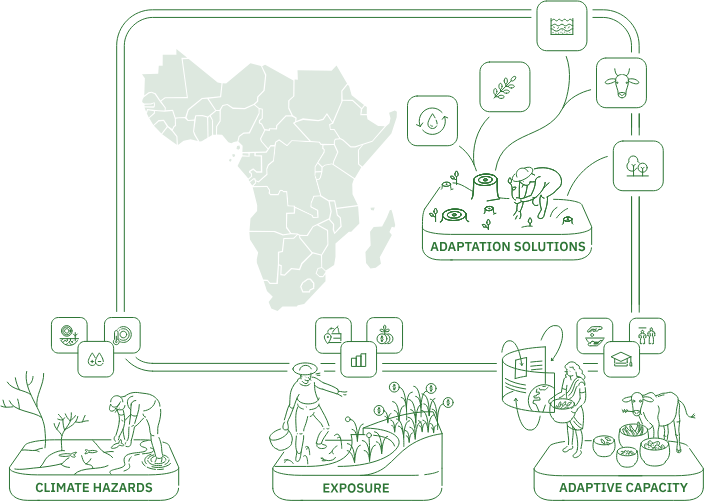
The Atlas serves as the foundation of this initiative as a dynamic decision-support tool. It compiles an extensive range of datasets on climate and agriculture, yet its true value lies in how this information is made usable beyond scientific circles. As Braden Youngberg of the Alliance explained, the Atlas was designed to be community-driven and openly accessible, with inclusivity and practical utility at its core. The hackathon format builds on this ethos, creating a collaborative space where participants from varied backgrounds can reimagine data through visualization, narrative, and applied problem-solving. In this way, the Atlas becomes not only a scientific resource but also a practical tool that can guide choices at local, national, and continental levels.
The Atlas in action
"The Adaptation Atlas is already being applied in real-world projects across Africa, including initiatives in Burkina Faso, the Republic of Congo, and other countries, where it supports climate risk assessments, vulnerability mapping, and the development of context-specific adaptation options. Feedback collected by the Global Center on Adaptation (GCA) highlights that the Atlas is valuable for project design, donor reporting, and scenario modeling, though users note areas for improvement such as language accessibility, regional data coverage, and integration of predictive analytics. By linking rich datasets with practical decision-making, the Atlas demonstrates its potential to inform not just the storytelling challenge but ongoing climate-smart agricultural planning and policy."
The Zindi platform, with its 90,000-strong community of data scientists and AI developers, provides the technical engine for the challenge. By hosting the competition on a platform that harnesses public and expert innovation and collaboration, the organizers ensure that the data is not only analyzed but also reinterpreted in ways that make it accessible to broader audiences. This combination of technical rigor and creative storytelling makes it possible for outputs to resonate far beyond academia and inform decision-making where it really matters.
“It’s a privilege and a pleasure for us to be hosting the Adaptation Atlas Data Storytelling Challenge on Zindi,” says Paul Kennedy, Chief of Staff at Zindi. “Using public data to tell compelling stories and support policymakers working in climate resilience across Africa perfectly aligns with our mission to bring data science tools and models to more organisations and more problems. We have every confidence that our community of passionate and talented data practitioners will build incredible notebooks and tools for the partner organisations.”
Six pathways of exploration
The challenge is structured around six thematic tracks, each reflecting a critical intersection of climate dynamics, agriculture, and human well-being. These are not abstract categories, but real-world priorities identified by governments, NGOs, and farmer organizations, ensuring that outputs respond directly to adaptation needs.
- Water security, agriculture and health: Examines how climate-driven water changes affect food production and community health
- Crop pests and diseases: Explores how pests and pathogens shift with climate variability, and how they threaten crops and livelihoods
- Soil health and food security: Focuses on soil conditions like fertility, degradation, moisture and how they shape food availability and resilience
- Infectious diseases: Looks at the spread and risk of human disease in relation to environmental and climatic changes
- Rainfall: Investigates variability, seasonality, and reliability of rainfall, and its implications for planting, harvesting, and water supply
- Forest cover: Analyzes changes in forest land, deforestation/reforestation, and how that influences ecosystem services and agricultural systems
Awards and recognition
- First prize: $1,000 per track
- Second prize: $500 per track
- Innovation prize: $750 for the most creative submission
- Gender inclusion prize: $750 for the best female-led submission
By rewarding creativity, inclusivity, and innovation, these awards reinforce the idea that impactful data storytelling requires both accuracy and imagination.
Partner organizations and their engagement
The challenge is shaped by a diverse ecosystem of organizations, each contributing unique expertise. The Alliance of Bioversity International and CIAT provide technical leadership, ensuring alignment with the Atlas and grounding the challenge in real-world agricultural contexts. CGIAR anchors it within a global research-for-development framework, while Zindi mobilizes its vast community and hosts the digital platform.
data.org and Capacity Accelerator Network (CAN) strengthen the capacity-building dimension, offering training that equips participants with both analytical and storytelling skills. African institutions, including the The Africa Network of Agricultural Policy Research Institutes (ANAPRI), theAgricultural Transformation Institute (ATI), the Regional Centre for Mapping of Resources for Development (RCMRD), and the African Group of Negotiators Experts Support (AGNES) all shaped the thematic tracks and use cases to reflect local adaptation priorities. Together, this coalition ensures that the challenge is rigorous, relevant, and responsive to Africa’s realities.
Bridging data and farmers’ realities
Ultimately, the initiative hopes to amplify the lived experiences of African farmers who confront climate change every day. Erratic rainfall that delays planting, pest infestations that wipe out harvests, and degraded soils that erode productivity are not distant scenarios but current realities. Yet these experiences are often overlooked in policy debates, where numbers may dominate but stories are absent.
Data storytelling bridges this gap by combining evidence, narrative, and visuals to make climate impacts tangible and relatable. By giving innovators, the platform to translate complex data into farmer-centered narratives, the challenge creates space for science and lived experience to meet. Over the coming months, submissions will reveal diverse perspectives with some exposing vulnerabilities while others showcasing resilience, that together form a community of practice advancing climate storytelling across Africa. The Adaptation Atlas Data Storytelling Challenge demonstrates how data, creativity, and partnership can come together to ensure African farmers are not just heard but actively supported in building resilient and sustainable futures.
Cover Photo Credit: AICCRA