From the Field First-of-a-kind school agrobiodiversity fan club supports a community seed bank in Ghana
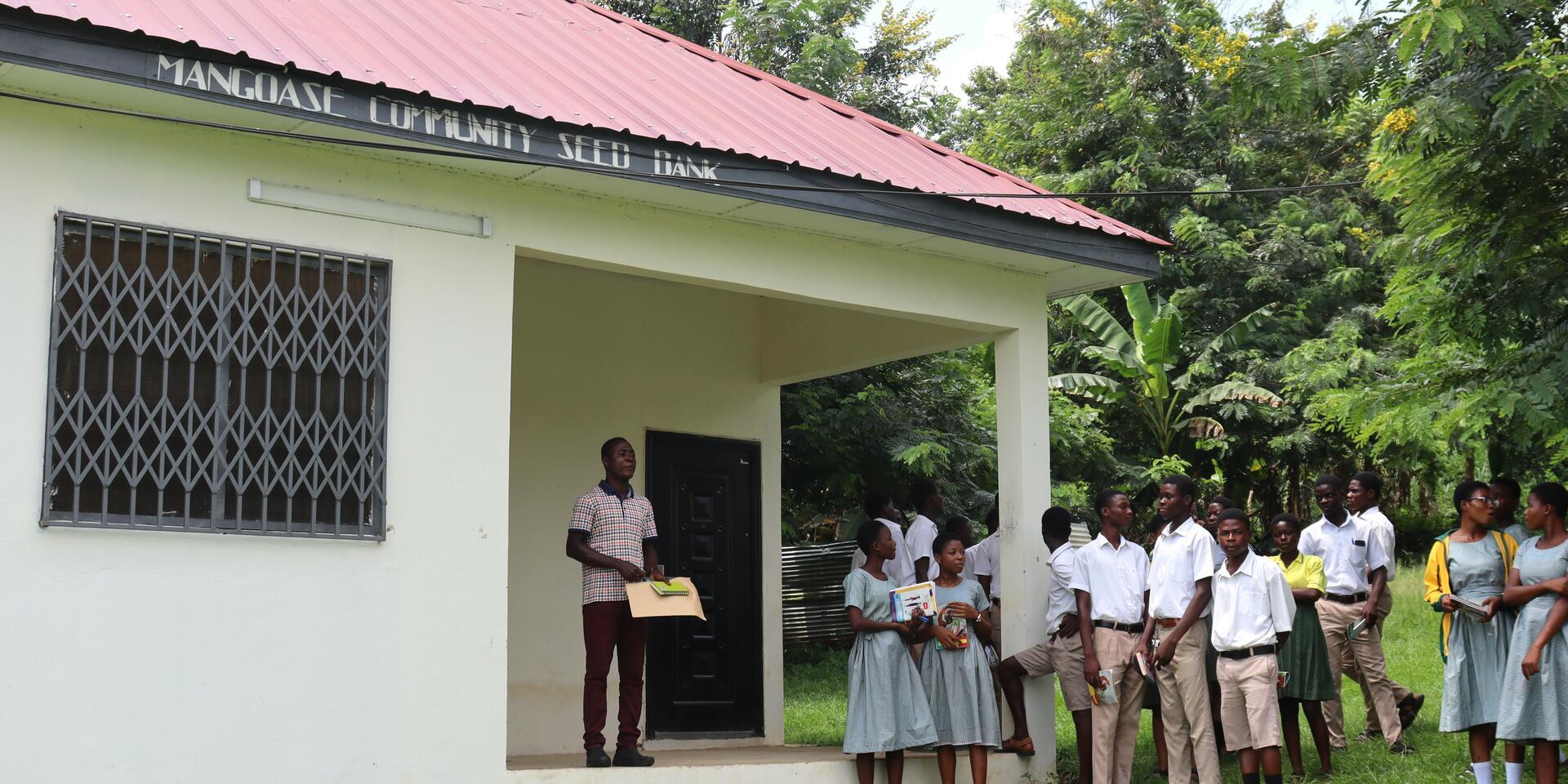

Students at Mangoase Senior High School have established a special fan club for hands-on conservation of local crops.
July 4th 2024: Cheers ring out around Mangoase Senior High School in Akwapim North District, Ghana, as 50 junior students and 10 staff endorsed the Mangoase Agrobiodiversity fan club, established to support the new Mangoase community seed/field bank (Promoting sustainable conservation and utilization of neglected and underutilized species in Ghana | Nieuwsbericht | Agroberichten Buitenland). In the ceremony, the Adawso District Agricultural Officer declared the fan club to have been constituted, and offered technical support to the fan club.
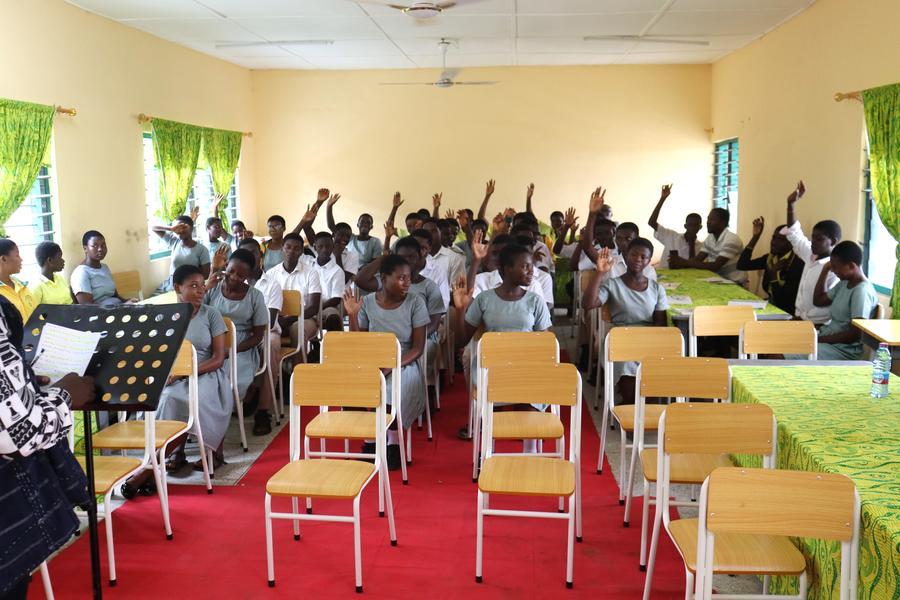

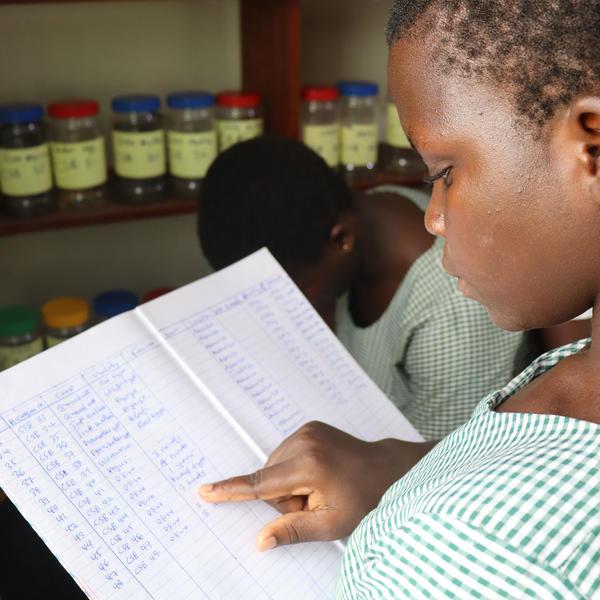
Scenes from the endorsement: students sign the visitor book and check the seed registry.
“We want to conserve our local crops and learn how to manage our community seed bank,” one of the students said. In company of the Senior High School Director and the District Agricultural Officer, the group proceeded to the newly-built facility to examine the first collection of seeds and ask questions about seed storage techniques and practices.
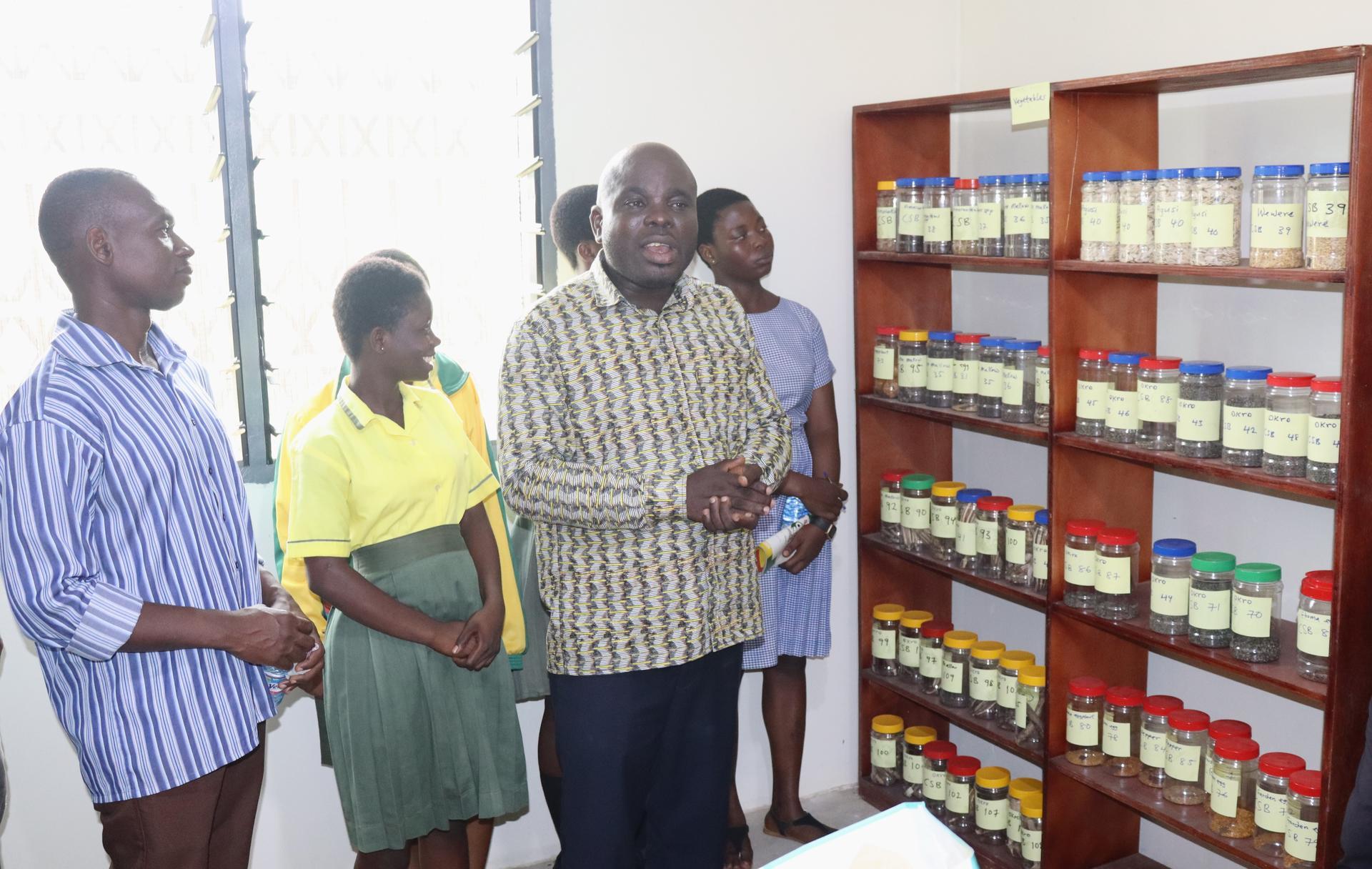
Daniel Nyadanu, technical advisor to the seed bank, responds to students' questions.
Daniel Nyadanu - Coordinator of the NUS Network Ghana and Technical Advisor of the community seedbank - gave an introduction about the new facility and answered their questions about seed storage conditions, different types of seed containers, and the lifespan of seeds conserved inside the facility.
The NUS Network Ghana is a non-government research and development organization that promotes neglected and underutilized species (NUS), also known as orphan crops, indigenous crops or traditional crops, through the conservation of their genetic resources, development of improved varieties, and upgrading of their value chains (Roles, Trends and Challenges of Neglected and Underutilized Species in Ghana | Nieuwsbericht | Agroberichten Buitenland).
The fan club - seemingly the first of its kind - will allow the direct involvement of students (majoring in agriculture, home economics, or general sciences) in everyday community seedbank activities such as collecting, cleaning, storing, and registering seeds donated by local farmers. It will also engage in awareness raising, education, and fundraising to support of the maintenance and sustainability of the new facility. Together with the Senior High School staff, the Ghana NUS Network and the Alliance will develop a course module on managing community seedbanks that can be integrated in the school’s curriculum.
A community effort in the making
Through the support of the Dutch Embassy in Ghana and coordinated by the NUS Network Ghana and the Alliance, in 2023, the pilot community seedbank was established on the Mangoase Senior High School campus, using the methodology developed by the Alliance. Community seedbanks increase the control of farmers and local communities over their seeds, and strengthen cooperation among farmers and others involved in the conservation and sustainable use of agricultural biodiversity. The community seedbank addresses Ghana's major challenge of giving farmers and their communities access to diverse and high-quality planting materials.
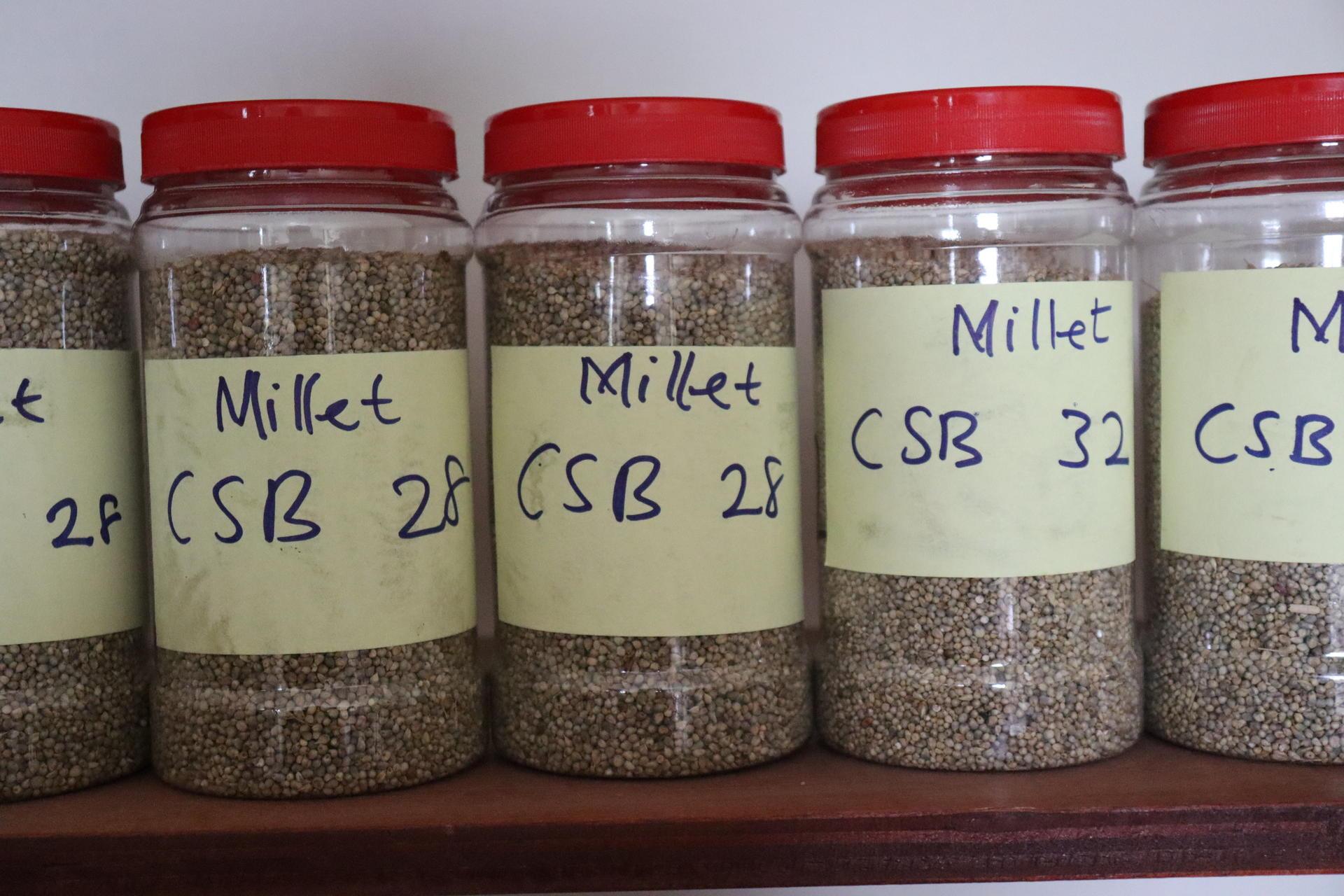
First samples of seeds collected at the seedbank.
Farmers in Adawso formed a community seedbank management committee to look after the facility in close cooperation with the Mangoase Senior High School. A novel feature is the management by individual farmers of field (seed) plots of bananas, roots and tubers as part of the core operations of the Adawso community seedbank. These plots will be used for long-term conservation and for distribution of seedlings to other members of the community seedbanks and, in the future, when enough planting material is available, beyond the community.
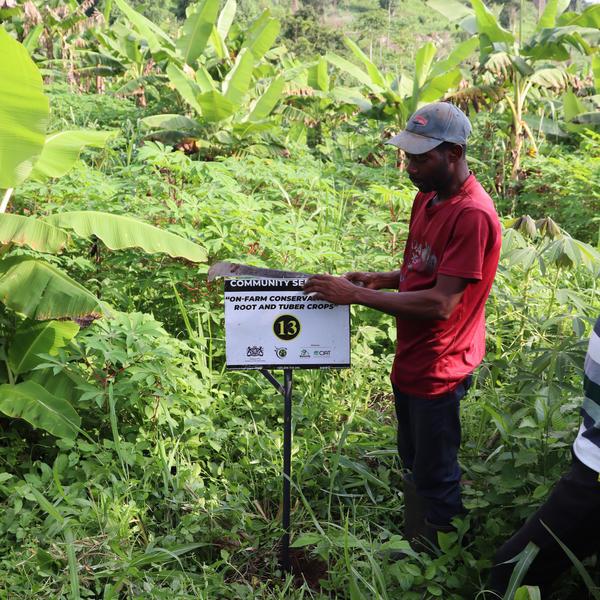
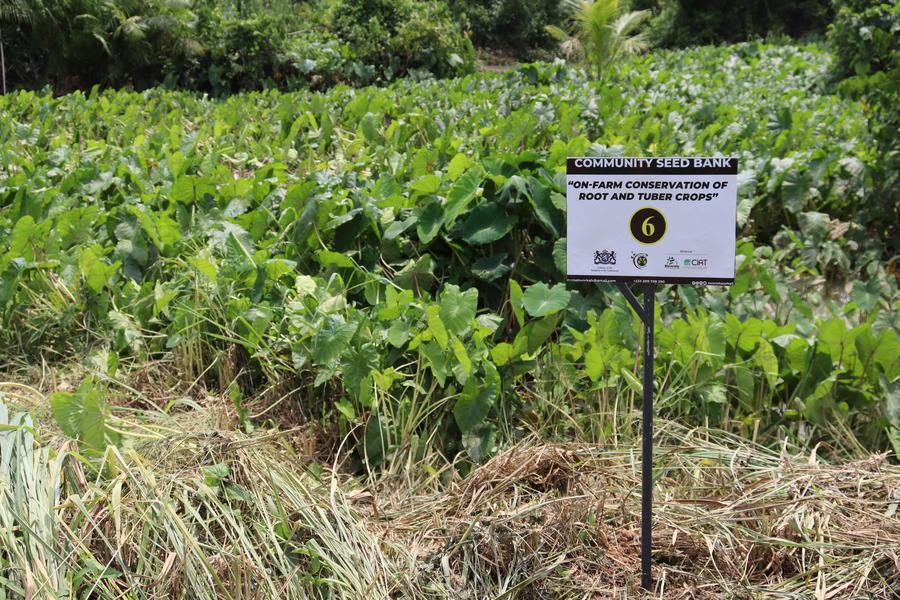
A farmer shows visitors the plots at the field bank.
The pilot initiative takes place in Adawso, in the Akwapim North District, which is a site known for high diversity of root and tuber crops, cereals, legumes, fruit tree species, and vegetables. The community has about 3,900 inhabitants and is a major source of food supply to Koforidua city (18.6 km from Adawso) and the Ghana's capital, Accra (59.3km from Adawso). Adawso has offices of the Ministry of Food and Agriculture (MoFA) and Agriculture Extension Agents (AEA), which offer extension services to the farmers. A farmer-based association (Nyonkopa farmer group) in the community is vibrant with an active membership of 120 (83 men and 37 women).