Press and News Driving Rwanda’s Agricultural Sector Climate Resilience Through Innovative Business

Rwanda’s agriculture is integral to its economy, and its reliance on rain-fed farming systems makes it vulnerable to climate change. With 91% of Rwanda’s farmers classified as smallholders, the need for smallholder-targeted innovation has never been more urgent. To address this, the AgriTech4Rwanda Innovation Challenge was launched to support and de-risk climate-smart agricultural innovations aligned with Rwanda’s Vision 2050 and national adaptation priorities.
Bootcamp for business
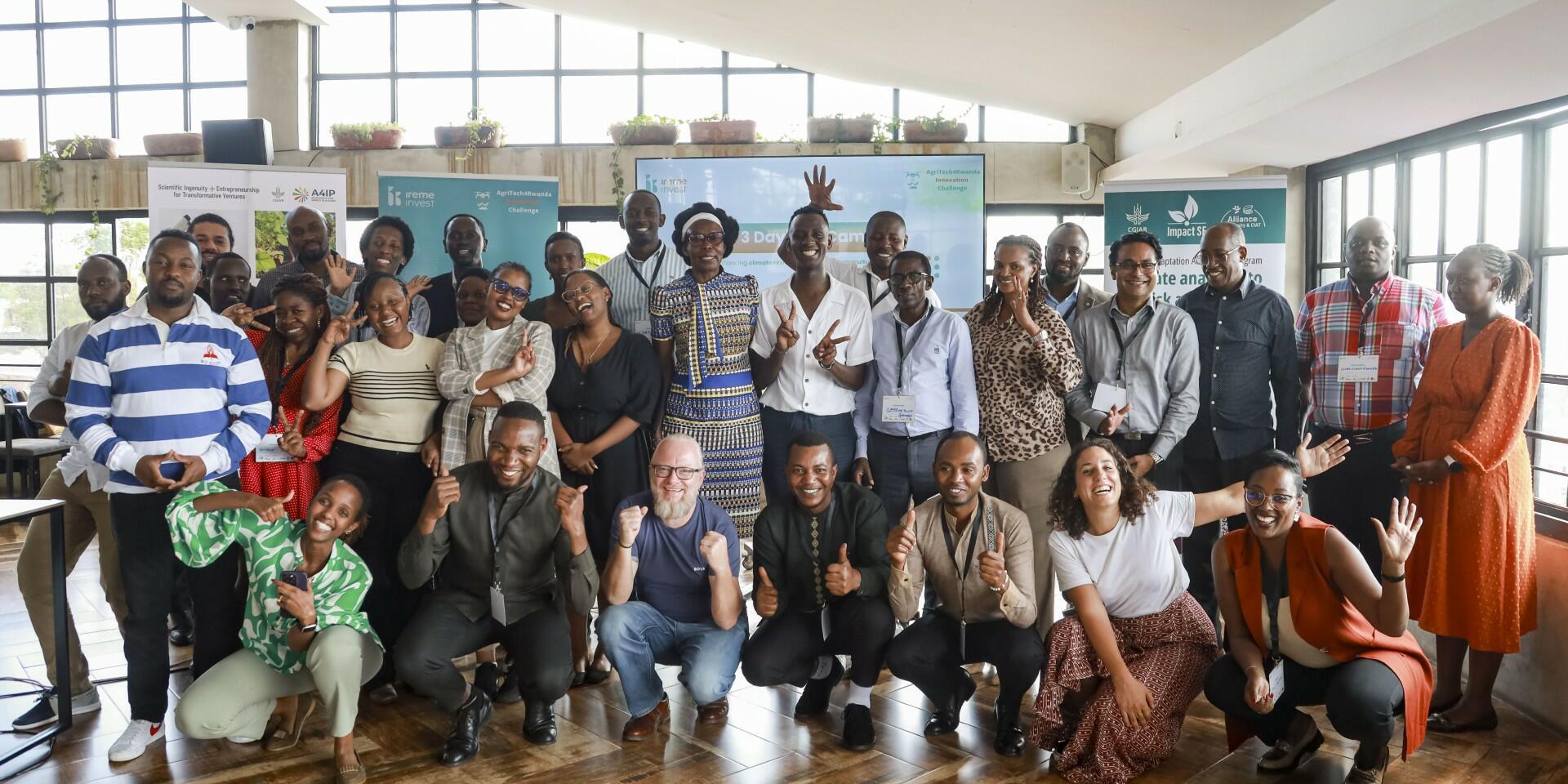
AgriTech4Rwanda is mobilizing high-impact solutions to tackle climate-related risks for smallholder farmers, powered by the Rwanda Green Fund through Ireme Invest, facilitated by the CGIAR Hub for Sustainable Finance (ImpactSF) and the CGIAR Accelerate for Impact Platform (A4IP), with funding from the Gates Foundation. Following a rigorous selection process, 25 ventures were selected from 236 applicants to participate in a fully funded 3-day bootcamp in Kigali.
The bootcamp gave participants immersive, hands-on exposure to technical skills, peer-to-peer learning, and refining business models. Led by experts in climate adaptation, agri-finance, and technology scaling, venture’s founders were guided through critical topics such as the drivers of climate change, the agricultural sector’s role in emissions, and the impacts of climate variability on farming systems.
Participants explored key adaptation strategies and were introduced to the principles of climate-smart agriculture, including awareness approaches and the effective use of climate information services to improve climate risk management. Essential skills for entrepreneurial success were also covered, including leadership for scaling, startup lifecycle management, strategic business growth, business differentiation, and scalability. Additionally, participants received an introduction to financial readiness for repayable grants and the fundamentals of impact measurement.
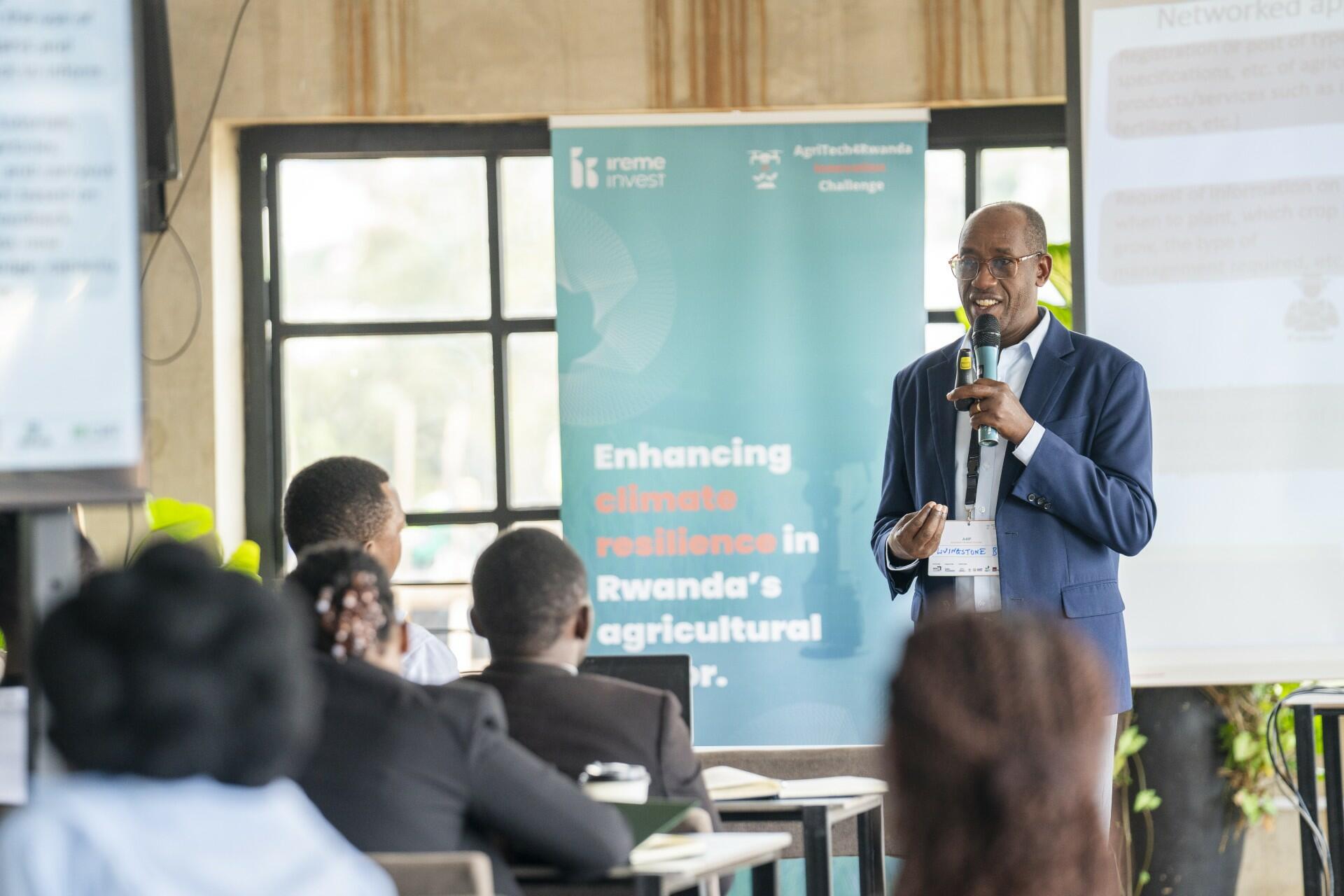
Mr. Livingstone Byandaga, Research Specialist at the Alliance of Bioversity International and CIAT sharing insights on climate smart agriculture practices and climate change adaptation.
“The bootcamp was a turning point for Virunga Biotech. We discovered that we are not just a small and medium- sized enterprise, but an innovation-driven enterprise (IDE): a realization that reshaped how we view our growth and funding strategies. We also gained practical tools in financial readiness, impact measurement, and go-to market planning skills that directly strengthened our pitch and helped us secure a spot among the top 12 ventures.” – Vinay Thummala, Managing Director of Virunga Biotech Limited.
The bootcamp also featured talks by prominent local financial and investment institutions, including the BK Techouse Ltd, Rwanda Social Security Board (RSSB), Bank of Kigali, and I&M Bank. The institutions shared their approaches to supporting agri-tech innovation, financial readiness, and resilience building, offering participants a clearer understanding of how to position their businesses to attract investment and scale climate-smart solutions in Rwanda.
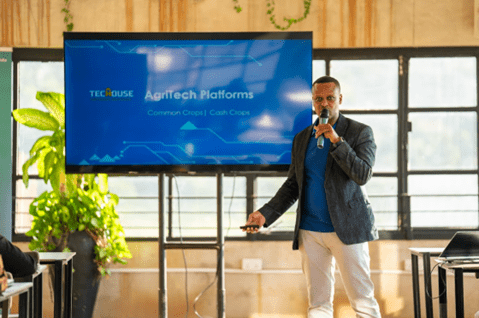
Mr. Deo Massawe, BK Techouse Ltd CEO sharing experience and agritech programs from the BK Techouse Ltd.
On the last day of the bootcamp, all 25 ventures participated in a lightning round of pitches in front of a panel of experts. From these, 12 standout innovations were selected to proceed to the next phase of the program, which includes a 3-month accelerator program, customized technical and entrepreneurship training, field validation opportunities with local partners and access to a curated network of investors, agribusinesses and policy stakeholders. The 12 ventures selected cover a wide range of agri-services, from climate-smart production systems to AI-driven drone input services and alternative credit scoring (see the ventures below):
|
Venture |
Description of Product/Service |
|
Provides an AI-powered drone spraying service that helps smallholder farmers increase yields and reduce costs by detecting crop stress and applying treatments only where needed—offering a more efficient, eco-friendly alternative to manual spraying. |
|
|
Provides tailored, localised Internet of Things solutions and real-time data to help farmers and agribusinesses improve irrigation, greenhouse management, poultry health, and cold storage—enabling smarter, climate-resilient decision-making through its Kumva Data Platform. |
|
|
Processes ready-to-eat fruits and vegetables using high-care systems and renewable energy to improve food safety, extend shelf life, and reduce environmental impact—helping distributors and retailers deliver safer, longer-lasting produce that meets global standards. |
|
|
Partners with smallholder farmers to grow premium horticultural crops for export, using solar-powered cold storage and Enterprise Resource Planning systems to reduce post-harvest losses, improve traceability, and boost farmer livelihoods—advancing climate-smart, data-driven agriculture. |
|
|
Improve livestock productivity and climate resilience by producing and processing pasture into green pellet feed—offering a sustainable alternative to rain-fed grazing that boosts milk yields, reduces greenhouse gas emissions, and ensures year-round feed availability. |
|
|
Enables unbanked smallholder farmers to access affordable, climate-smart financing through its AI-powered SAVE platform, which offers alternative credit scoring, digital micro-loans with climate insurance, and Kinyarwanda voice-based financial education—accessible via USSD and local agent networks. |
|
|
Enables transparent, data-driven tree planting through EcoForest—a digital platform connecting organizations with smallholder farmers. By combining satellite data, mobile tools, and real-time monitoring, it ensures tree survival, measures carbon impact, and empowers farmers with guidance and market access. |
|
|
Provides an integrated, climate-smart tomato production system that combines smart greenhouses, solar-powered cold rooms, and electric transport to help smallholder farmers boost yields, cut post-harvest losses, and access markets sustainably. |
|
|
Provides a smart farming platform that helps smallholder farmers boost productivity and adapt to climate change through real-time insights, AI-powered disease detection, and localized farm management tools—all accessible via an intuitive mobile app in Kinyarwanda, even offline. |
|
|
Enhances Rwanda’s chili export value chain by introducing a solar-powered cold storage and transport system to reduce post-harvest losses, preserve quality, and stabilize farmer incomes. |
|
|
Transforms nutrient-rich whey waste from Greek yogurt production into shelf-stable, fortified beverages—reducing environmental harm, cutting dairy waste, and creating a new revenue stream. |
|
|
Provides the M-LIMA Platform, a digital marketplace that connects smallholder farmers to competitive buyers, financial services, and market information. |
Dreaming big for the next phase
The ventures participated in the AgriTech4Rwanda Innovation Challenge program with various expectations:
“We seek essential tools to manage growth, build a strong foundation for scalability, and engage effectively with investors. We also aim to develop a robust impact measurement framework selecting the right data tools, optimizing storage, and using storytelling to communicate impact. We also welcome technical support to improve our product through collaboration and knowledge exchange within the agricultural innovation ecosystem.” – Kennet Christensen, Co-founder & Managing Director at the Kumva Insights Ltd venture.
By supporting these 12 ventures, the AgriTech4Rwanda Innovation Challenge is accelerating scalable business models that can reduce climate vulnerability, enhance productivity, and create pathways for sustainable rural development. The initiative is strengthening Rwanda’s broader innovation ecosystem by fostering local entrepreneurship and facilitating cross-sector collaboration. Together, these 12 ventures represent the future of climate-smart agriculture in Rwanda driving resilience, opportunity and inclusive growth.
The Team

Nasson Ntwari
Consultant, CGIAR Hub for Sustainable Finance (ImpactSF)
Justine Umutoni
Research Associate