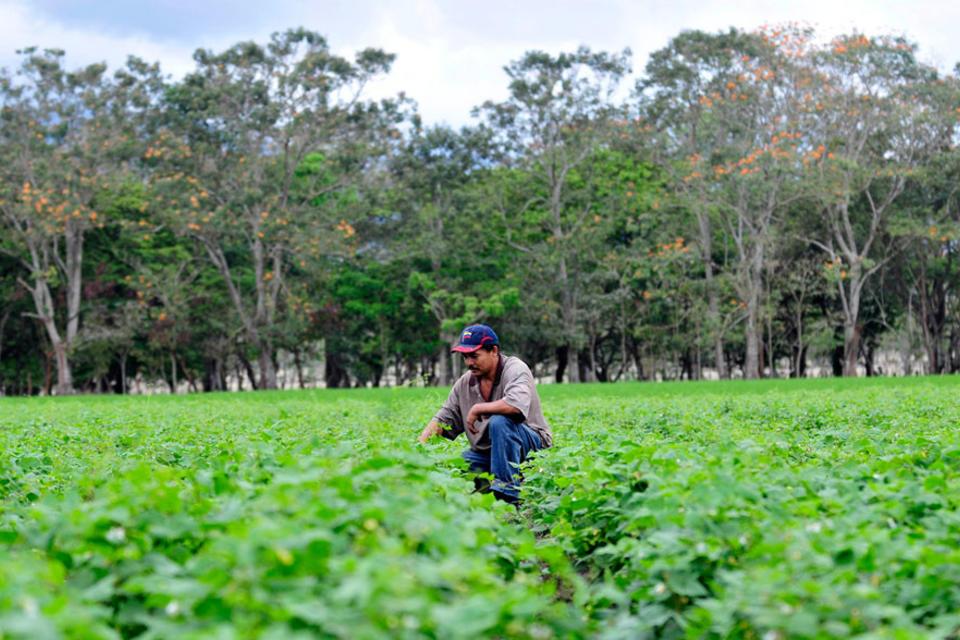
Blog Be amazed: Growing hope in the mountains of Nicaragua
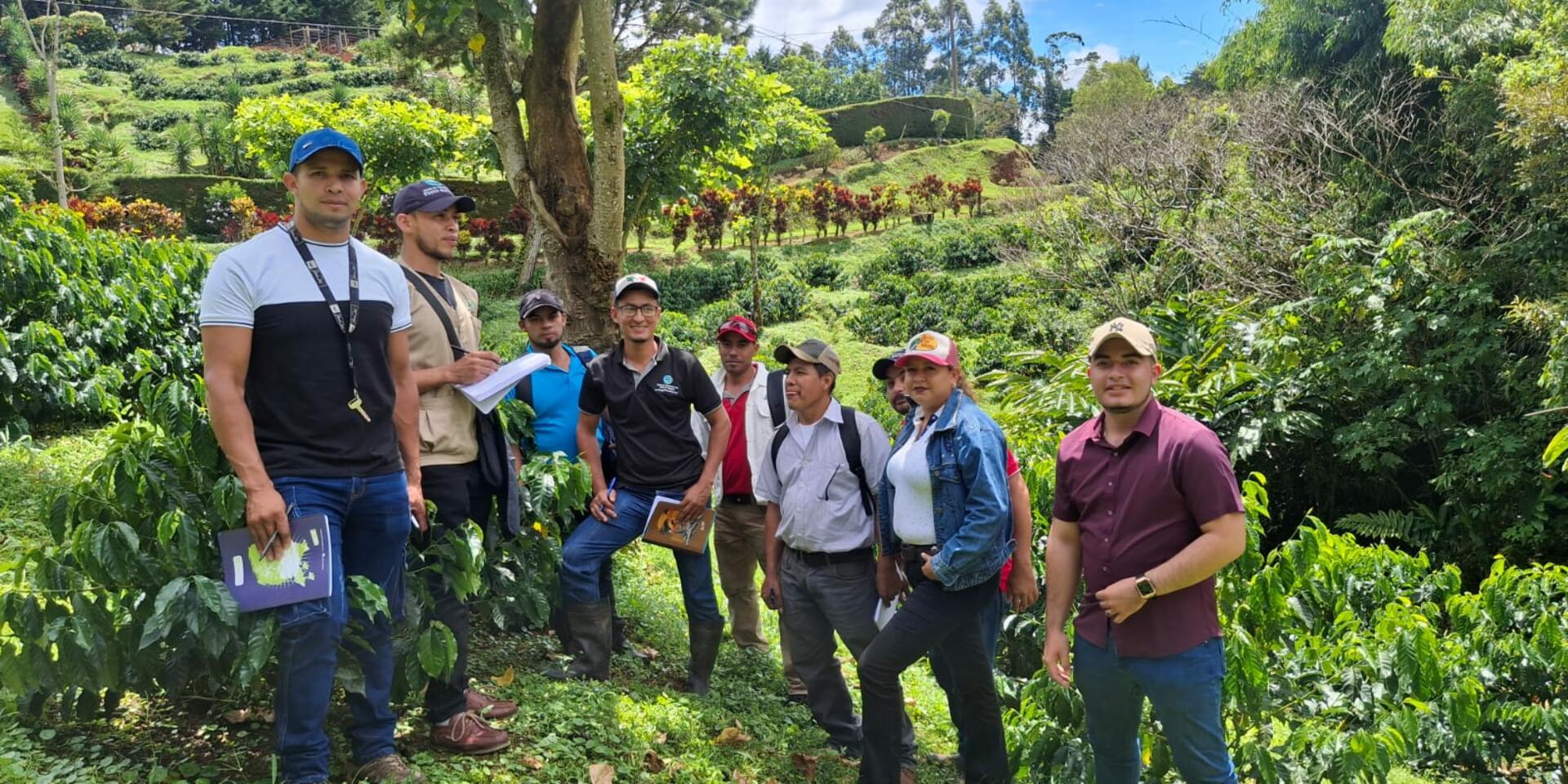

The Asómbrate program, implemented by Solidaridad together with the Alliance Bioversity & CIAT, promotes improvements in the productivity and sustainability of 12,500 coffee and cocoa producers in northern Nicaragua. Through Climate Smart Practices (CSA) and the strengthening and implementation of agroforestry systems, degraded soils are being recovered, diversifying rural incomes and generating lasting environmental and economic benefits.
In the rural communities of Matagalpa, Jinotega and Nueva Segovia, amidst mist-covered mountains and the aroma of freshly roasted coffee, thousands of Nicaraguan producers are transforming their relationship with the land. Through the Asómbrate program, farmers are learning, deepening and updating their knowledge of CSA practices in order to adapt to changing climate conditions in the area. These skills allow them to grow coffee and cocoa more sustainably.
The program encompasses more than 83 cooperatives that have been strategic allies and a fundamental pillar in the implementation of Asómbrate. Through the cooperatives, 12,500 producers have been trained, and 291 trainers have been developed using the "Trainer of Trainers" (ToT) methodology, which identifies and strengthens local technicians and leaders.
The trainings combine theoretical and practical sessions, complemented by farm visits to provide personalized follow-up. This process aims to deepen the principles of CSA, addressing topics such as soil preparation and health, the use of natural fertilizers, the selection of plants or trees that prevent erosion, taking advantage of local temperature variations and much more.
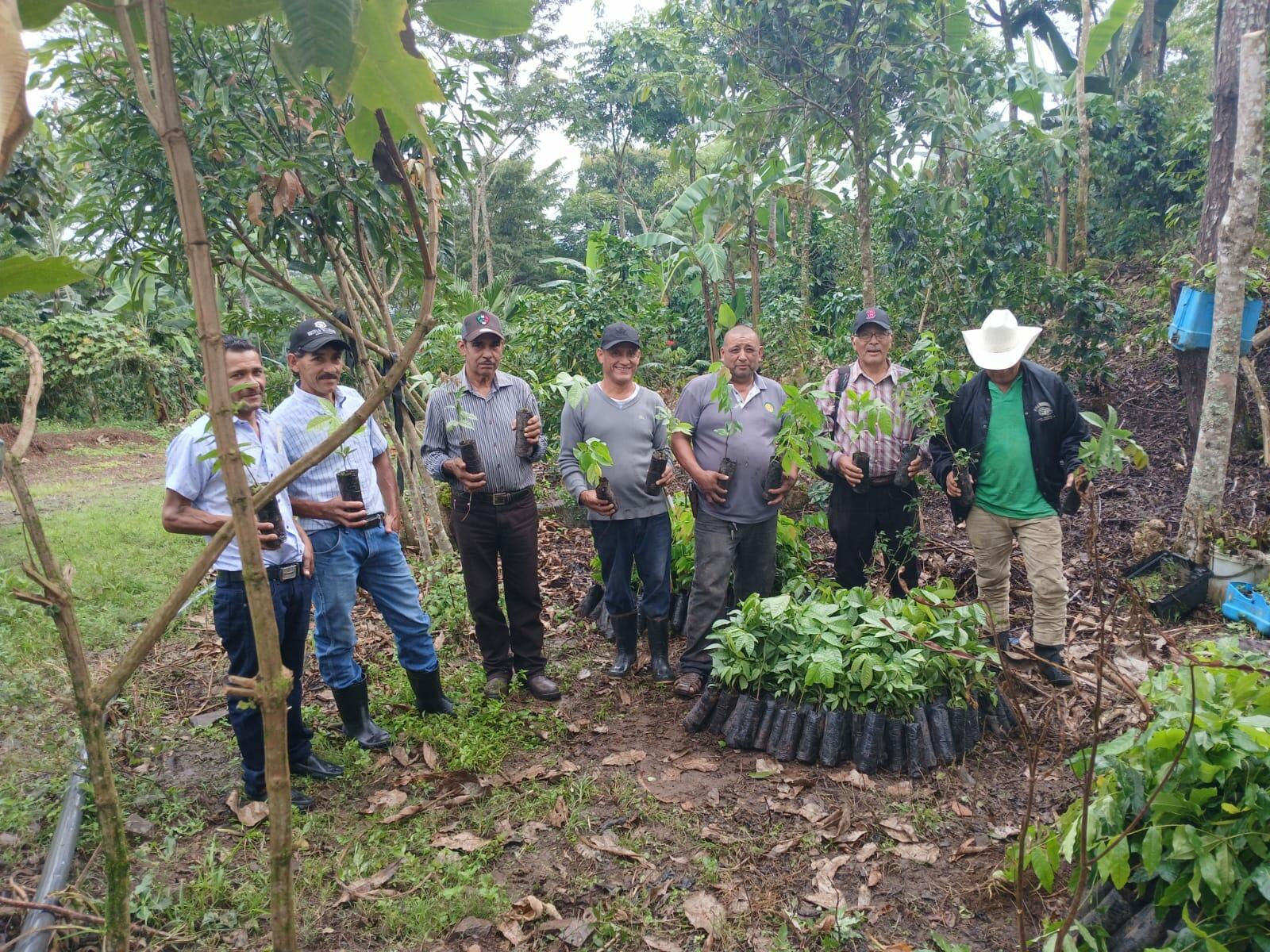
Farmers attribute the success of the program to the availability of adequate training inputs, which enable them to empower, deepen and technify their knowledge, gradually transforming their habits and mindset towards these new practices. In addition, as part of the program, 10,887 trees have been distributed among the participants of this group, contributing to the reforestation of 12,500 hectares.

At the same time, Asómbrate's training lines also include the promotion of a resilient and regenerative economy, supporting producers to join the voluntary market of carbon credits through the ACORN platform.
A carbon credit or CRU (program currency) is equivalent to one ton of carbon dioxide that has been avoided emitting or removed from the atmosphere through sustainable activities, such as introducing companion trees into coffee and cocoa systems. Producers receive training on what they are, how to generate them, and how to market them. It is a process that takes time, but in the long run yields many benefits.
In every corner of the plot, a new opportunity
Primitivo Zeledón is a producer of coffee and other crops in the municipality of San Rafael del Norte, Nicaragua. His plot is located in an area that little by little has been populated by families dedicated to agriculture. He tells that in a part of his plot no crops were thriving and that, in addition, it presented problems of landslides.
He tells us that during one of the follow-up visits of the Asómbrate program trainers, he received guidance to plant bamboo in that area of his plot. By applying the planting and maintenance recommendations, the plant adapted quickly. Today he can see how the bamboo is growing little by little, making better use of the land and reducing the risk of landslides in the area.
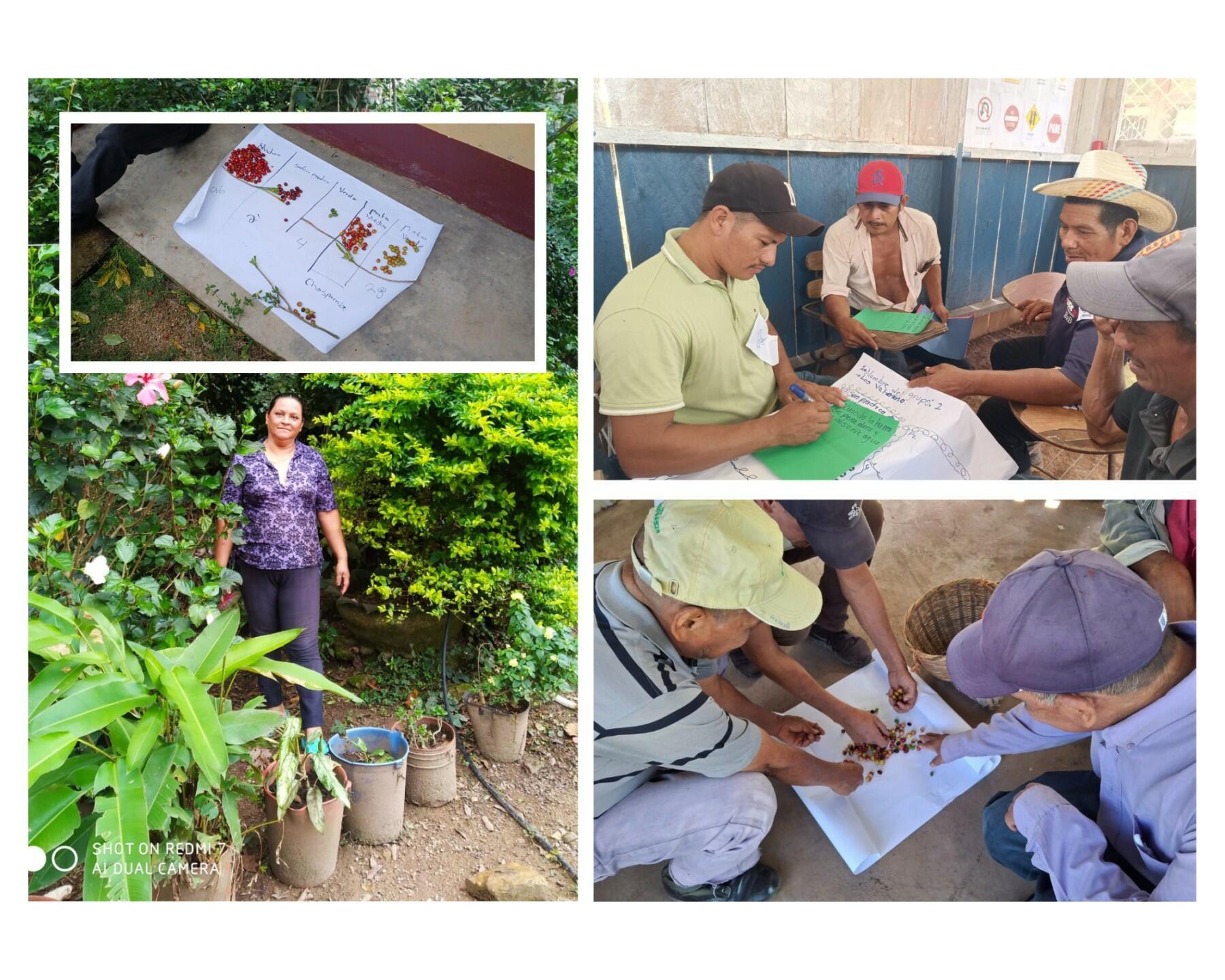
"From then on, I made it a point to leave no area of the plot unused. Every corner has a purpose, and it is essential to know the soil to make the best use of it. With Asómbrate I have learned to understand and take better advantage of the resources I have in my plot," concludes Primitivo Zeledón, an associate of the Cooperativa Cafetalera de Servicios Múltiples El Gorrión.
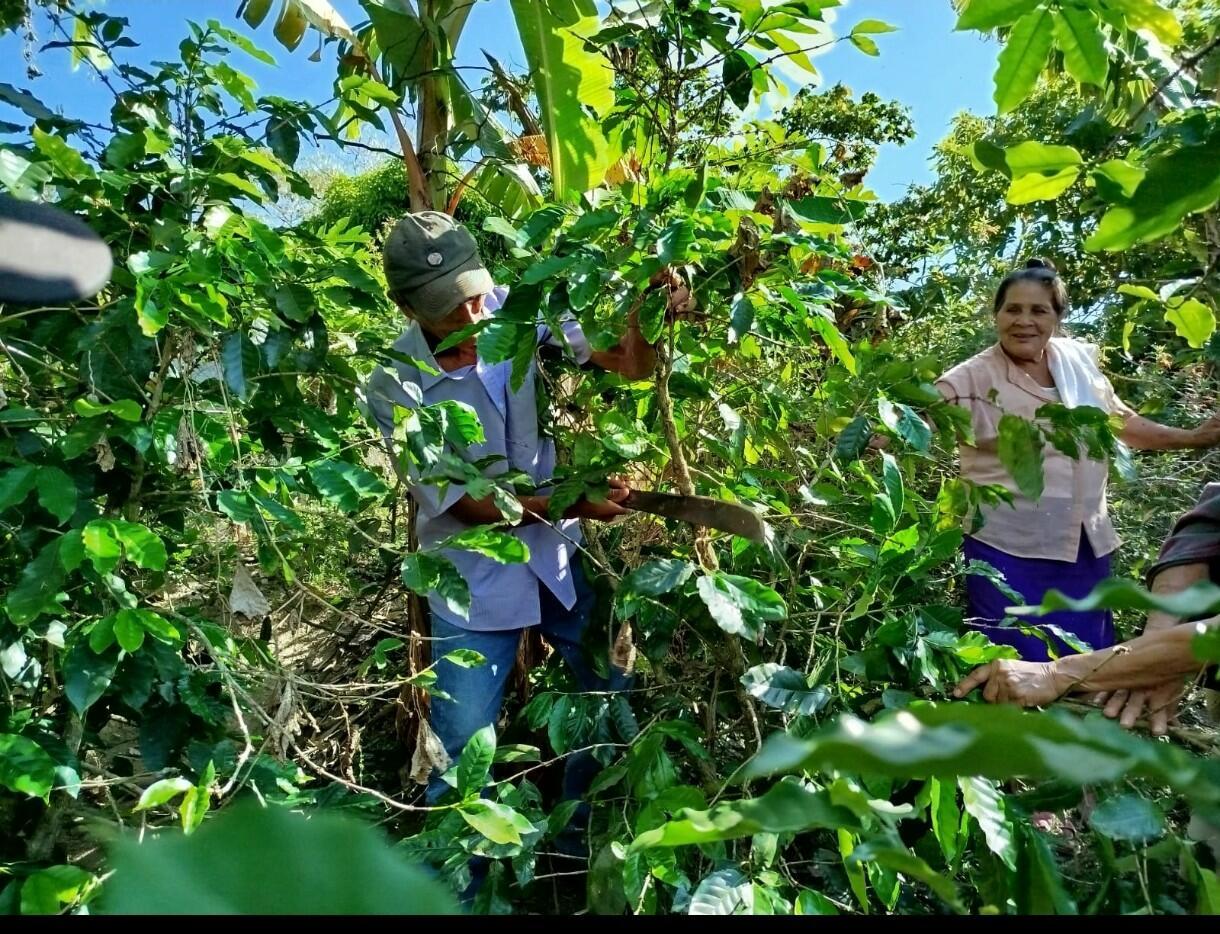
Efficient soil fertilization
César Sevilla Hoyos is a coffee and basic grains producer in the community of El Zancudal, Nicaragua. At home, he inspires his daughters to participate in the world of coffee, involving them in the process of washing and accounting for the marketing of the bean.
Cesar tells us that in previous years he used to apply more fertilizer than necessary because he thought he would get a better and bigger harvest. But the opposite happened; he got a lot of empty beans, that is, defective coffee beans, reaching up to three cans for every 20. Now, by using only the necessary amount of fertilizer, he has almost no losses, and his production has improved notably.
"We are often the ones who block the soil’s nutrients through excessive fertilizer use. You come to believe that the more you fertilize, the bigger the harvest will be, but that’s not the case. In my situation, I was applying more fertilizer than necessary, and that only increased the amount of defective coffee beans and harmed the soil’s health. I only realized this once I began receiving the Asómbrate training," said Cesar Hoyos, a member of the Cooperativa Cafetalera de Servicios Múltiples El Gorrión.
At Asómbrate we continue to strengthen the capacities of the trainers, connecting producers with CSA practices, with the objective that more and more producers where the program is implemented cultivate in a sustainable manner, protecting natural resources and increasing the resilience of their agro-productive systems in the face of climate change.
![[Video] Tiempos de cambio: Innovación organizacional en Nicaragua](/sites/default/files/styles/header_image_teaser/public/images/nicaragua_alianzas.jpg?itok=hV32RoV0)